This page was translated by AI. Please be forgiving of any mistakes.
‹ Photo Notes · 3 května, 2017
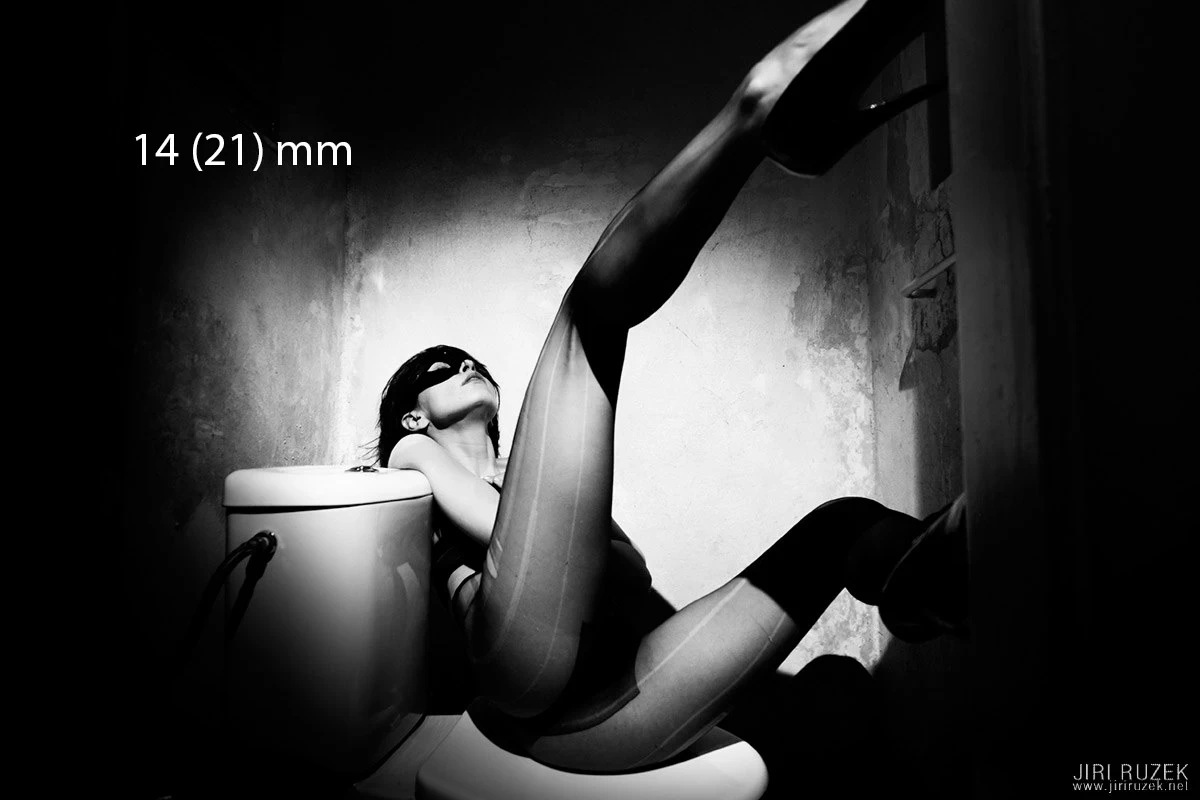
Which focal length is best for portraits? Which for lengthening legs? For slimming the hips? Modelling the figure and the face? And how does each lens handle space?
Every photographer has favourite lenses and favourite focal lengths. They constantly argue among themselves about which focal length is best for portraits, which for street, landscape, architecture. A large group of people agrees on certain lenses for each of these and other genres. For street photography, for example, one of the most popular lenses has a focal length of 23 mm (on an APS-C sensor, 35 on full frame). When it comes to portraits, a lot of photographers prefer longer lenses.
I photograph mostly women, so I won’t comment on other genres, only on the portrait and the figure.
Note: I will give focal lengths as above, e.g. 23 (35). The first number corresponds to the focal length on an APS-C sensor, the number in brackets to the focal length on a full-frame camera. Whoever doesn’t know what this is about most likely has a camera with an APS-C sensor.
What is a portrait?
For me a portrait is any-sized part of the figure. What matters is to capture and underline the expression, the mood and the prominent physical features the way I see them right now. Even the way I idealize them or want to idealize them for the viewer.
When photographing women, it is about emphasizing beauty and suppressing unflattering things. And because I admire natural beauty, I want to keep believability and naturalness at the same time.
Every lens is dangerous
I can’t shoot the same thing in the same way with every lens. I have to keep a certain distance from the subject (the model) in connection with perspective and its required distortion.
The lens itself doesn’t distort perspective; as far as perspective goes, they all behave the same, and the difference in perspective is caused only by the different distance between the camera and the photographed subject. In practice I would be able to achieve the same perspective distortion with any lens (distance decides, not focal length) if I shot with them from the same distance. But we choose the distance from the subject precisely because of the angle of view, and it’s logical that with a long focal length we shoot from a greater distance than with a short one. Actually it would be more correct to divide lenses into narrow and wide rather than long and short, because the fundamental difference is only in the width of the field of view.
Even with a short lens, though, I can’t be too close; everyone needs their own space. It’s nonsense to try to capture the same crop with different focal lengths (see the animation).
There are several variants of this animation on the internet, but I have always seen them only with a male model. I talked the model Viki into letting me make her look hideous…
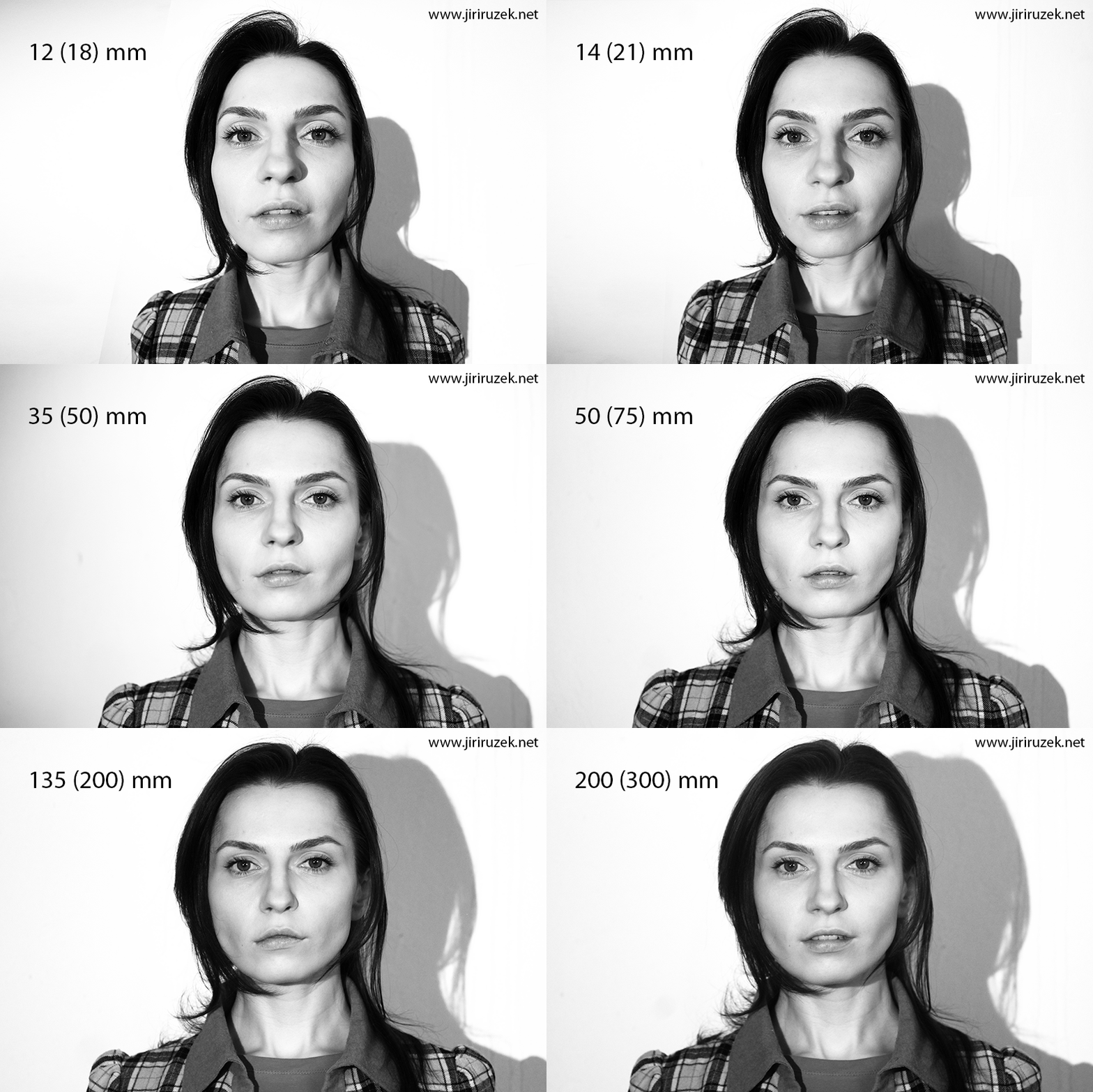
With short focal lengths I’m too close to her, the face is too deformed. It gradually straightens out, but as the focal length grows, the opposite deformation occurs and the model gets rounder, the shoulders and neck widen (in other words she gets fatter; do you know a model who wants to add kilos in photos?). Notice also the shadow, how with longer focal lengths it grows and comes closer (the model stands about 40 cm from the wall). By the end it looks almost larger than the head. And try to imagine that instead of the shadow it was the model’s backside, if she were lying on her stomach, for example: it would also come closer (shortening of the body) and grow larger.
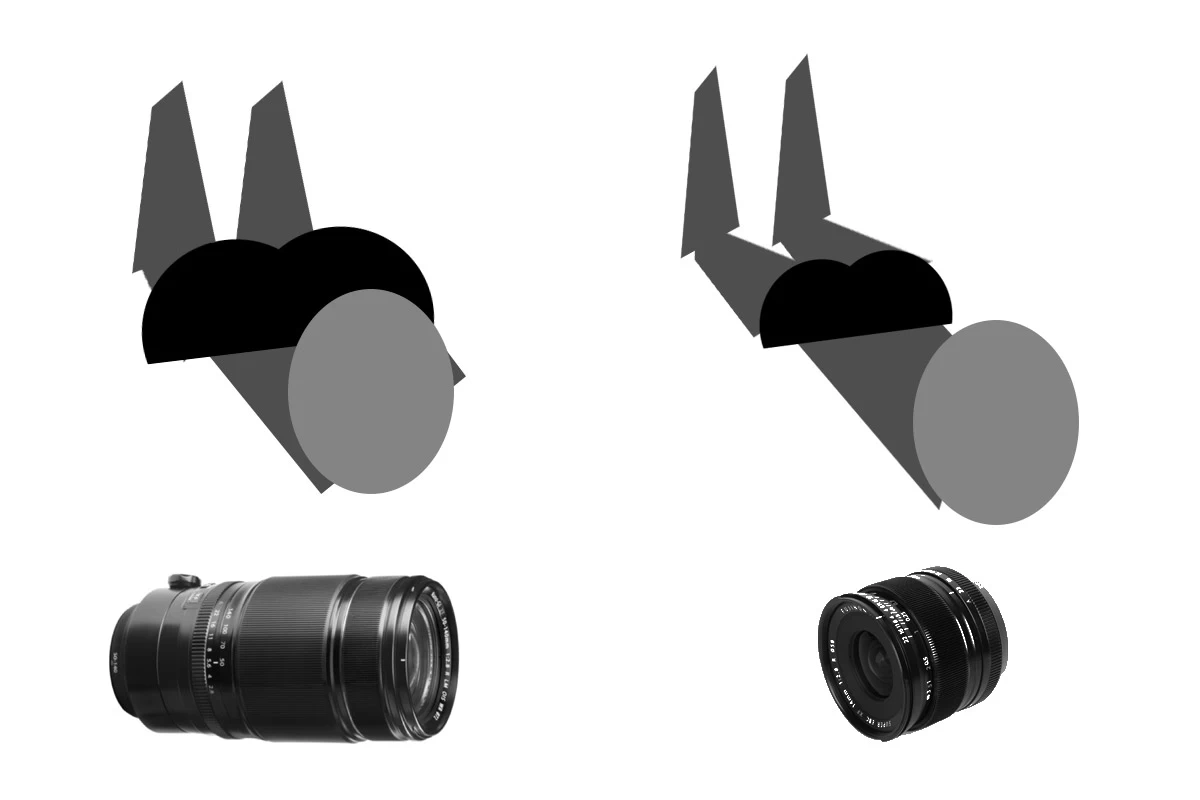
I’m planning to make an animation about the undesirable shortening of the body, enlargement of the background and poor modelling of the body, and I’ll add it here later; for now at least a very simplified and hastily sketched diagram:
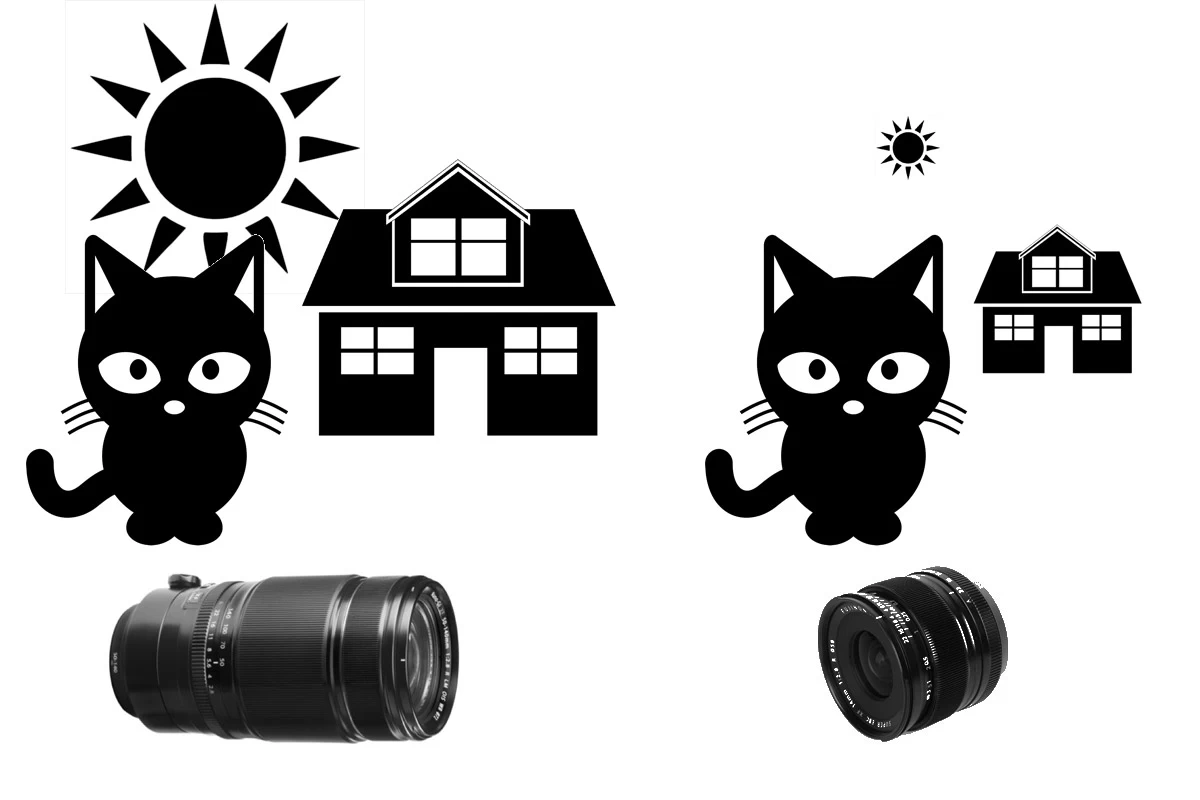
One more picture on this topic. I think it needs no commentary; most people understand these connections. The human body has to be worked with in the same way as any other objects in the scene.
Every lens is good
So I have to use each lens in a different way. I have to be aware of whether and how I want to model the body and face. And constantly perceive and watch the model’s proportions.
I perceive a photograph as a stopped moment of a film, which is why I work with space too. Each focal length behaves differently towards space and the figure. I choose the individual focal lengths according to whom I’m photographing, how I want to portray them, and also according to my intention with the space (or how the space limits me).
In practice it looks, for example, like this:
Very short focal lengths, e.g. 12 (18) and 14 (21) mm
I use these extremely short focal lengths to capture wide space, whole rooms and so on. Also to emphasize the perspective of both the space and the body; I have to work with the body carefully so that ugly deformations of the body or head don’t appear. Even a slight tilt in the wrong direction can mean disaster in the form of a big head, short and too thin legs and the like. But when I carefully watch the angle at which I shoot, and the placement and direction of the figure in the photograph, I can model the figure inconspicuously or markedly.
I almost never shoot vertically (in portrait orientation) with them; deformation in the vertical direction looks stronger than in the horizontal.
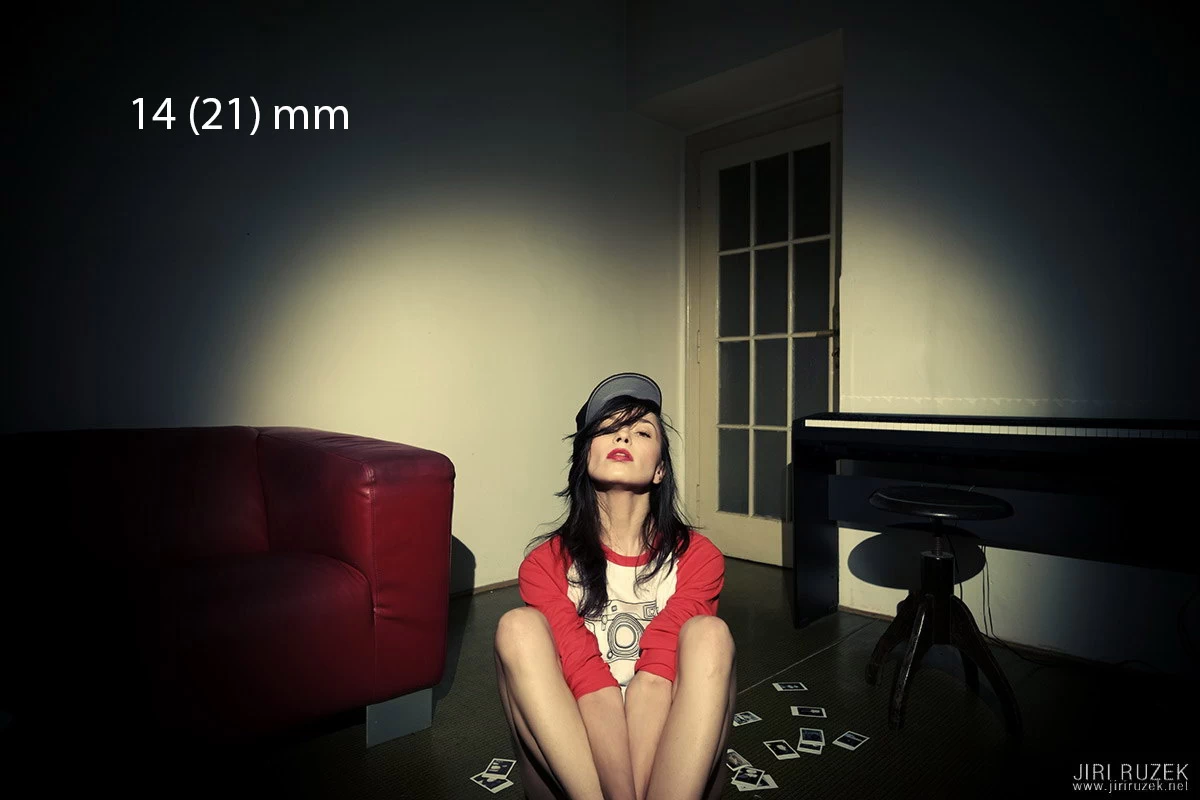
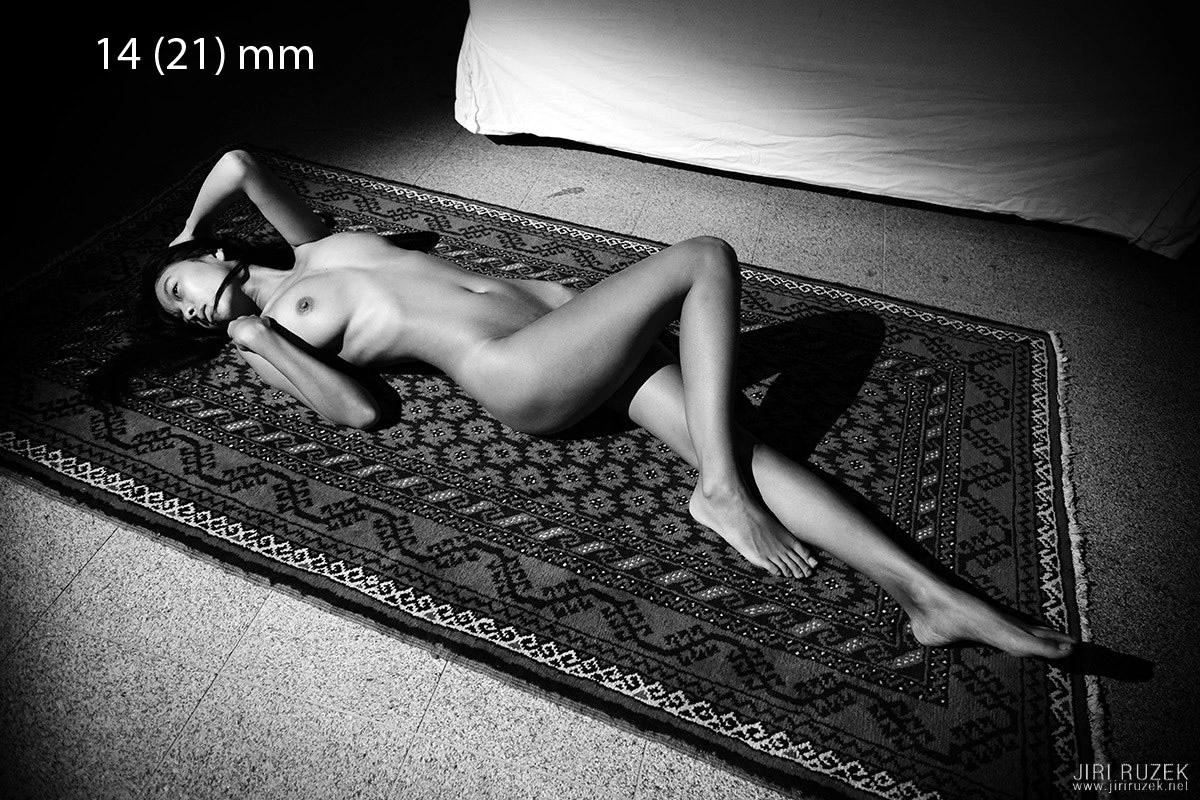
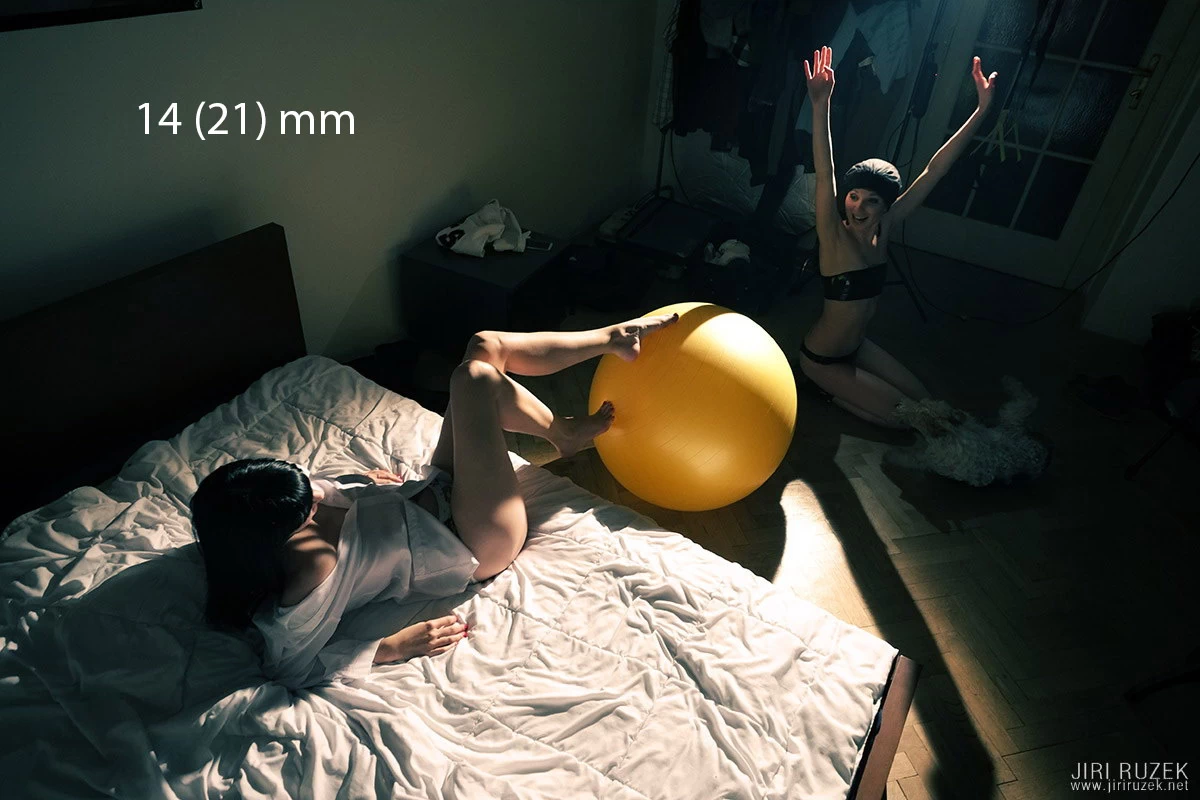
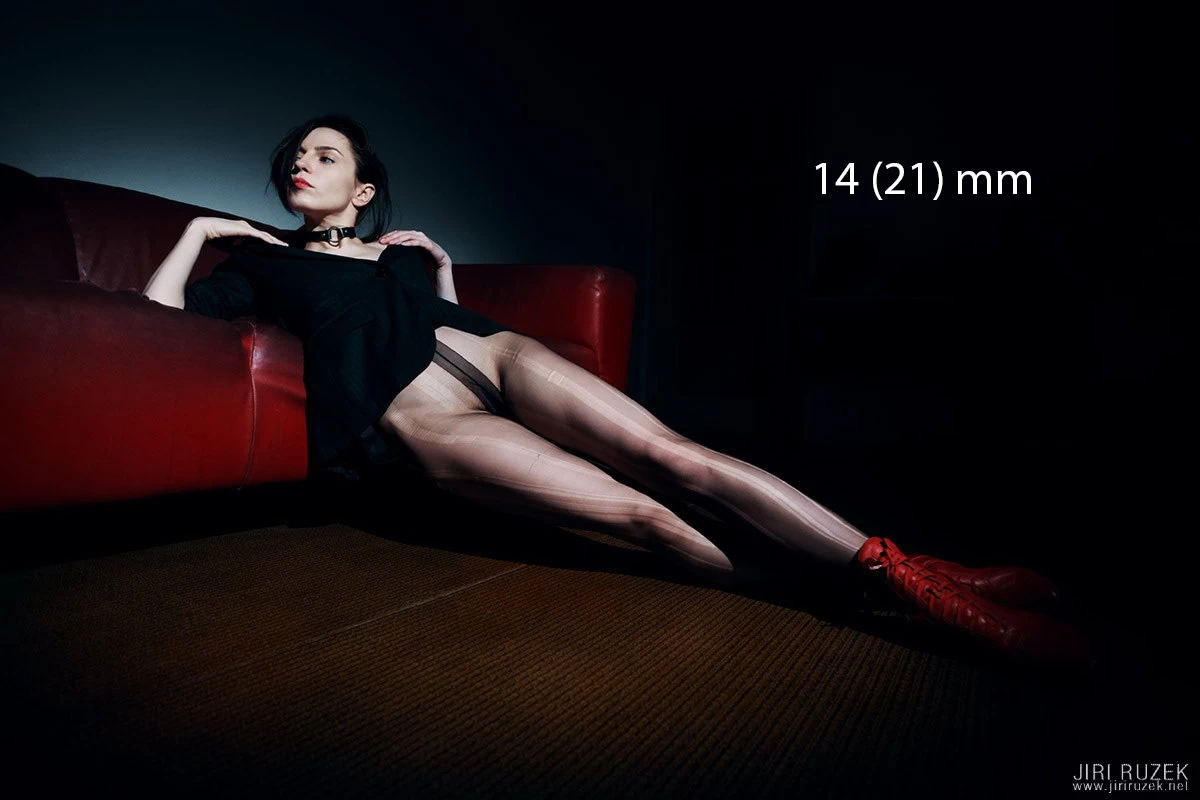
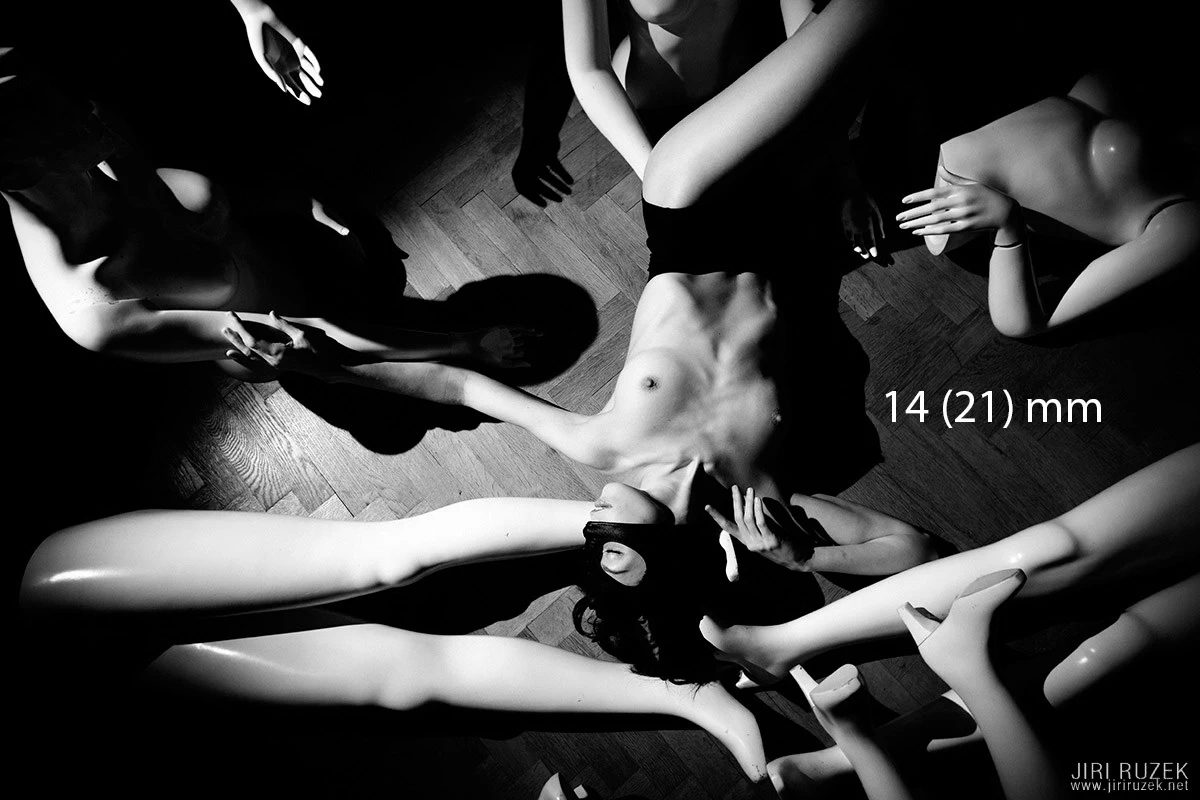
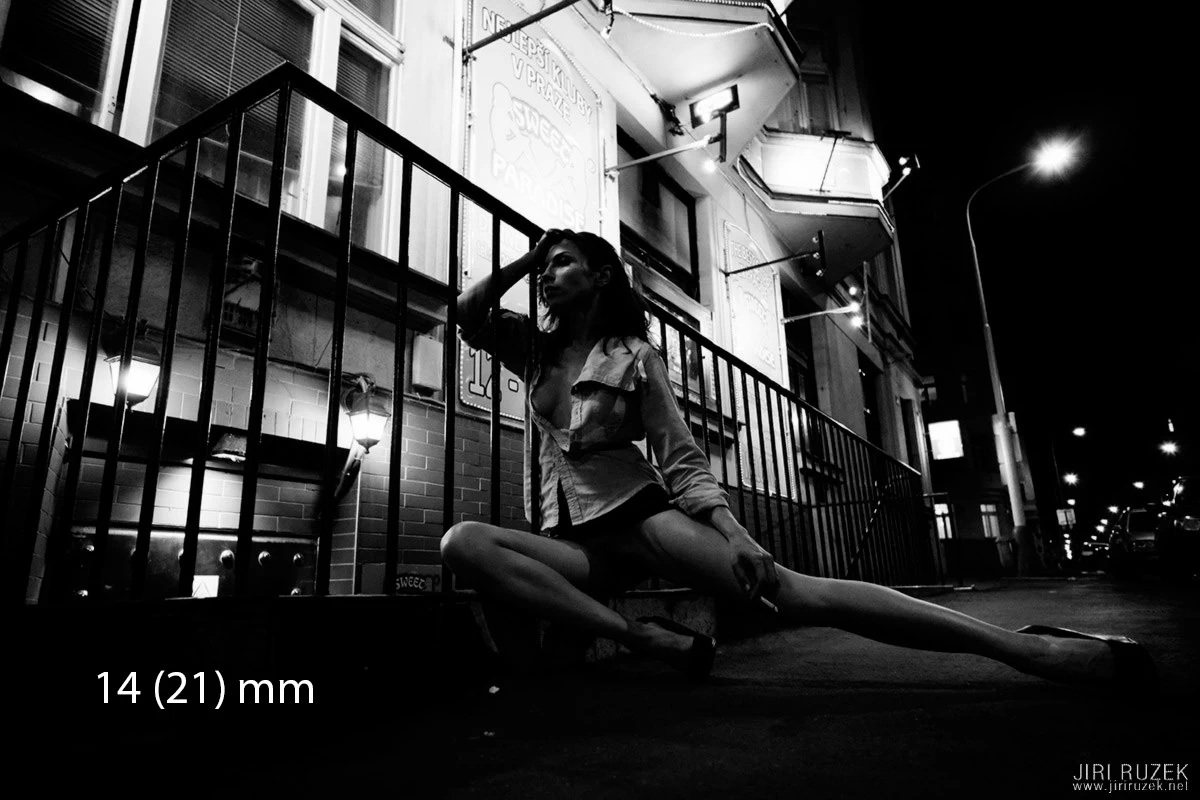
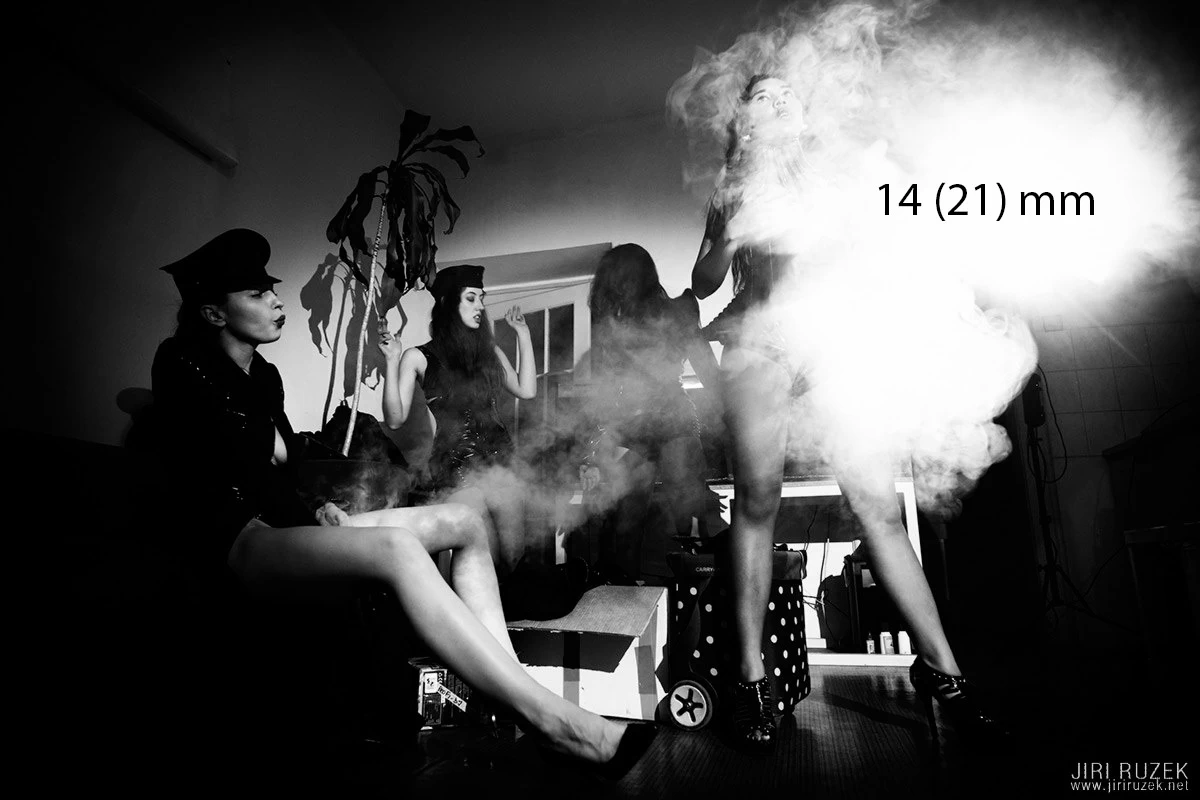
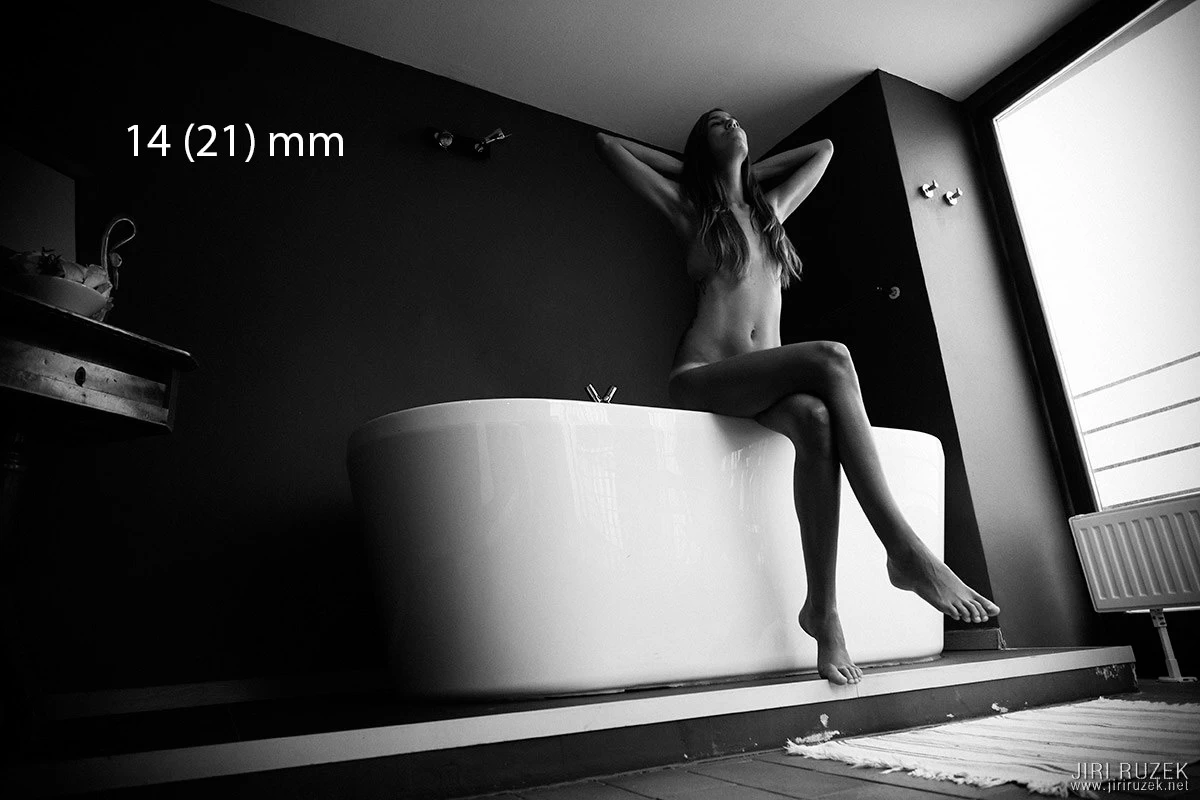
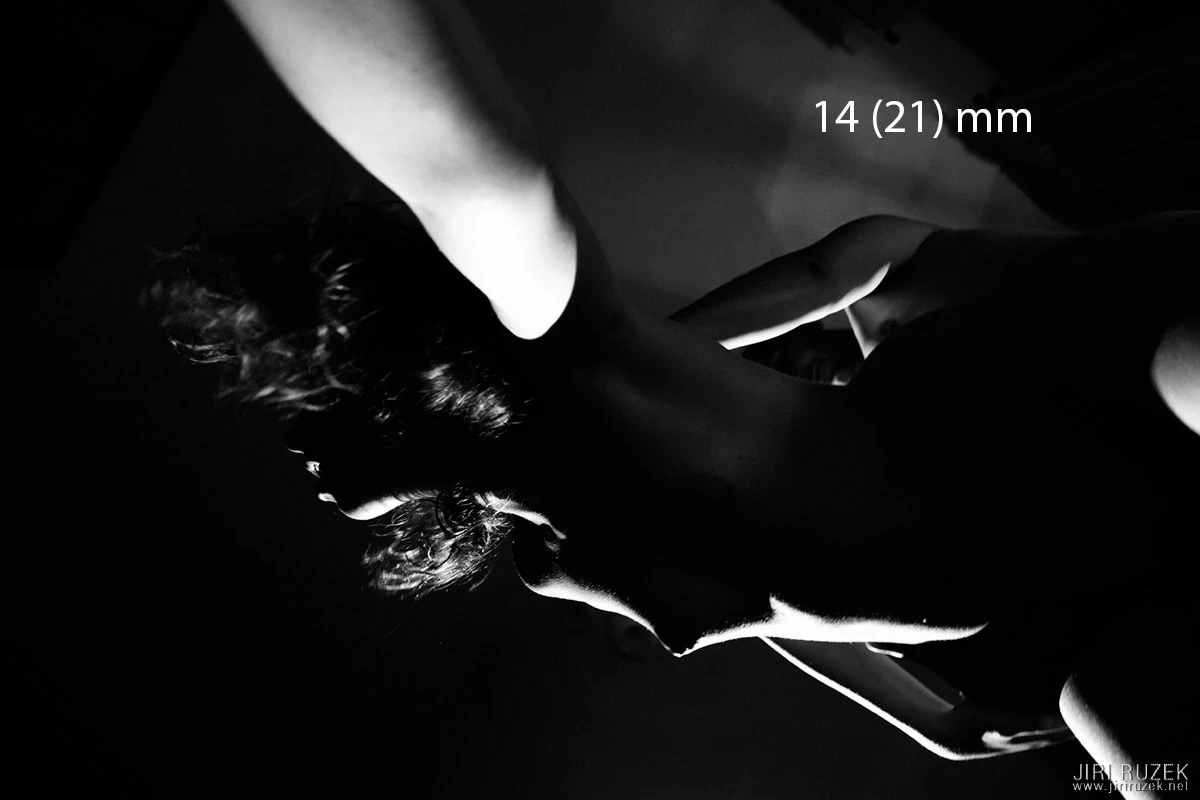
Lenses used: Zeiss Touit 12 mm/2.8, Samyang 12 mm/2, Fujifilm XF 14 mm/2.8.
Short focal lengths, e.g. 18 (27) and 23 (35) mm
Use similar to the shortest focal lengths; deformation and perspective can still be quite pronounced, but I can also almost suppress it. I like using them, for example, for lengthening legs. Used skilfully, the viewer practically doesn’t notice this small trick. Even with these focal lengths I shoot in portrait orientation only exceptionally.
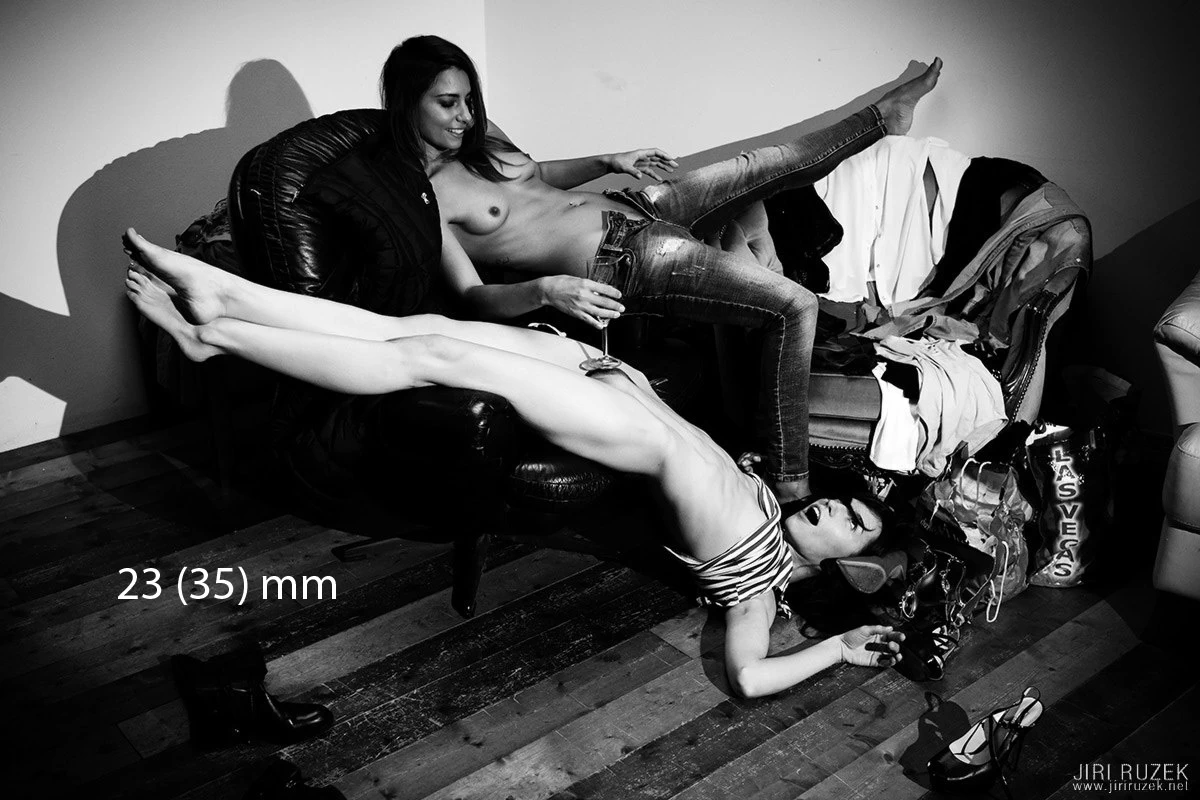
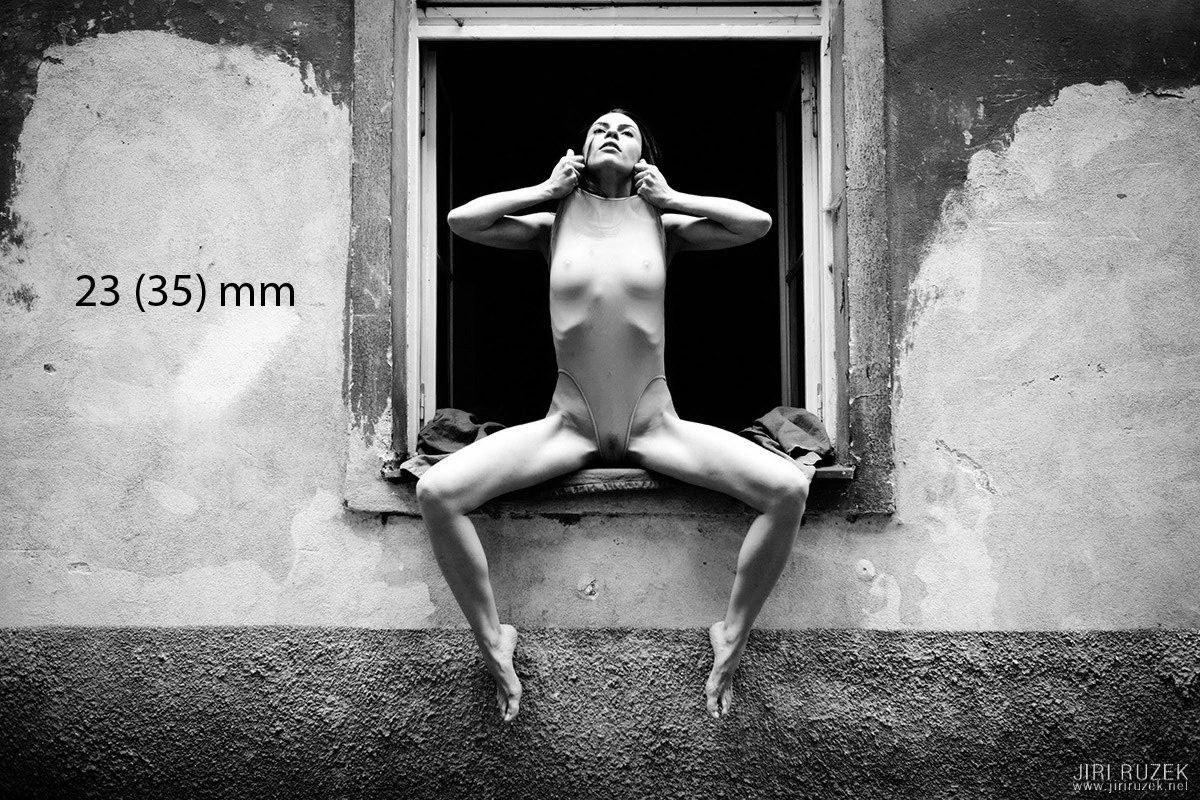
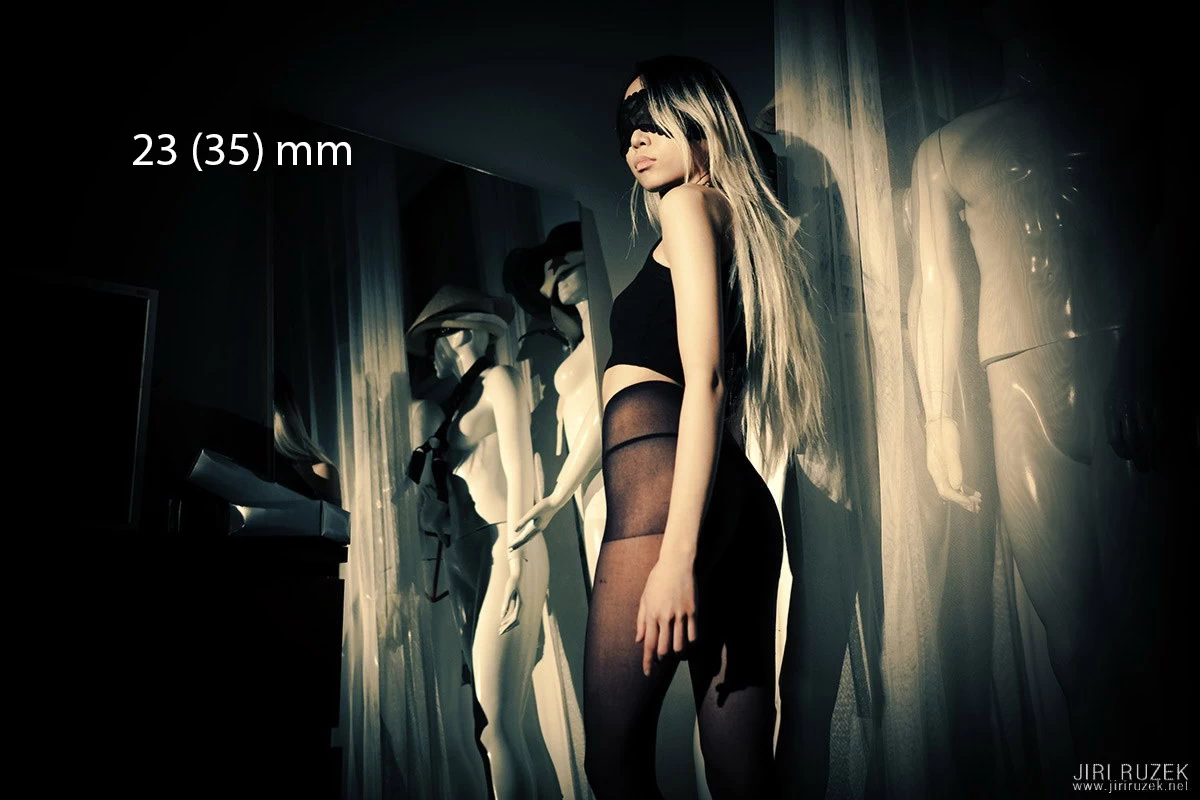
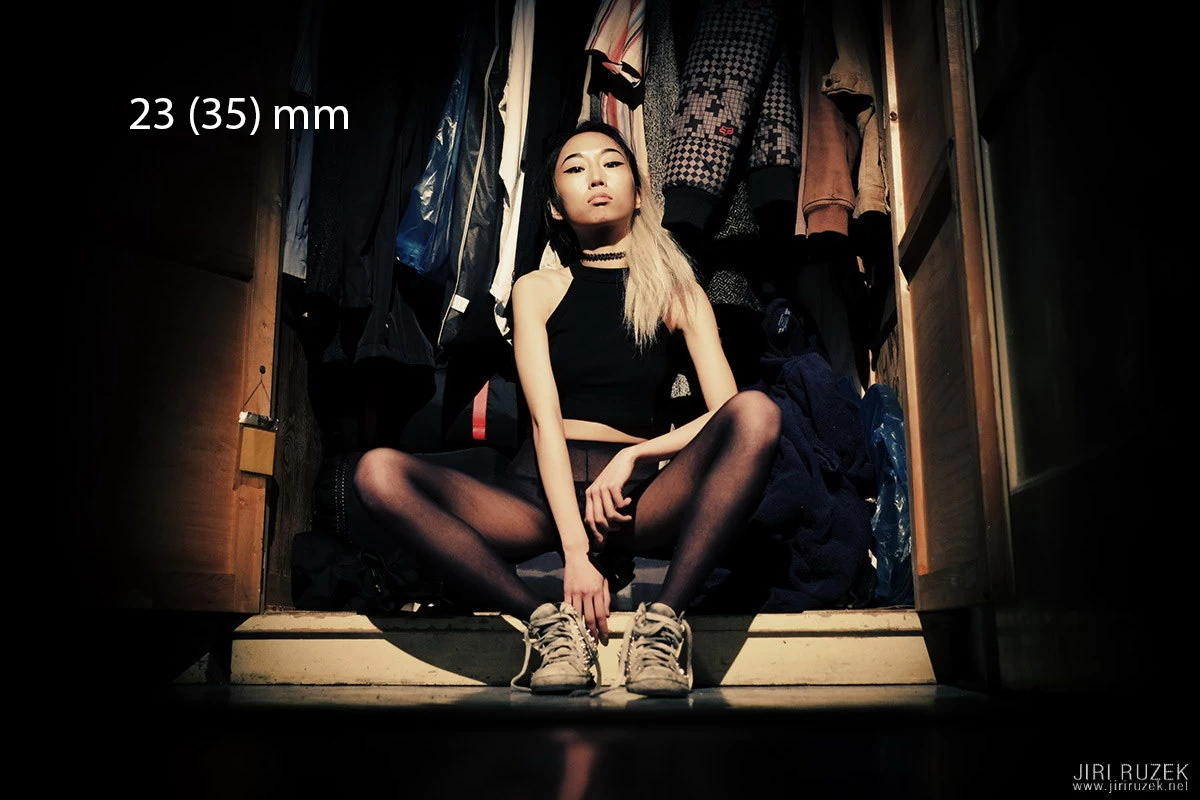
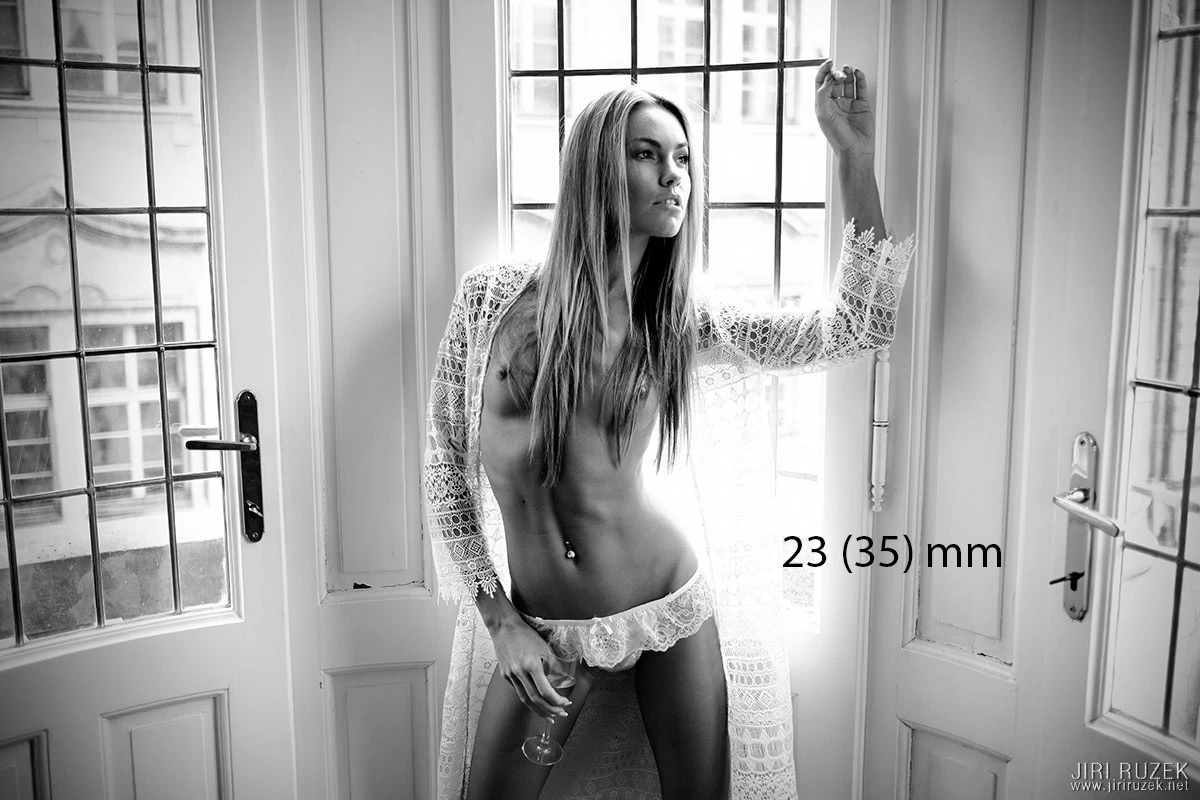
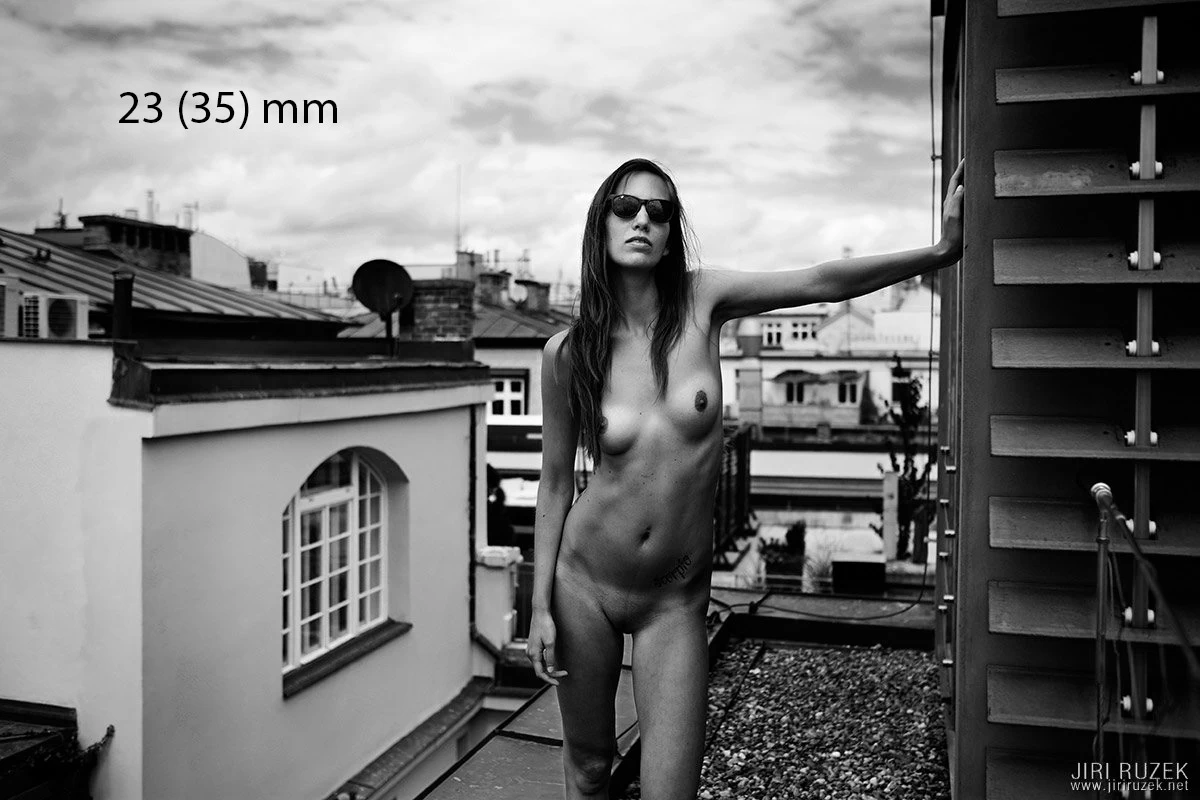
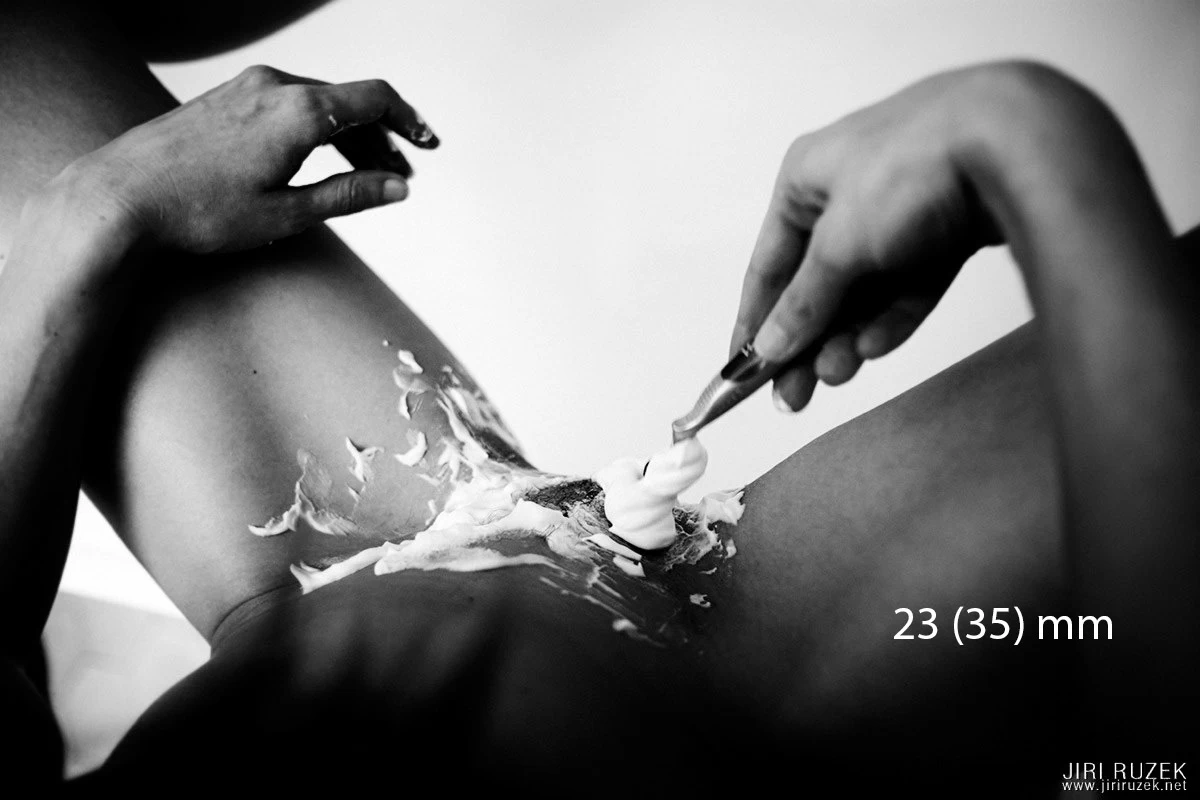
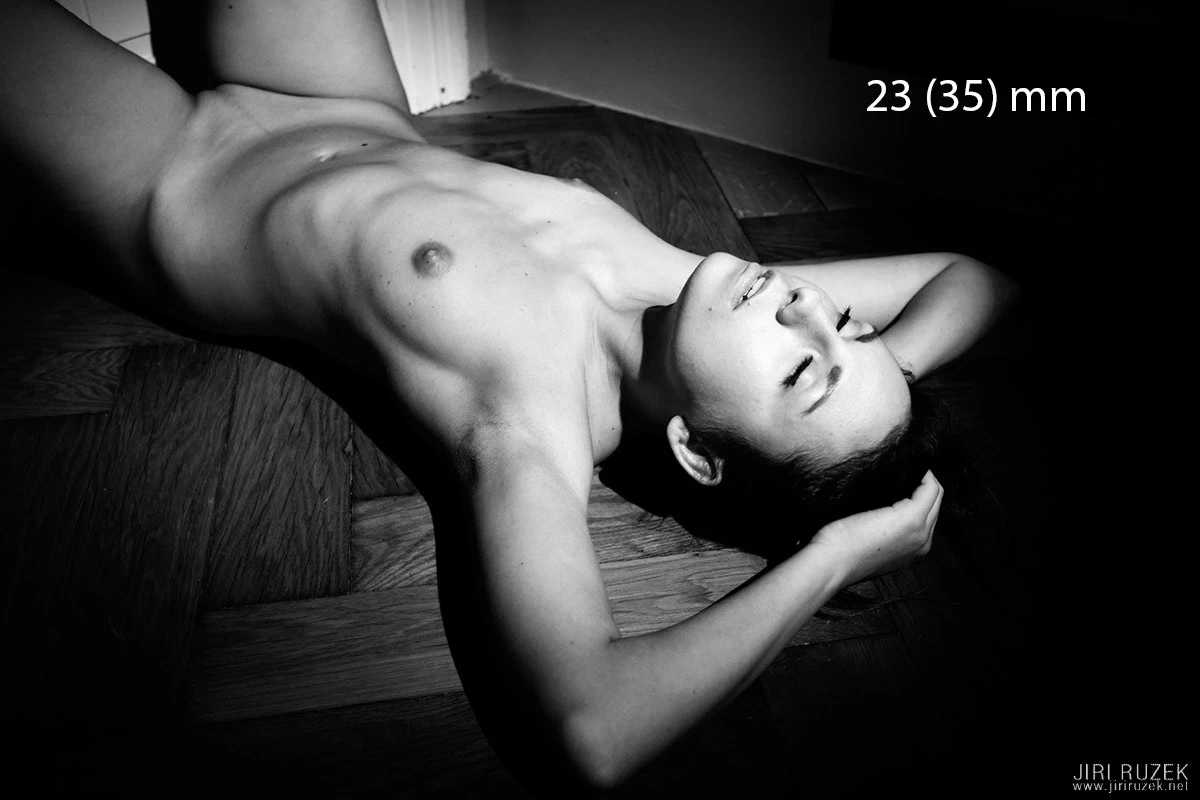
Lenses used: Fujifilm XF 18/2, Fujifilm XF 23 mm/1.4, Fujifilm XF 23 mm/2
Medium focal lengths, e.g. 27 (40) and 35 (50) mm
In angle of view and depth of perspective they are closest to the perception of the human eye. The photograph looks very natural, yet I can still model the body: slim the hips, accentuate the thighs, shape the face and so on. Working with these focal lengths is not dangerous in any way.
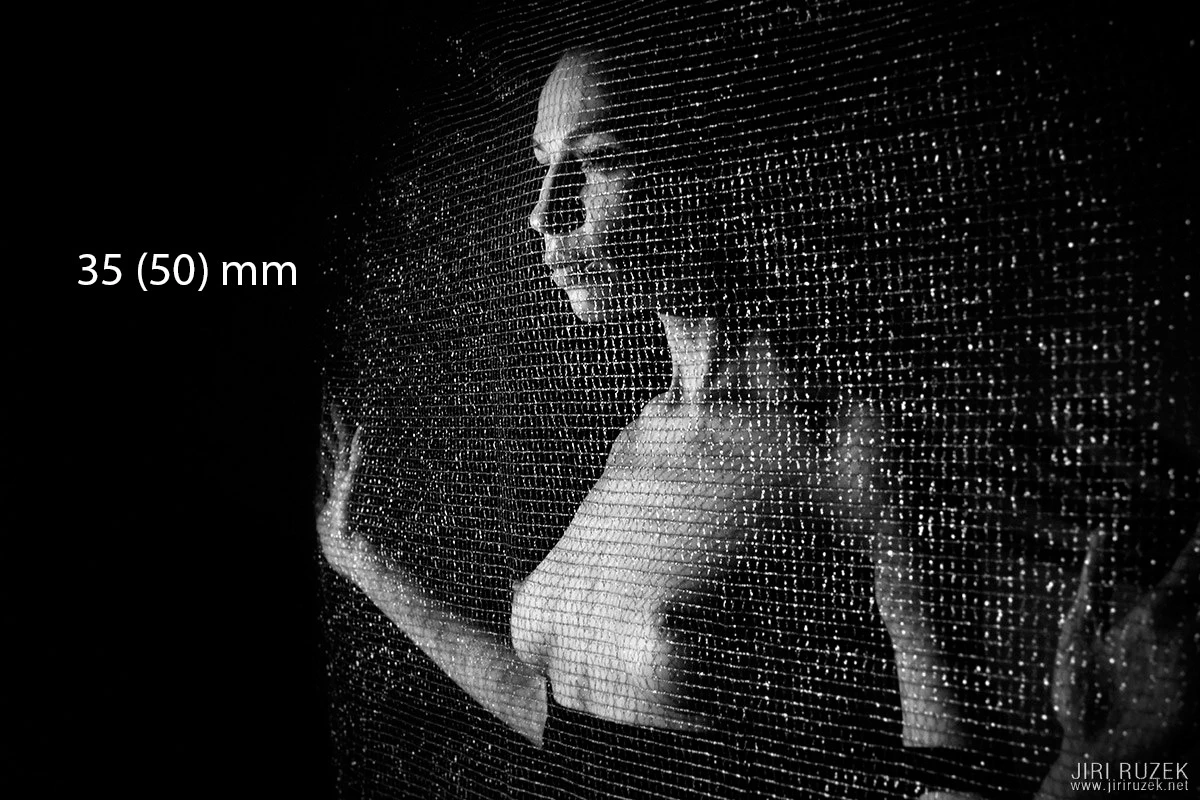
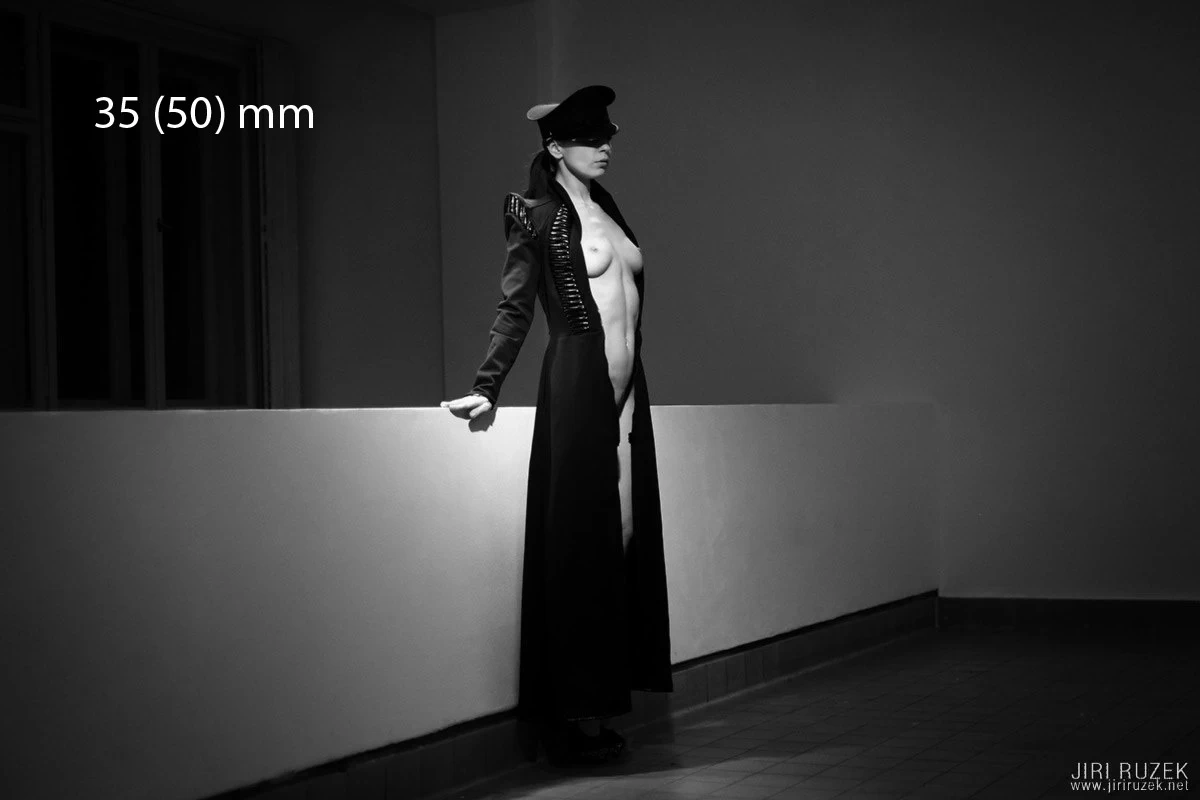
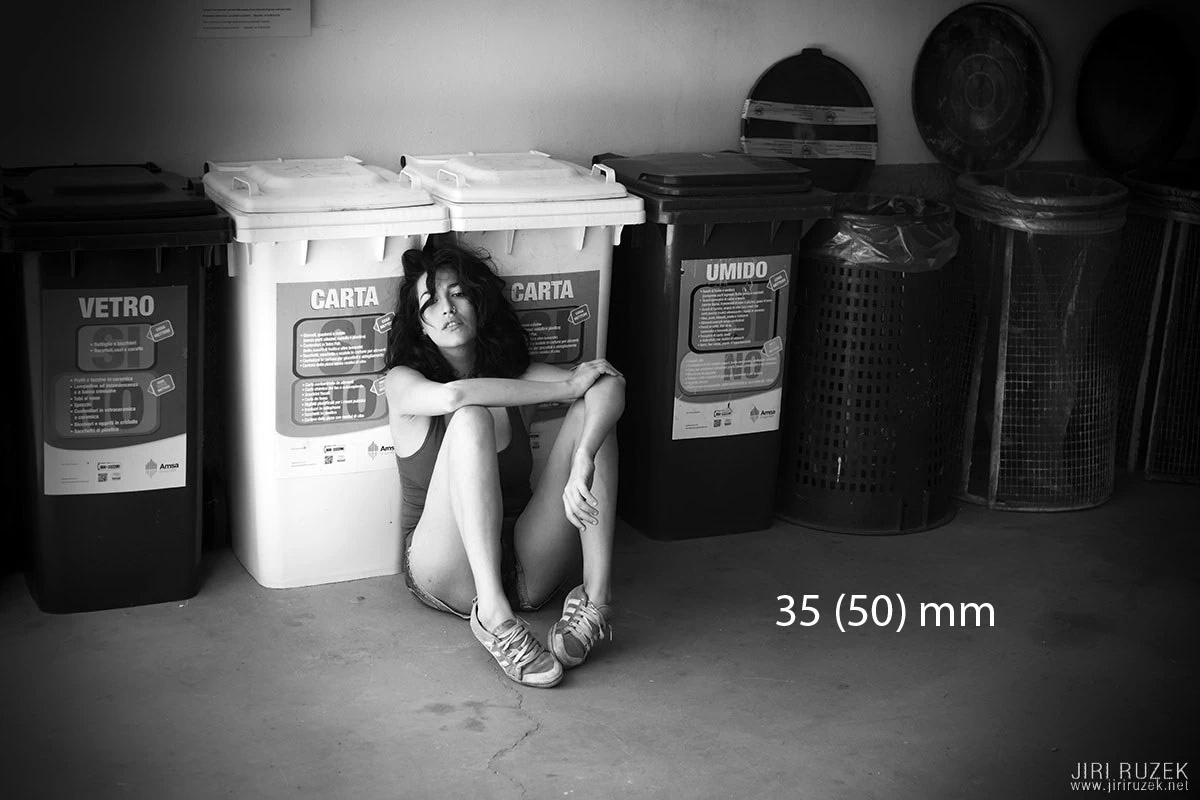
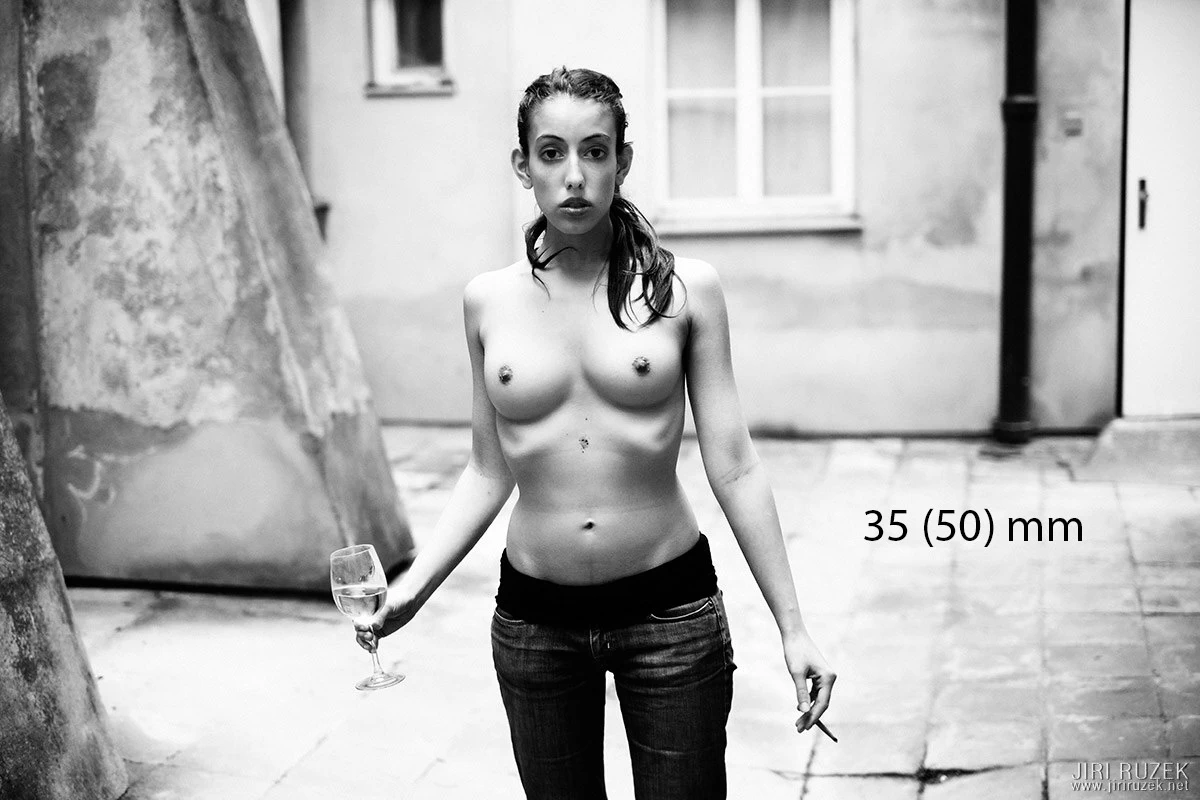
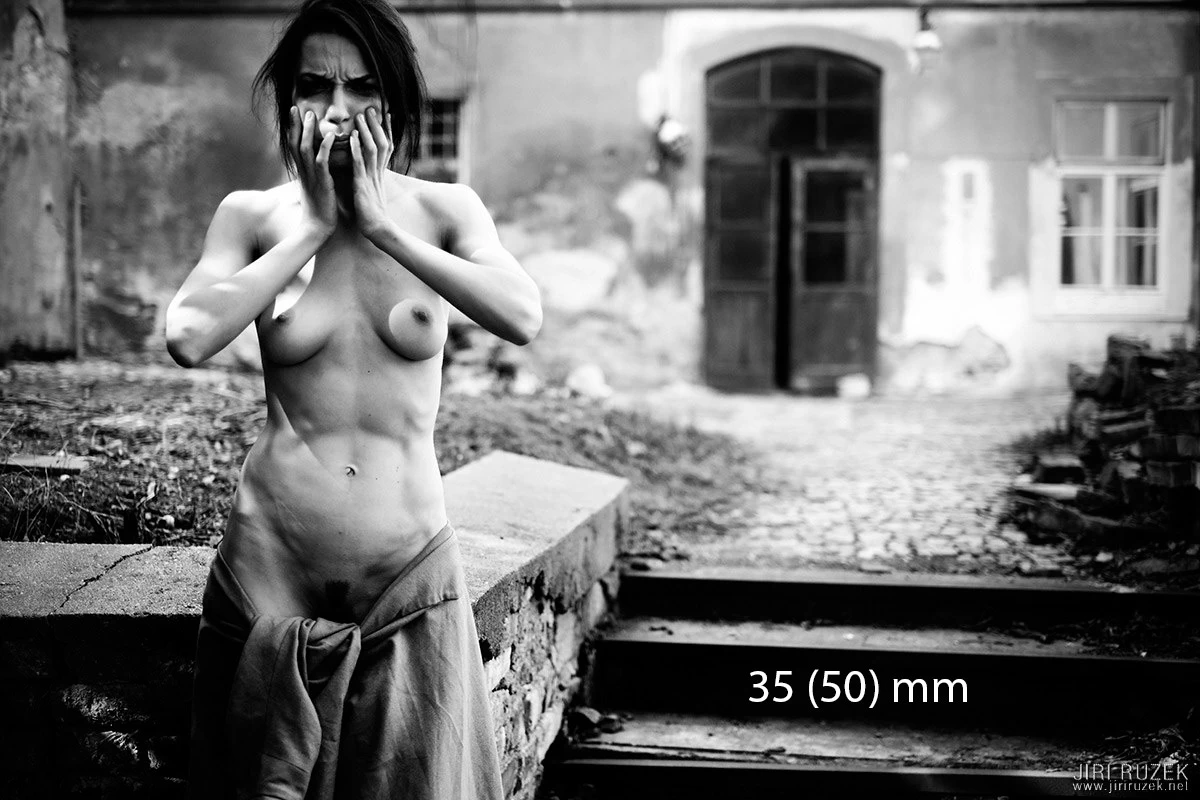
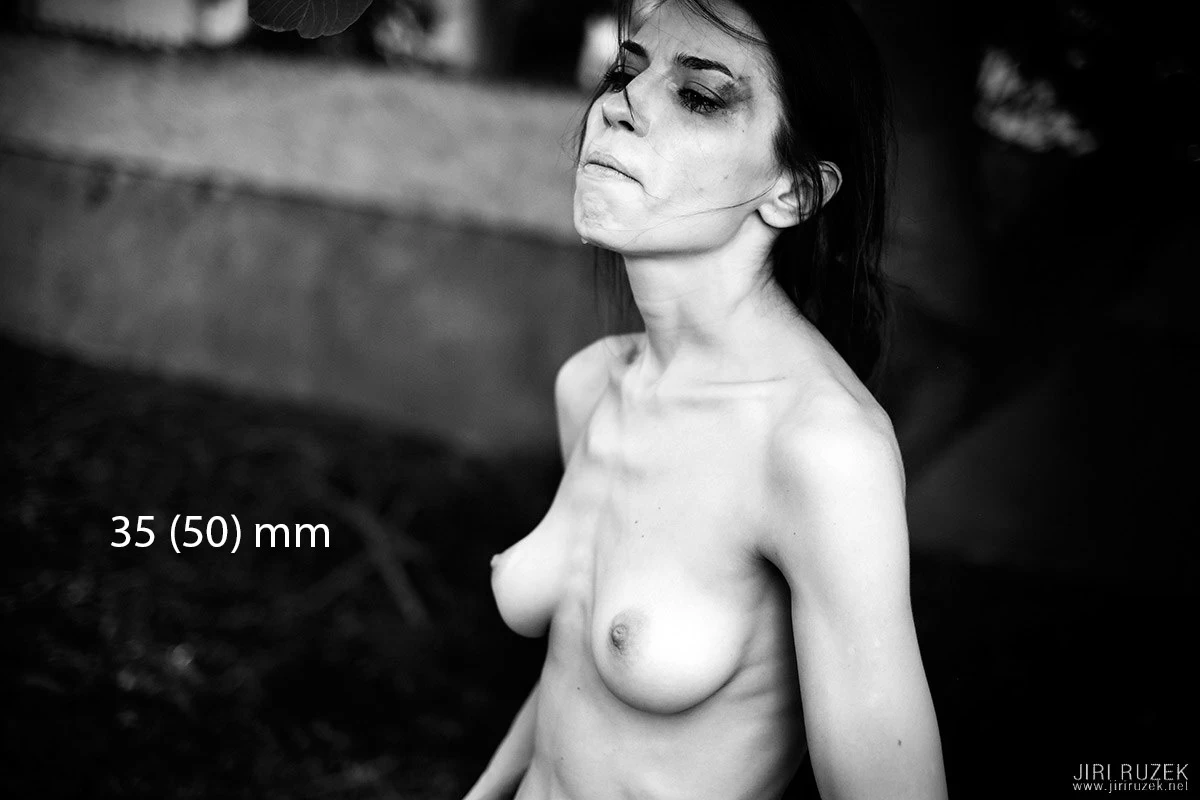
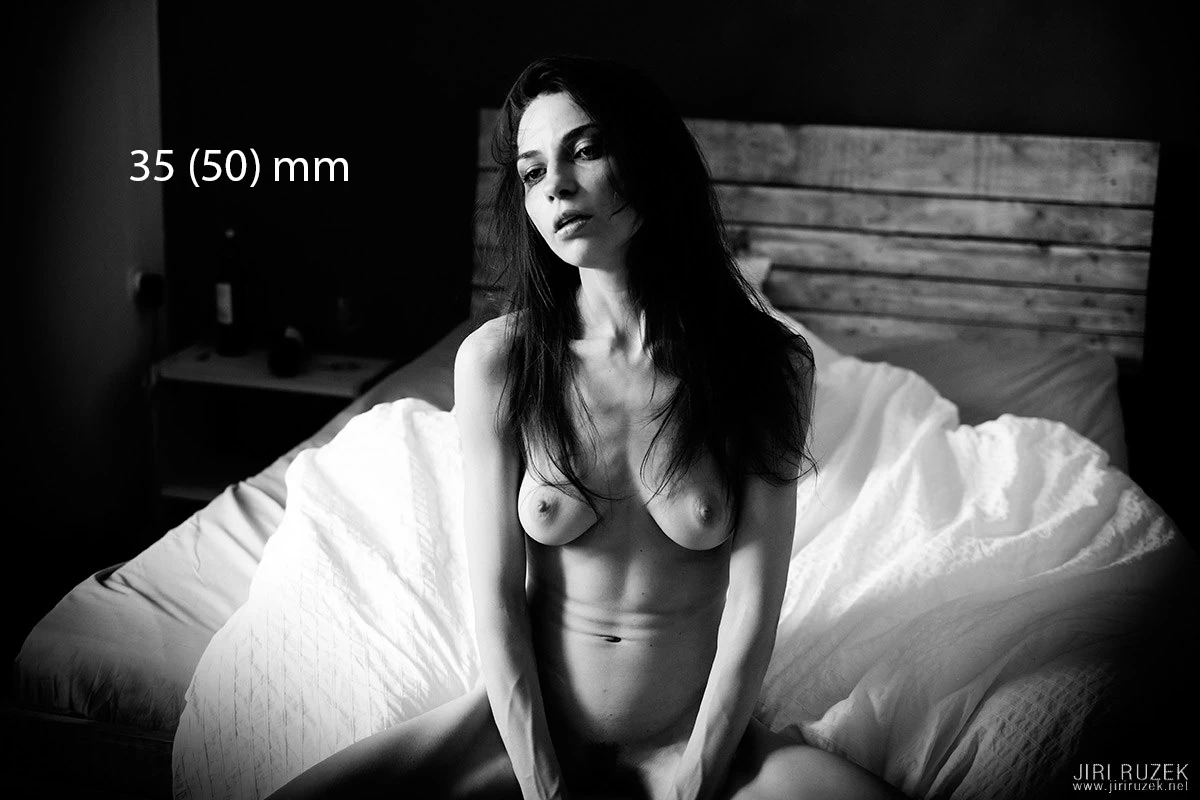
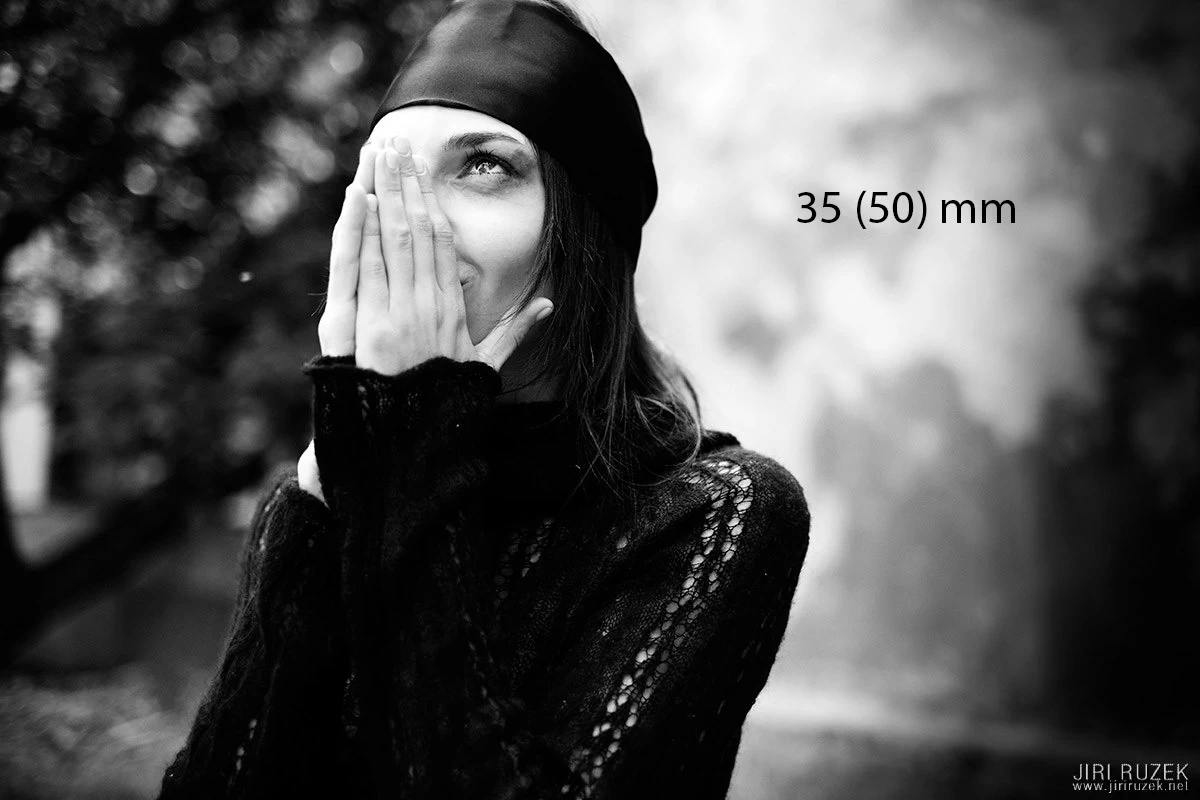
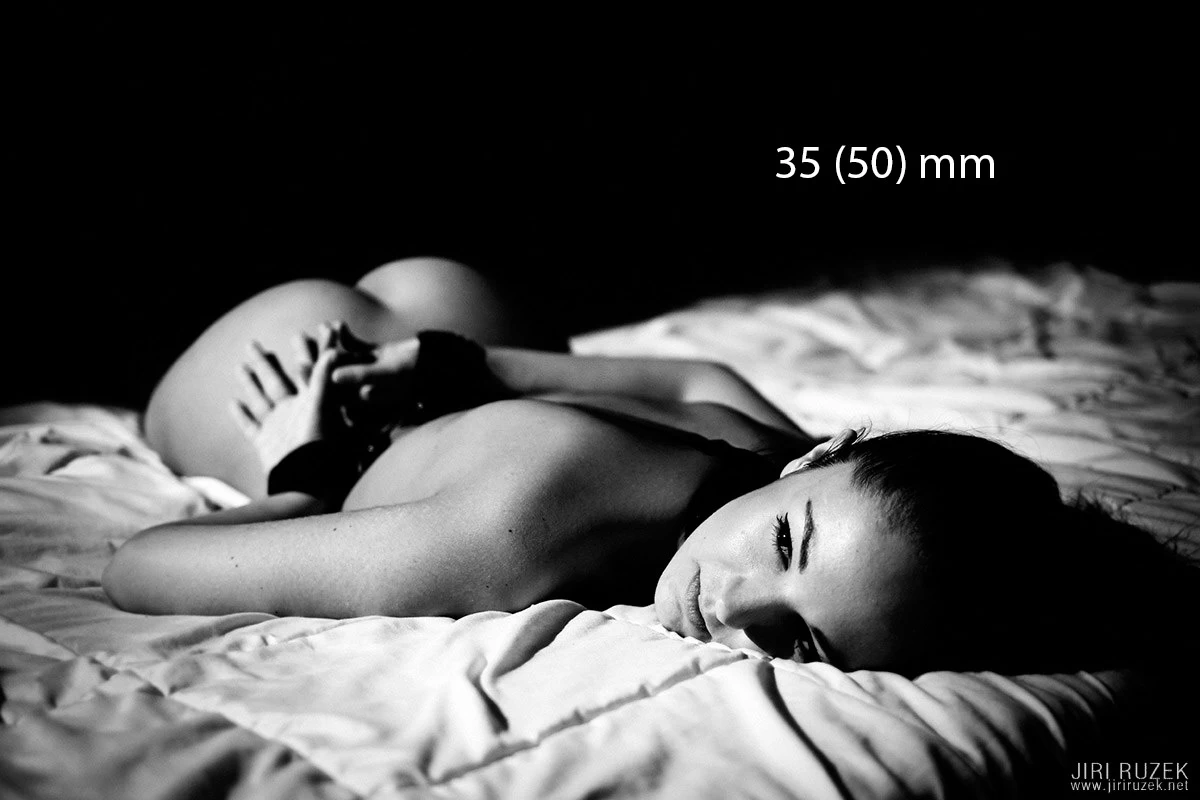
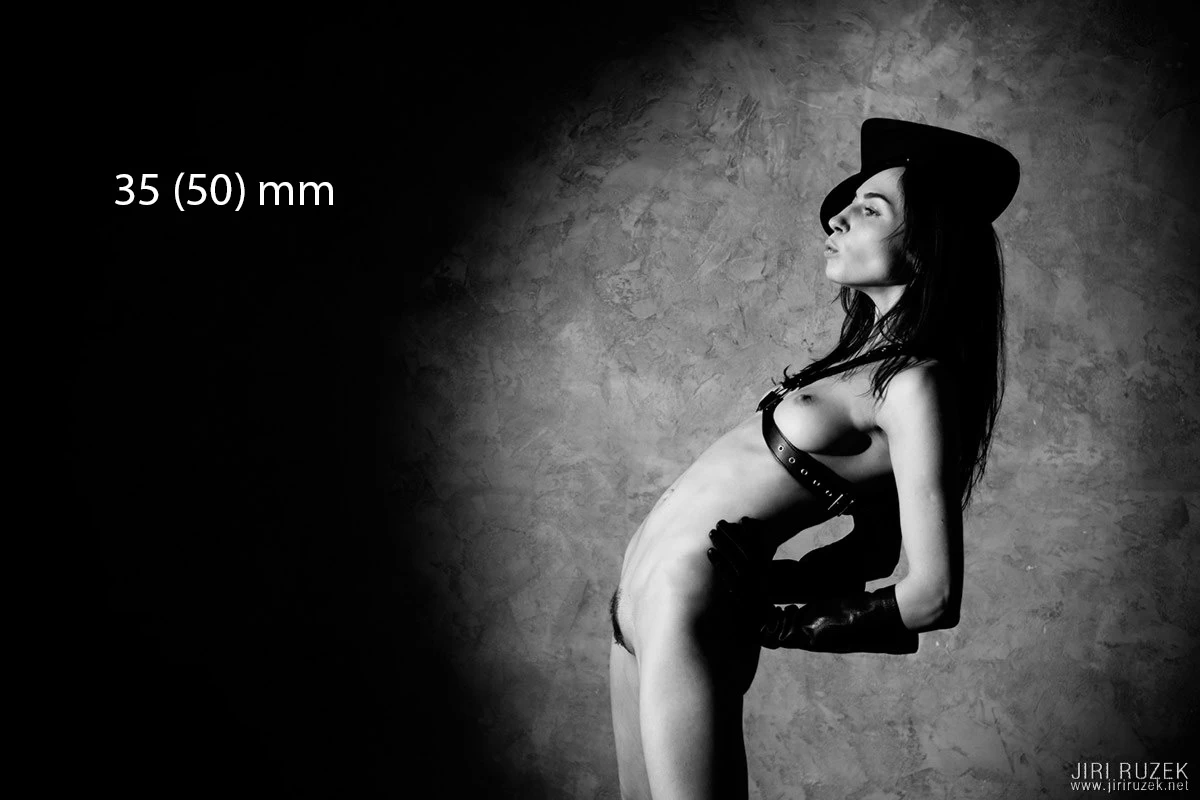
Lenses used: Fujifilm XF 27 mm/2.8, Fujifilm XF 35 mm/1.4, Fujifilm XF 35 mm/2
Longer and long focal lengths, e.g. 56 (85), 90 (135) mm and longer
All focal lengths above 35 (50) mm behave towards perspective the other way round: they compress it. That doesn’t mean only the background of the scene moves closer to the model; the whole model flattens too, which in practice means I optically add a few extra kilograms to her. Look at the animated gif, where as the focal length lengthens, the model’s shoulders and neck widen and the face rounds. Long focal lengths have wonderful properties, but I don’t know a model who would want to look heavier in photos than in reality. That’s why I use them only on the slimmest models and with similar caution to that with which I use short lenses.
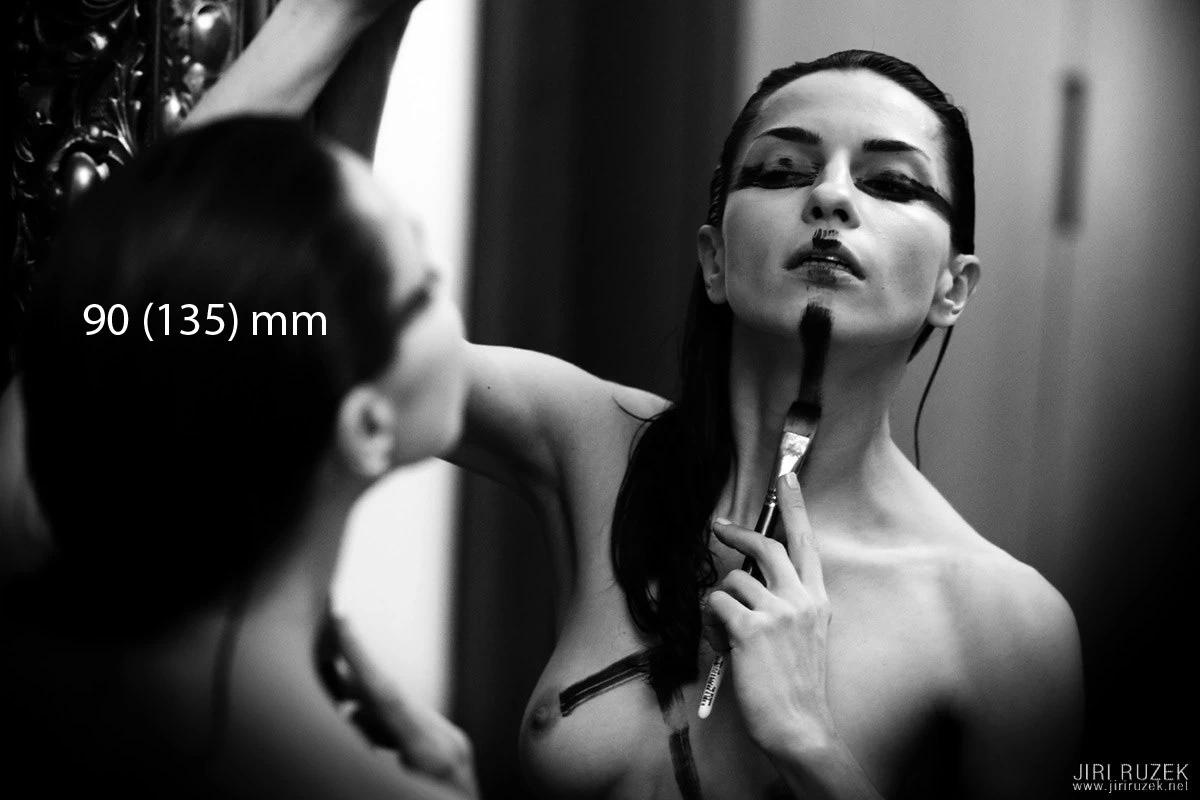
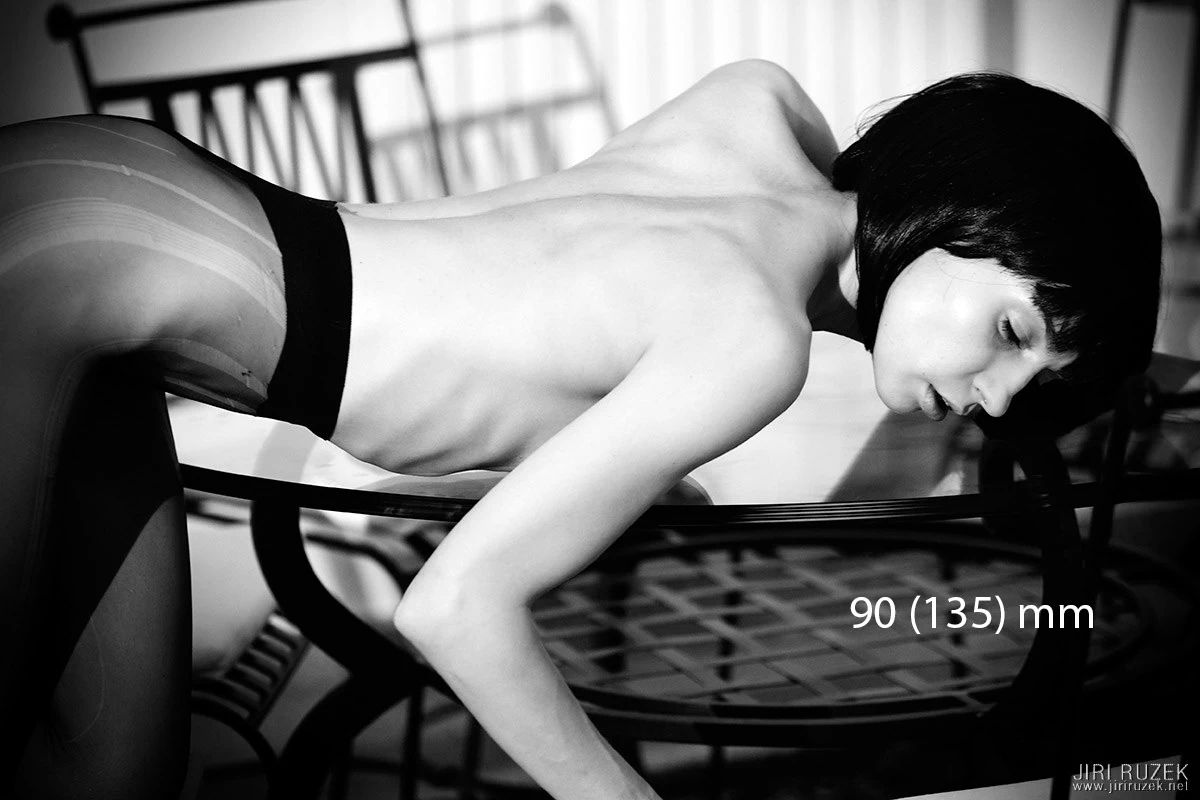
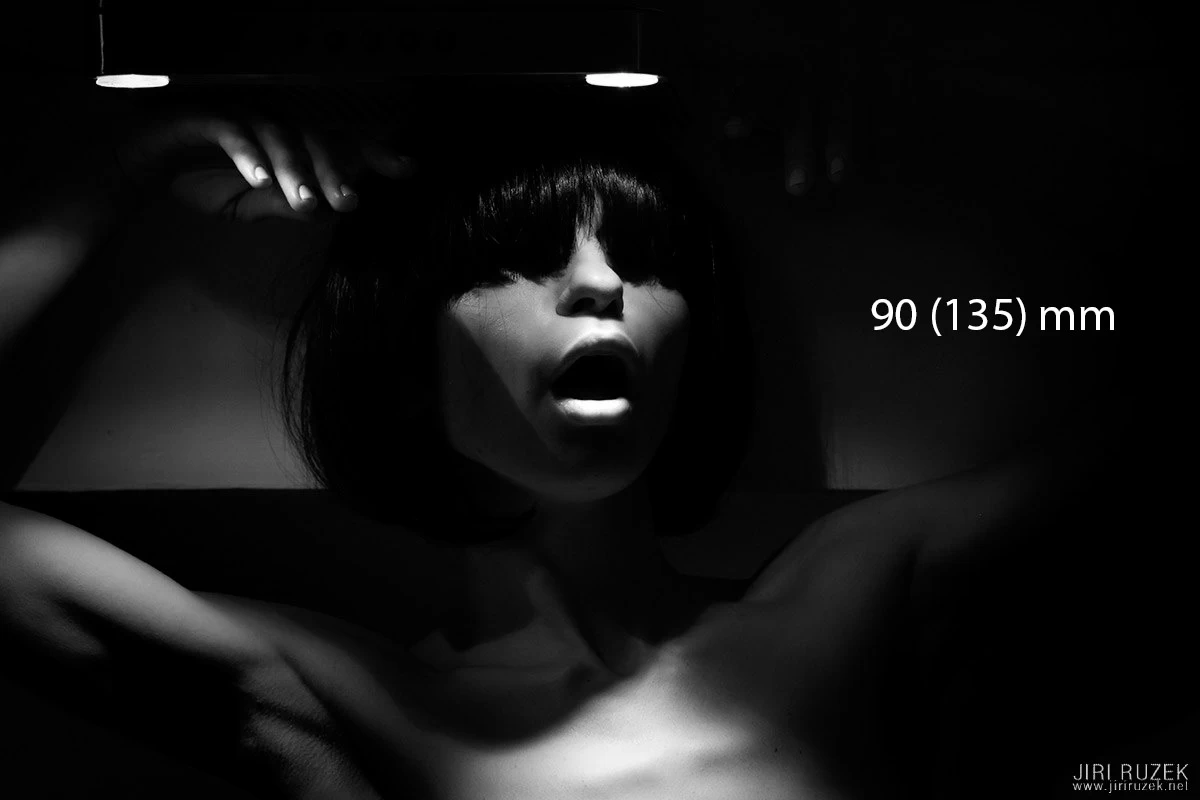
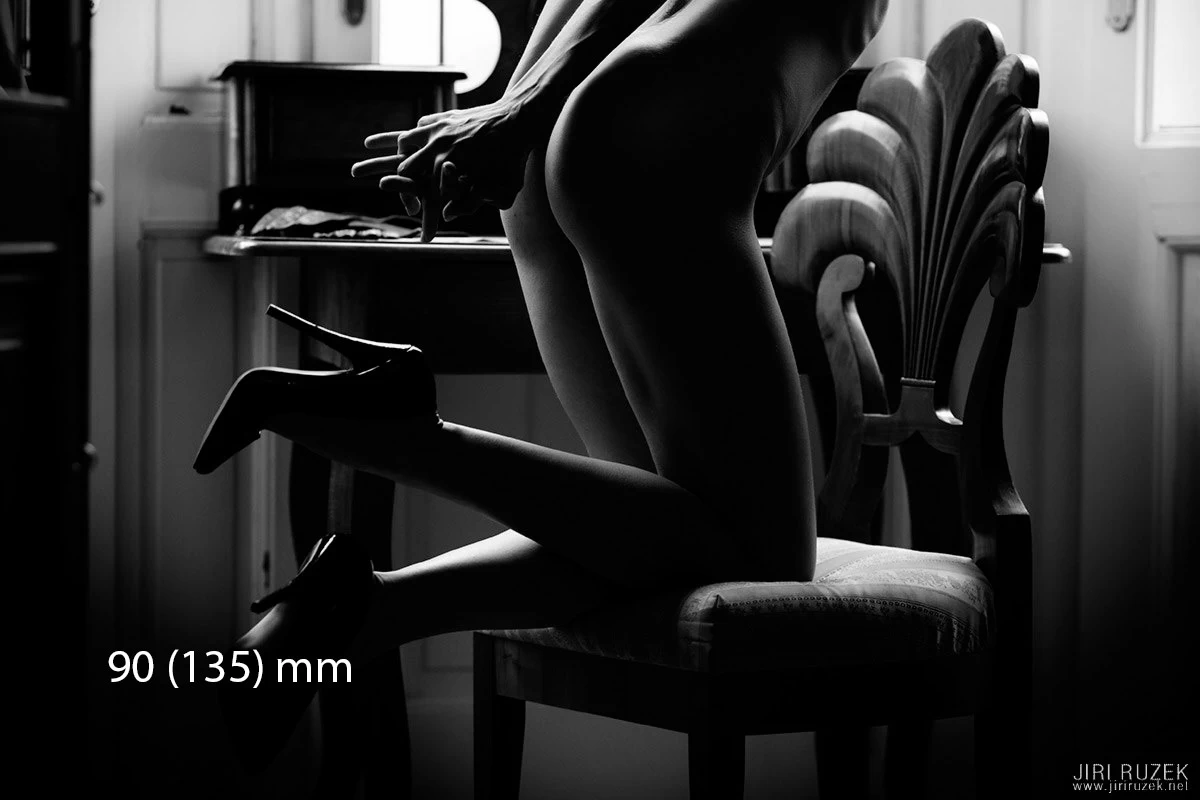
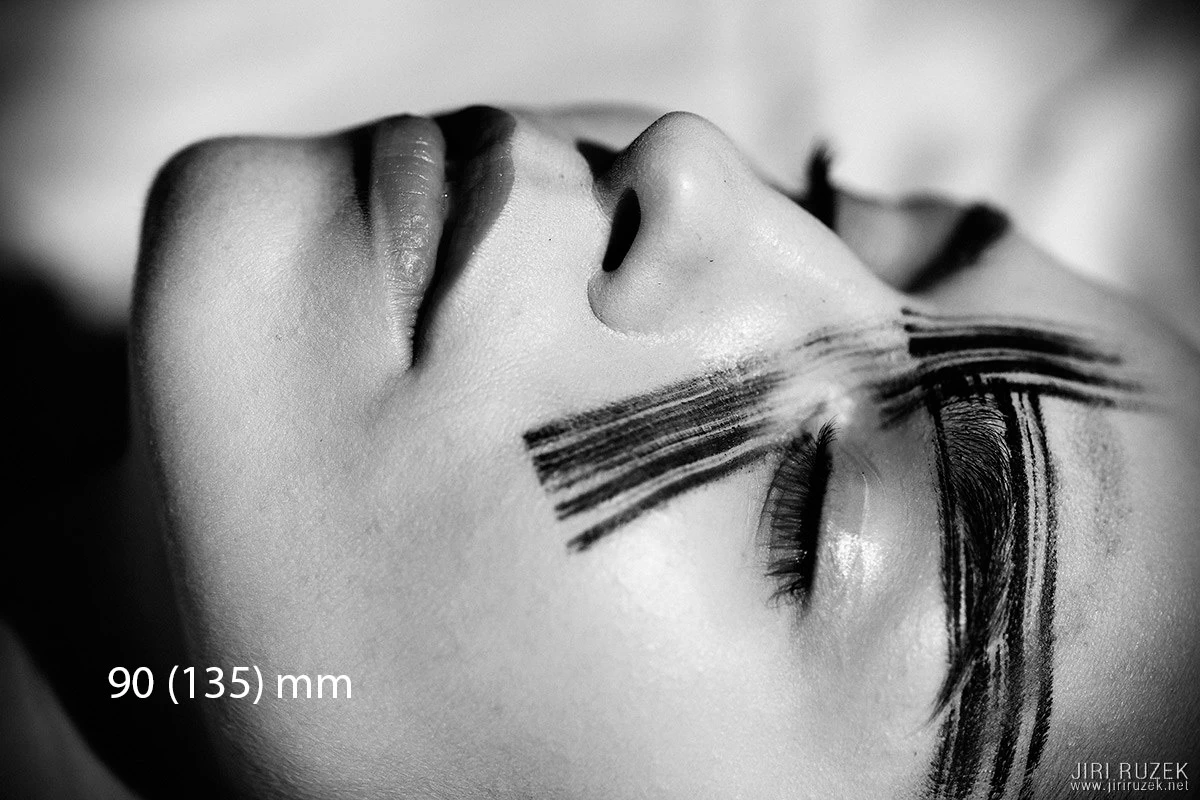
Lenses used: Fujifilm XF 56 mm/1.2, Fujifilm XF 90 mm/2
Perceive the model and the scene, and always subordinate the choice of lens to your intention, not your intention to the lens.
By the way: David LaChapelle, Helmut Newton and others – they relied heavily on medium and short lenses… Learn from those you admire.
All the photographs shown above once more here in one video (if you don’t want to click through the individual shots):
Want to be informed about similar articles? Join our group on Facebook.
If you’d like to dive deeper into this topic and try everything out hands-on, drop by our workshop.
Thank you for reading and sharing, have a nice day 🙂