This page was translated by AI. Please be forgiving of any mistakes.
‹ Photo Notes · 10 března, 2012
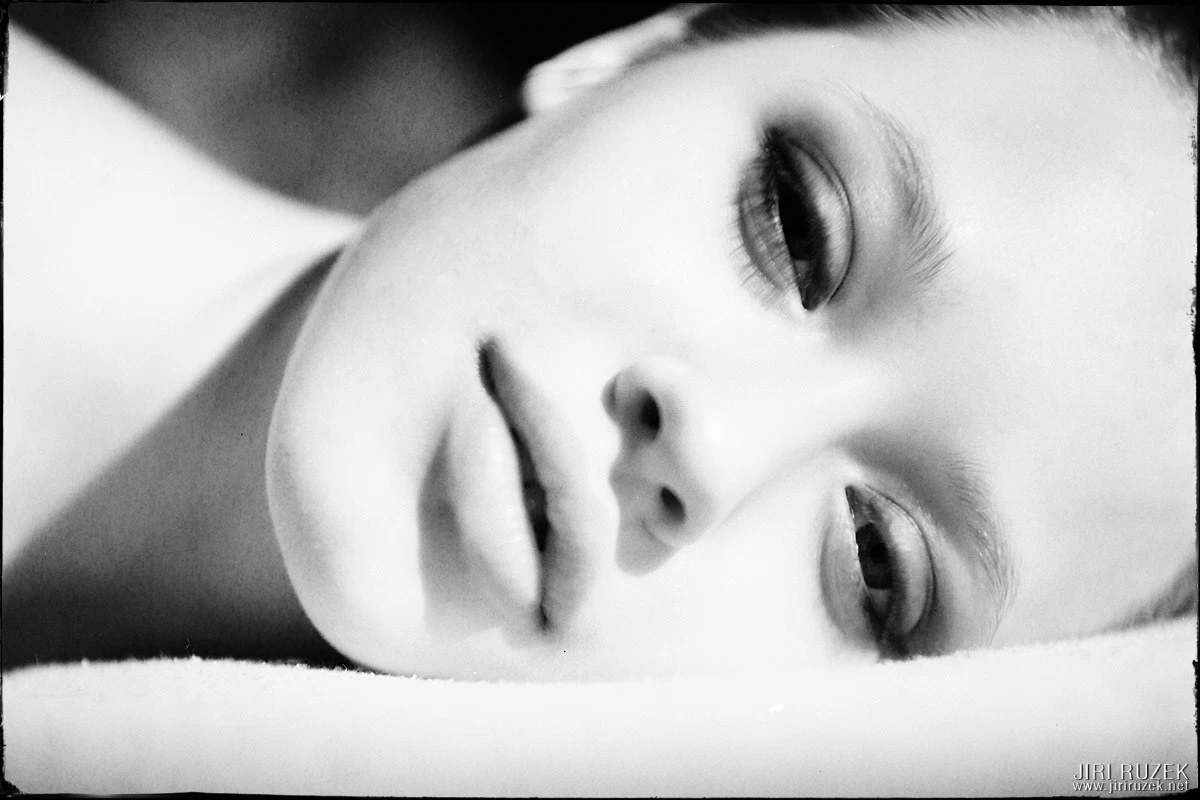
„How come you switched to film?„, a colleague asked me recently. I didn’t switch, I only returned to it, and I have no intention of abandoning digital photography. Photographic discussions all over the world are full of petty wars on the topic of film versus digital. In my opinion completely needless.
I once mentioned similar and similarly senseless discussions here between fans of the Canon and Nikon brands, so today I’ll take on the topic of analogue versus digital photography.
At the beginning of 2004 I took all my film photo equipment to the second-hand shop at Pazder’s to scrape together money for my first digital camera, in which I saw a bright future. Of course it wasn’t enough, the selling prices of old cameras were ridiculous, but that’s a different topic.
Digital photo equipment
The beginnings, or rather the first years with digital cameras, were expensive and not very effective. Every new camera, praised to the skies by critics, was a class better than the previous one, but for a long time the results were not comparable with photographs taken on film. That is, on medium-format film; given the enlargements I make, 35mm film is uninteresting to me.
Current electronics develop in such a way that today’s higher-class digital cameras, fortunately including mine, are already capable of competing in quality with medium-format film. Roughly every two years the companies dominating the modern photo market show us that there is still room to go, and for some time it will probably stay so. Although the race for resolution is probably slowly ending – I shot the photograph of the Czech Central Highlands in 2006 on a 6-megapixel Nikon D70, today it is common to have 12 MPx in a compact or mobile phone, my D700 has the same resolution and it’s enough for me. The extreme 36 MPx offered by the new D800 I understand as an attack on medium-format „digital backs“ like Phase One or Hasselblad and also as one of the last marketing moves in the field of resolution. The hit of the last two years is Full HD video, but Full HD is the limit for video resolution and there is no point offering more here either. Further and much more important improvements are therefore (finally) beginning to concern the quality of the image record, and here I see a trend thanks to which manufacturers will still from time to time force us to move to a newer model. I see the greatest possibilities in raising the light sensitivity of sensors while lowering noise – here digital technology already has a head start over film, but there is still room to go – and in raising the dynamic range of a photograph, where, on the contrary, it still lags behind flexible film, which every new shot taken on film proves to me.
Digital photo equipment is expensive, but once you have it, the cost per shot is minimal – practically zero, if you don’t count the amortization of the camera.
Film photo equipment
Analogue technology, by contrast, practically doesn’t develop. Many companies have long disappeared or are vegetating; fortunately, thanks to a still large number of fans, the proven Ilford remains with us, which is a certainty in chemistry, films and photographic papers. The cameras in use are often many decades old; for example my favourite, a Yashica, is about 50 years old.
A great advantage is that film equipment can be acquired literally for a few crowns today; an example is the rather interesting and usable Agfa Isola camera, which I won at auction for an unbelievable 7 crowns. What you save on equipment, you pay for films, papers and chemistry. But at least it forces you to think more about the shot and not waste material needlessly (an old truth).
Optics
It’s similar with photographic optics – it still develops, but over the last 100 years its development has been markedly slower than that of electronics, so again we can use, even for digital photography, absolutely marvellous lenses from the middle of the last century. And again at very low prices.
Return to film
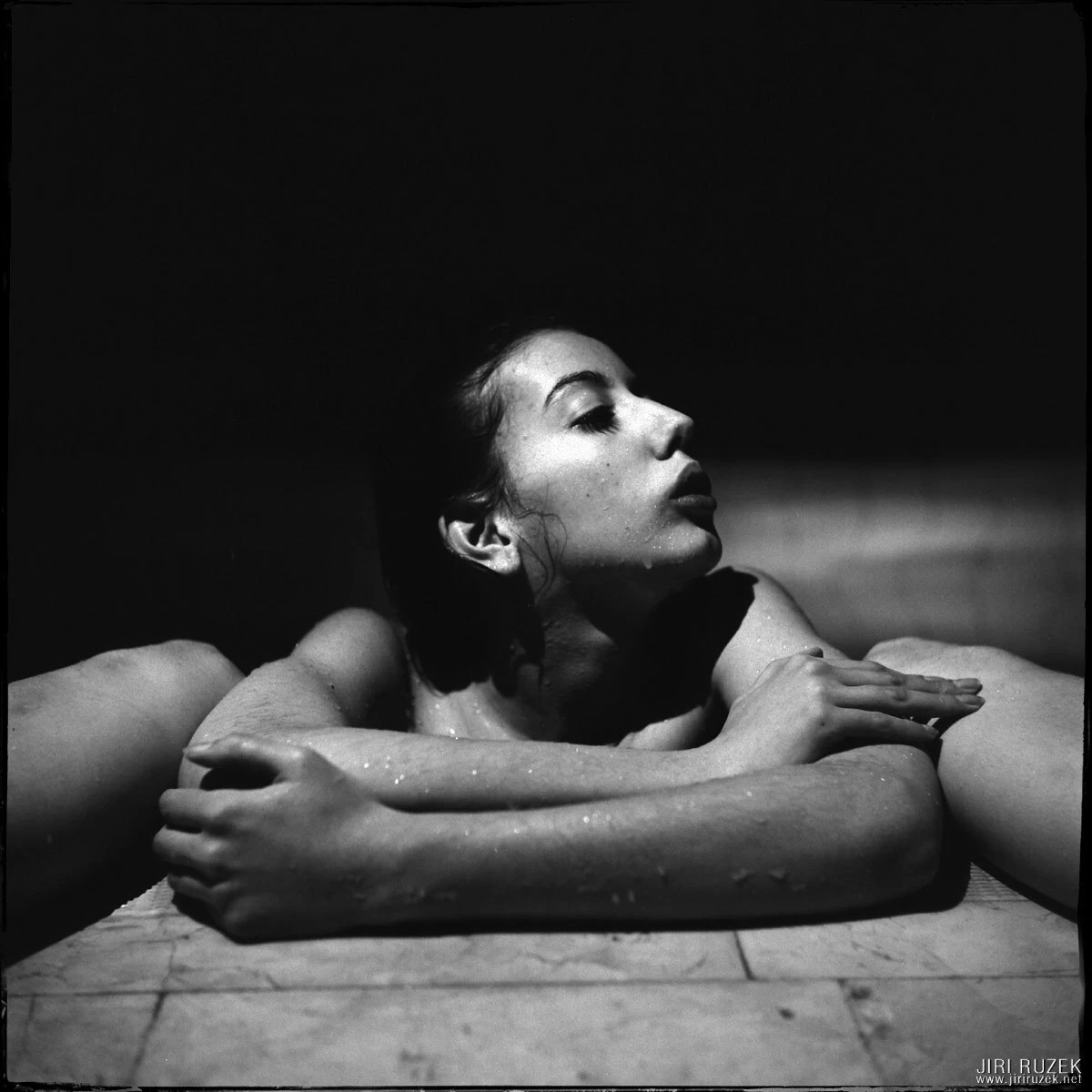
In 2008, for a laugh, I bought a Holga camera. For those who don’t know it, it is a so-called Toy Camera. The Holga is a plastic medium-format (6×6 cm) camera made in China. It is of very poor quality; its bugbears include a badly light-sealed body and thus stray light getting onto the film, strong vignetting, not very good rendering by the lens in the middle of the frame and not at all good rendering outside the centre, etc., etc… The Holga simply offers so many flaws that thanks to them it became popular, even cult, all over the world, and photographers began to interpret its poor quality as an inimitable atmosphere.
I shot a few films on the Holga then, but at the thought of the large enlargements I make, I soon put it aside and devoted myself further exclusively to digital photography.
In mid-2011 I began to shoot regularly on film. I acquired a large collection of various old cameras of various quality and looked among them for my favourite. At present it is the Yashica twin-lens reflex. It has very good optics and at the same time leaves in the photographs an imprint of indescribable atmosphere.
Film or digital?
Originally I thought it would be a very short article; it’s not working out. There are many reasons.
One of the current trends is to say that with digital photography you have no chance of getting your work into galleries and museums. At the opposite extreme you’ll hear that it doesn’t matter what and how you shoot, but if you develop it in platinum or another historical technique, someone will buy it (paradoxically, many of today’s platinum prints were taken with a digital camera). To a certain degree that is true and galleries often support this view, but what about David LaChapelle, for example? His works, exhibited in prestigious galleries around the world, are the result of a digital process. I regard digital photography, and LaChapelle is proof of it, as a new and equal medium, and all talk that it isn’t so strikes me as the grumbling of old-timers. After all, photography itself, analogue of course, long struggled with whether it belongs among the fine arts; its taking lasts just a moment, practically anyone can manage it, and it merely documents, copies the image in front of the lens. It is only a matter of time before galleries begin to approach photography en masse without differentiating the way it was taken.
Let’s not forget the often mediocre photographers who consider themselves „more of an artist“ than anyone else using digital equipment merely because they shoot on film. This opinion is especially laughable; in music one would find comparisons like classical/electric guitar or piano/modern keyboard instruments.
I shoot on film too, but not only on film, so why?
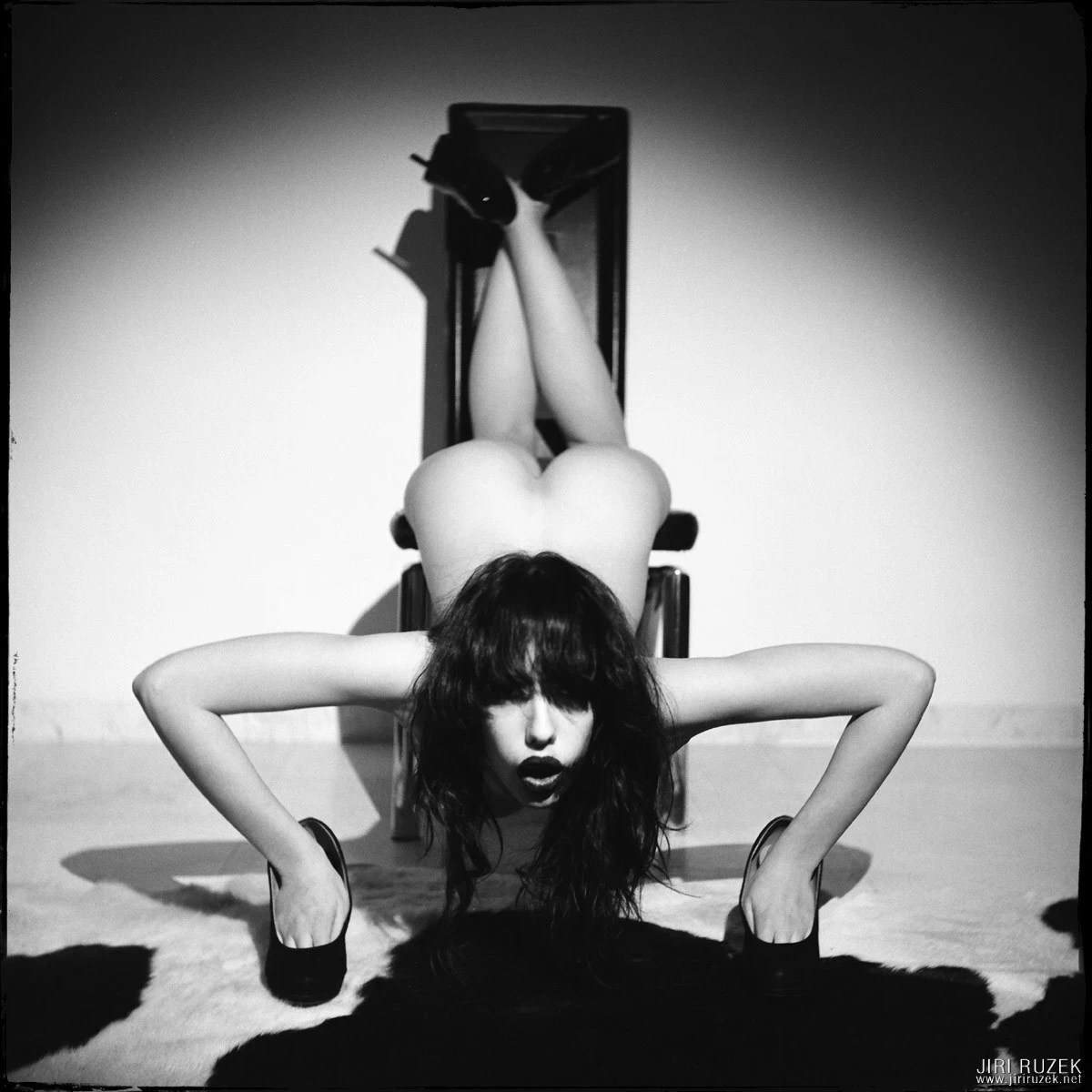
Most photographs I take digitally. When I fall in love with a scene, I also shoot it on film and wait for the result so that I can compare the difference. Waiting for the result means about half an hour until you develop the film and look for the first time at what is on it. It is quite a different feeling from the instant look at the display of a digital SLR, I recommend it. So when I have a film and a digital photograph to compare, I decide, mostly at first glance, which of them to use. Some shots from film have a beautifully soft atmosphere that is nowhere near as pronounced in a digital photograph, and some scenes, conversely, suit digital austere perfection. So I can’t say that I always test a scene with digital and after fine-tuning shoot it on film; I always decide only by looking at the result. What follows from this?
There is no versus
Analogue and digital photography are for me two different media, just as one picture needs oil and another stands out better drawn in pencil. Both these media bring me different results and different feelings.
For me there is no versus… and how about you?