This page was translated by AI. Please be forgiving of any mistakes.
‹ Photo Notes · 28 září, 2015
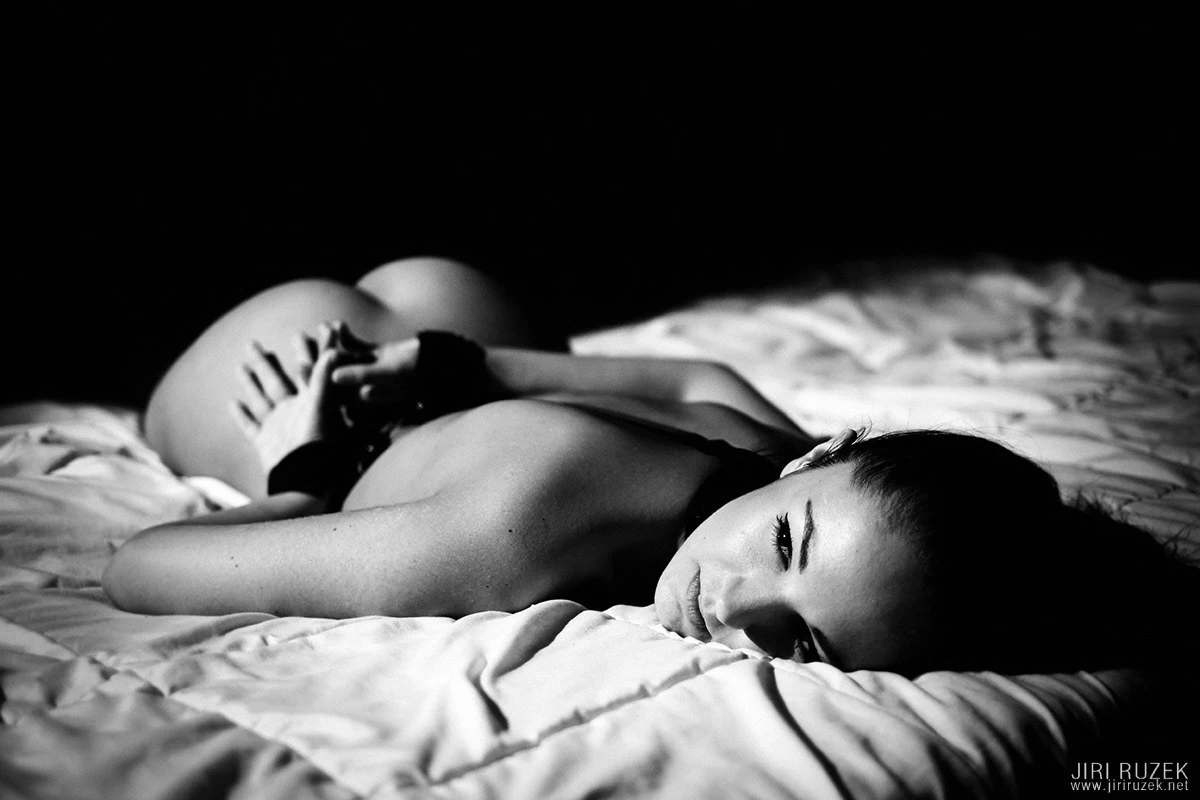
Modern cameras can do most of the photographer’s work: they focus perfectly, meter and set themselves so that the result is the best possible photograph. I hold the view that some things are better kept under total control at all times.
I’m not talking about autofocus. A fast enough and above all accurate autofocus is a gift from God, especially for a person with glasses. I remember the time when I shot exclusively with a Zenit, a Praktica and other fully manual cameras and the first camera with autofocus came into my hands. A bit smugly I challenged it to a duel with my manual focusing skills, and of course I lost on all fronts. No rejects, just perfectly sharp photos. And I remember it to this day whenever I shoot with a film Yashica from the sixties or with manual lenses on a modern body.
Setting the exposure values is another matter. Users of compact cameras and cameras in mobile phones shoot almost without exception in fully automatic mode; all decisions are left to the camera. Among experienced photographers the aperture priority mode is very popular. On cameras it is marked with the letter A for aperture. It means the photographer’s control over the aperture, while the shutter speed (and, for example on my camera, the ISO) is calculated automatically so that the result is the best-exposed photograph possible.
I like to use aperture priority on holiday, when wandering through a city or nature, and also at various parties and the like. But when I want to shoot „my genre“, I always switch to manual mode (M). Why?
I see it at my workshops. I look at someone’s display and say: „you have it under(over)exposed„. How can almost perfect modern technology make mistakes? It makes no mistakes, but it doesn’t know what you are photographing, what your intention is. In the case of my scenes the camera’s exposure meter often sees a very dark scene from which the model’s light body emerges. The meter automatically wants to correct/solve that terrible unphotographable darkness and brightens everything. Unfortunately including the model. In the opposite case the model stands in front of a lit white wall or even backlit in front of a window, and this time, for a change, she is darker than the background. The meter doesn’t like the bright background and darkens the photo – again including the model.
Because I want exact control over how light or dark the model’s skin will be, I expose manually. No, it doesn’t slow things down. The light conditions of my scenes mostly don’t change drastically, and I see in the viewfinder in advance how light or dark the photo is (an advantage of electronic viewfinders). On top of that I constantly use another helper, the histogram, which shows me the same in a simple graph. In the bottom left corner of the viewfinder it takes up only a little space.
Many will object that the solution is spot metering. My experience is that even spot metering sets values according to its mood, not mine, and can also make a mistake. Manual is exact.
Another trap of aperture priority is the possibility that the camera automatically sets too long a shutter speed, the photographer overlooks it and the photos will be blurred.
On holiday or at a party I want to capture the overall atmosphere of the scene, but in my photos the model is what matters.
So that’s about it… have a nice evening 🙂