This page was translated by AI. Please be forgiving of any mistakes.
‹ Photo Notes · 26 října, 2015
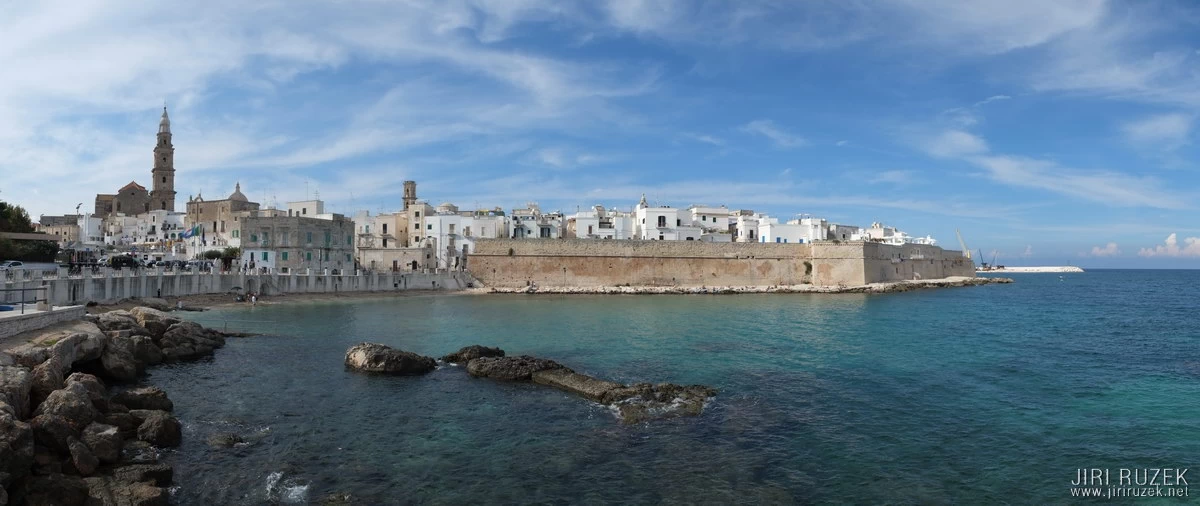
I promised to share the experiences and impressions from my recent visit to the magical southern Italian region of Puglia (Apulia in English).
Italy is not just the beautiful but expensive and tourist-spiced Tuscany and the holy trinity of cities Rome – Florence – Venice. The charm of this country lies precisely in its variety, and after two spring working visits (Milan and Pisa) we set off this time to rest right after the season in quieter Apulia, forming the heel of that Italian boot.
PHOTOGRAPHIC NOTE
I combined the pleasant with the useful and took three zoom lenses with me for a comparison test. In a separate article you’ll find out which of them won with me.
All photographs published here are without any edits, as they came out of the Fujifilm X-E1 (shot in JPG in aperture priority mode). EXIF data is preserved in the photographs, basic details are under the photographs.
 XF18-135mmF3.5-5.6R LM OIS WR; ISO 200, f/4.5, 1/250 s
Everywhere you can read that Apulia is among the poorest parts of Italy. Don’t imagine anything like the borderlands of eastern Slovakia and western Ukraine by that; it’s only a comparison with other Italian regions. It is a fertile land, slightly smaller in area than Moravia. It is washed by the Adriatic in the east and the Ionian Sea in the west, and both seas are in most places transparently clean and full of life.
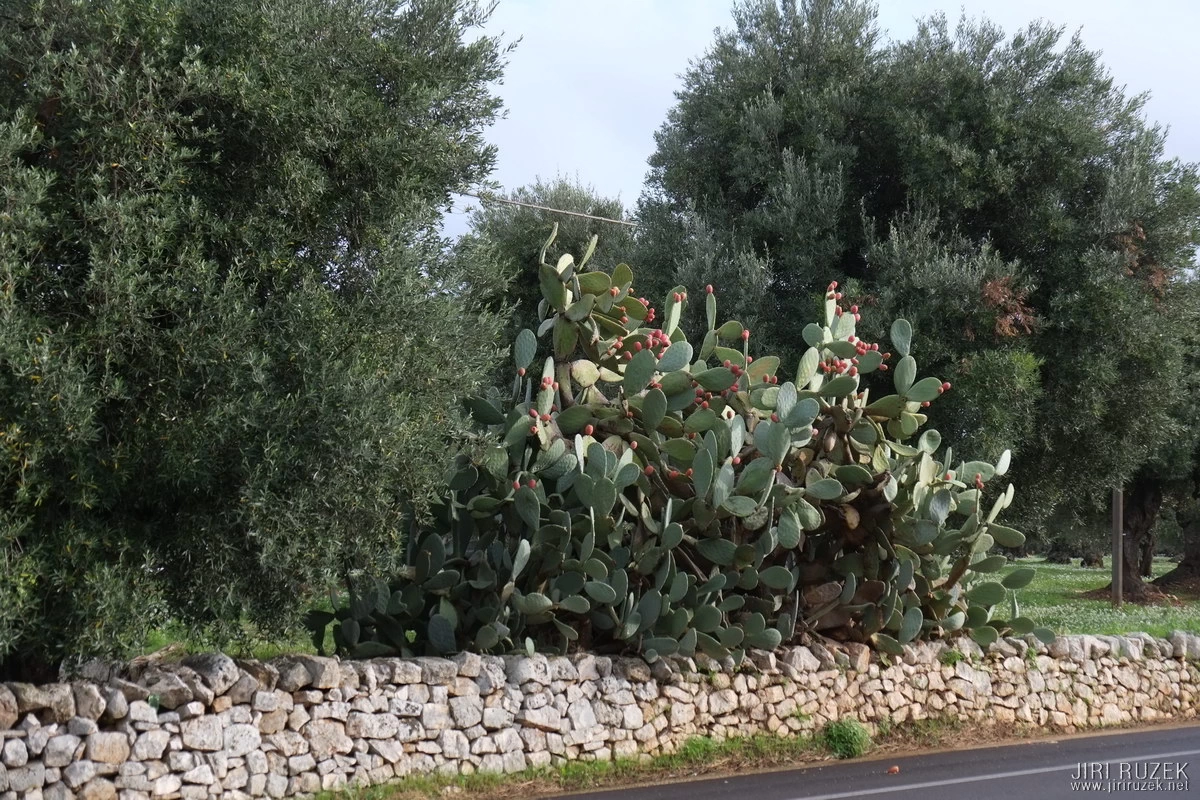
Among the most important branches here are olive growing and olive oil production (about 40% of the whole of Italy’s output), winegrowing and fishing. Thousands and thousands of young and ancient trees in olive groves, fenced by low stone walls, easily carry your imagination into biblical times. I mustn’t forget the wild prickly pears several metres tall, which you meet at every step too, and which, together with the smell of the sea, you feel as soon as you land at Bari airport.
 XF18-55mmF2.8-4 R LM OIS; ISO 200, f/4, 1/640 s
Apulia isn’t very touristy, but even here you can still divide it into busier and calmer places. Among the more touristy parts belong mainly the beaches of the Gargano peninsula, that’s the spur on the Italian boot, about 100 km north of Bari. We, on the contrary, went about 50 km south, to the quiet seaside town of Monopoli. We soon found out it was a brilliant choice.
TRANSPORT
We flew with WizzAir to Bari; the trip took about an hour and forty minutes. I recommend ordering tickets well in advance or, on the contrary, at the last moment. Prices range roughly from 500 to 2,000 CZK for a one-way ticket. With such short flights, though, the ticket is usually the smallest cost (you have to live and eat somewhere).
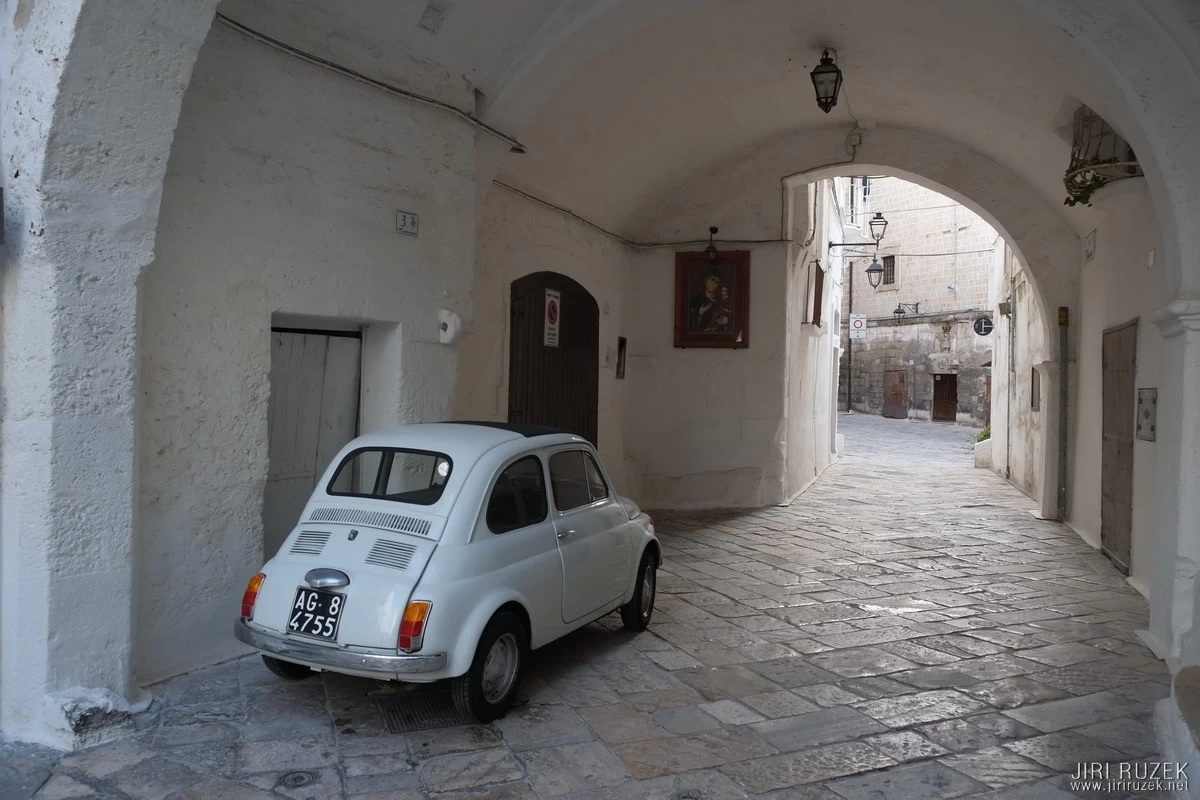
Through EasyTerra we rented a Fiat 500 for a lovely price of about €13 a day. At the airport there are about seven counters of various companies (all represented on EasyTerra); you fill in the remaining documents there and get the car keys… Or not. Two days before departure we noticed that the conditions state the need to guarantee with a credit card (not debit). Of course we have no credit card, the system rejected the debit card and we didn’t get the car. But we had somehow counted on that and, laughing, strode off to the train.
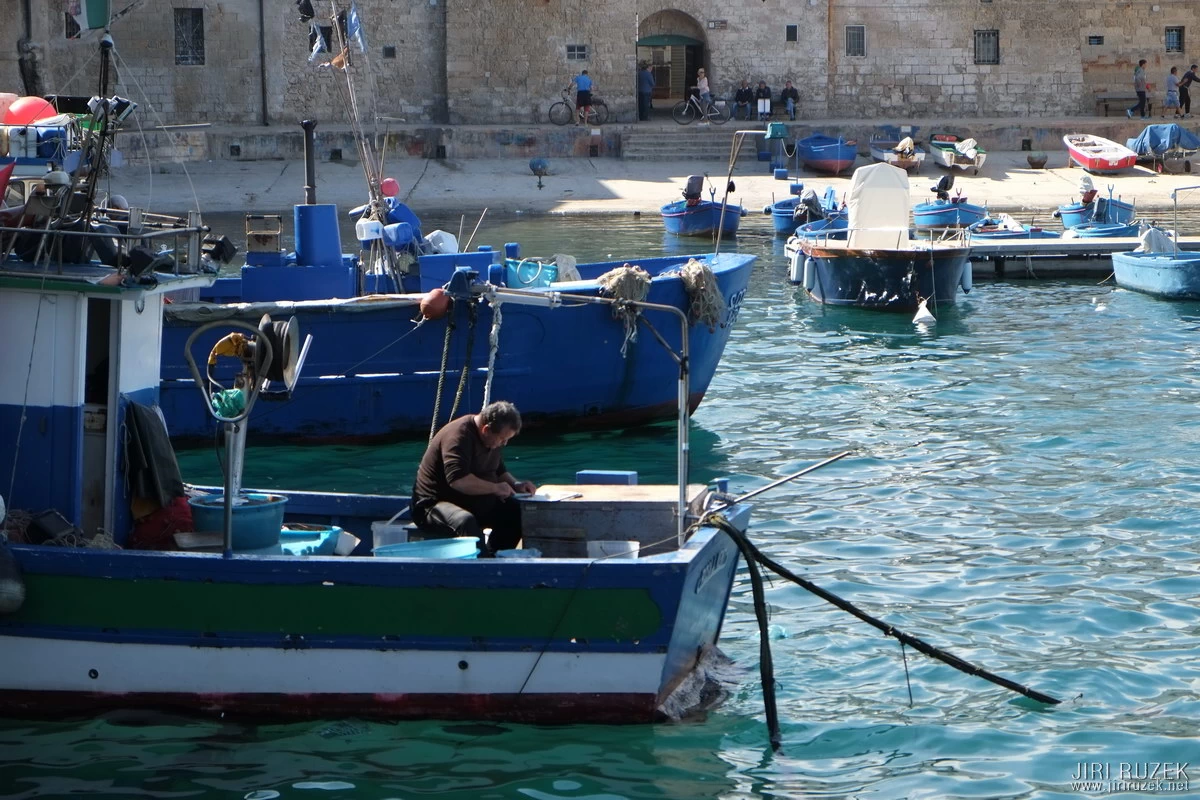
 XF18-55mmF2.8-4 R LM OIS; ISO 400, f/4, 1/125 s
The train from the airport to Bari costs €5 and the trip takes about twenty minutes. From there we continued for €3.20 another half hour to Monopoli.
At the stations there are very clear ticket machines (including English), and you can pay with banknotes, coins or card. Sometimes the machine wouldn’t take banknotes and sometimes it didn’t like the particular banknote we offered it. Somewhere near the machine you’ll find a device for validating the ticket – the slot for the ticket is wide, push it into the left part, otherwise it won’t be validated. A ticket is valid for 6 hours, but it states exactly from where to where you may travel.
The best transport hub for trips around Apulia is Bari, but from Monopoli too you can easily set off around the area.
ACCOMMODATION
In Monopoli we had a whole private apartment about 10 metres from the sea, the same distance from the 16th-century castle (Castello Carlo V) and about 30 metres from the old harbour (Porto Vecchio). We booked through the ever more popular network Airbnb. It is distinguished by connecting, instead of hotels, people who look for or offer a place to sleep. Lately we use it more and more.
For the last night in Bari we chose a B&B room on Booking.
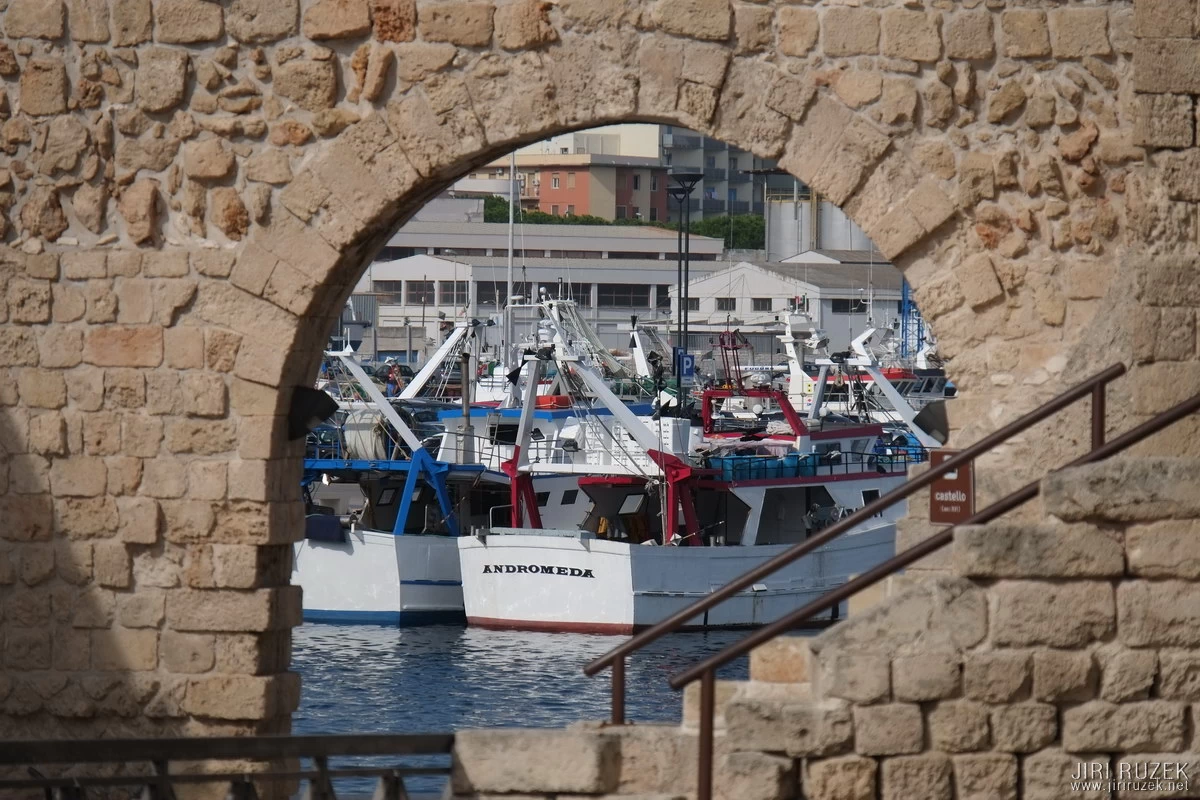 XF18-135mmF3.5-5.6R LM OIS WR; ISO 200, f/5.6, 1/1500 s
A MIX OF CULTURES
The position of Italy’s easternmost region destined Apulia to become an important maritime and cultural crossroads. To this day this role is fulfilled mainly by the ports in Bari and Brindisi. They connect Italy with Greece, Turkey, Cyprus, Israel, Albania, Montenegro, Croatia etc.
Over thousands of years the influences of many eastern and western cultures have mixed here. You notice it in architecture, art, gastronomy, but also in people’s faces (e.g. the quite frequent Greek noses).
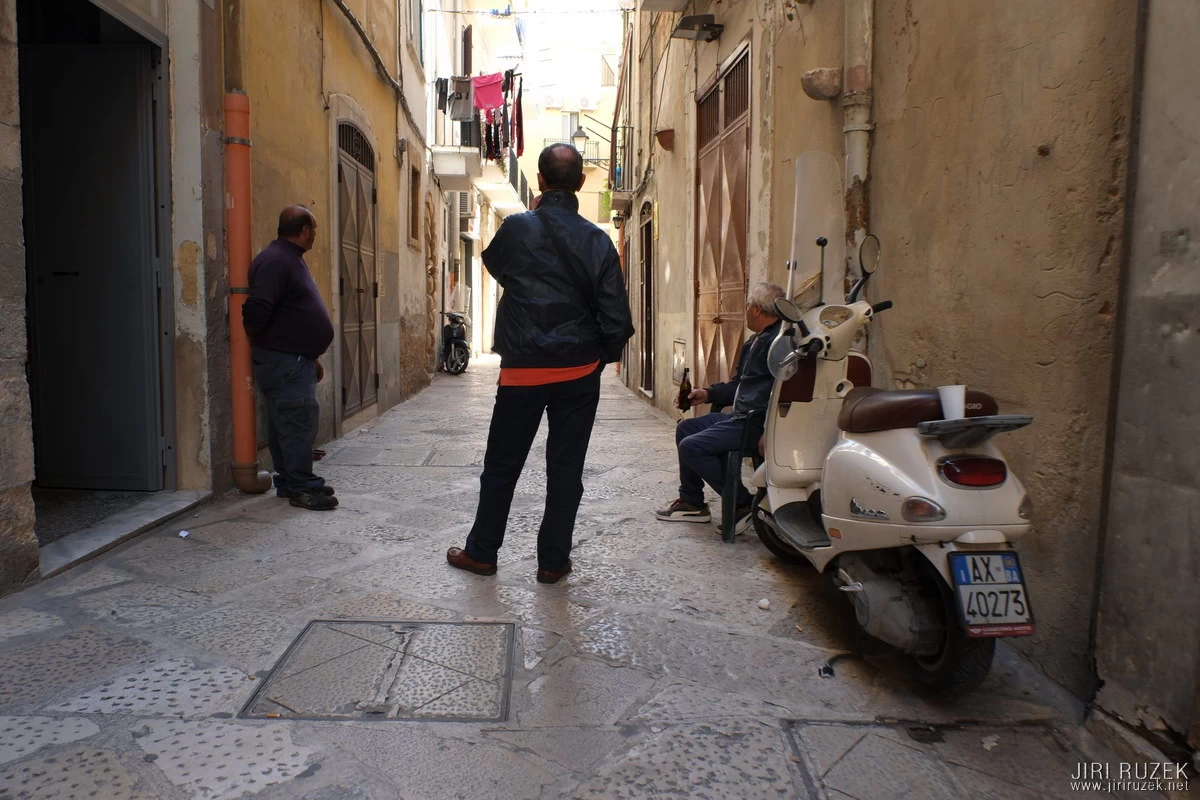 XF16-55mmF2.8 R LM WR; ISO 640, f/5.6, 1/125 s
Most people here are of smaller stature – men about 170 centimetres and less (not all, but markedly many). The women are typically southern-beautiful, and it didn’t escape the photographer’s eye that they’re a bit round in the bottom (Lída remarked that Italian models never quite suited her precisely across the hips).
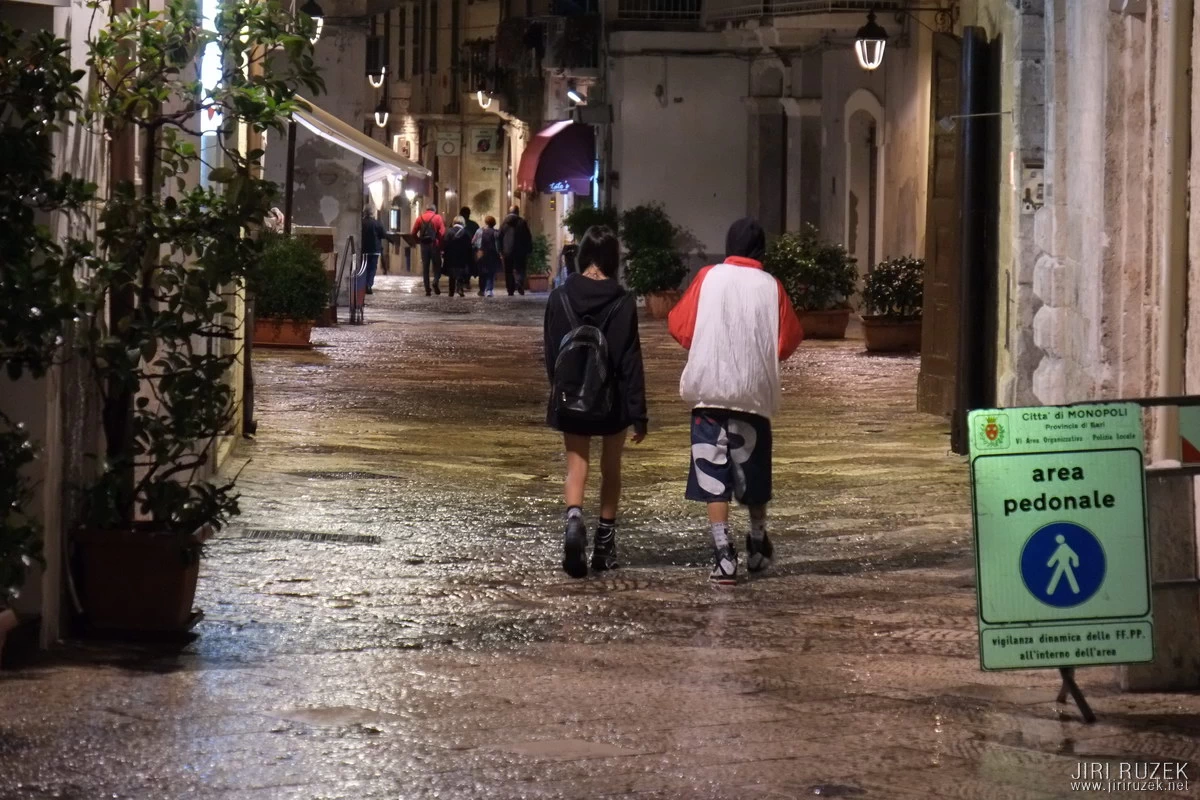 XF18-135mmF3.5-5.6R LM OIS WR; ISO 6400, f/5.3, 1/27 s
WEATHER
Is it enough to know that in January it’s between 7 and 15 degrees Celsius here? On the day of arrival it was 28 and several dozen people were bathing in the sea (early October). Then it rained and cooled to 17 – 20, gradually rising again towards 25. You can probably imagine the shock on return, when at Ruzyně it was 1 degree above zero.
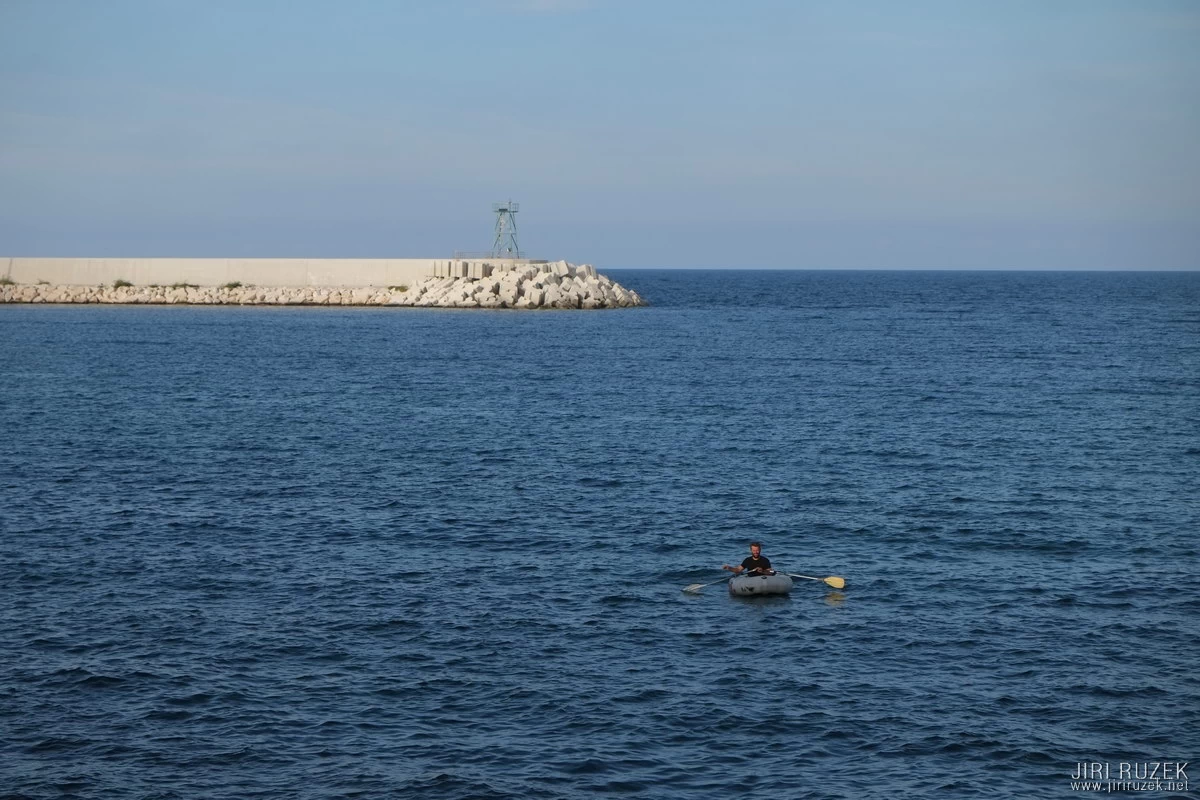 XF18-55mmF2.8-4 R LM OIS; ISO 200, f/4, 1/1400 s
SIESTA
Italians, especially those in the north, sometimes like to scoff when you talk about the siesta. Here in the south, though, be prepared that the siesta is observed. Around one o’clock after noon the towns fall silent, and until at least a quarter past three it is quiet everywhere and, with exceptions, closed everywhere. Better to count on it in advance. Even Sunday is sacred; do your supermarket shopping already on Saturday.
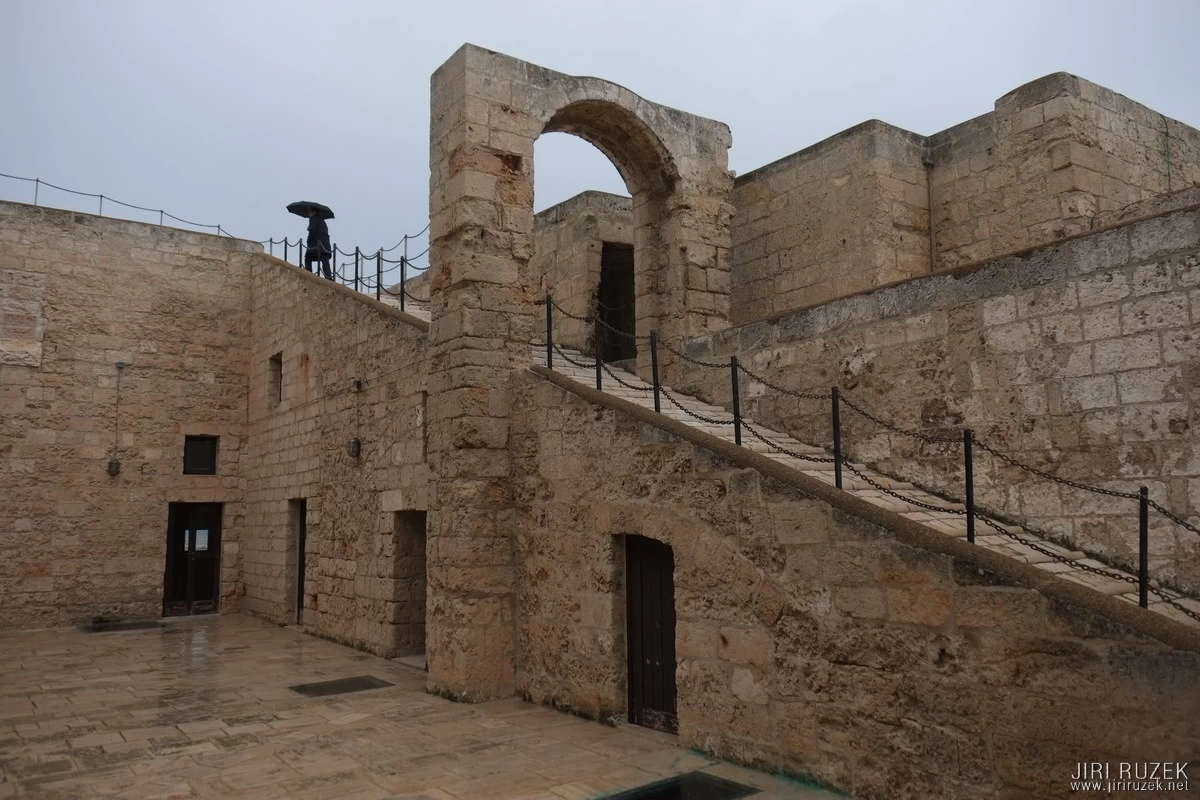 XF18-135mmF3.5-5.6R LM OIS WR; ISO 200, f/3.5, 1/1500 s
FOOD AND WINE
In Apulian cuisine you’ll find lots of fish and other gifts of the sea, plenty of vegetables and of course olives and olive oil. Typical local pasta is orecchiette („little ears“). Besides excellent pizza, puccia is very popular here. Depending on the area it can differ greatly, and to me it was reminiscent of my favourite focaccia. Conversely, the focaccia I ordered here reminded me a bit of a peculiar pizza. Interesting are arancini, fried rice balls in breadcrumbs with various fillings. Tiella alla barese is the local variant of paella made from potatoes, rice and mussels. On menus it often appears under the name Patate, riso e cozze. If you prefer classic paella, you have the option; in Apulia it is also quite popular.
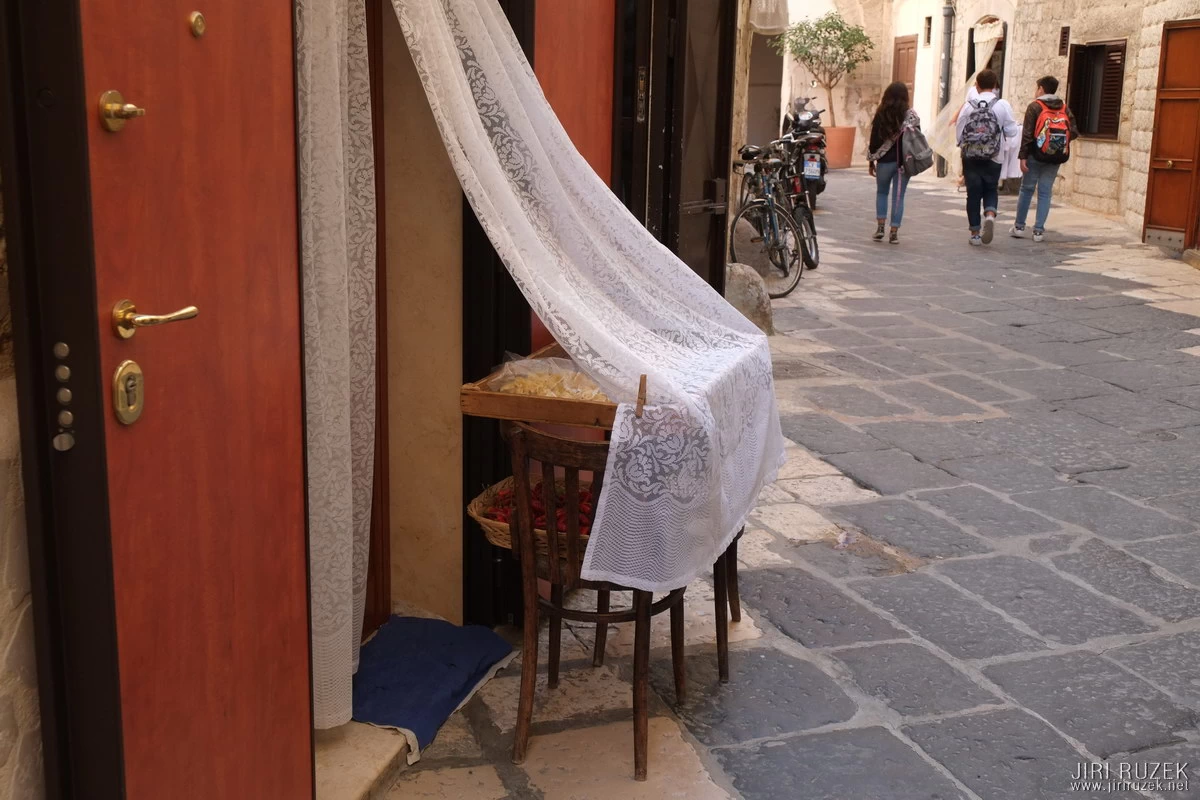 XF16-55mmF2.8 R LM WR; ISO 1250, f/5.6, 1/125 s
I recommend tasting two of the many local cheeses. The first is scamorza. It isn’t typically Apulian, it is a traditional cheese of the whole of southern Italy. In taste it came somewhere between mozzarella and Slovak parenica. Mild and very good. The most famous cheese of Apulia, though, is burrata. The name can be translated as „buttery“ (burro is butter) and I can’t think of a better way to describe it than to imagine mozzarella full of cream. With Apulian bread and olive oil, a perfect delicacy.
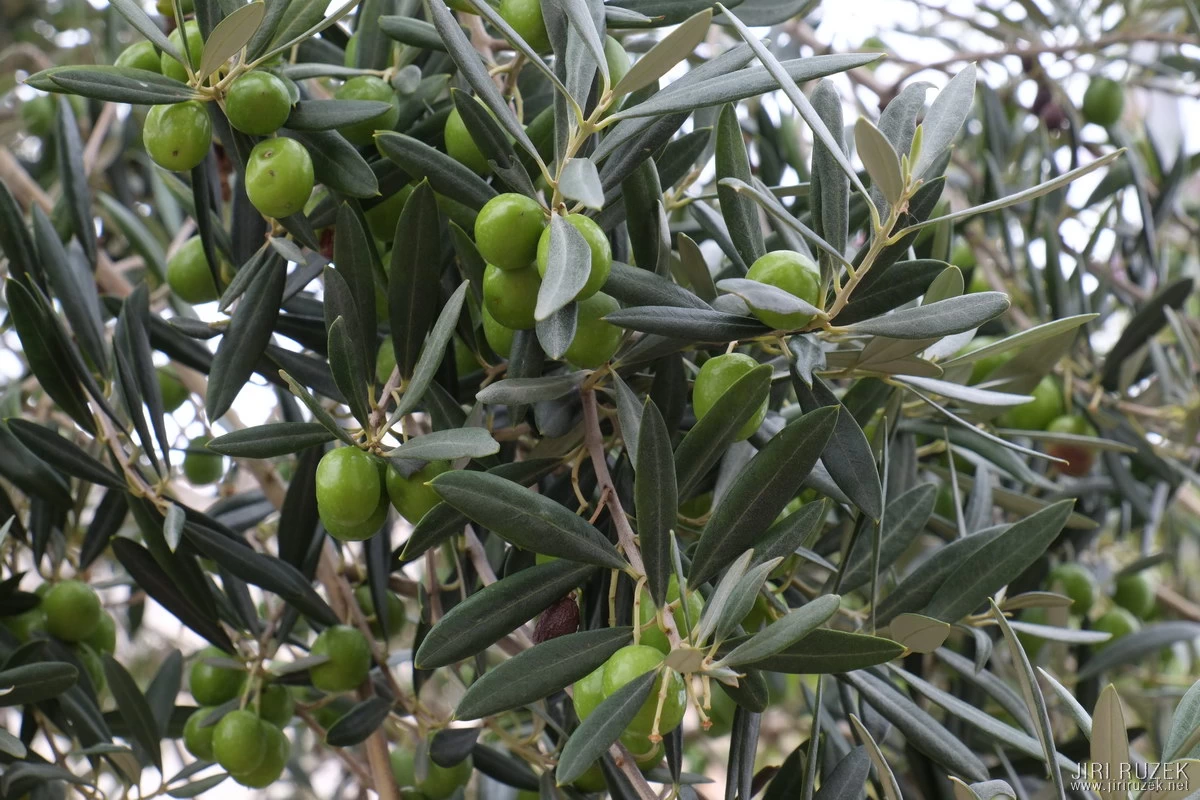 XF18-135mmF3.5-5.6R LM OIS WR; ISO 1250, f/11, 1/125 s
Caffè is mostly sold here in a caffè (in the north you typically buy an espresso at a bar). It tastes and costs the same. For the best ice cream (gelato) at a great price go to Caffè Roma in Monopoli, just a stone’s throw from the cathedral. Their tartufo is famous, but also try the unbeatable classic pistacchio, the excellent Perla del Sud, cherry and others.
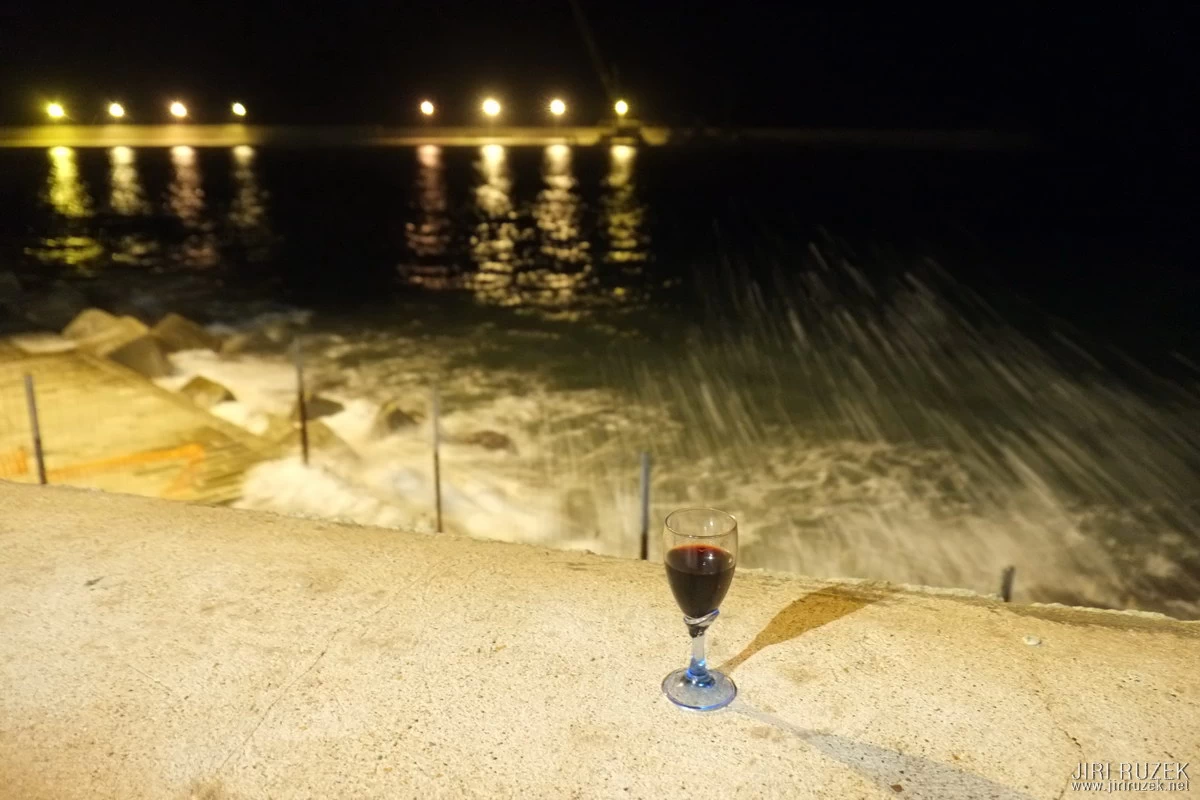 XF18-135mmF3.5-5.6R LM OIS WR; ISO 6400, f/3.5, 1/8 s
And finally the wine. It doesn’t matter what you drink here, all the wines are delicious and of good quality. The best known is the original noble variety Primitivo, then for example Negroamaro, Malvasia, Nero di Troia and others. I devoted myself to tasting conscientiously and persistently. We drank various varieties from various sources at various prices, we liked each one, and believe it or not, we fell most for the last two evenings for a drawn Primitivo priced at €1.70 a litre. Fortunately it can be bought at home too for reasonable money, only you’ll miss that sea air; it tastes better with it.
Enough general information, let’s travel. We visited 6 towns in all. That’s not many, Apulia offers far more interesting places, but we were limited by time and transport, and even so we saw quite a lot. I’ll start with those we went to on excursions. It was only by chance that we rode through them in alphabetical order.
ALBEROBELLO
You’ll find it in every guidebook and on the UNESCO list. That’s because of the trulli (singular trullo). They are ancient little houses of unmistakable look and unclear origin. There are about 1,500 of them here and they’re definitely worth seeing. We reached Alberobello from Monopoli by bus in about three quarters of an hour (€5 for the ticket). By car it would be only about 20 km, but the bus went through all the villages around.
You’ll find trulli elsewhere in Apulia too, but not in such numbers and condition. Unfortunately this town is famous and even after the season was full of tourists. The rest of the town didn’t interest us and we looked forward to „going home to Monopoli“.
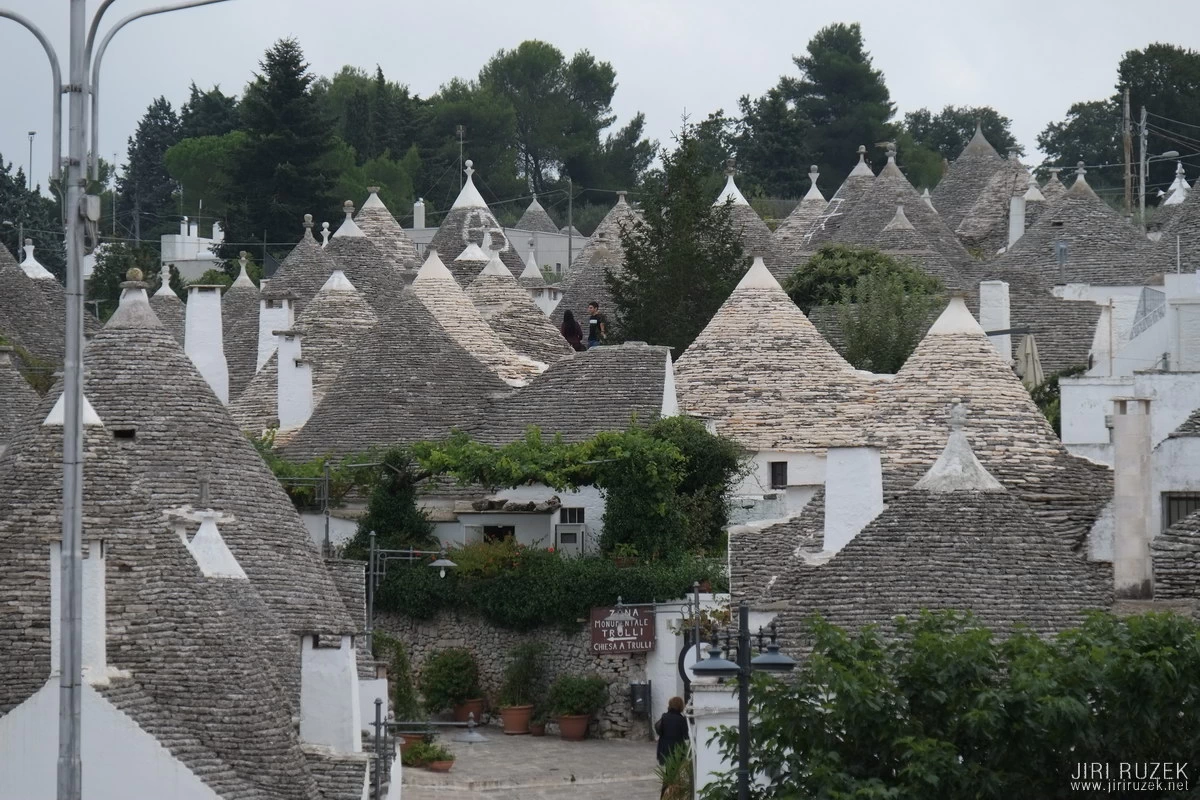 XF18-135mmF3.5-5.6R LM OIS WR; ISO 200, f/5.6, 1/300 s
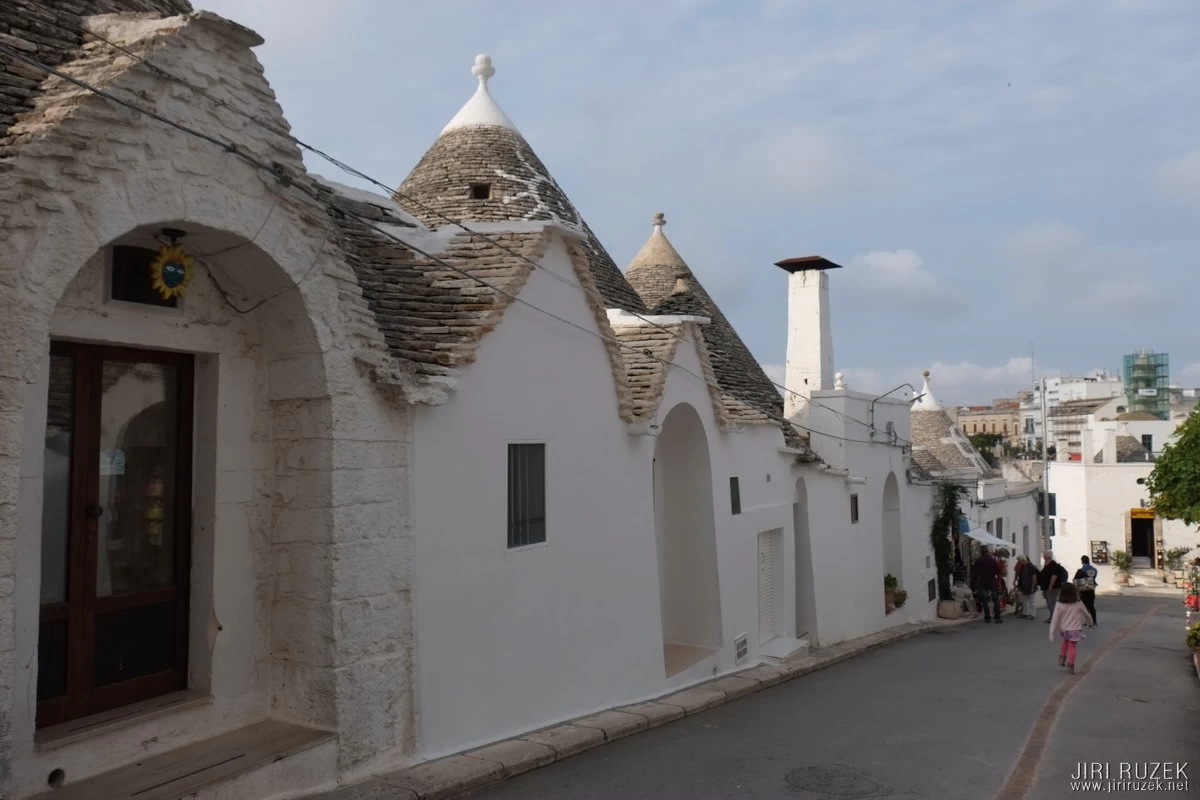 XF18-135mmF3.5-5.6R LM OIS WR; ISO 200, f/5.6, 1/300 s
BRINDISI
Brindisi is an important port city, which was also the reason for our visit. It didn’t welcome us very warmly. We arrived by train for a little over €5 right after lunch, just as the siesta started, and the streets were deserted, almost all shops and restaurants closed. On top of that it started raining heavily. Brindisi didn’t feel very touristy, but was quite multicultural, like most larger Italian cities. It seemed suited to fashion shopping. Bathed in sun and outside the siesta it might have its charm, but we left it after a couple of hours. Golden Monopoli.
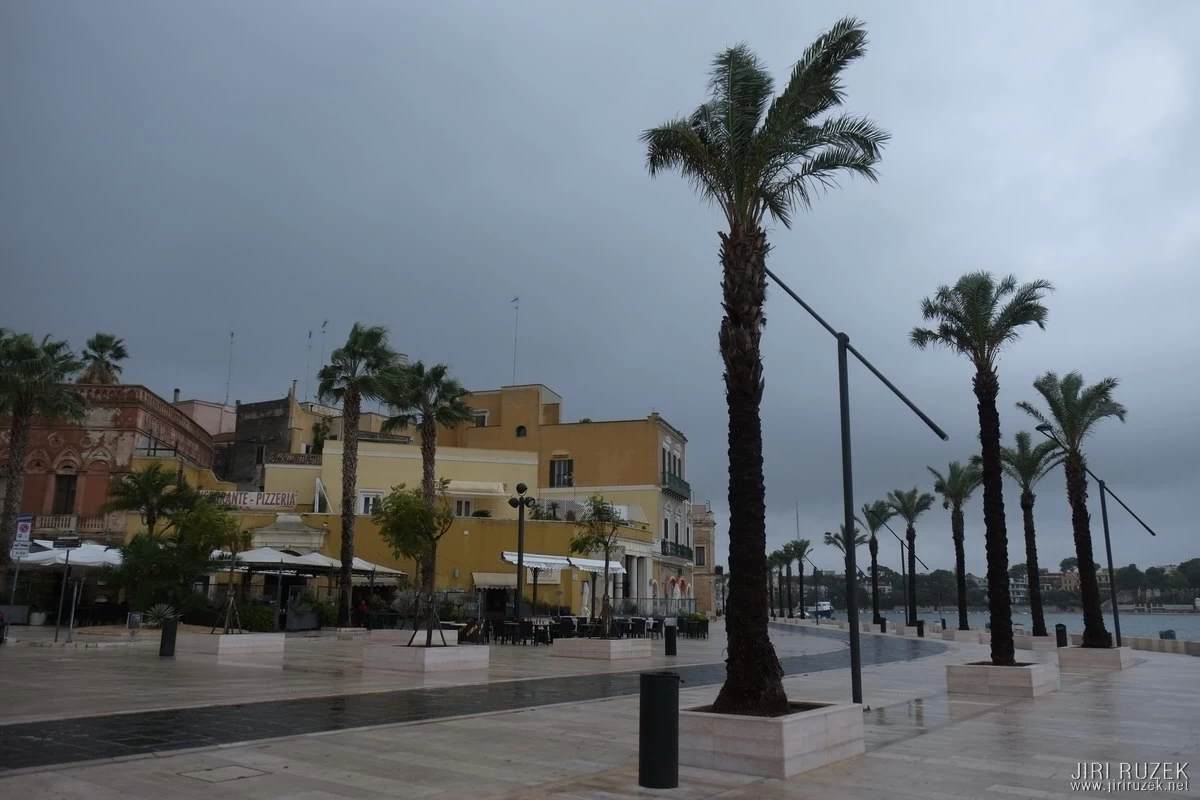 XF18-135mmF3.5-5.6R LM OIS WR; ISO 200, f/3.5, 1/200 s
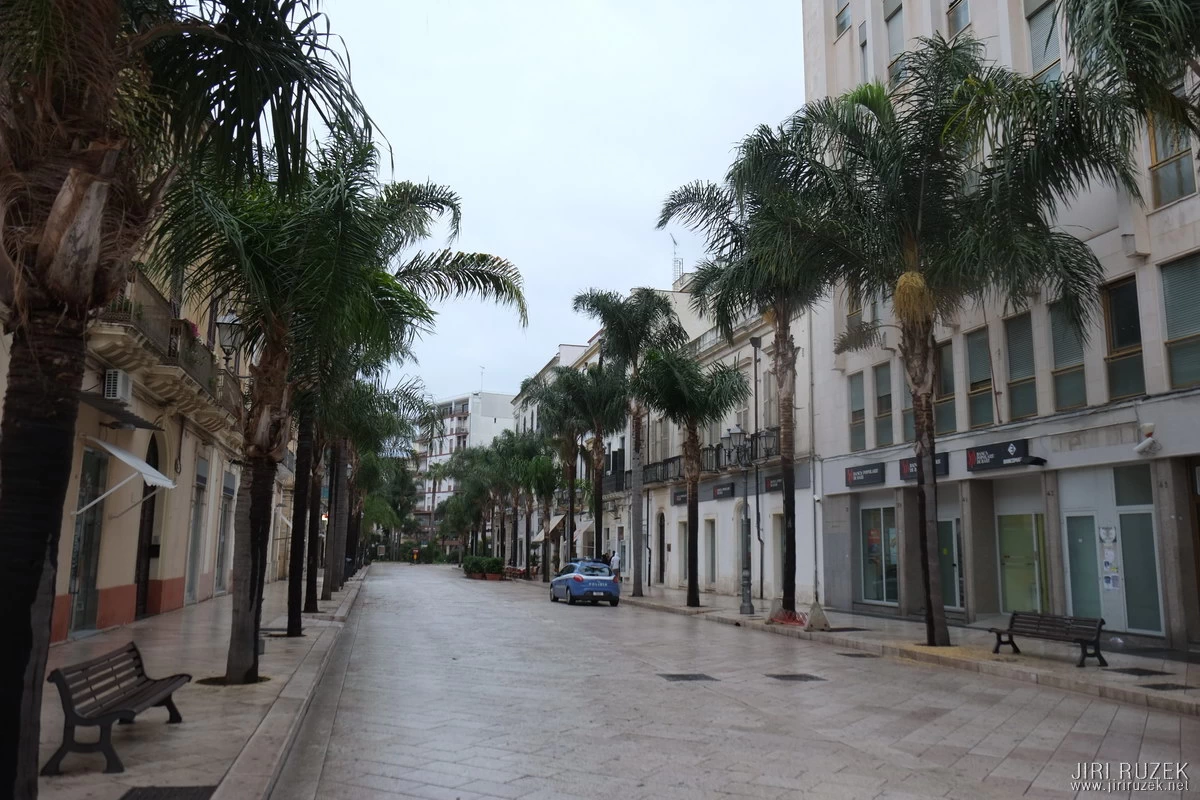 XF18-135mmF3.5-5.6R LM OIS WR; ISO 400, f/3.5, 1/125 s
OSTUNI
Italians call it la città bianca – the white city. Here I’d like to remark that almost all the towns here are white, nevertheless you shouldn’t skip a visit to Ostuni. Unfortunately, after the rain that swept through Apulia that day, Ostuni, and in the early evening at that, was a bit grey. And it isn’t nearly as boring as in my photos, it is beautiful and interesting, but in that near-twilight I didn’t enjoy shooting much.
The little town stands on a rock about 7 km from the sea, surrounded by endless olive groves. The train trip from Monopoli costs about €2.50 and takes 20 minutes. The historic part is one big maze, similar to Monopoli or Bari, only on a hill. Nothing but narrow streets and steps in all directions. This part of the town is touristy, but in the other parts of Ostuni it was very pleasantly alive „the Italian way“. We wouldn’t mind staying here, only it’s a pity the town isn’t right by the sea. And those hills too… In Monopoli we’re simply better off 🙂
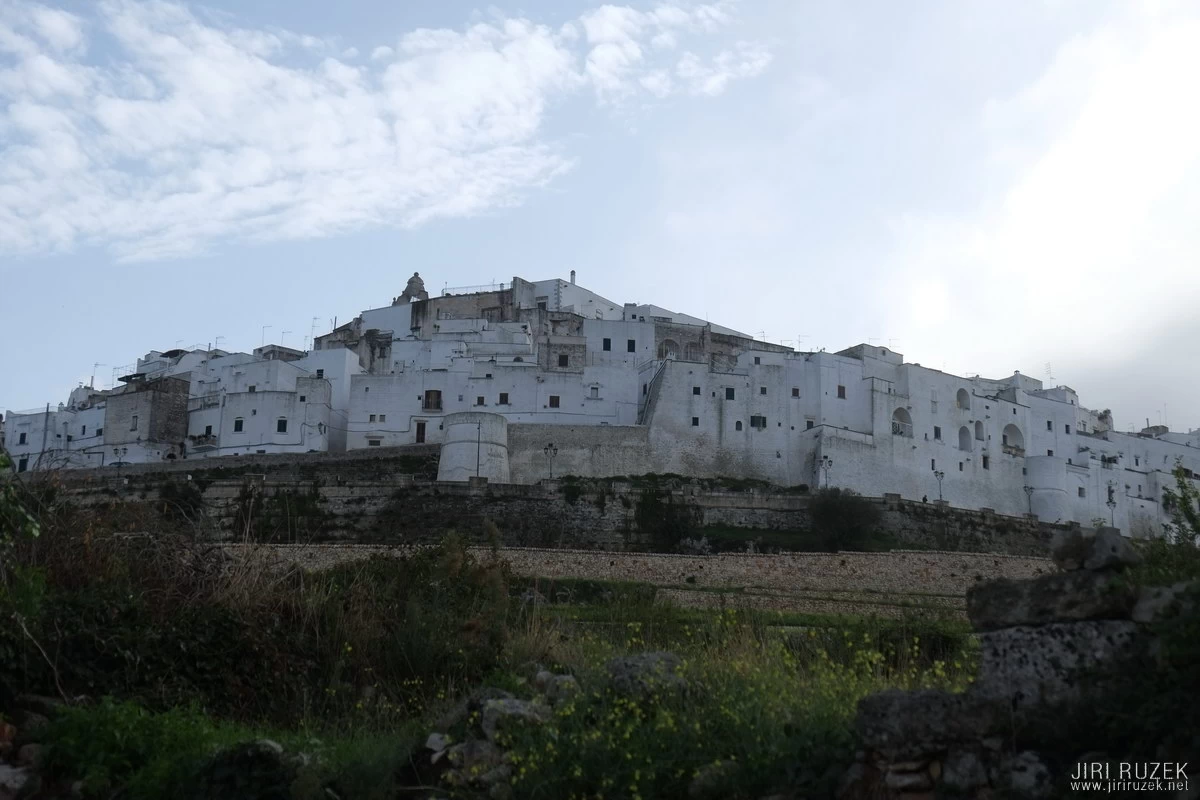 XF18-135mmF3.5-5.6R LM OIS WR; ISO 200, f/5, 1/1000 s
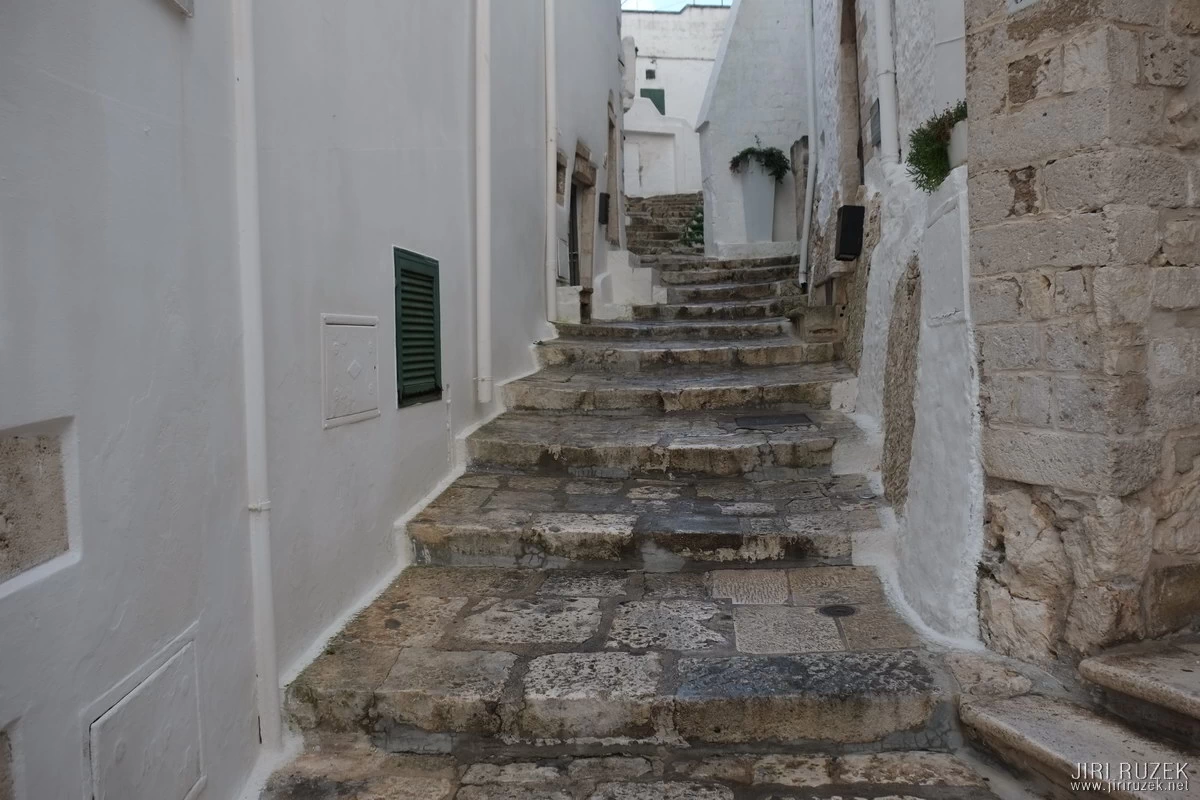 XF18-135mmF3.5-5.6R LM OIS WR; ISO 200, f/5, 1/150 s
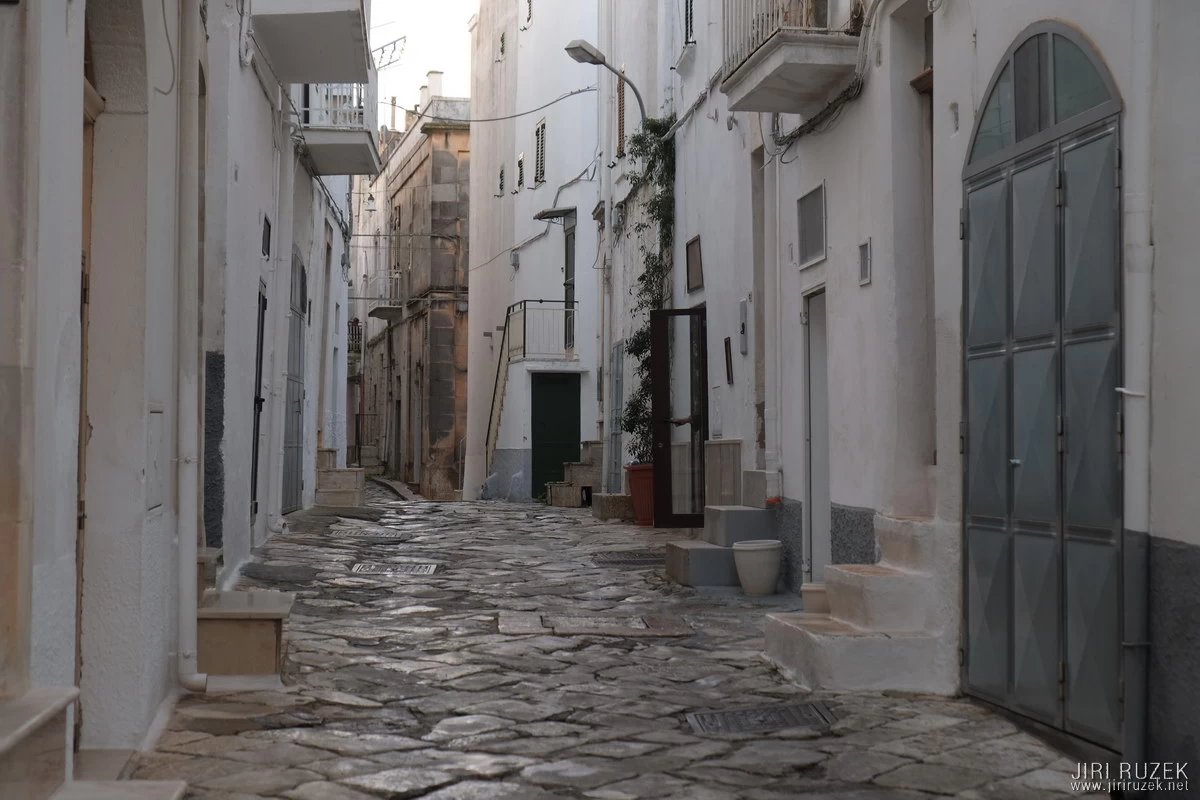 XF18-135mmF3.5-5.6R LM OIS WR; ISO 400, f/5, 1/125 s
POLIGNANO A MARE
Polignano (pronounced poliñáno) towers on a rock above the sea, which also gave it its name. It has a very curious, almost kitschily beautiful beach, set as if right in the town, but surrounded on the sides by rocky cliffs. There are lots of viewpoints, so you can photograph the beach toward the sea as well as toward the town. For more photos you just turn around and shoot endless panoramas of the town on the rock, into which the sea has carved huge caves. It is a beautiful little town, but in comparison with Monopoli it didn’t hold up for us. Here it makes sense either to stay and soak up the atmosphere, or on the contrary to visit it for two hours and continue on. The eight-minute train ride from Monopoli cost a little over €1 (like one coffee).
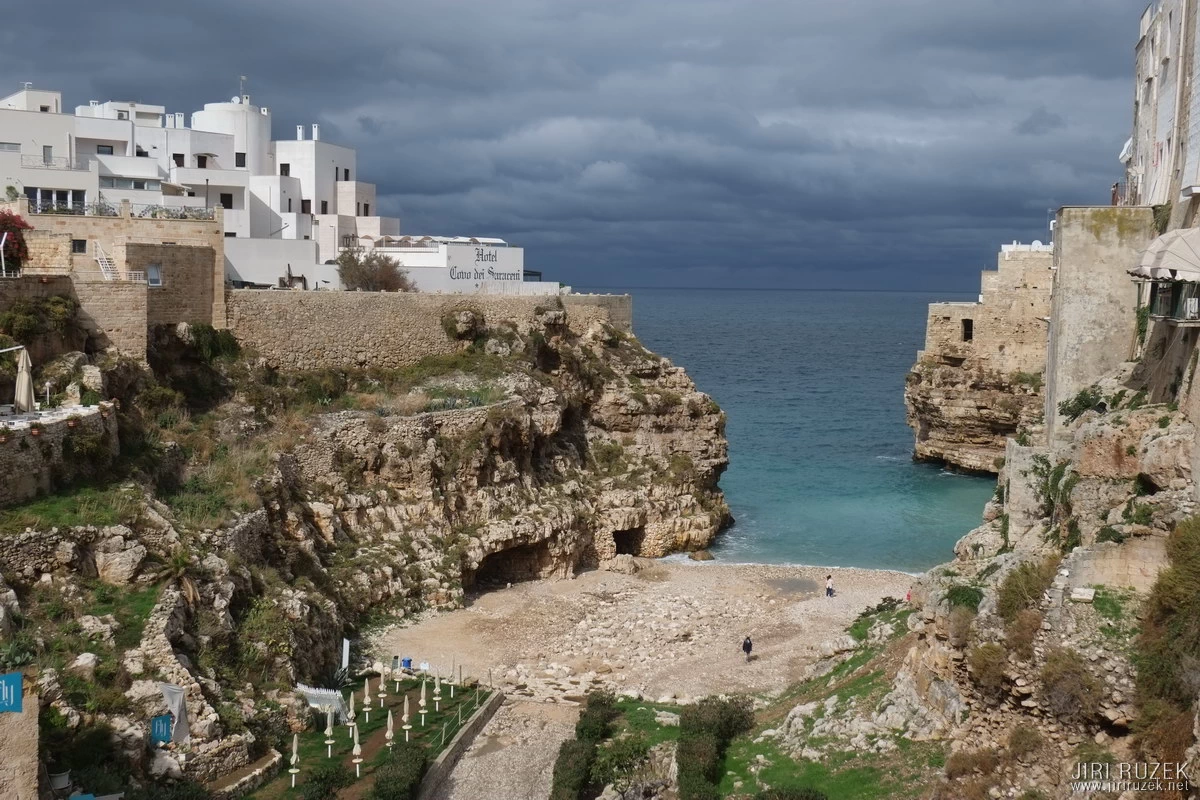 XF18-135mmF3.5-5.6R LM OIS WR; ISO 200, f/7.1, 1/950 s
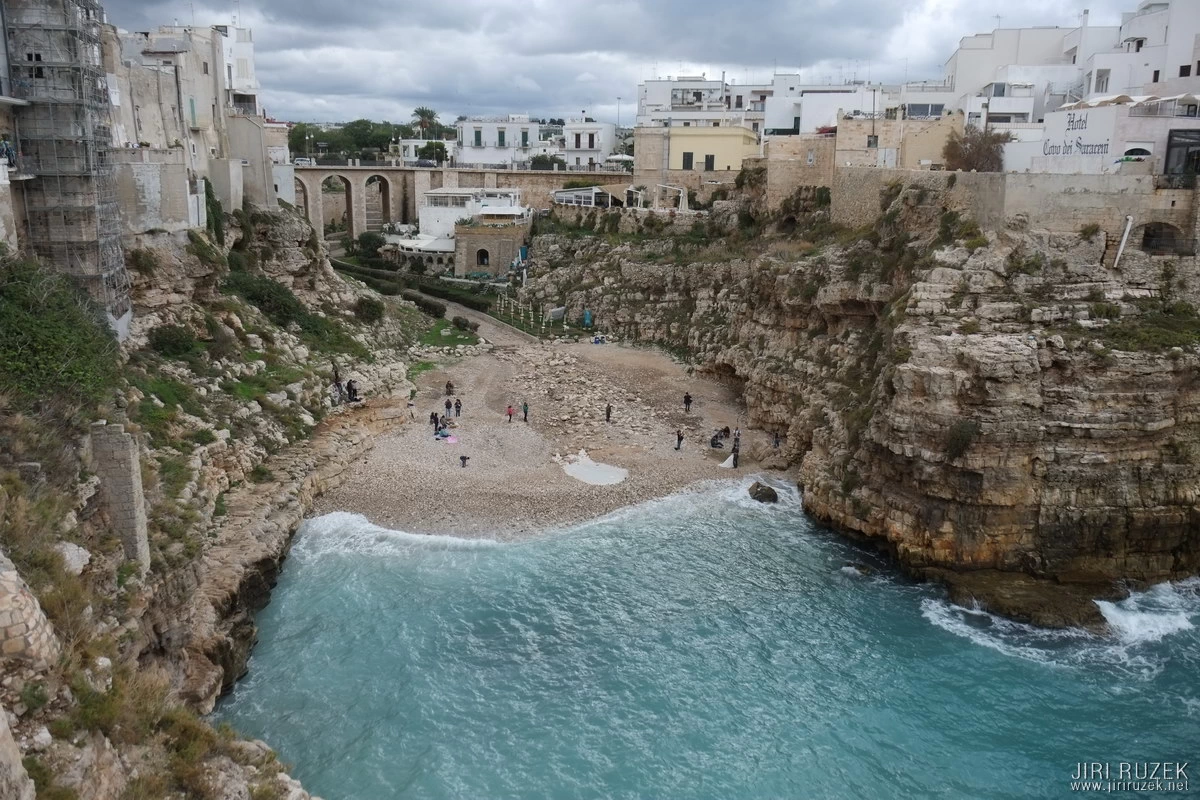 XF18-135mmF3.5-5.6R LM OIS WR; ISO 200, f/4, 1/850 s
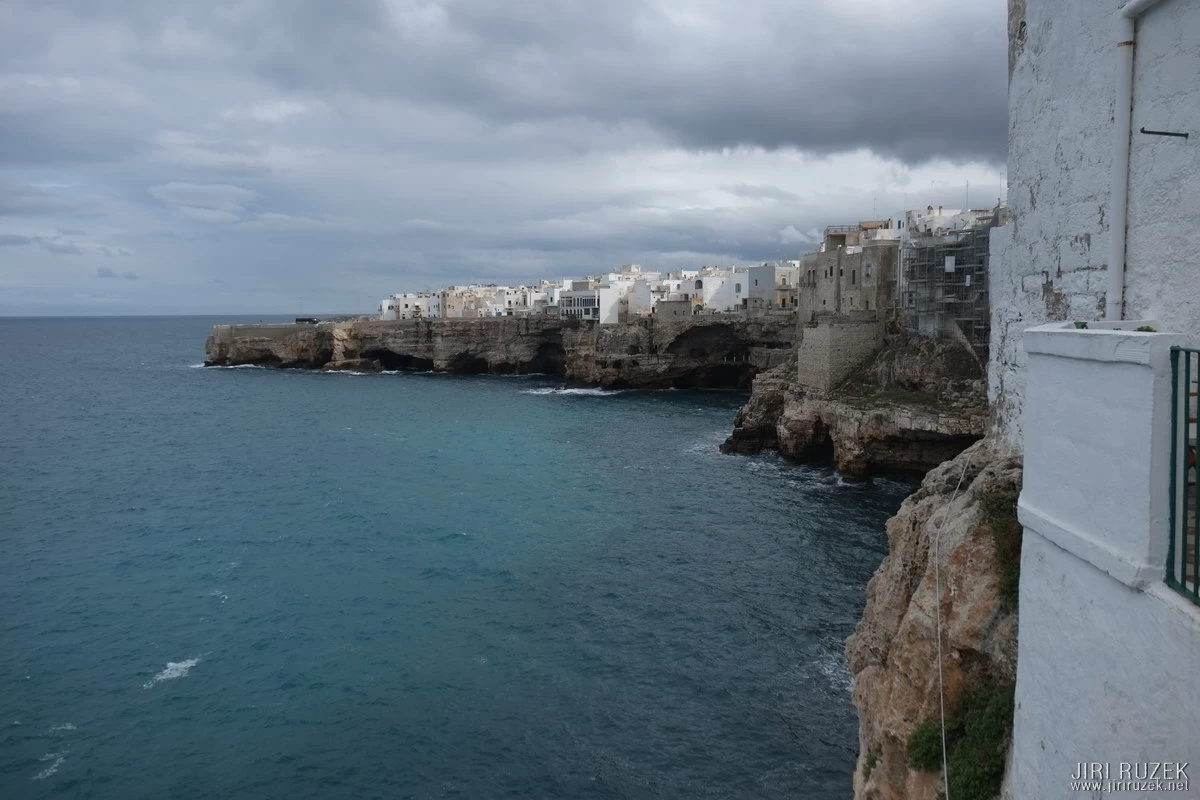 XF18-135mmF3.5-5.6R LM OIS WR; ISO 200, f/4, 1/1800 s
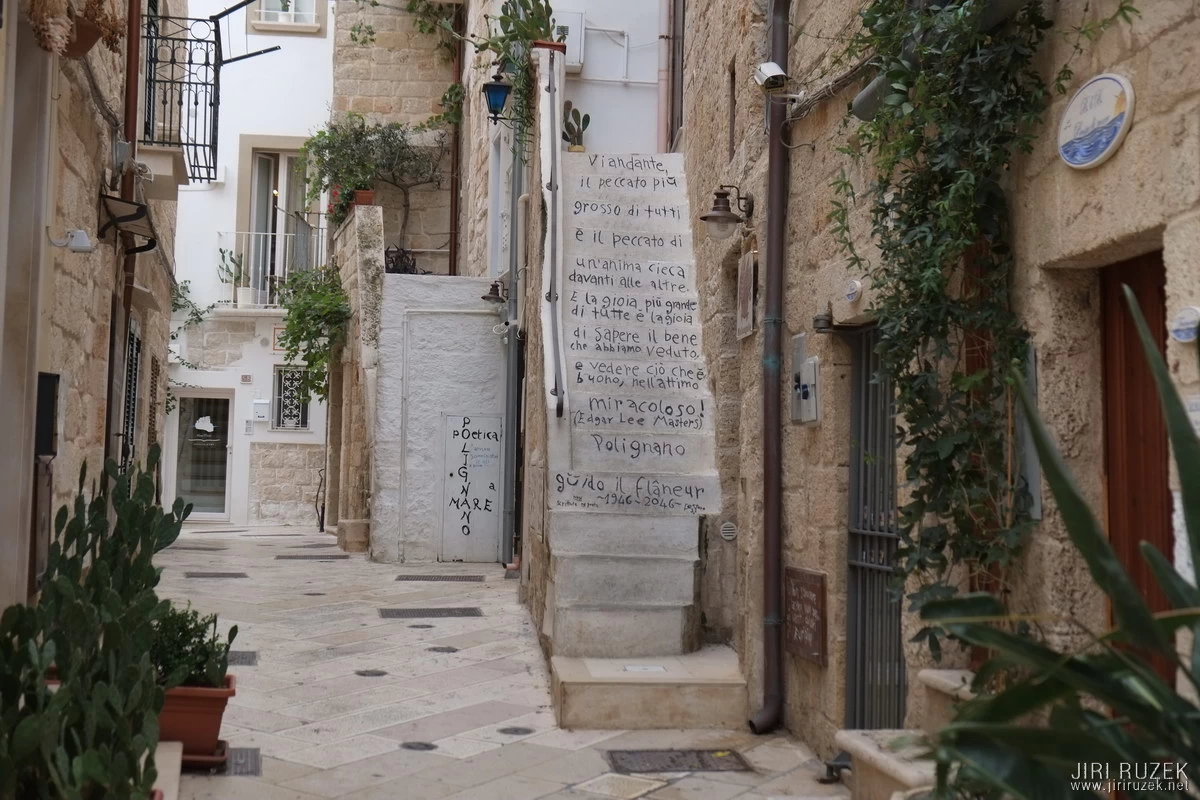 XF18-135mmF3.5-5.6R LM OIS WR; ISO 200, f/4.3, 1/280 s
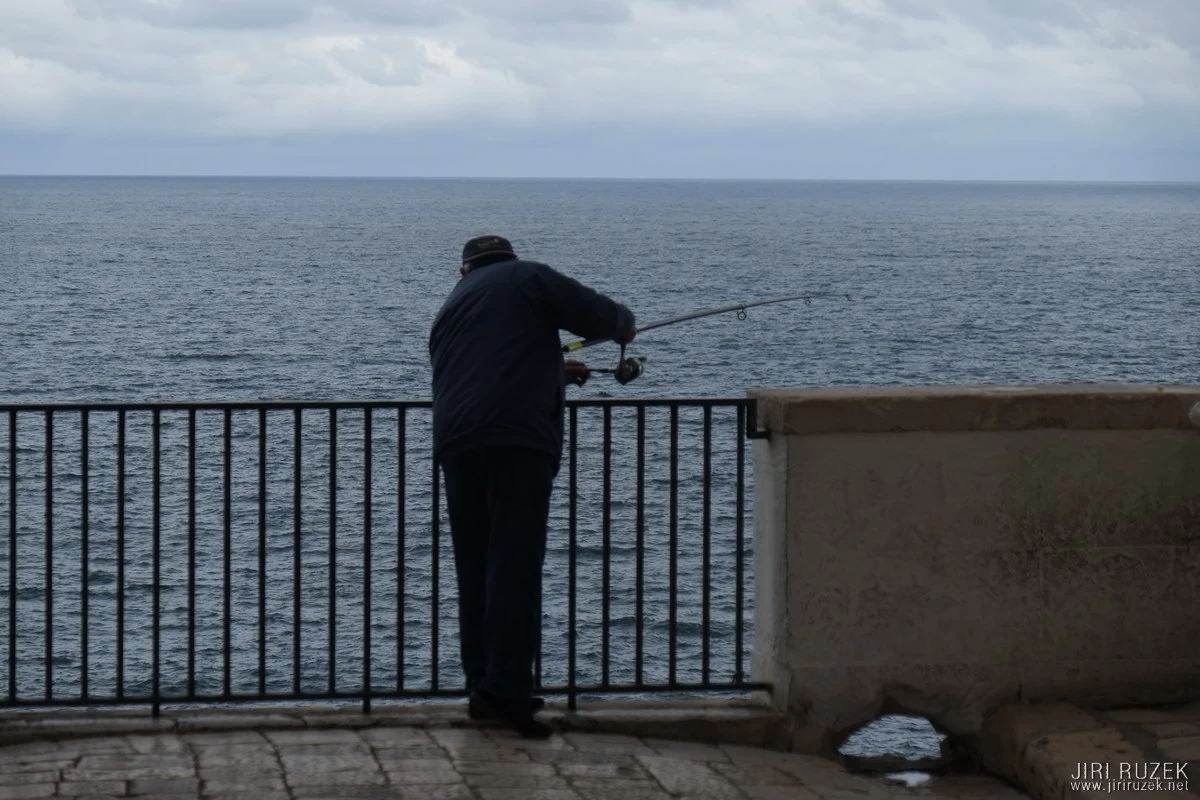 XF18-135mmF3.5-5.6R LM OIS WR; ISO 200, f/5.3, 1/450 s
MONOPOLI
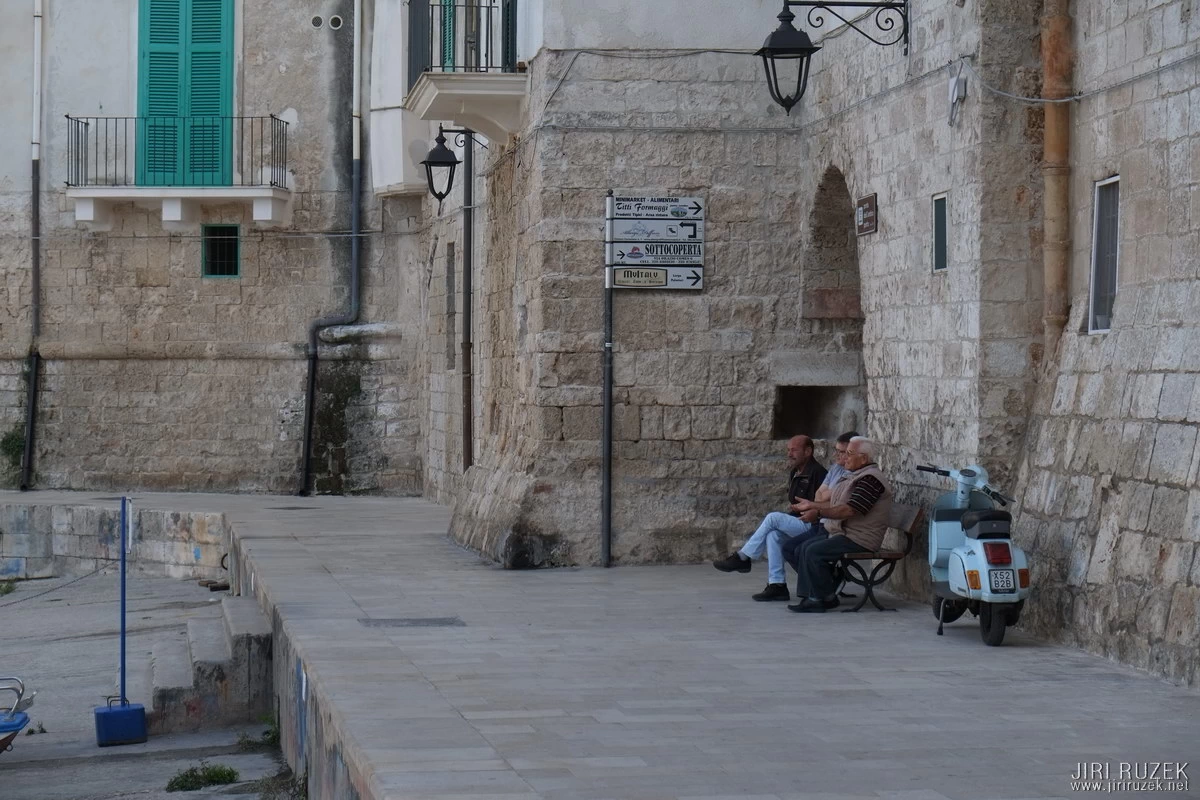 XF18-55mmF2.8-4 R LM OIS; ISO 200, f/5.6, 1/280 s
At last I get to our beloved Monopoli (pronounced monópoli). Now I’ll gush for a while, of course aware that these are our subjective feelings; for example my friend Honza Nachtigal, who visited Apulia a few weeks before us, devoted only a short mention to Monopoli in his article Bella Puglia. We were thrilled here.
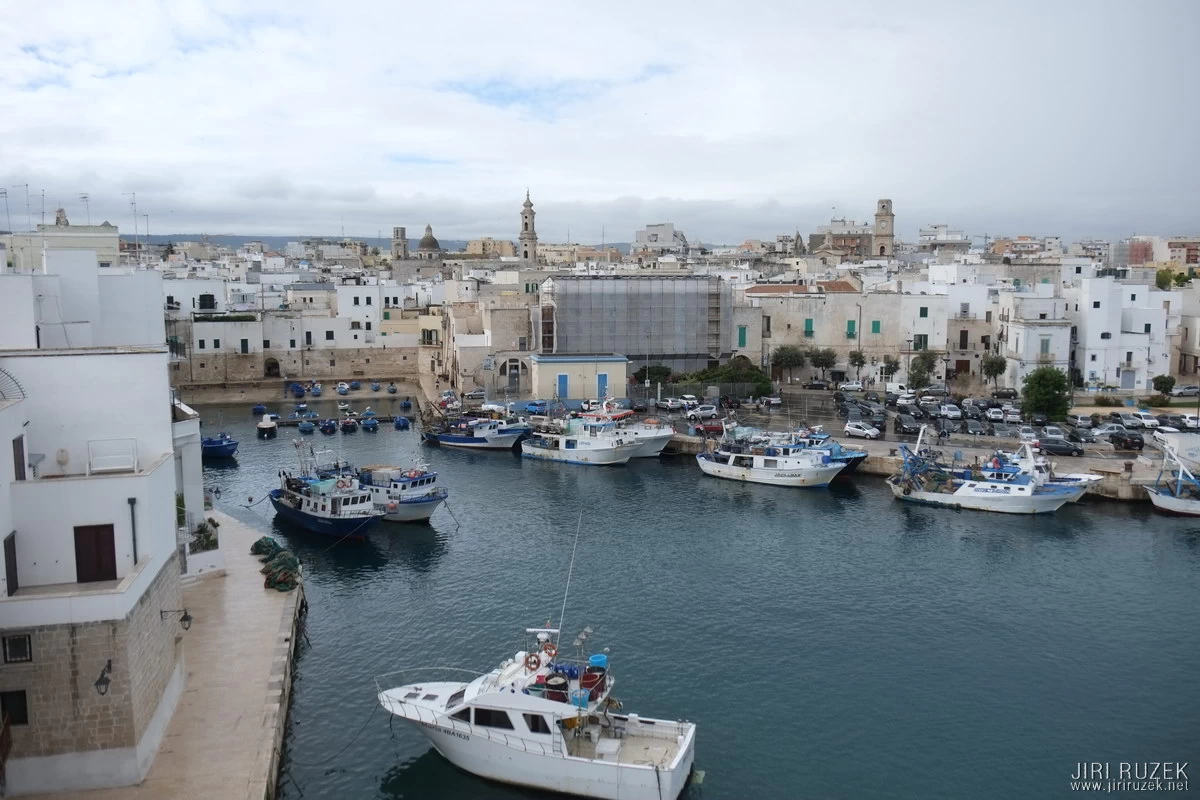 XF18-135mmF3.5-5.6R LM OIS WR; ISO 200, f/3.6, 1/1400 s
It seemed to us that time had slowed down in Monopoli. No hurry, the people seemed happy and, regardless of age, were well turned out at any time of day. Their main time was the evening. Around eight they filled the local pubs and after a long dinner promenaded over the stone paving of the picturesque maze of streets in the historic centre (centro storico). In the old harbour (porto vecchio) pensioners were chatting and fishermen were arranging their nets.
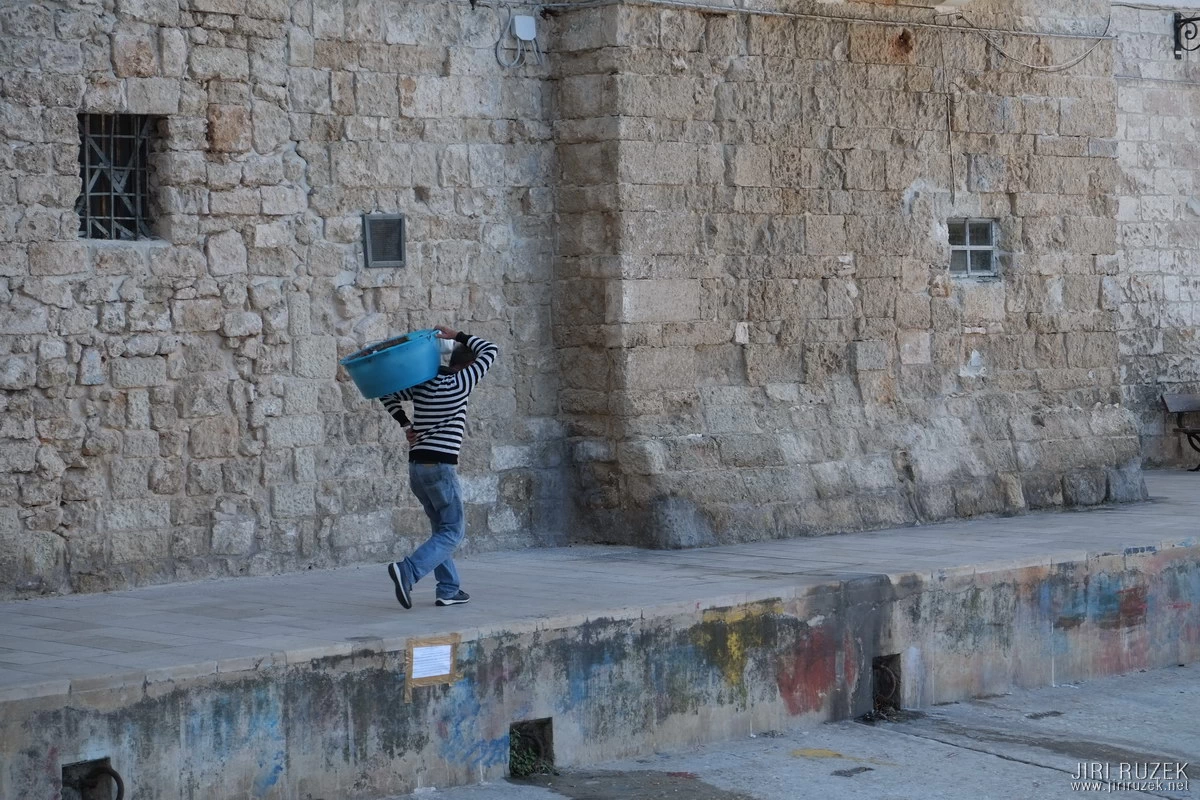 XF18-55mmF2.8-4 R LM OIS; ISO 200, f/4.5, 1/300 s
These are all scenes we have seen in many other towns, but it was precisely here that the unbelievably calm atmosphere enchanted us. We heard neither a car horn nor anybody shouting (southern Italians are said to be loud). Lots of young and old people greeted us with a smile, by word or gesture, a nod… Often someone started chatting to us and didn’t mind a bit that our Italian is at the absolute minimum; he simply shared everything he had on his heart.
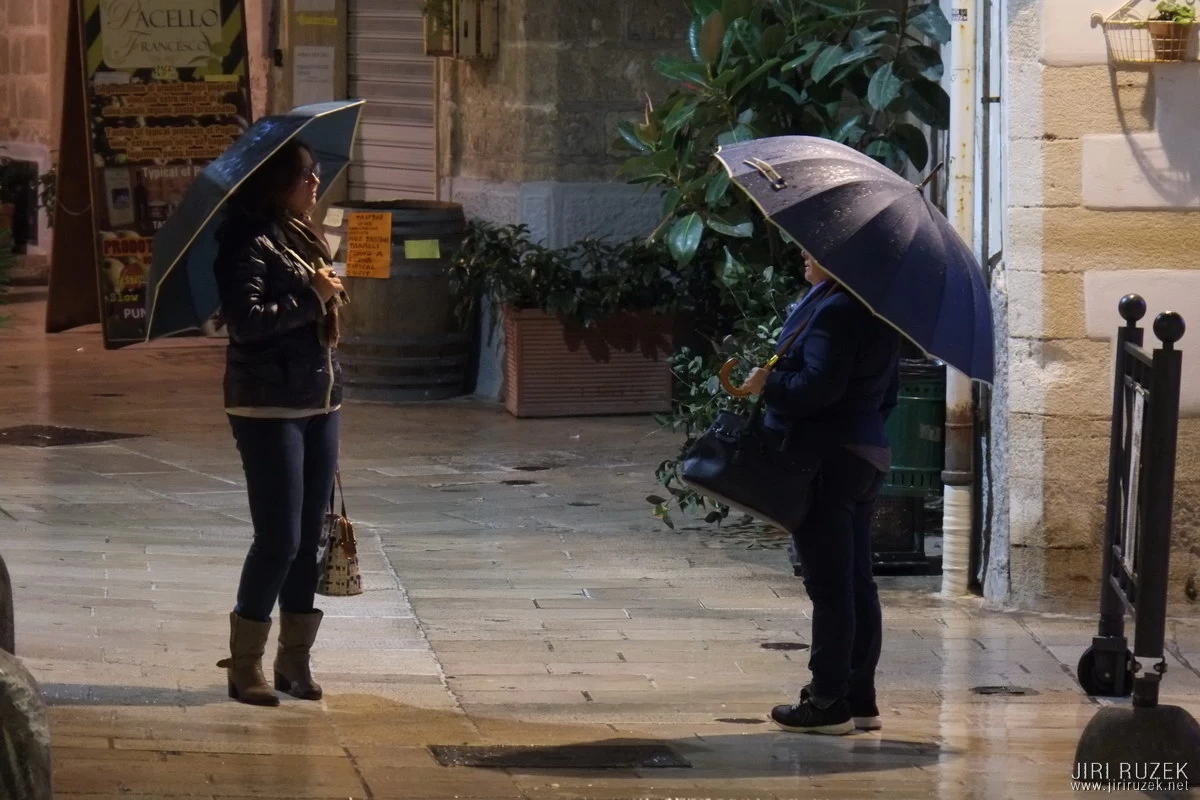 XF18-135mmF3.5-5.6R LM OIS WR; ISO 6400, f/5.6, 1/27 s
On Saturday evening the town was at its liveliest. In churches there was playing and singing (pop about the little sun, happiness etc…), we found another music recital in the bowels of the castle, and the streets were full of promenading people long into the night. The ladies showed off their handbags, the gentlemen their hairstyles. Being a hairdresser in Italy must be a very safe trade.
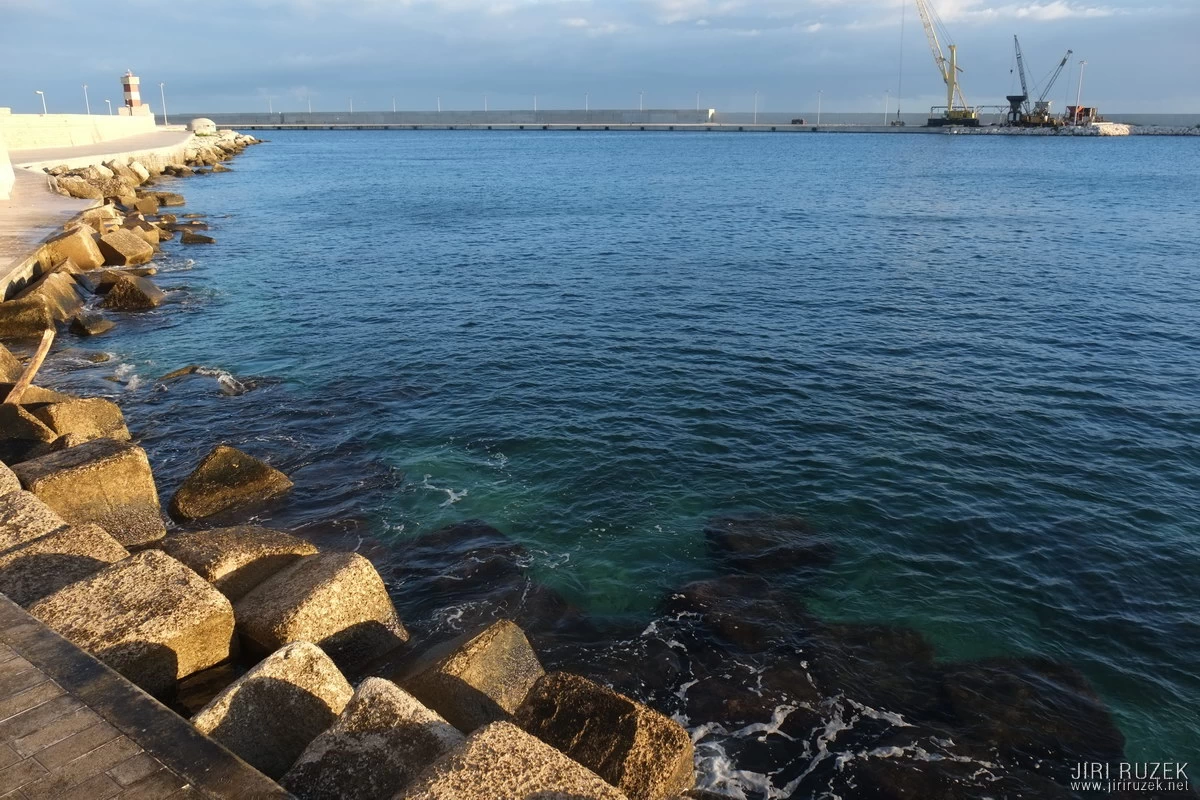 XF18-135mmF3.5-5.6R LM OIS WR; ISO 250, f/8, 1/125 s
In the unbelievably tangled streets of the old town I felt safe even long after midnight, when Lída was already asleep and I, after a bit of Primitivo, went for one more walk. I got lost in them, rediscovered myself in unexpected places, on the way chatted with the owner of a pizzeria and tasted wine at his place, elsewhere had one more caffè in the last open establishment and took a few night photos. I stood by the sea a while longer before I made the twenty steps up the white stone stairs to bed. In the morning I crawled out of it, made coffee and made the twenty steps to the sea.
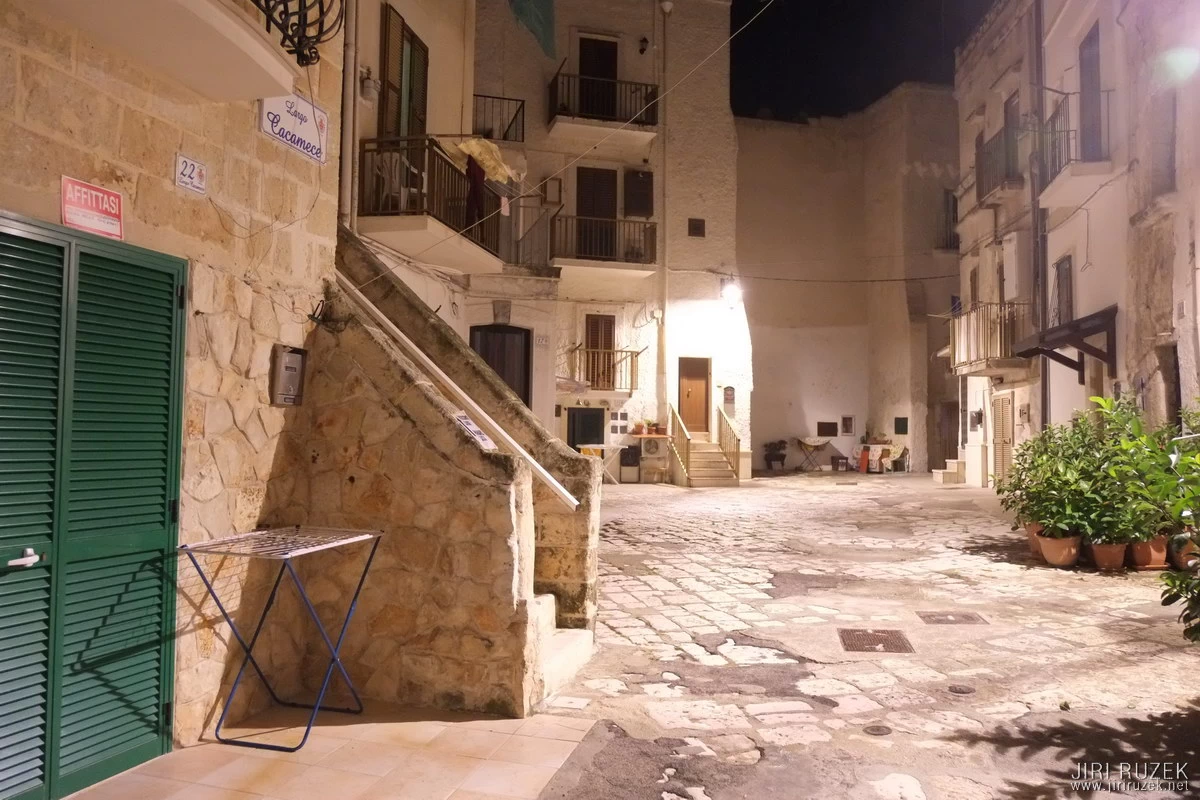 XF16-55mmF2.8 R LM WR; ISO 6400, f/2.8, 1/15 s
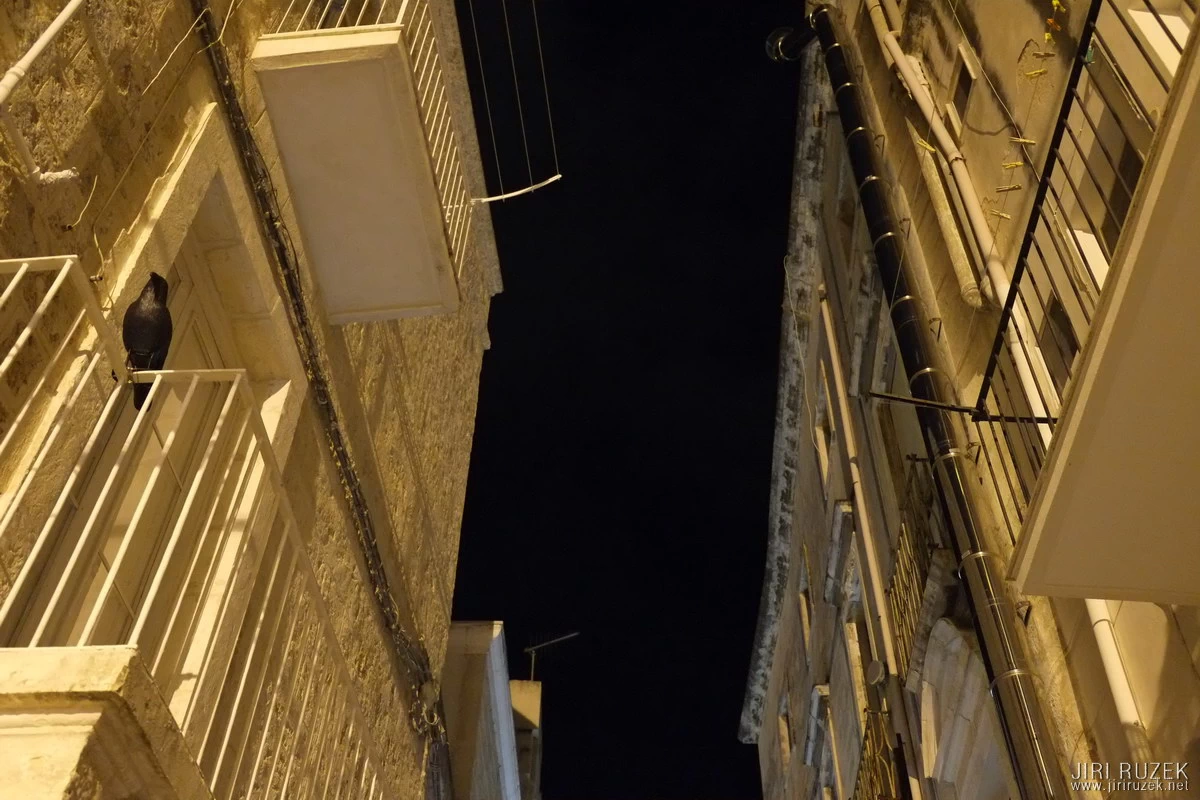 XF18-55mmF2.8-4 R LM OIS; ISO 6400, f/3.2, 1/14 s
So I’m not just raving… The sea is wonderful here, the beaches not. The beach is right in the town, sandy and only a few tens of metres long, and when a wave comes, it floods all of it, there’s nowhere to dodge because behind it is a wall. That’s why people sunbathe on big stones that serve as breakwaters. On a walk further along the coast to the south you meet other small bits of sandy beach, but mostly the coast is rocky, better for photographing than for swimming. If you long for beautiful beaches, just set off a few kilometres south; there are around 15 kilometres of them.
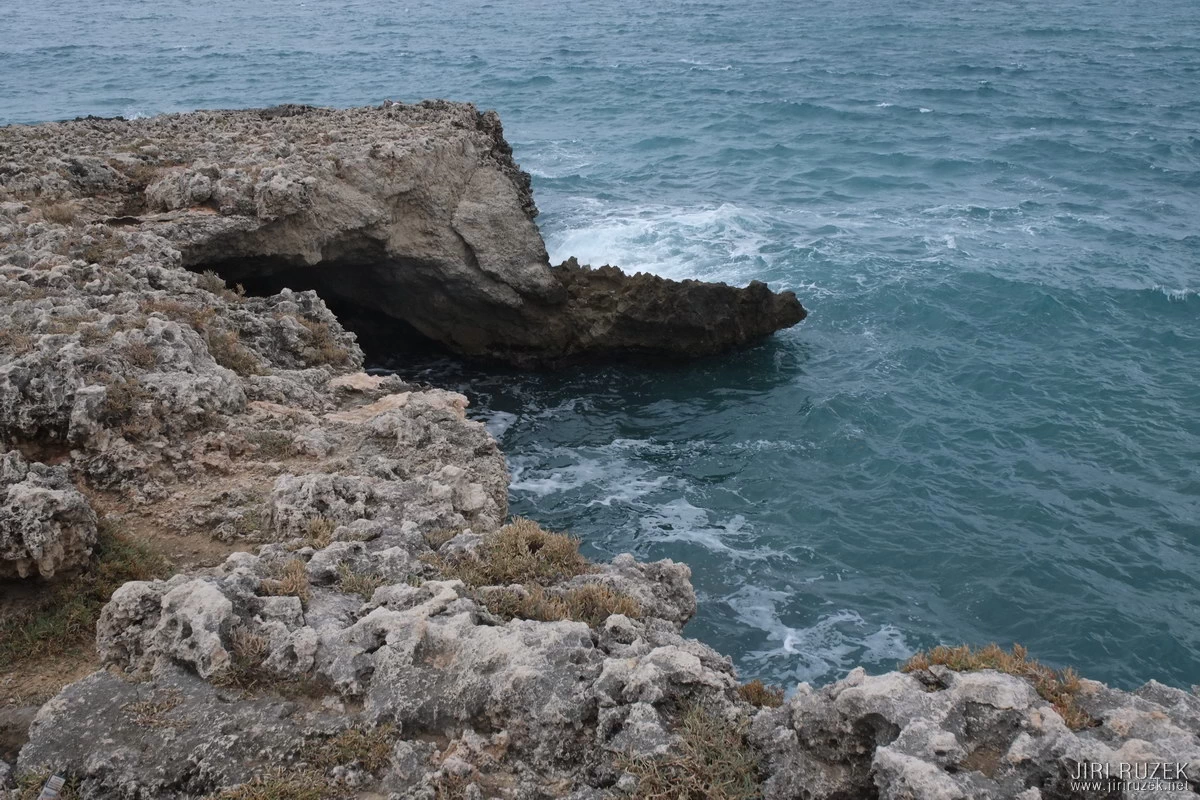 XF16-55mmF2.8 R LM WR; ISO 1600, f/8, 1/125 s
It can’t be described, I’m realizing that. Definitely not in a single article of this length. Actually there’s nothing important here, just the atmosphere, and that got us. And we had to move on, back toward the airport.
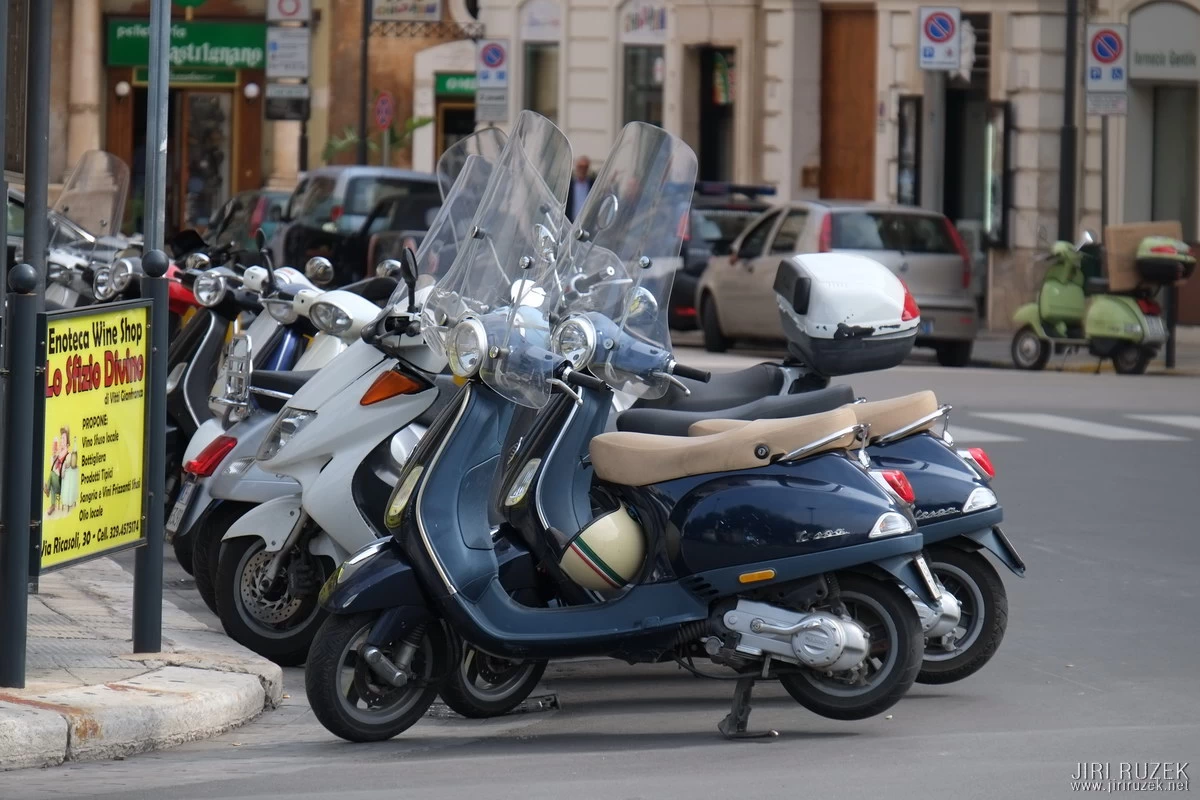 XF18-135mmF3.5-5.6R LM OIS WR; ISO 200, f/5.6, 1/340 s
BARI
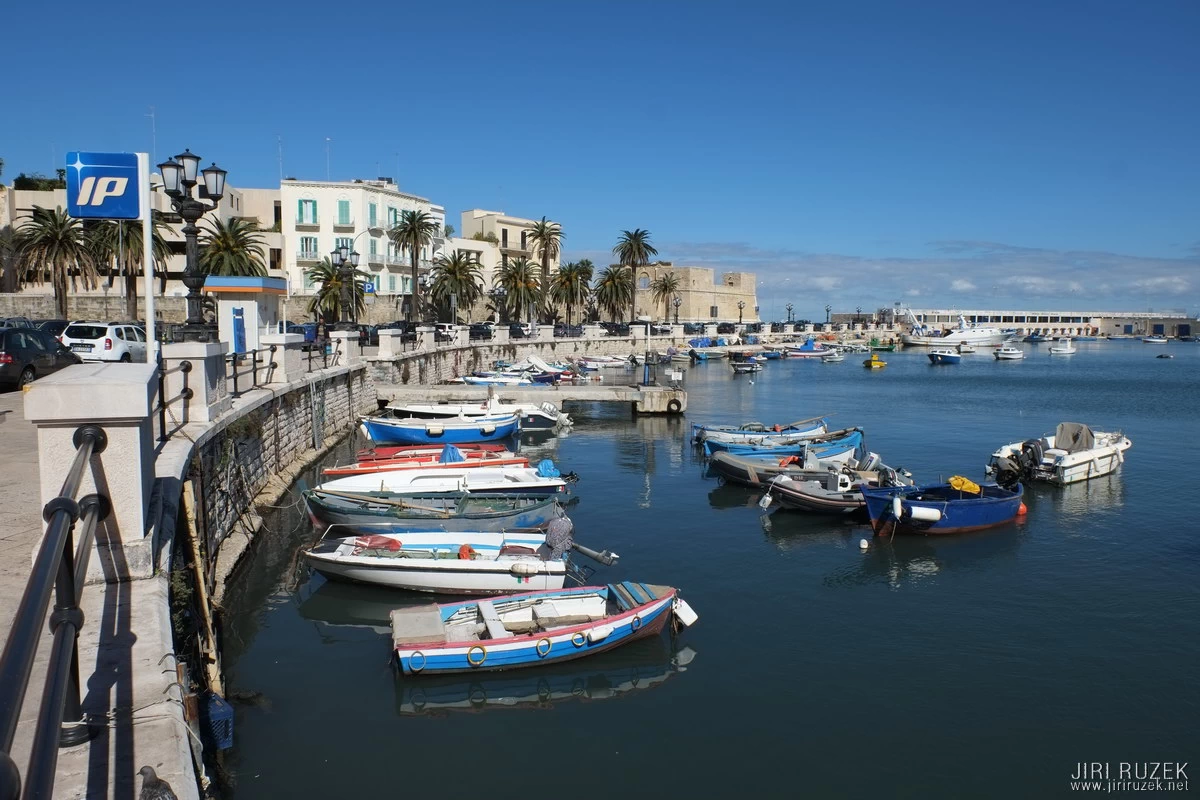 XF16-55mmF2.8 R LM WR; ISO 200, f/11, 1/340 s
Bari (pronounced bári), with roughly half a million inhabitants, is the capital of Apulia. In every direction it is an important transport hub and the biggest centre of everything happening in the south-east of Italy. This combination makes it a special city, which I’d venture to compare to a mix of Milan and Naples. Wealth visibly mixes with poverty here. I perceived the city on about three levels. Along the mostly perpendicular streets men in ties and women in suits rush busily (of course outside the siesta). The palm-lined harbours were full of small fishing boats and ocean ships, bigger than most houses around. This poetry was disturbed by a road reminiscent of the Prague magistrála, but the Italian way: honking, dozens of small and big scooters, almost no helmets or indicators, unlit bikes and cars, simply a madhouse. The third zone is the historic centre. Again a beautiful maze, but it didn’t resemble Monopoli. The old town is entered through gates, and crossing this boundary you find yourself in a completely different world. You can feel poverty here, and unfortunately you also lose the feeling of safety; you instinctively throw your bag across both shoulders so that it can’t be snatched by a scooter rider who emerges from somewhere and vanishes again.
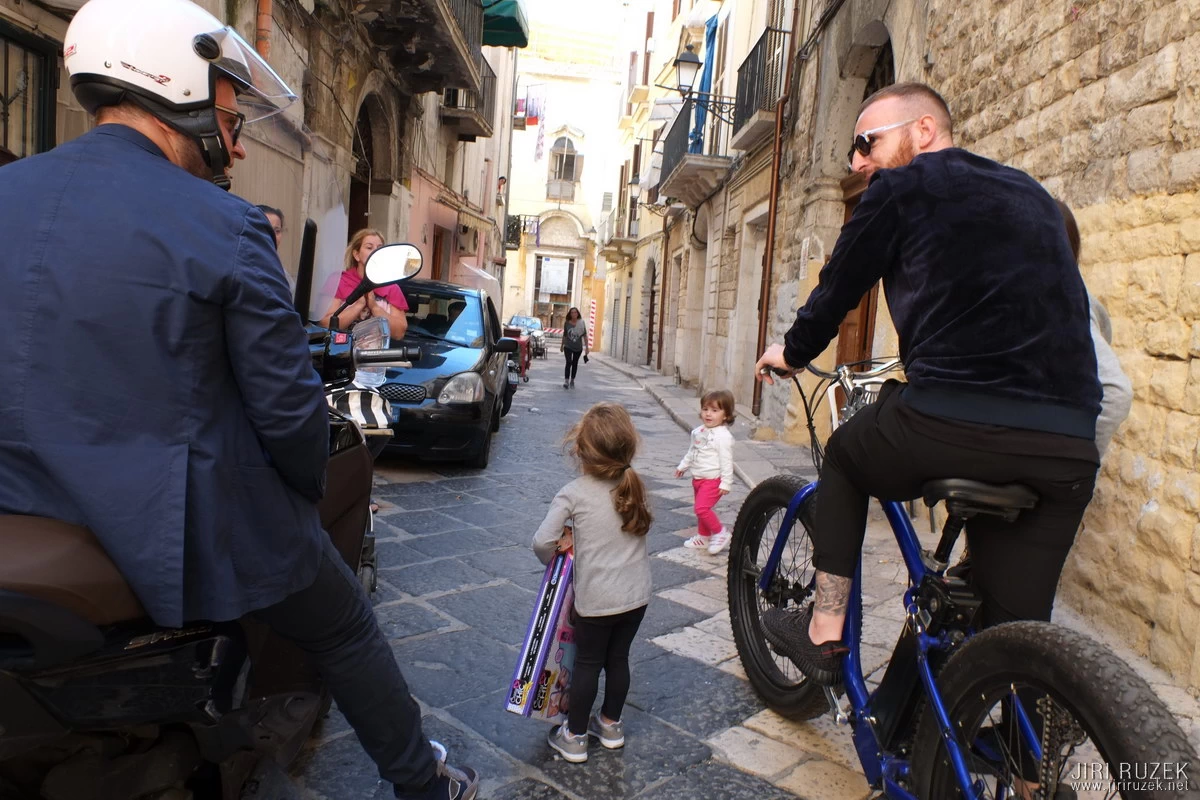 XF16-55mmF2.8 R LM WR; ISO 1000, f/5.6, 1/125 s
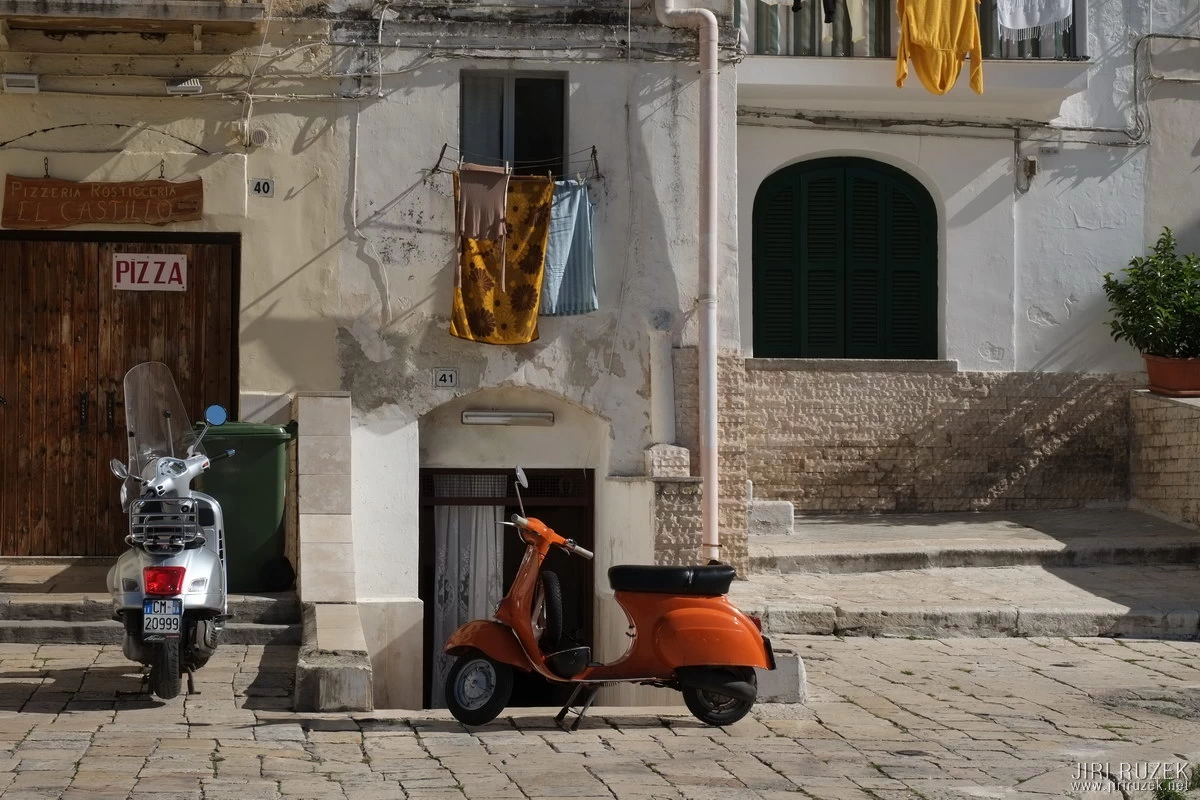 XF16-55mmF2.8 R LM WR; ISO 200, f/11, 1/350 s
I don’t mean that I didn’t like it here, on the contrary, I love these places where people really live. Laundry hung everywhere, peppers and orecchiette were drying, I liked it a lot. We were just more careful. Only after returning home did we find out that just a few years ago crime here was at such a high level that gendarmes stood in front of the gates to the historic town and advised against going further, especially not at night. We did one afternoon and one late-evening walk here and don’t regret it at all. I’m only sorry that I didn’t get here in the morning hours, before the siesta begins. Everything suggested I’d have seen the „real southern Italy“.
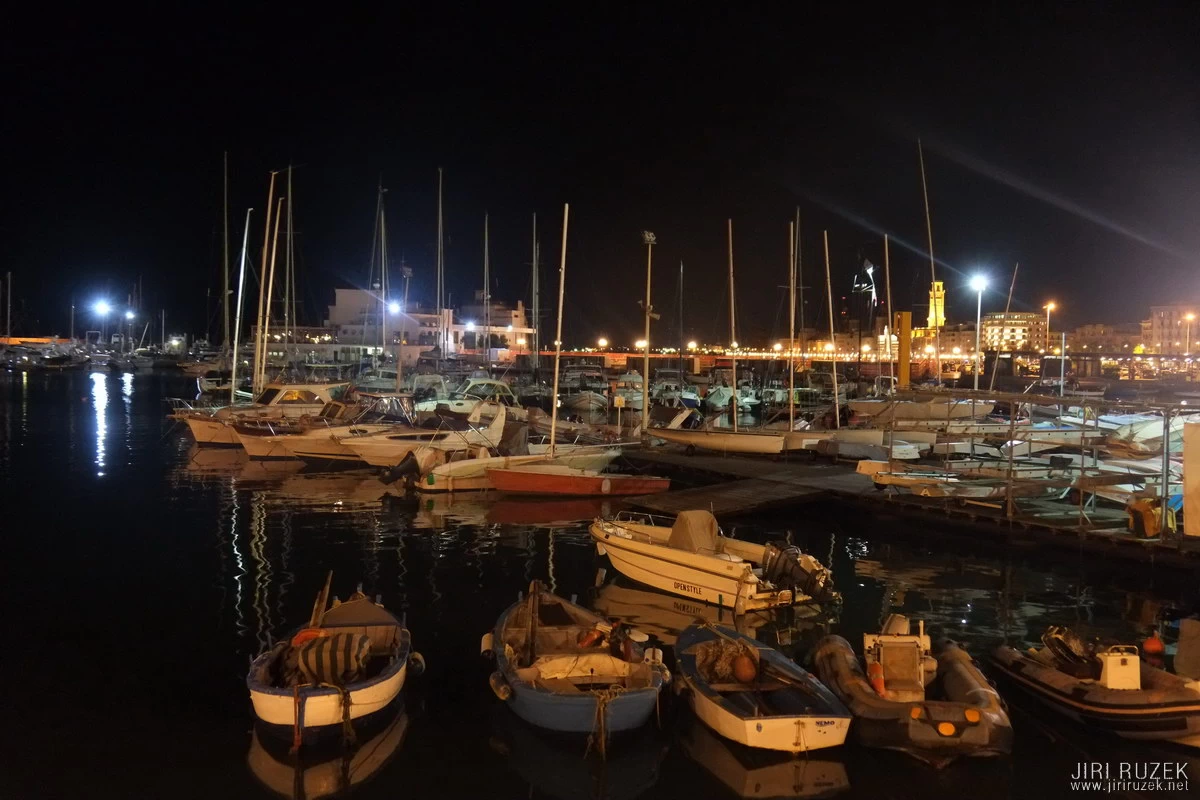 XF18-135mmF3.5-5.6R LM OIS WR; ISO 6400, f/4, 1/20 s
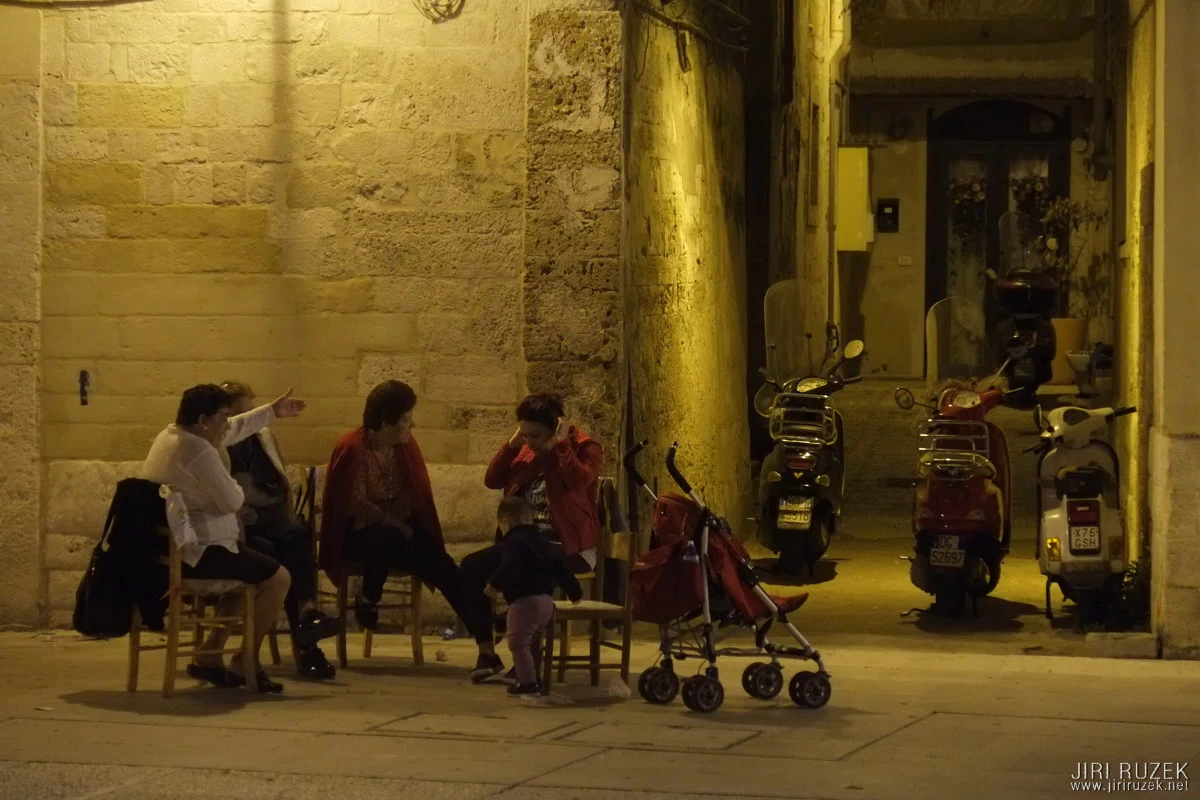 XF18-135mmF3.5-5.6R LM OIS WR; ISO 6400, f/5.3, 1/50 s
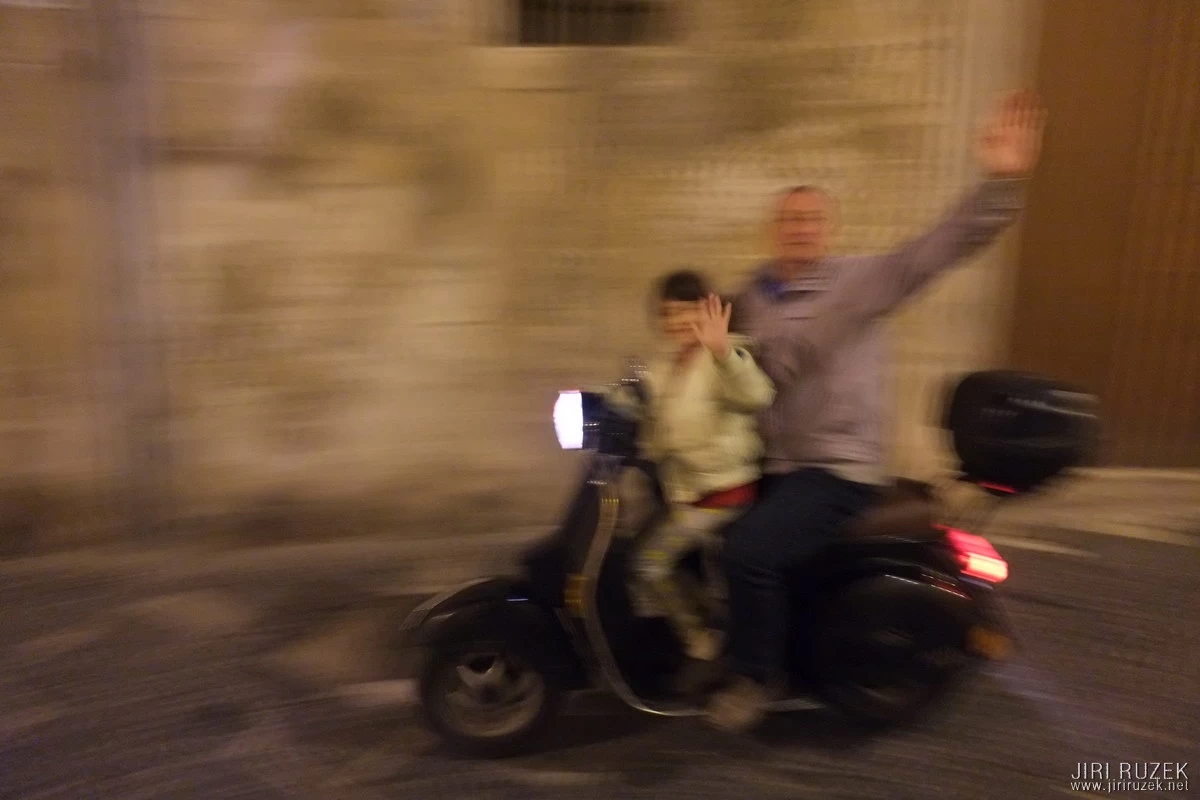 XF18-135mmF3.5-5.6R LM OIS WR; ISO 6400, f/4, 1/20 s
This time I wanted to write it shorter than my Memories of Rome, but even with this length I can share only a small part of the experiences. The mentioned Rome is still my most beloved Italian city (and maybe not only Italian), but Apulia captivated me, and Monopoli especially. Rome is life, Monopoli is rest. Probably that’s why Lída and I agreed that we „want a cottage“ here 🙂
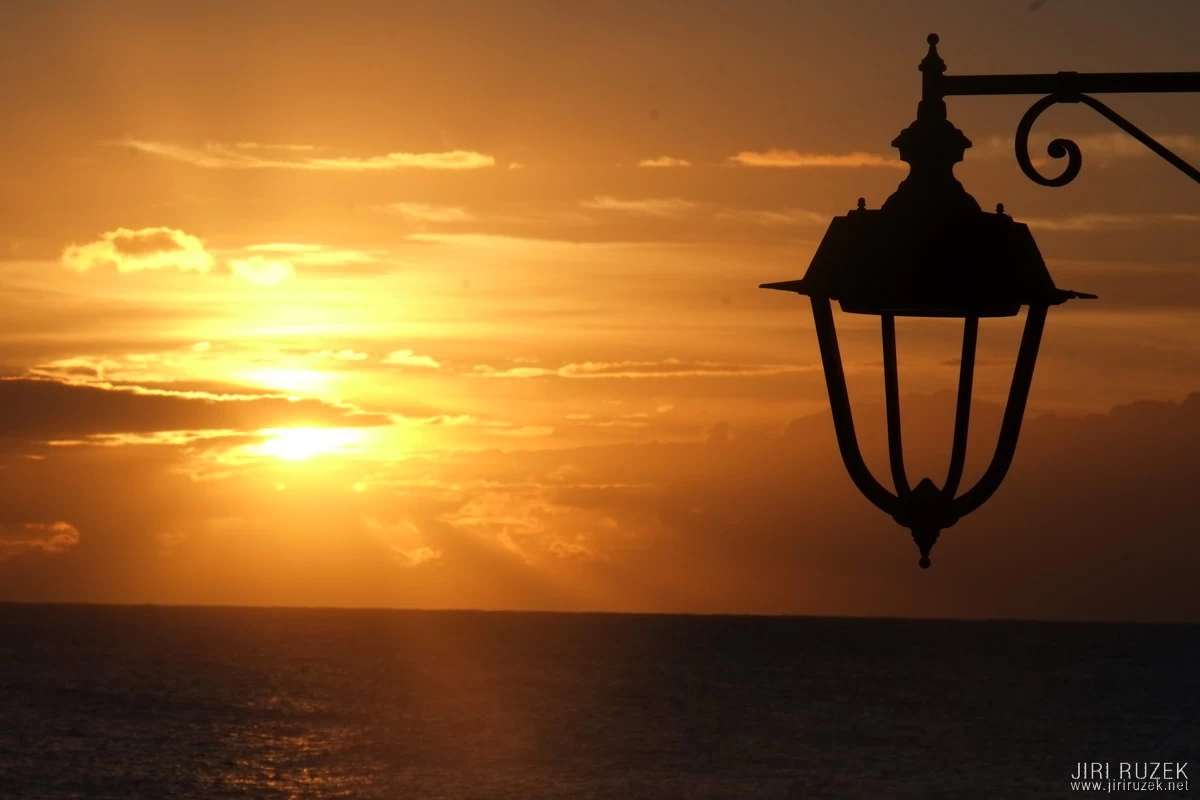 XF18-135mmF3.5-5.6R LM OIS WR; ISO 200, f/22, 1/180 s
It took work, so if you like it, share 🙂 Thanks