This page was translated by AI. Please be forgiving of any mistakes.
‹ Photo Notes · 20 ledna, 2014
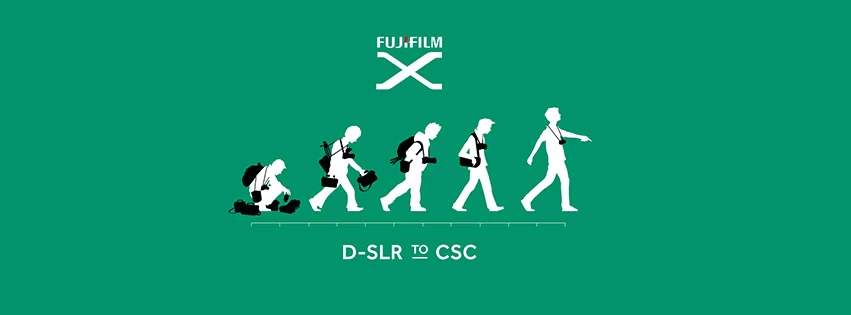
You may have noticed on Facebook or elsewhere that in November I sold all my Nikon photographic equipment and switched to the Fuji X mirrorless system.
I promised to write down in this article the reasons that led me to the change and to share my first impressions of the new camera.
To be clear, I’m not bragging, there’s nothing to brag about, let’s stay grounded, it’s still just consumer goods; the point of the article is to give information and perhaps help someone in deciding.

A small sensor? Never again!
We are not infallible, and I am now admitting to a big mistake. I remember a September workshop where during a break a debate was going on about the advantages of mirrorless cameras. Mirrorless is a terrible word; these cameras look like rangefinders, but they aren’t really rangefinders either. They are compact cameras with a large sensor and interchangeable lenses (not always, we’ll get to that). At that time I had exactly one experience with a camera of this type: a year earlier I had had a Sony RX1 for just a few hours in order to write a review, a 24.3-megapixel full-frame compact with a Zeiss 25mm/f2.0 lens. It shot fantastically, but paying 85 thousand for something with no viewfinder and no option to change lenses? Nothing for me.
In that debate the Fujifilm X series cameras were being discussed. I knew them only by sight, and I liked their compactness, retro design and controls. But I said I couldn’t imagine ever going back to a small sensor (by which I mean APS-C size, not the small sensor of cheap compacts). I repeat that I knew the Fuji X very superficially and I was wrong when I thought such a camera would be, for me, a step back to lower photo quality.
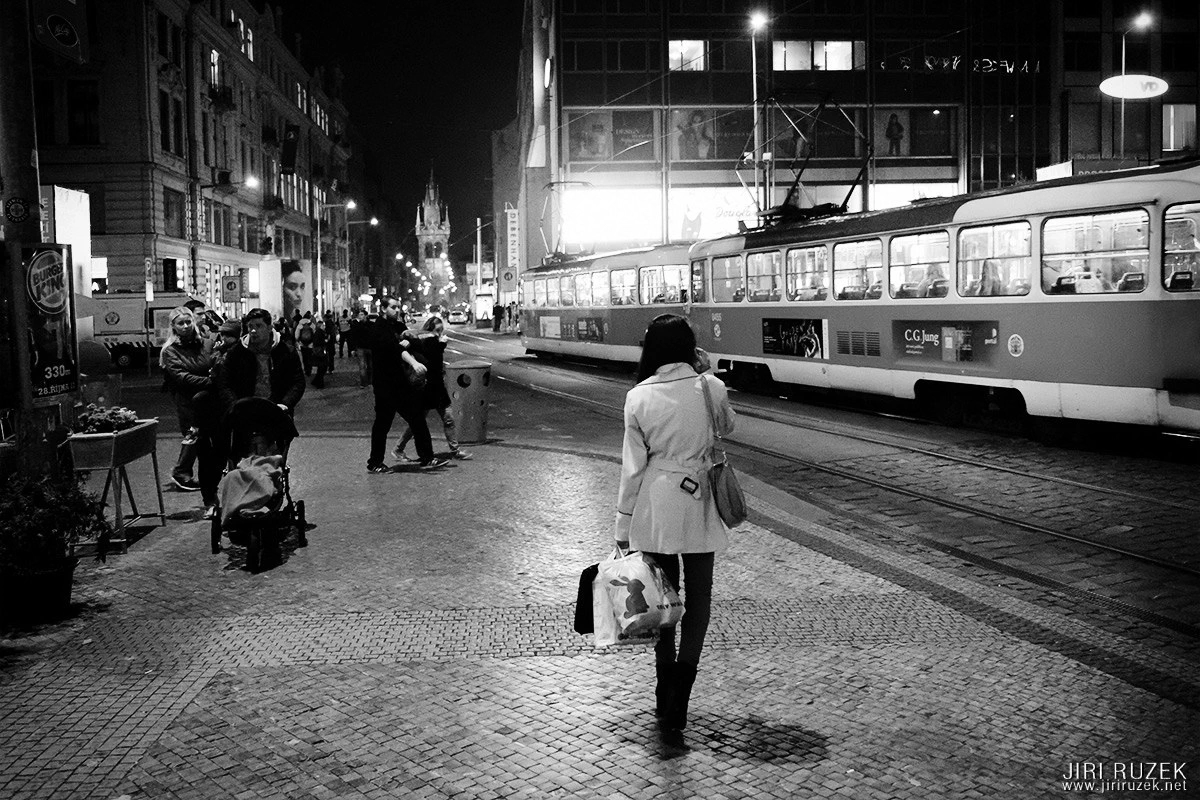
Fuji X-Pro1 + Fujinon XF 18-55mm/F2.8-4.0 R LM OIS.
ISO 6400, 1/140 s, f/2.8, JPG/Velvia (converted to B&W).
It must sit in the hand (a flight through history)
When I was choosing my first digital camera at the beginning of 2004, I was drawn to the Fujifilm S5500 and S7500. Fuji promised different work with colours than the rest of the world and I felt like getting one. Everything changed when I took them in my hand. They were funny, miniature plastic little compacts and instead of them I bought the Sony DSC-F828. That was a kilo-heavy cross between a camcorder and an SLR with a decent Zeiss lens. Unfortunately its quality could not be carried by the noisy sensor, and so after a year it went out into the world and I faced my first encounter with a digital SLR and an APS-C sensor. In the game were the Canon 300D and its equally good rival the Nikon D70 – the latter won thanks to the feel in the hand, I had no other reason. The D200 followed, and then finally full frame, the fantastic D700. Each of them was a step forward, and with the D700 came a huge step.
In the field of SLRs there wasn’t, and for now isn’t, a possible step back to APS-C; once you taste full frame, there’s no other way. I stand by that to this day.
I had no reason for a change or for fidgeting; Nikon’s platform suited my needs superbly and under certain circumstances I can imagine many more years with this brand in my hand.
Except that every new model was bigger and heavier. Compared with the Sony, which weighed under a kilo, I was now holding a kilo and three quarters. In my shooting it didn’t limit me in any way, but it was a camera „just for shooting“. When I went out to photograph, I took it with me. Only a fool would carry 2, 3, 4 kilograms of equipment every day „just in case„. It was the same on trips. On the first day of a holiday I had in my bag a Nikon D700, preferably 2 extra lenses, a film Yashica and a camcorder. I returned to the hotel with an aching back and the photos in my phone! Each following day I removed something, and at the end of the holiday I still had the most photos in my phone.
But cheap compacts didn’t satisfy me, and buying an expensive one (worth a nice holiday) just to put in a pocket seemed a pity.

Fuji X-Pro1 + Fujinon XF 18-55mm/F2.8-4.0 R LM OIS.
ISO 6400, 1/30 s, f/3.2, JPG/Velvia.
Accidents change the world
This accident certainly doesn’t change the world, but it decided things, and did so unexpectedly and sharply. A late night hour, maybe I was just writing some article or preparing photographs. An emptied bottle of wine, I’m getting ready for bed and decide to delete a few emails first – heaps of spam, which I’m partly to blame for myself. A photo catches my attention and I click on a link. It leads me to the Scoop.it of the German photographer Thomas Menk, who is a great fan of Fuji X and on the Scoop.it platform acts as a curator of all kinds of articles about these little machines.
To cut it short – before I went to sleep I clicked through about 20 articles from his collection, and when I woke up in the morning I knew I wanted to sell the Nikon with all its accessories and get a Fuji X.

Fuji X-E1 + Fujinon XF 23mm/F1.4 R.
ISO 1000, 1/60, f/2, JPG/Velvia.
Why?
It is small and light. Uncomfortably so, but it fits into the pocket of a winter jacket. You don’t feel it in your bag; it is really a camera you can have with you always, all the time and constantly… Compare the three- to five-kilo kit of your SLR with one kilogram of Fuji X and several lenses.
It is beautifully retro – not only to look at; the aperture ring and the shutter-speed dial pull you back into a photographic process like the one of 15 or 100 years ago.
It shoots superbly. When I saw the heap of splendid photos, I had to take myself by the nose and admit that these photos don’t lack quality at all and on top of that have charm. Indescribable. I know, the photo is made by the photographer and not his camera, but that isn’t quite true. There are cameras that do their job exactly at the corresponding quality – for me that was, for example, the Nikon D700. On the other shore are devices like the Polaroid (or Fuji Instax), Holga, Diana and other lomo toys with miserable quality but unique charm. And somewhere in between, between that imaginary heaven and earth, are cameras that shoot with quality and as a bonus give the photos that charm. It can’t be described, only felt. Musicians know something similar – two instruments of equal quality, but one has a soul. In the world of film cameras, a similar example for me is the Yashica twin-lens reflex. In the digital photo world it is the Fuji X.

Fuji X-E1 + Fujinon XF 14mm/F2.8 R.
ISO 3200, 1/60 s, f/2.8. RAF.
There are no small sensors
The quality is stunning. The patented Fujifilm X-Trans sensor is to blame, which again works with image and colours differently than we’re used to from other brands, and so are the truly excellent lenses that Fujifilm keeps adding to the relatively new X series. Fuji shoots superbly in poor light; ISO 6400 here doesn’t mean an unusable photo, and the noise, when it does appear, has a pleasantly analogue grain, the colour rendering is literally shocking, the dynamic range will surprise you too, and so on and so on.
Fujifilm keeps churning out new lenses with apertures of 1.4, 1.2, fantastic sharpness from the centre to the edges and excellent transfer of contrast and colour.
In two and a half months it hasn’t occurred to me even for a moment that I made a step back. On the contrary, and I stress how superb the Nikon D700 is!
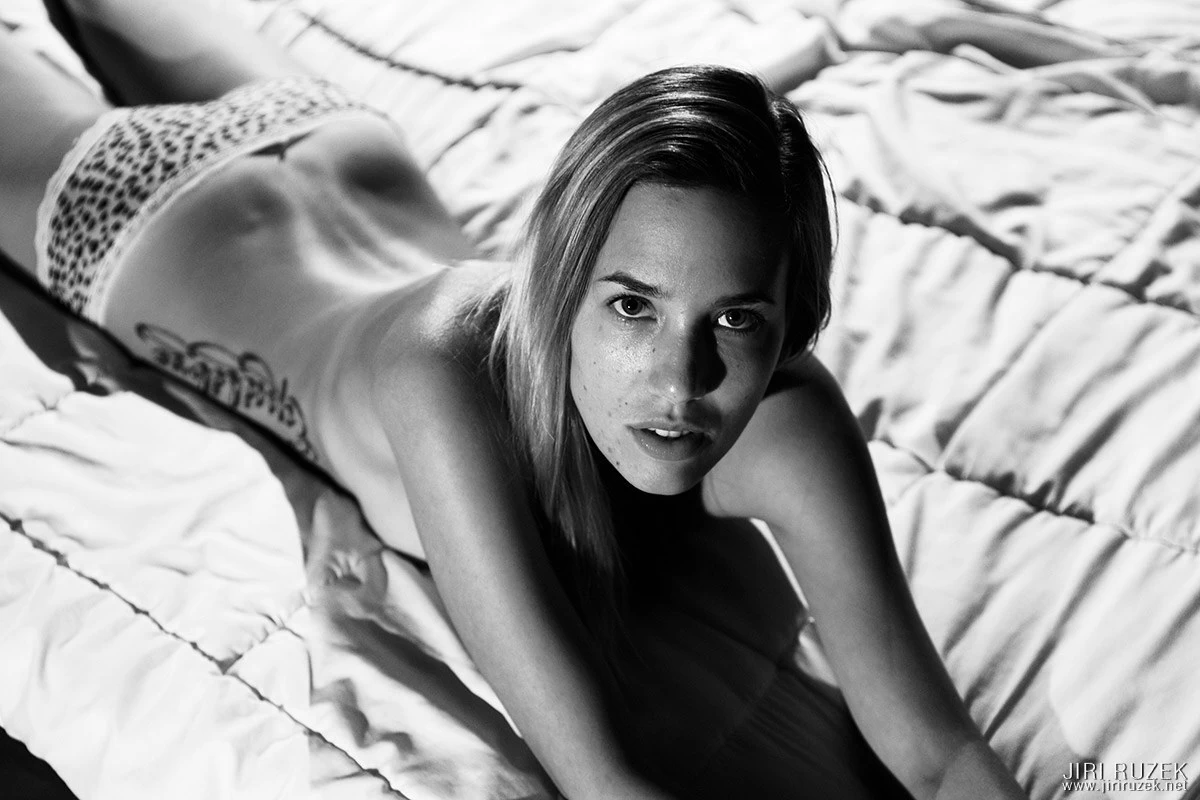
Fuji X-Pro1 + Fujinon XF 18-55mm/F2.8-4.0 R LM OIS.
ISO 1000, 1/60 s, f/4, RAF.
X, but which X?
Three devices interested me at once – the X100S, X-E1 and X-Pro1. After two weeks the newly announced X-E2 joined in. In photo quality they don’t differ; all are fitted with the X-Trans sensor except the X-E2, which has the new X-Trans II, but the difference is only in its speed, the photos are qualitatively the same.
The current king of the compacts is considered to be the Fuji X100S. It is fantastic – it has the most retro design of the whole X series and is the most compact. It is fitted with a hybrid EVF/OVF (electronic/optical) viewfinder and a lens with a focal length of 23 mm (35 mm with the 1.5 crop factor) and an aperture of F2.0. It is truly a gem and I think I’ll almost certainly end up with one in my pocket one day as „the even smaller one for trips“. But sometimes I need to change the lens, and so this time it was disqualified.
Next in the line is Fujifilm’s so-called flagship, the X-Pro1. It too has a hybrid viewfinder, but allows changing lenses – exactly what I need. It was clear there was no other choice, but I wanted certainty. Luckily, at the FotoŠkoda shop a promo campaign was running, thanks to which I could borrow the X-Pro1 for a weekend and test it.
The third candidate in the line was the X-E1. Interchangeable lenses yes, hybrid viewfinder no, only electronic – surely I won’t be looking at a display like in a tunnel! I had my fill of that with the Sony, today it’s a different standard. That disqualified it.
But since I don’t have unlimited finances, I first had to sell the Nikon and then buy the Fuji. It took a while, and meanwhile I followed new and newer articles about Fuji collected by Thomas Menk. And on the internet it is very popular to make articles, videos and reviews of the type something versus something. So I came across a series of X-Pro1 vs. X-E1 reviews and to my surprise the X-E1 won everywhere. I compared it with my experience of the test weekend with the X-Pro1 – the only fundamental difference I saw was in the viewfinder (OVF/EVF vs. EVF). At that moment I understood what the comparative reviews were talking about, namely that after a few hours with the OVF on the X-Pro1 I had started to use the EVF without realizing it. The electronic viewfinder is very good and in poor lighting conditions, in which I often work, it is moreover an advantage. It brightens the scene and shows it as it is exposed. That also gives an immediate impulse to adjust the exposure values.
Because it couldn’t be simple, at the very moment when I was clear that the X-E1 was a good choice for me, one that incidentally would save me a nice few thousand, Fujifilm announced the arrival of the new X-E2. The Nikon was sold and I waited for the novelty. The internet again got busy, this time with reviews on the topic X-E1 vs. X-E2. On paper the X-E2 is of course better, but it isn’t a revolution and the photo quality is identical. The new processor is merely faster, nothing that would limit me. The hybrid autofocus shows in speed in good lighting; in poor lighting it behaves the same as the older X-E1. Moreover the X-E2 has wi-fi, which I was looking forward to, but it isn’t a necessity and one can do without it using a wi-fi SD card. Still there was no reason not to wait for the X-E2.
It arrived at the moment when internet classifieds began to fill with offers of nearly new X-E1s at half price. At that moment I decided to buy the excellent X-E1 for a song and rather invest the saved money in lenses and other accessories.

Fuji X-E1 + Fujinon XF 14mm/F2.8 R.
ISO 6400, 1/60 s, f/3.2, JPG/Provia.
Fujimania
I have never experienced such hype around any camera as there is now around Fuji. Earlier I probably wouldn’t even have understood it; now I’m part of it myself. Fujifilm managed to make devices you build a relationship with.
Logically, it is still just stupid electronics and optics, but after a long time I feel a completely new enthusiasm for photographing and I look forward to new photos.
The internet is full of articles „how I switched from a professional SLR to Fuji“ and instead of the usual „Photos from Tuscany“, „Photos from Tuscany with Fuji X“ appears daily.
The very length of this article is probably proof of that. Never before did I feel the need (nor was there any interest) to confide how much better my new Nikon was; Fuji is a joy.
It’s a phenomenon, of course, but …
Not for everybody
Where does Fuji fail? Technically I ran into a single shortcoming that is discussed on the internet – the speed of focusing. On that I want to say that the focusing is precise and fast. Really fast and not limiting. Not as fast, though, as a professional SLR with a very good lens. For that reason it is probably not suitable for photographing flying birds, cheetahs on the hunt or F1 races. In ordinary shooting, however, you won’t run into a problem.

Fuji X-E1 + CCTV lens 25mm/F1.4.
ISO 200, 1/125 s, f/1.4, JPG, conversion to B&W, crop.
Size matters
The small size and weight is Fuji’s big advantage. As I found out, it is also its disadvantage. It’s unbelievable, but several photographers told me that with such a small device they couldn’t hand a client an invoice. Others said that with „this“ they can’t go to models, that they would laugh at them.
It’s terrible when you think that the client pays not for the photo but for the impression – a big SLR with a big lens (and ideally a lens hood, even when it rains) and a cartload of light stands.
This fortunately doesn’t bother me at all, and I tell myself that as an art photographer I can shoot with a matchbox if it suits me.
But I’m honestly sorry for you, colleagues ….

Fuji X-E1 + Fujinon XF 14mm/F2.8 R.
ISO 2500, 1/60 s, f/2.8, JPG/Velvia.
Leica for the poor
Oh nonsense, dear ones. That is another opinion I came across. Leica makes amazing cameras and lenses, but if I saw added value corresponding to the price, I would get one. Whoever knows me knows that when I set my mind on something, I don’t stop and I push it through. But as I wrote, you fall in love with Fuji, and nobody has convinced me so far that Leica would be 8x better than Fuji. If it manages to, maybe I’ll pay 8x as much and shoot with a Leica.
Until that happens, I will honestly claim that I didn’t buy out of need, but chose carefully and for a long time.
And the argument that I can’t afford a Leica, but rather than a „Leica for the poor“ I’ll shoot with an ill-bred Canon 5D Mark II, is for me just stupid snobbery.
Lenses
The X series is relatively new and Fuji supplies it generously with quality lenses. The cheaper ones are labelled XC, the better ones have XF in the name. I got the FX 14mm/F2.0 for extremely wide shots and the XF 23mm/F1.4 as my main lens. I also plan the portrait XF 56/F1.2, which reaches the shelves at the end of winter. Beyond the Fujinon brand you can use practically any other lenses with an adapter (in manual mode, of course). A bit for fun I got two CCTV lenses (lenses for security cameras), which give an interesting lomo effect. The price of one such lens is a mere 500 crowns.
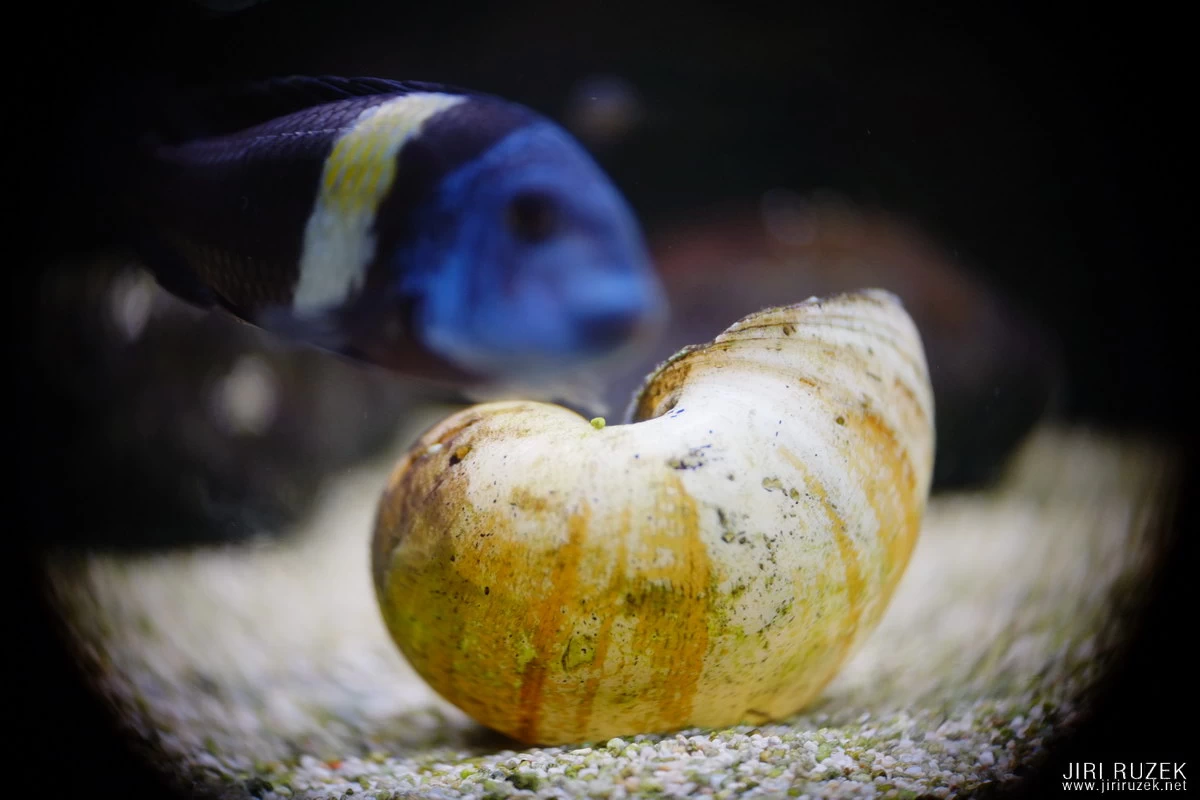
Fuji X-E1 + CCTV lens 25mm/F1.4.
ISO 1000, 1/60 s, f/1.4, JPG/Provia.
Too early for a review
So far there has been too little time to really test the Fuji X properly on what I normally shoot, that is, nudes. I haven’t even got much to daytime outdoor shooting; most of my photos are from the night. For that reason I don’t want to launch into a detailed evaluation of this and that, I’ve already written a lot as it is, and that was only about impressions.
I’m attaching a few photographs here; in time you’ll see more of how it shoots, and I may also write new overviews or reviews of individual lenses and so on.
The best? Probably not
I’m not claiming it is the best camera in the world, but it is damn good and I’m happy with it. If you’re thinking about it, try it and you’ll see for yourselves.
Fujifilm cameras can be bought e.g. at FotoŠkoda or Fujifoto.cz.