This page was translated by AI. Please be forgiving of any mistakes.
‹ Photo Notes · 6 září, 2016
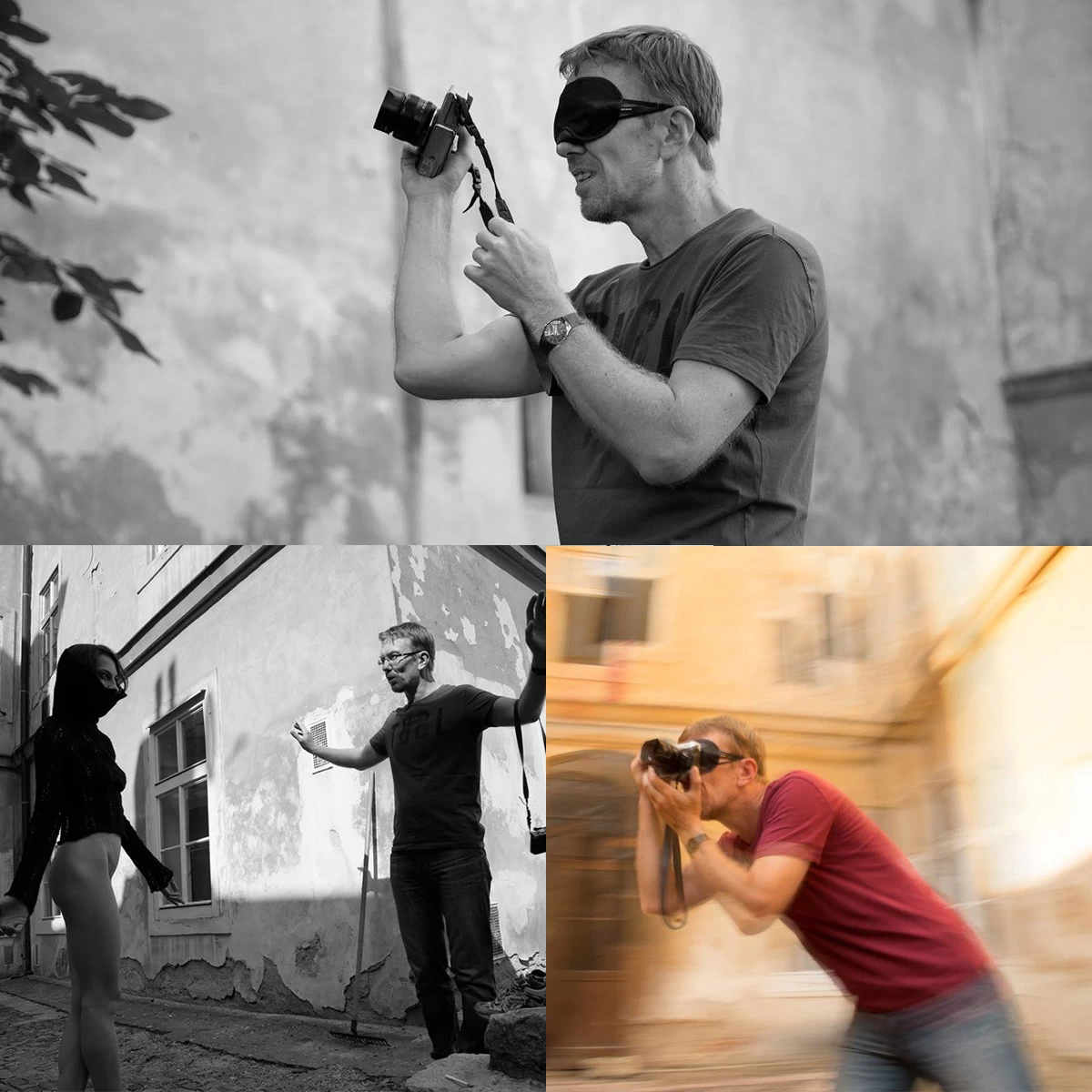
I could hardly have found a better title for today’s article than the famous quote by Paul Gauguin. It is about how having closed or blindfolded eyes doesn’t mean not seeing. Even in photography.
In August I took part in the project Fine Art Nude Photo Challenge, organized in Prague by Paul Pacey, a Canadian photographer and owner of the gallery at Nerudova 25, which then logically culminated in an exhibition in the same place. A total of 13 photographers from six countries got the brief: one place (the gallery and adjacent spaces), one camera, one lens, no lights, no assistants, one hour and one model whom nobody had shot before. And that was the problem.
The model, you see, was Viki (Vikencia), with whom I’ve been shooting for six years and with whom I also have dozens of workshops behind me. In short, we know each other so well that we could already shoot together blindfolded.
And so, to keep the conditions fair, I put a black sleeping mask over my eyes and shot.
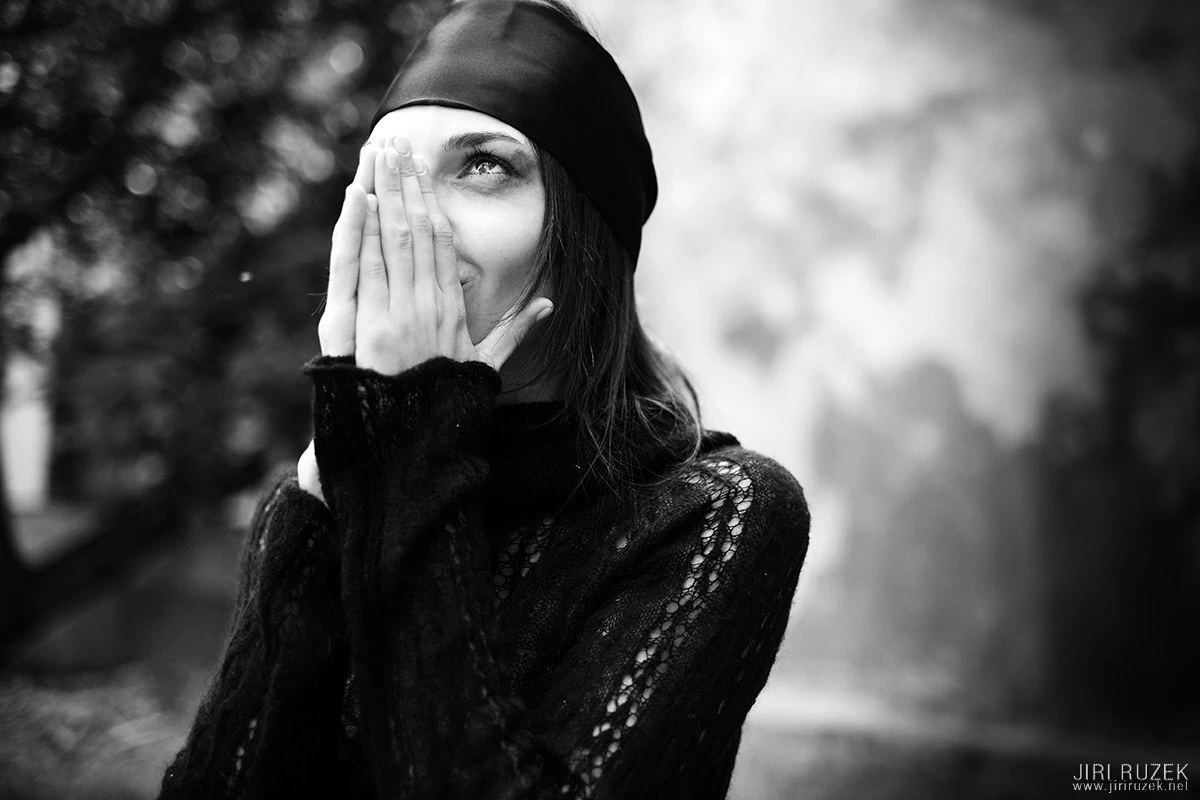
I admit it wasn’t my first time shooting blindfolded (I do it now and then), though it was the first time with Viki. For some it’s a cheap circus trick and pointless showboating, for others a miracle. For me it’s neither.
When I shoot this way, I see. I don’t see the exact reality but my idea of this reality. Which isn’t all that different, since when two people look at the same scene, each will see something different anyway.
„And what did you see?“
Try it. Put two people in front of a model (it doesn’t have to be a model). Let them look for a while, then blindfold them and ask them to describe what they saw. One may say „a nice woman“, the other, like a poet, will describe in flowery words the curves of her ankles, lips, eyebrows, the river of her hair, her scent and so on. We perceive and describe reality differently.
There is even a difference between what we see in the viewfinder ourselves and what we then see in the photo. You know how it is: sometimes everything in the viewfinder looks amazing and in the photo it then doesn’t. Or, worse still, the photographer sees it in the photo too, but nobody else does.
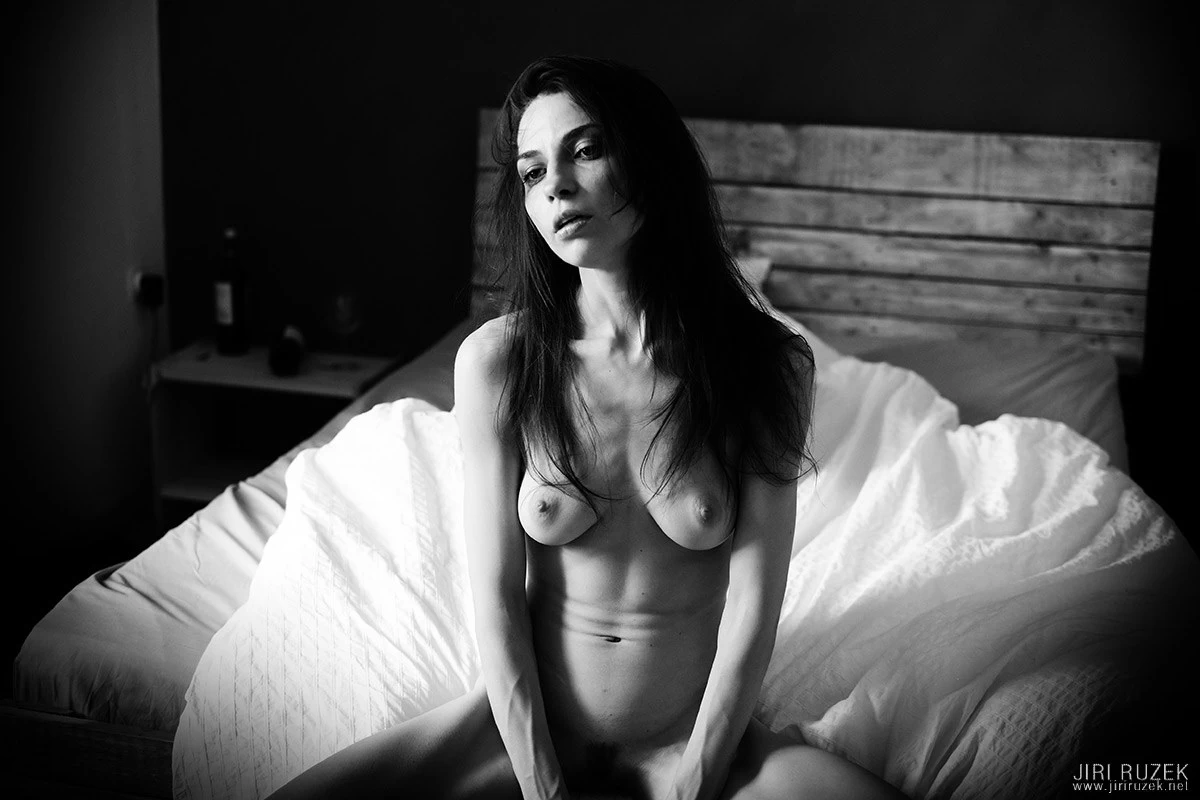
Even without a mask over my eyes, I fall into an instant trance while shooting and press the shutter at the moment when something fantastic is happening in front of me. Fantastic for me, for my perception. I’m connected to the image in front of me and, in my own way, the way I feel it right now, I transfer my fantasy into the photograph. If someone were standing next to me at that moment, they would see their own fantasy.
If I thought while shooting blindfolded that I can’t see anything, the result would be different. I imagine what is happening in front of me, and sometimes it may even seem that I’m waiting for the right moment. For a moment I feel. Even though reality is different and what’s in the photograph isn’t what I imagined, it remains influenced by my feelings, my harmony with the model, and it isn’t a purely random photograph.
How does it work technically?
I set the exposure manually (as always) so that the model was exposed according to my ideas. Instead of (as at other times) putting the focus point on the eyes, I set the autofocus to pick the nearest point in front of the lens. The camera sometimes misses, so you have to expect a few throwaways here, but most photos come out properly sharp. I risked a shallow depth of field and shot everything wide open (F1.4 with the Fujinon 35 mm lens). I held the camera with both hands up to my eye, as if I could see. That way I can aim by ear, keep the horizon level and so on. If I just held the camera in my hand, I’d just be taking random snaps; this way I can try, and I really do try to compose. The compositions of course come out differently, but sometimes they’re so bold and interesting that I wouldn’t dare to make them with my eyes open.
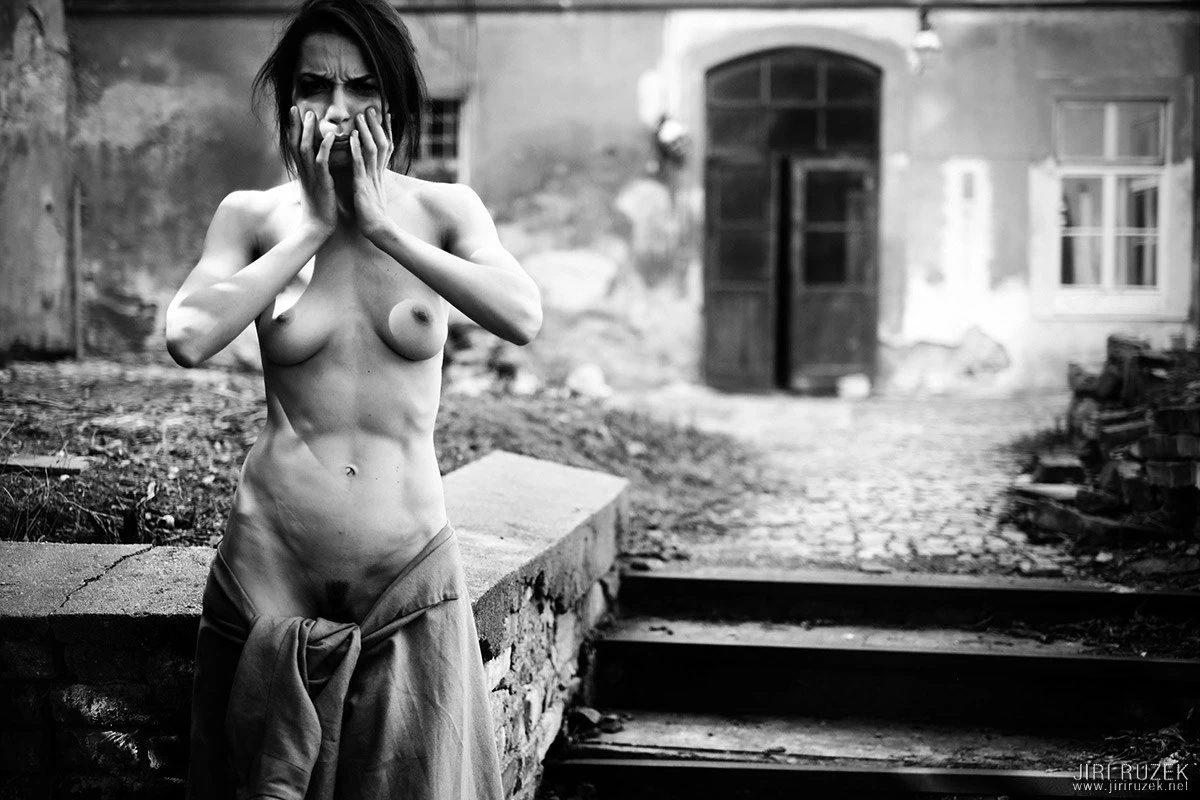
On the same wavelength with the model
For this way of shooting it is especially good to know the model and be tuned to the same wavelength. I shot Tereza and Viki like this. I know both of them inside out and we understand each other brilliantly while shooting, so even with blindfolded eyes my idea doesn’t differ much from reality.
Why is she crying?
I’ve been photographing Viki for six years, and for the whole time in our photos I’ve mostly emphasized her beauty. From all sides, again and again, only occasionally veering off somewhere. And this time we agreed it was time to do something different. Even though we both know that crowd-pleasers always win the likes, we wanted to shoot for ourselves, not for some purpose or intention. I came to the agreed shoot in Nerudova Street and explained to her what I wanted to achieve and how. Viki liked the idea and we went into action. Our experiment got the working title „Naked to the soul„.
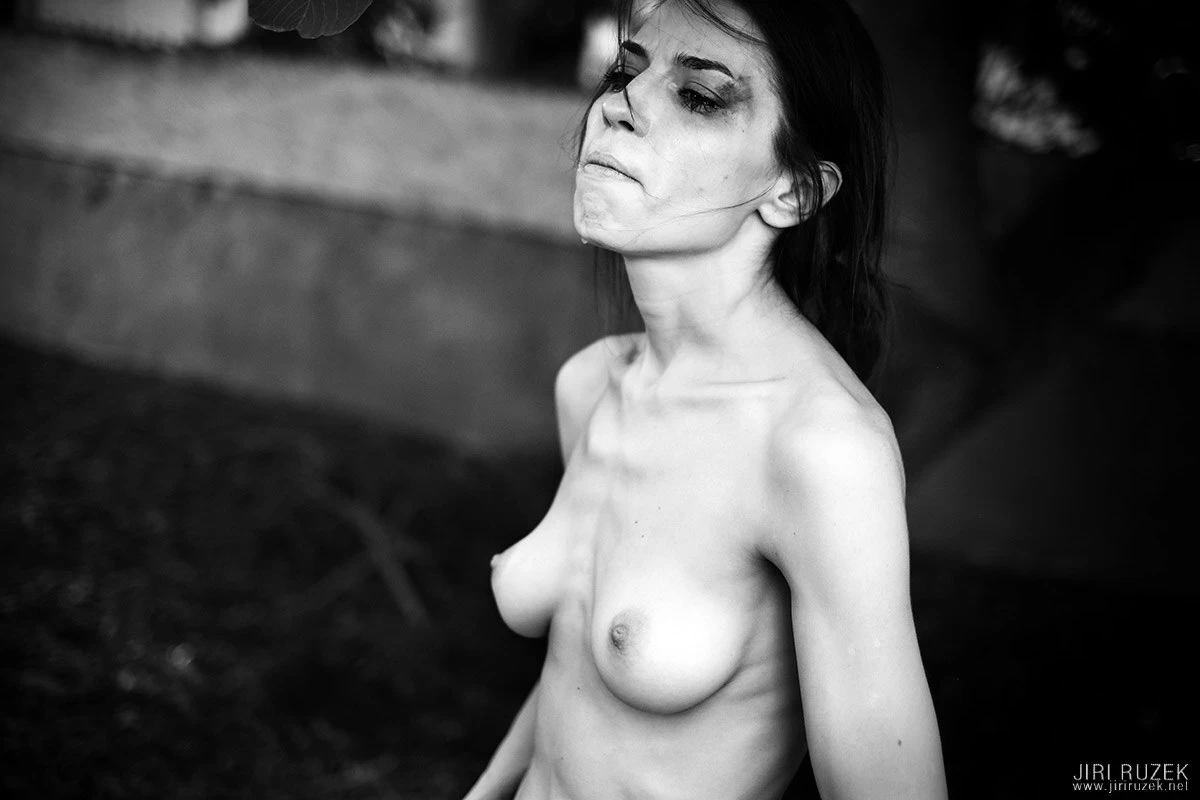
I checked the camera, set the exposure and put the mask over my eyes. For a while I just stood, listened and tried to perceive and imagine… Viki began to speak to me monotonously, almost in a whisper (and in Russian), in a reproachful tone, and within a short moment she burst into tears. She got so deep into her role that it seemed to me she had completely broken down, and after a moment I asked her whether she was alright and whether she wanted to stop. She answered aloud, laughing, that everything was fine and we continued. We alternated three different scenes and the whole shoot took something like half an hour. You can see the result in the photos. I took the mask off only during the breaks.
The photos are uncropped, unrotated, the composition is as it was shot. I only did my usual conversion to black and white.
Try it. We sometimes show it at workshops and we sometimes see people shaking their heads, thinking we’ve completely lost it. Then they try it, and afterwards we’ve heard things like „the best photos of the whole day“ or „the mask opened my eyes“.
And come see the exhibition at the Paul Pacey gallery (Nerudova 25, Prague); it was originally planned for a single evening but in the end it was extended until 25 September.