This page was translated by AI. Please be forgiving of any mistakes.
‹ Photo Notes · 15 ledna, 2012
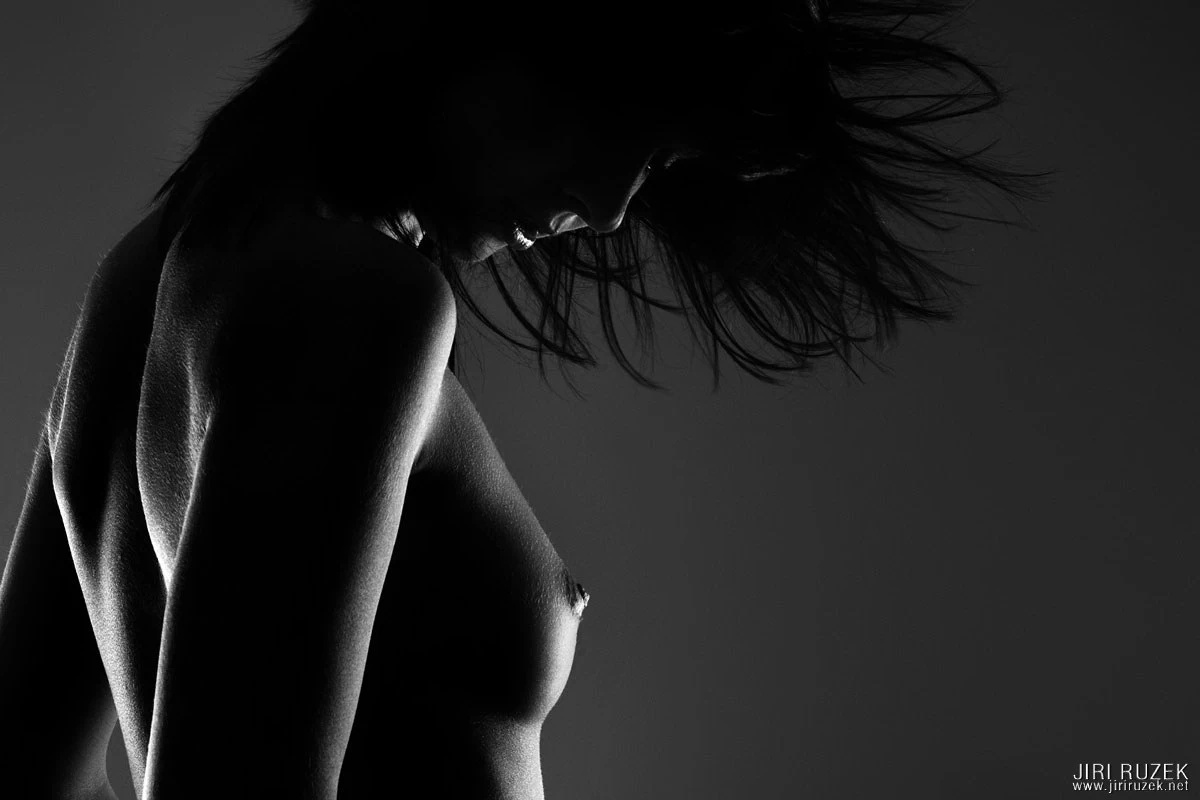
People often ask me how I lit this or that scene. One of the most frequently asked questions concerns lighting so-called low key nudes with the contours of the body drawn out, as can be seen in the illustrative photographs.
There is nothing especially complicated or secret about it; any sensible photographer will tell you how to do it. I didn’t discover this method either, and I once fumbled around quite long and needlessly. Perhaps if I had asked one of my more experienced colleagues right at the beginning, I would have saved a lot of time and disappointment.
I originally wanted to draw a plan of the placement of the lights, but it seems simpler, more sensible and clearer to show the lights‘ position in a photograph.
You will need two lights (it doesn’t matter much whether flash or continuous), which you place at the sides behind the model, at roughly a 45-degree angle – don’t take that as dogma; for the final effect it is necessary to experiment and it often depends on centimetres.
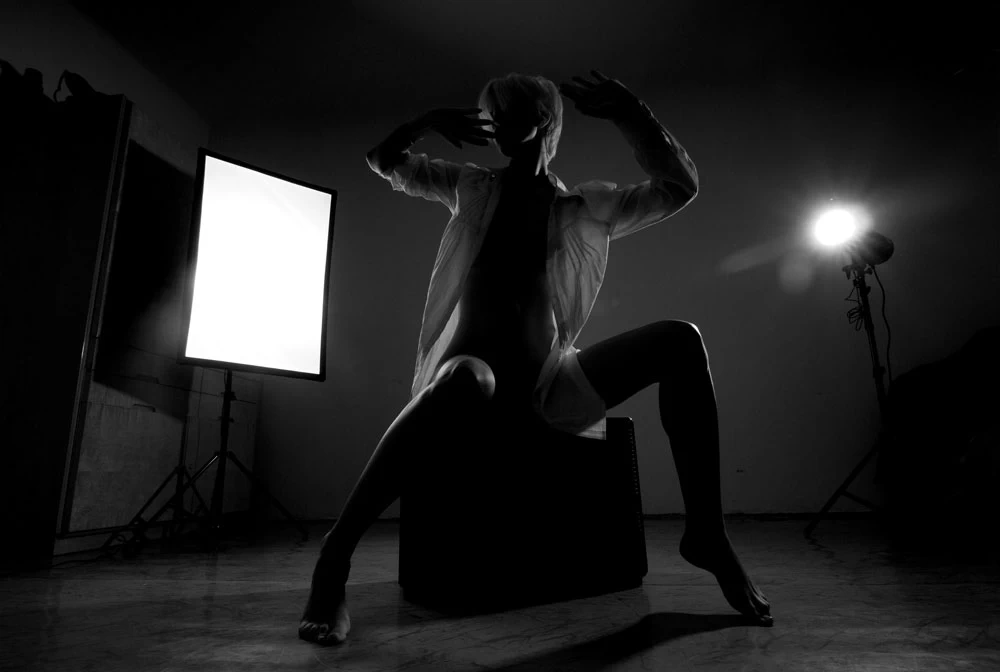
The lights shouldn’t be too far from the model; in extreme situations I have the lights so close that they almost touch the model from the sides. Then of course it is much harder to compose. The distance of the lights also depends on their power; the stronger they are, the farther away they can be. For me, the space I had to fit into was always important. In the photograph above you can see that a softbox is fitted on the left light, while the right one shines directly. It depends only on your intention whether and which diffusers you use; with softboxes, white umbrellas etc. the contours will be softer, and if you use silver umbrellas or direct light, the contours will be sharp (see the model’s left and right leg). You can also add a weaker light from the front, a so-called fill-in light, in case you want the model partly lit from the front as well. The fill-in function can also be partly replaced by a white or silver reflector.
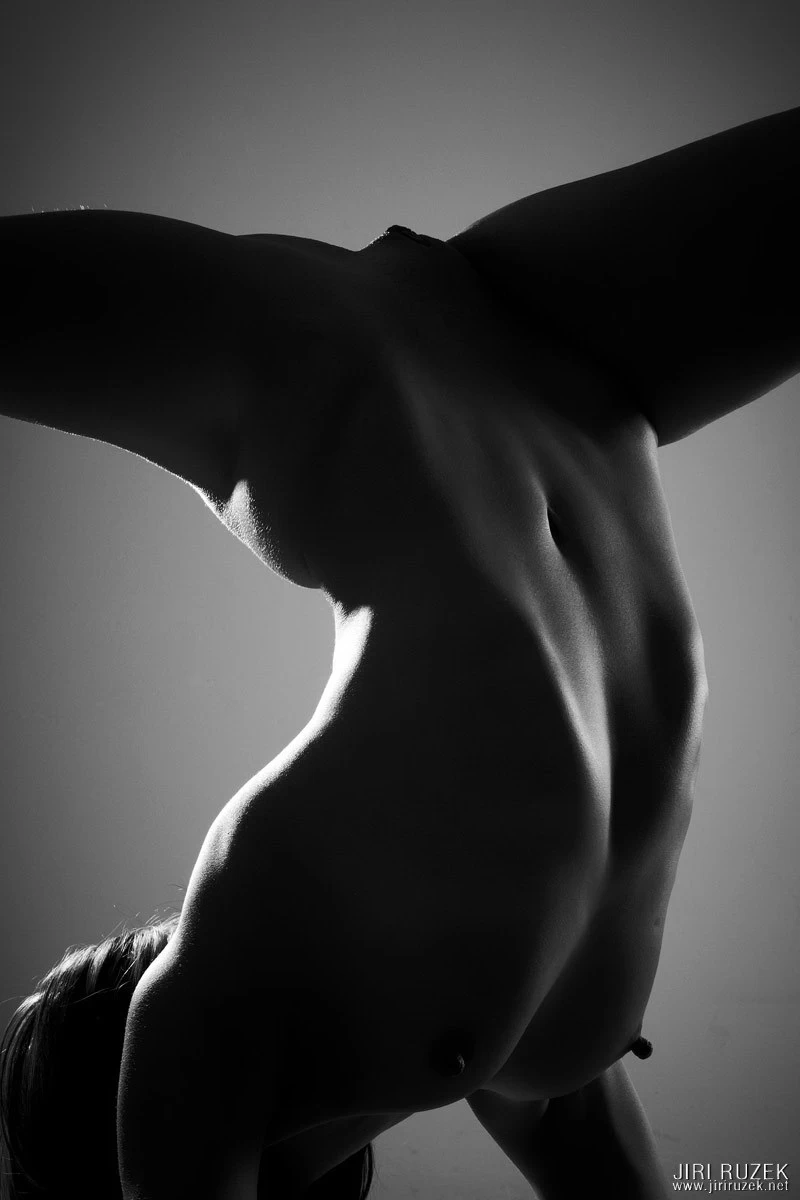
The light alone won’t be enough, though; the camera’s aperture setting is also important. Test and close the aperture as far as conditions allow – don’t be afraid of f-numbers 16 or 22; a high f-number gives your photographs contrast. Thanks to the high f-number you can comfortably shoot low key nudes in front of a white wall (see the samples); in the result the wall will be dark grey to black, as long as the model is two to three metres from the wall.
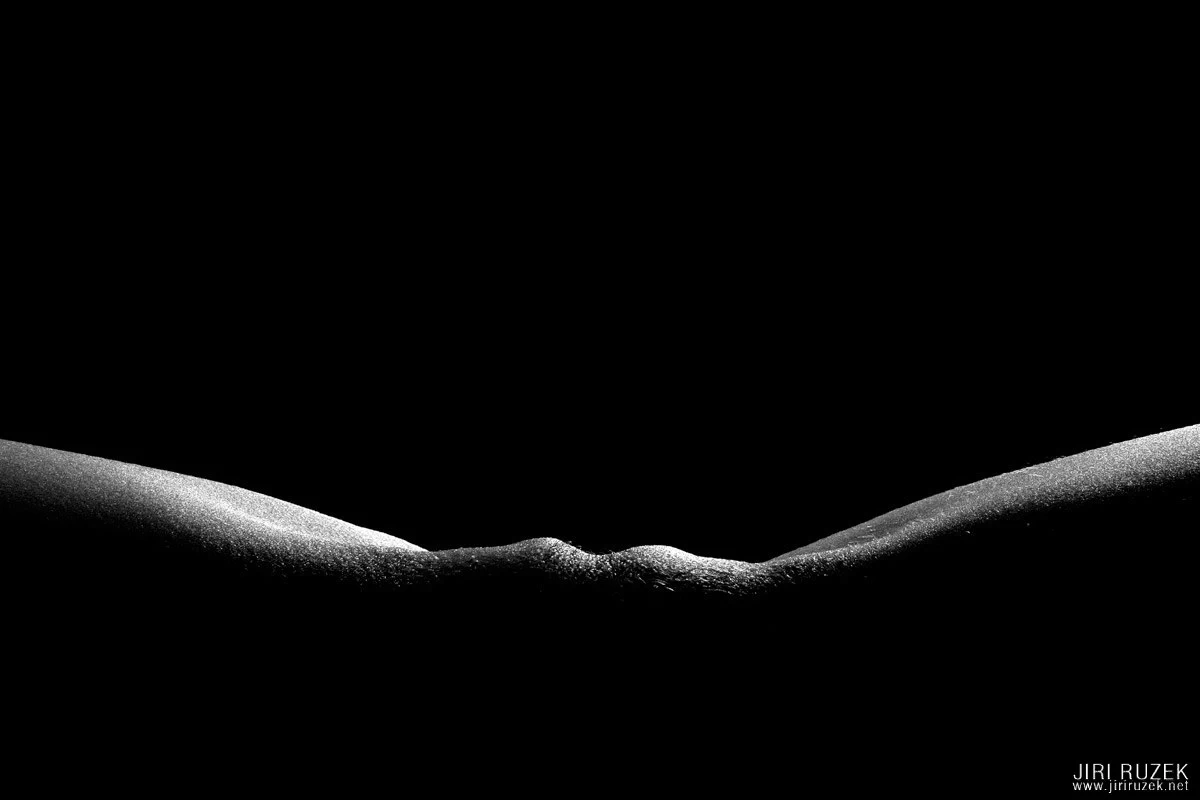
Anything else? No, this is the whole secret, the rest is up to you and your experimenting. Try changing the positions and number of lights and everything that occurs to you. Above all, try to bring something more into the photograph, something of your own; setting the lights and aperture alone won’t make a good photo. And don’t expect success on the first try; nothing works immediately, and in photography especially this very often holds.
Good light … outside it’s fucking snowing again …
Want to learn more? Visit the nude photography course.