This page was translated by AI. Please be forgiving of any mistakes.
‹ Photo Notes · 30 srpna, 2012
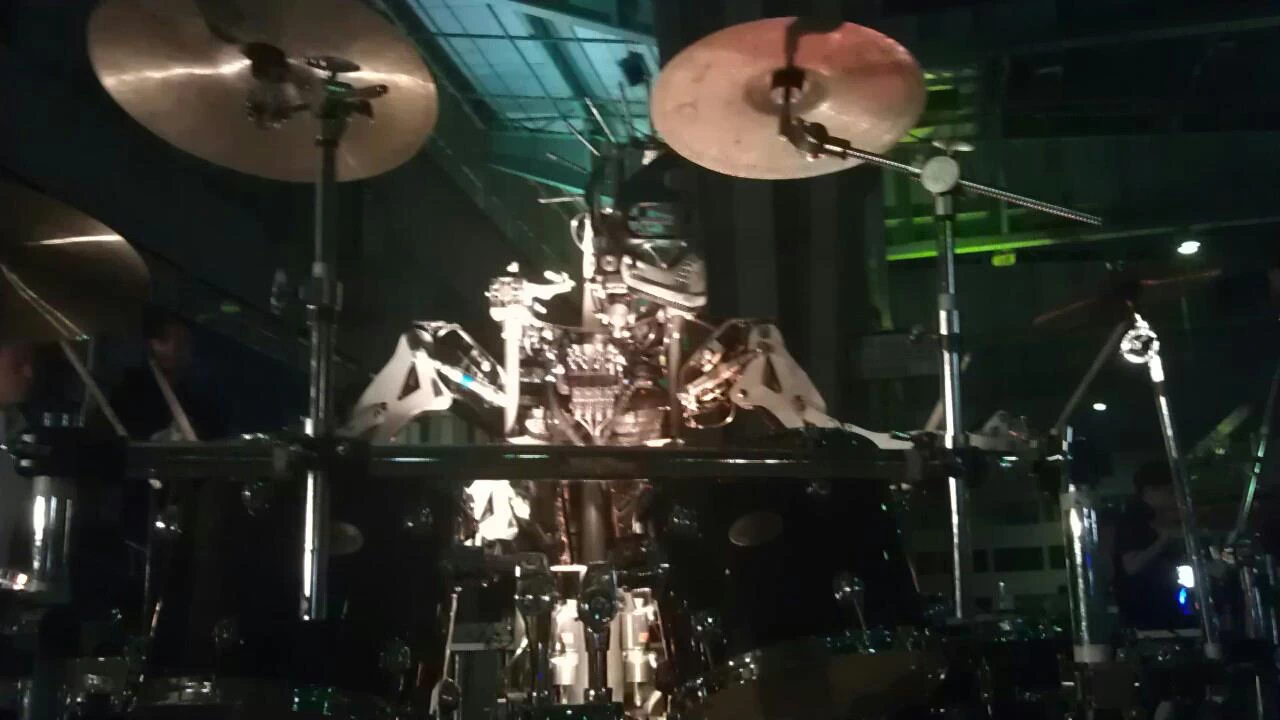
The title could not only begin this article but quite well end it, because it contains both the problem and its solution. You wouldn’t thank me for such an article, though, so let’s talk a bit about blurry photos.
When shooting with a lack of light we help ourselves in various ways – we use more sensitive films or „raise the ISO“ on a digital camera, open the aperture as far as possible and lengthen the time for which the camera shutter is open. Mobile phones and compact cameras often set these parameters without our knowledge. It is precisely long times in combination with the natural shaking of hands that are responsible for photographs blurred by motion.
How long a time can I hold by hand?
There is a simple rule about the reciprocal value of the lens’s focal length. A terrible sentence, right? No, it’s really simple – imagine you have a lens with a focal length of 50 mm mounted. A relatively safe time should then still be 1/50 of a second (one fiftieth) and shorter, so 1/100 and so on. With a 20 mm wide-angle lens you should hold times around 1/20 s. Conversely, with a telephoto lens of 300 mm focal length, times longer than 1/300 s are not recommended. Other focal lengths and times you can work out in the same way.
Of course you’ll meet people who will tell you that with a 50mm lens they can hold 1/8 s, and conversely others who won’t shoot with a time longer than 1/150 s. Our dispositions are individual, as is our courage to venture into longer shutter times. An important role is also played by the grip, which can be acquired through practice.
In general, then, with a short lens you can afford longer times than with a telephoto lens, which shakes much more in the hand. If you have a camcorder at home, you can try it – under the same conditions shoot a scene by hand with the shortest and then with the longest focal length. The first shot will look relatively steady; the image of the scene shot at maximum zoom will hop back and forth. The same happens in photography.
One hand doesn’t shoot
The „safe“ times recommended above can’t be taken literally as safe if you hold the camera in one hand or wave it around and dance with it. One hand never has the stability you get when you take the camera in both. Learn to always hold the camera with both hands if possible, press your elbows to your body, take a breath and hold your breath at the moment of taking the shot. In time you’ll get used to it and will shoot this way even when the scene is lit more than sufficiently. After shooting you may be a bit more tired, but you will definitely have a far smaller percentage of blurry photos.
Isn’t it better to use a tripod?
From the technical point of view certainly, but you don’t always have a tripod at hand, and it really doesn’t suit everything. You’ll easily photograph a landscape or the panorama of Hradčany with a tripod, but when shooting people, animals or other dynamic scenes, a tripod may be more of a nuisance.
Speaking of tripods, even a tripod can easily be shaken at exactly the moment you press the camera’s shutter button. A better way is to use the self-timer – after pressing the shutter button the camera sways a little, but quickly settles and only then does the exposure take place. Another option for limiting vibrations is „mirror lock-up“, but not every camera will offer you that.
Test and experiment; I wish you a steady hand. Actually both hands.