This page was translated by AI. Please be forgiving of any mistakes.
‹ Photo Notes · 15 ledna, 2012
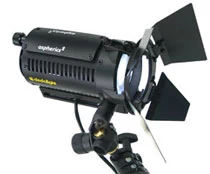 Mr Dedo Weigert of Munich was something of a tinkerer, and when in the nineties he began to develop for his own film-making needs a light that would meet his considerable demands, he probably had no idea what response his invention would meet. The goal was miniaturization while retaining all the comfort – a small, easily controllable device with unprecedented light quality, minimal electrical power consumption and low heat radiation.
That he succeeded in his aim is probably best attested by the Oscar (Scientific & Engineering Award) granted by The Academy of Motion Picture Arts & Sciences, as well as the Emmy (Engineering Award) from The Academy of Television Arts & Sciences. The most important argument will probably be that Dedolight lights are sold all over the world today and are regarded as a technological top.
What is the view of an ordinary user?
I must have this!
Like most photographers I started with incredibly makeshift lights and flashers and longed for real flash lights with huge softboxes, exactly the kind that the big photographers use. When I finally got to them, I slowly began to find out that this kind of light doesn’t amuse or satisfy me much. As Robert Vano says: „shine is unnatural, in nature things shine only when the gods are pissed off„. I longed for something different, and when I first saw this little thing at a colleague’s, it was clear to me that it was exactly what I was looking for. With a Dedolight spotlight you feel as if you were sitting in a theatre, that is exactly the character of this light.
It works!
When the salesman brought two ordinary cardboard boxes without any print from the warehouse, I smiled a little. He understood and added that this is already progress, at first they supplied it only in bubble wrap. In one box was the light head DLH4 and in the other the 24-volt power supply with dimmer DT24-1. At home I immediately unpacked the light, attached it to a stand and switched it on. The first impression can almost be called disappointment. It’s small, it can’t do anything special; you switch on the light, set its intensity with the dimmer and determine the size of the light cone with the „focus knob“. Nothing more, but nothing less. It shines like in a theatre and even looks like an ordinary theatre spotlight, but it fits in a camera bag next to the other equipment.
Description of the equipment
DLH4 – an aspheric spotlight with a focus, enabling a range from spot (4.5°) to soft diffuse lighting (48°). Depending on the power supply used, it is fitted with a 12 V/100 W or 24 V/150 W halogen bulb – in the second case you gain 80% higher light output. The light intensity then roughly corresponds to ordinary 500 W lighting. Filters, barn doors and other accessories can be attached to the spotlight.
DT24-1 – a 24V/150W power supply (transformer) with a continuous dimmer. On the top you will find a three-position switch and the knob of the continuous dimmer. The first switch position is for dimming mode, the second gives a colour temperature of 3200 K, and in the third position we get maximum output with a colour temperature of 3400 K.
In practice
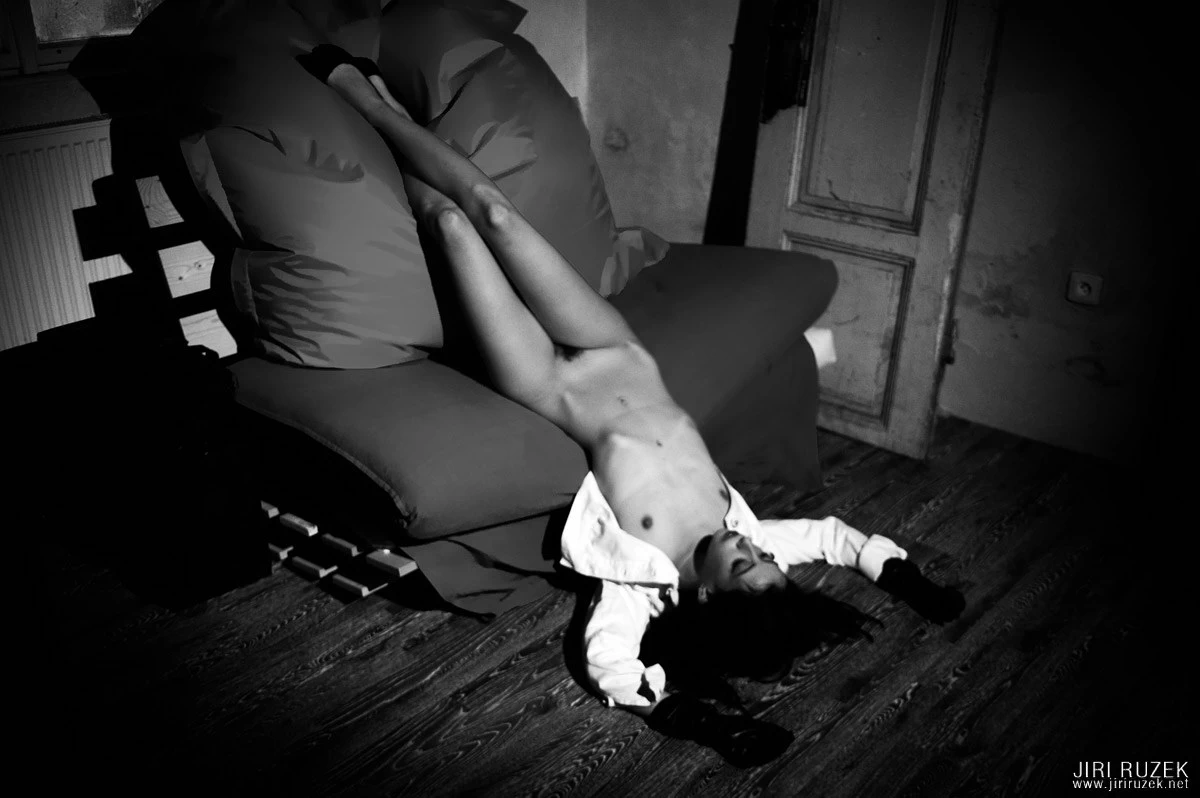
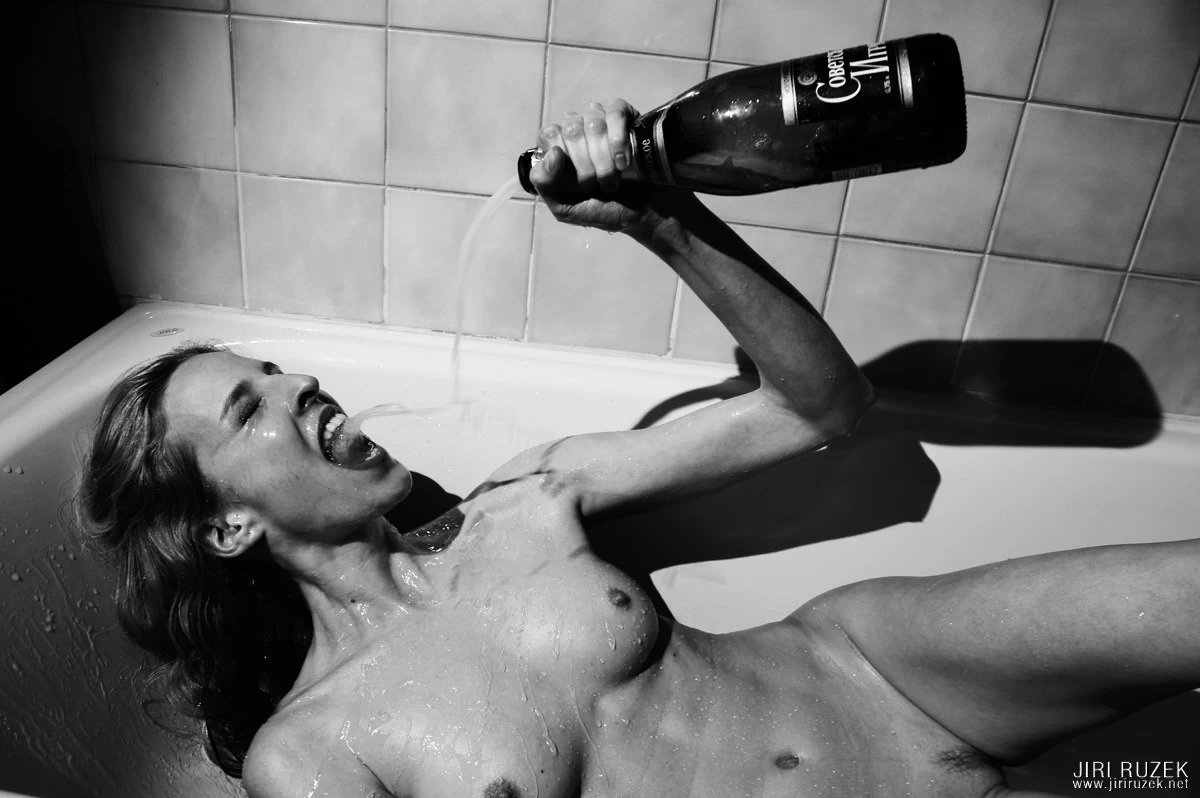
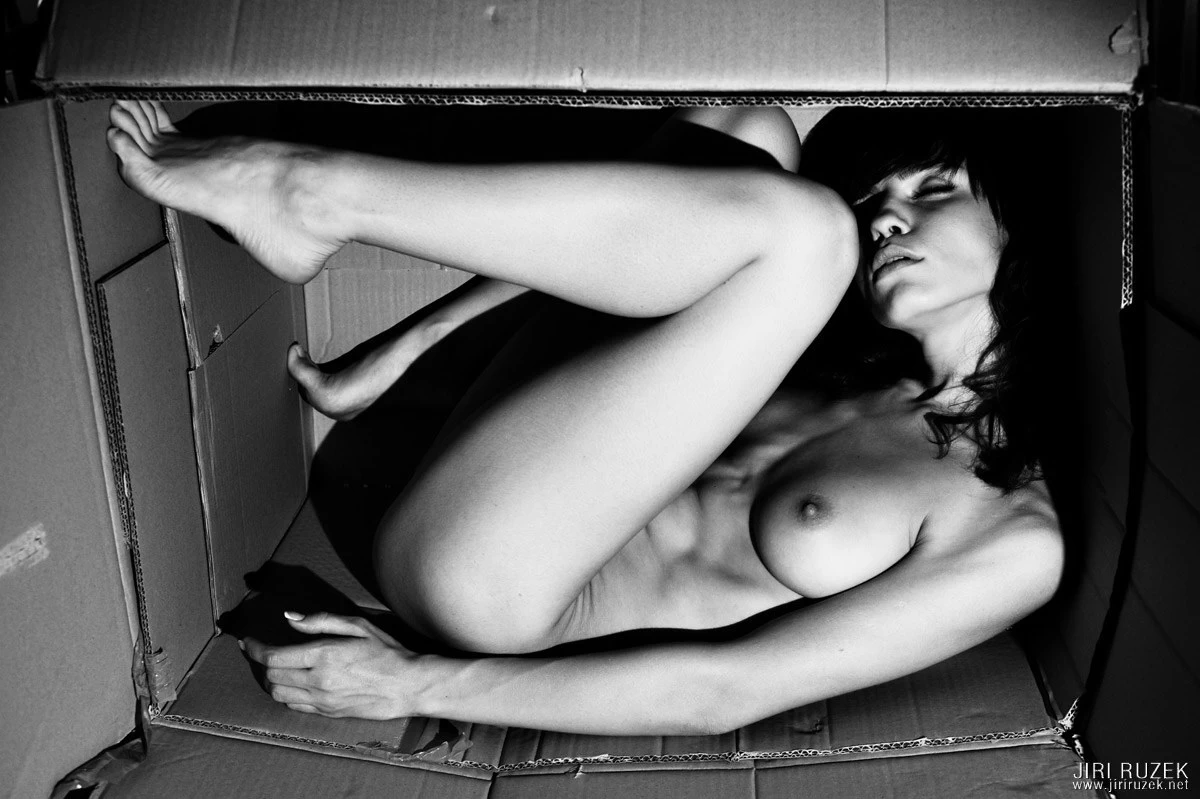
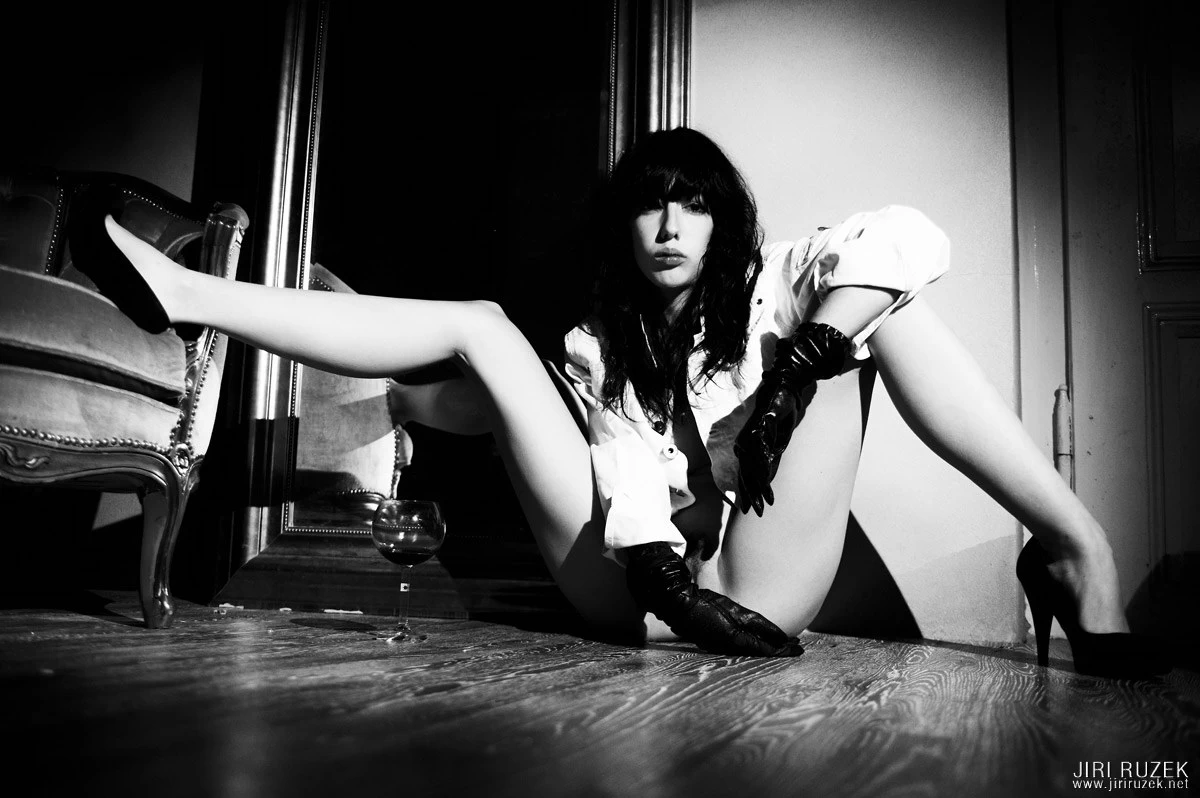
Dedolight really has an incredibly theatrical character; thanks to the aspheric lens the light distribution is even and ends almost abruptly at the edges of the circle. It resembles lighting with a honeycomb grid, but there is the option of regulating the diameter of the light circle. The light gives a beautifully sharp and above all undoubled shadow. Of course it isn’t suitable for everything; because it is very typical and recognizable, photographs lit with Dedolight look as if they had a vignette. It suits best very dramatic and contrasty lighting.
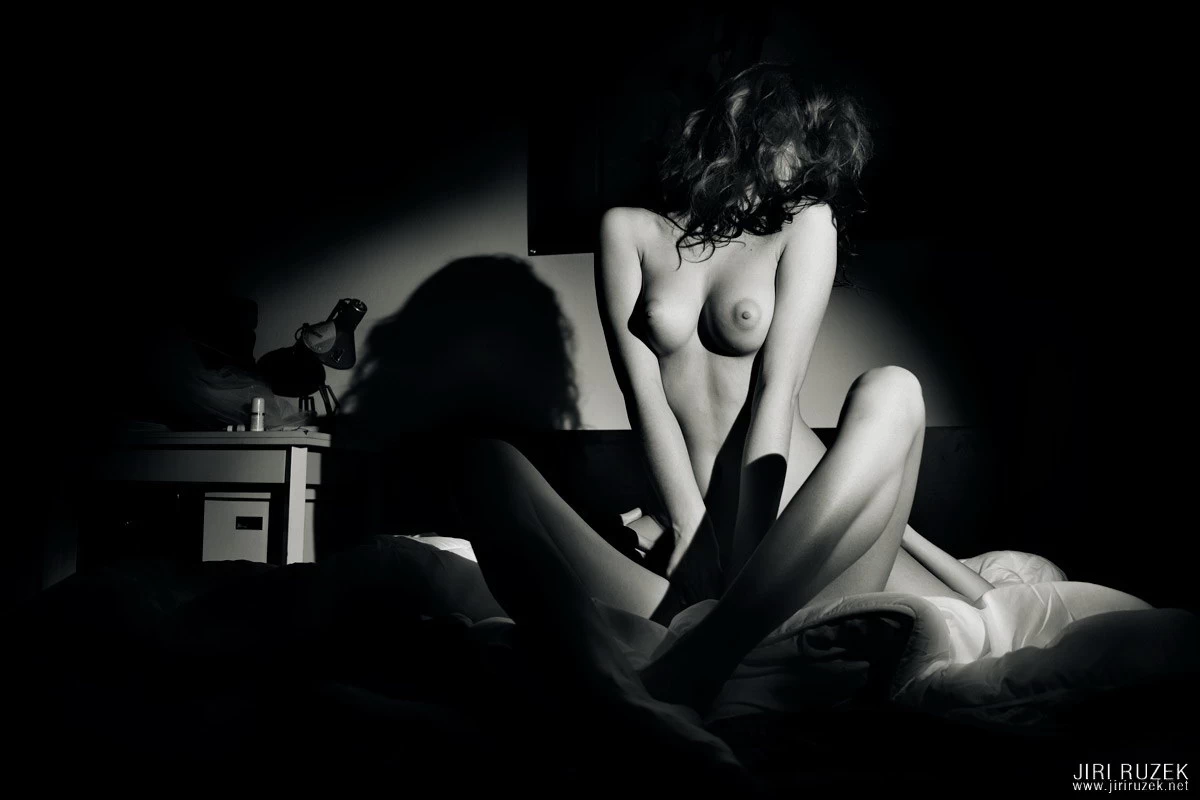
I don’t use the dimmer, because the output of the light is not particularly high, so I always shine at full power. I can well imagine using the dimmer in a situation where I had more of these lights, but I don’t. When shooting I mostly use ISO around 800 (depending on the distance of the light from the photographed object). Fortunately for the Nikon D700, ISO 800 is no compromise in quality, but with cheaper cameras it could mean a big increase in noise. Given the output, I don’t recommend using the 12V power supply.
The construction of the light is simple and precise. In almost every detail it resembles big theatre lights and looks like a 1:4 or 1:5 scale model. The focus system consists of a simple mechanical slider with a screw lock. The slider moves the halogen with the parabolic mirror – simple and ingenious. Soon after the purchase I managed to knock the light to the ground from a height of about 180 cm – the stand simply lay down. When I saw it falling, I was in a second sweating all the way to… well, you know where… But nothing at all happened to the light, neither the lens nor the halogen bulb cracked, not even a single sign of the fall appeared on the housing.
Advantages
- compactness – the spotlight is 17 cm long and weighs half a kilogram
- low consumption – only 150 W at maximum output
- truly quality continuous light with beautiful shadows
- little radiated heat – it heats, but can be taken in the hand without injury
- indestructible construction
Disadvantages
- after switching on, the model has to get used to it for a while, the light is relatively sharp – everyone has differently sensitive eyes, and in one case I already thought I would have to choose flash, but in the end the model got used to it. Even so, there is a risk she will squint.
- the focus slider could run more smoothly – it is only a trifle, but it occasionally drags a bit
- the absence of a grip on the back and on the joint of the vertical rotation – you have to tilt the light by force against the resistance of the nut and hold it directly by the hot body – probably it is expected to be attached permanently or, on the contrary, on a stand with some movable head
- higher output would be welcome, it would gain lower ISO and shorter exposure times
- price – one light with a transformer costs over 15,000
Conclusion
Dedolight does only one thing and does it really well – it shines. It is rightly regarded as the peak of current technology and I don’t regret the considerable investment at all. The price you pay is for the idea and truly precise workmanship and quality light. But when I imagine a scene lit with, say, five Dedolights and multiply the purchase price, I feel faint. I think that if I expand my lighting kit in this direction in the future, I will choose one Dedolight as the main light and look for supplementary lights from competing brands. I won’t get the comfort of Dedolight, but for the price of one I will buy another two or three.
Manufacturer’s website – www.dedolight.com
Addendum after a year of use
Still satisfied; except for a few shots taken in daylight, all my photographs from 2010 were lit with Dedolight. Almost exactly after a year of use the first halogen bulb burned out, which I consider a very decent lifespan. Replacement is quick and simple, only there is rather little room for fingers. An investment in an Osram halogen bulb of about 120 CZK.
Several colleagues scolded me in discussions for the way I use Dedolight and for the fact that this article may lead to the idea that it is a universally suitable light for photographing people. Not at all, it is very specific and that is exactly what suits me about it; for classic ways of shooting I would of course recommend other kinds of lighting. The purpose of the article was only to inform about this alternative, interesting to me.
You can order Dedolight online, for example from FotoŠkoda. You will need the Dedolight DLH4 spotlight, the transformer with dimmer DT24 and optionally the DBD8 barn door or other accessories.