This page was translated by AI. Please be forgiving of any mistakes.
‹ Photo Notes · 6 srpna, 2016
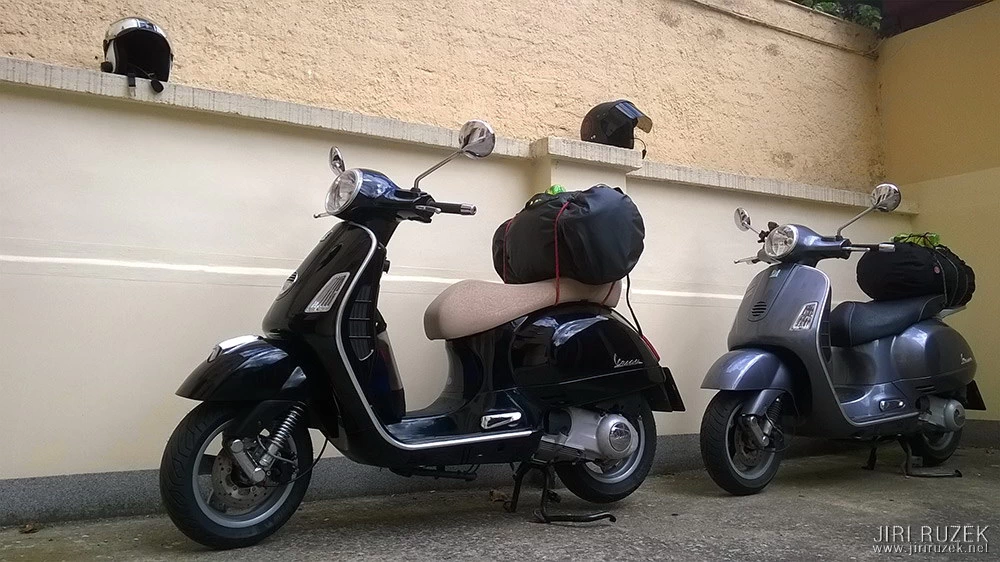
It’s raining outside, which is changing our plans yet again, so it’s time to start writing about the incredible experiences of our just-finished Vespa trip in search of sun and sea. Before we forget half of it.
How did it all begin?
For two years now Lída and I have been devoted to the Italian phenomenon called Vespa, and we always admired the courage and perseverance of other Vespa riders criss-crossing Europe on their beauties. Lída had a small 125 with ten-inch wheels, a cheerful little runabout for the city or the waterside, nothing for long distances. We did ride 900 kilometres on it last year during a holiday, but it really wasn’t meant for travelling abroad. And we wanted to go there. A Vespa simply belongs in Italy, by the sea and in the sun. Luckily Piaggio, the maker of the Vespa, thinks of more demanding travellers too and offers the much more comfortable and powerful Granturismo line with twelve-inch wheels and 200, 250 and 300 cc engines.
So we decided to upgrade: I got a Vespa GT 200, Lída a GTS 250, and off we went. To the workshop of our favourite Beppe, an Italian wizard of Vespas in Prague. To the workshop because both Vespas were second-hand, mine from a Czech owner, Lída’s a direct import from Italy. Beppe did a basic check and service, changed the oil and tyres, fitted USB sockets and so on; we kept thinking up more and more while pressing against time, as the departure date was getting closer.
I almost forgot: Lída had to get a licence for a big motorbike (10 days) and have the Italian Vespa re-registered onto Czech papers (a week). On Saturday I had a workshop, on Sunday we wanted to leave for 13 days in all, but she only got the Czech plate on Monday afternoon, so on Tuesday we finally set off. The trip was planned for 11 days, because we wanted to be back for PragoVespa, an international meeting of crazy people like us.
Kit for the road
Each Vespa carried a 50-litre waterproof travel duffel, strapped with „bungee cords“ to the seat, the rack or both. Lída carried sleeping mats and sleeping bags in hers, I carried clothes, shoes and other bits. Under my seat was the tent, under Lída’s the rain gear and a handbag. On our helmets we had intercom communicators, a great thing; while riding we talked to each other even at a distance of several hundred metres, and via bluetooth each of us was connected to our own phone, so we could even make calls or receive directions from the navigation. A solar charger (power bank), USB cables for all the devices and once again the indispensable bungee cords of various lengths and a bungee net. Under it a PET bottle of water, refilled along the way at petrol stations and campsites. A patch kit for punctured tyres, which luckily we didn’t need.
Nothing according to plan
Our route was drawn out fairly precisely, but largely left open. We had no accommodation booked anywhere in advance, only campsites picked out around the route and the determination to sleep anywhere: in a guesthouse, a hostel, under the open sky… We followed the motto „we’ll get as far as we get“. Still, we had a plan of how far we wanted to get each day; with so little time it couldn’t be otherwise.
Everything turned out differently, all the plans fell apart, but surprisingly for the better. With a couple who have been together 12 years you might expect a serious crisis in such situations, a search for the culprit and a daily contest for the bigger fool (with a clear winner in advance). I’m not claiming we didn’t quarrel once during the whole trip, but every change of plan brought us possibilities and experiences we had never dreamed of, and in the end we were grateful for every shortcoming. All those shortcomings were perfect and unforgettable (I’m lying, that’s why I’m writing it all down, so I can remind myself). Were I a Christian, I’d have to say God guided our paths; as a heretic and esoteric I lean towards the version that the sun and stars were on our side.
Day 1 – Kvilda, Šumava
Cold, and closed after nine
We set off only in the afternoon; the ride was one of the shorter ones, about 200 km south to the German border, where we wanted to sleep at a Czech campsite and head out into the world in the morning. By chance, though, a friend of ours was close to the campsite we’d picked, and we accepted her invitation to stay in a pleasant apartment.
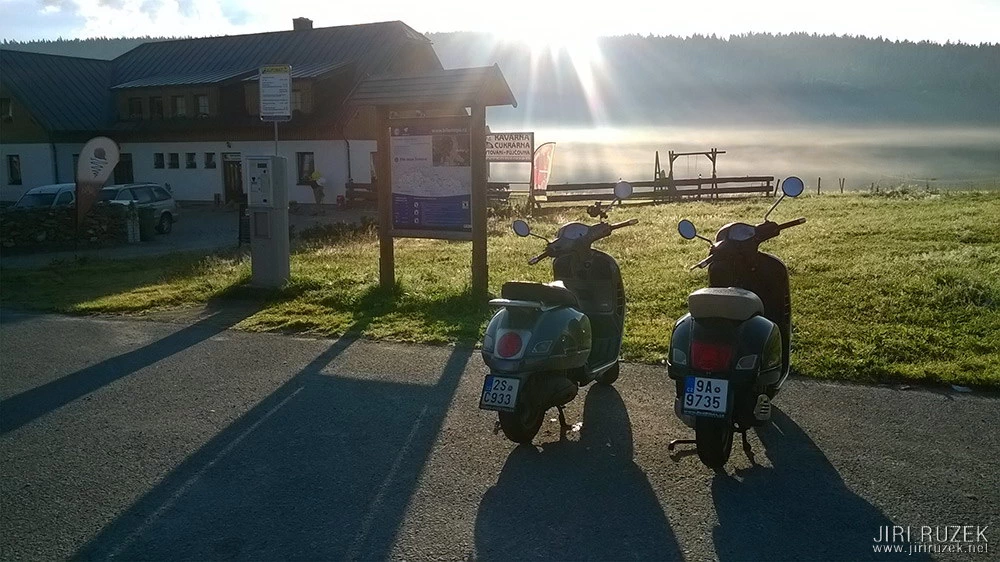
We rode through the Šumava forests after eight in the evening and the July afternoon heat turned into unbearable cold. Frozen, we longed for the warmth of a restaurant and some grub. By the time we had unpacked it was past nine and everything around was closing. A bottle of wine and muesli bars became our dream dinner.
On the way to Šumava I noticed that my petrol was dripping a bit. In the morning, with the help of a local handyman, we tried to repair it: the gentleman took out pliers, shortened the hose and fitted it a bit further along. At that moment we understood it was rotten, and the problem got even worse. The navigation found us the nearest garage in Vimperk, 20 km away (Auto Jamra, an authorized Kia service). When I was a kilometre from the garage, Lída reported over the communicator that the petrol was no longer dripping but spraying onto the hot exhaust. Fortunately the garage was downhill and I reached it without the engine. They fitted a new hose and we set off for the German border, delayed and aware that Italian Bolzano was no longer an achievable goal for today. As the new goal we chose Innsbruck in Austria.
Distance ridden about 200 km
Day 2 – Passau, Salzburg, Innsbruck
Ordnung, cheap campsites and Alpine peaks
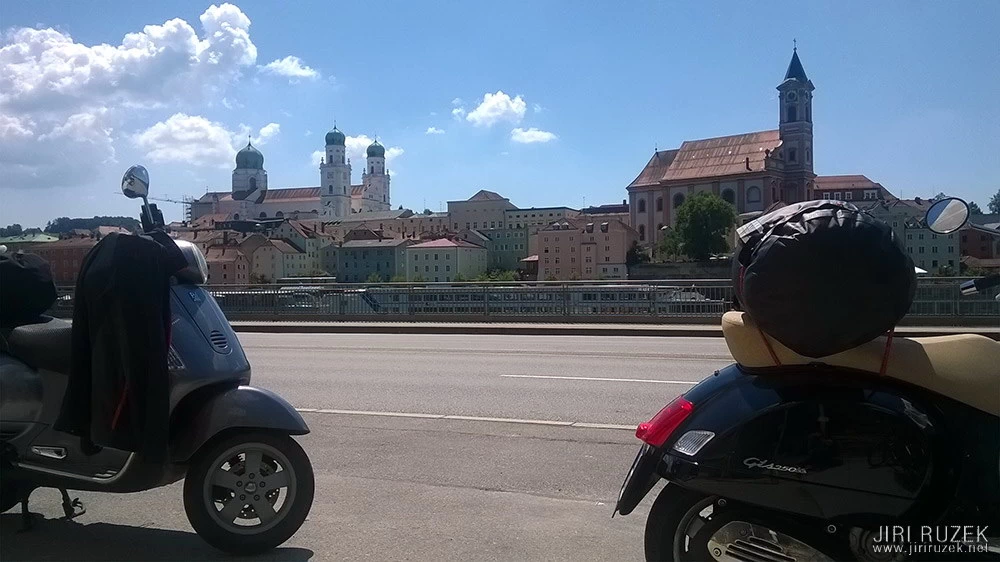
Riding on Bavarian and Austrian roads was great; the repeated crossings between Germany and Austria we sometimes didn’t even notice. In Passau and Salzburg we stopped only to stretch our stiff bodies and rushed on, surrounded by Alpine peaks, towards Innsbruck. We forgot about Bolzano and followed the navigation to Judenstein campsite in nearby Rinn. Reception was already closed, but a sign pleased us: „find a free spot and register in the morning“. Trusting Austrians. We slept, paid in the morning and left.
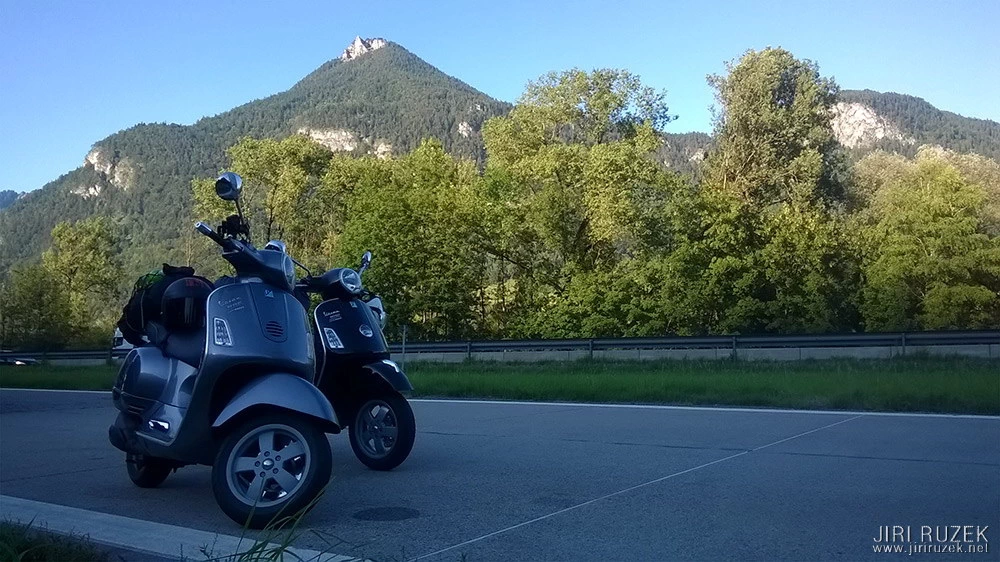
Campsite price 17.70 EUR, distance about 420 km, partly on German and Austrian motorways.
Day 3 – Brenner, Brixen, Bolzano, Trento, Verona
Serpentines, K. H. Borovský, Juliet and donkey ragù
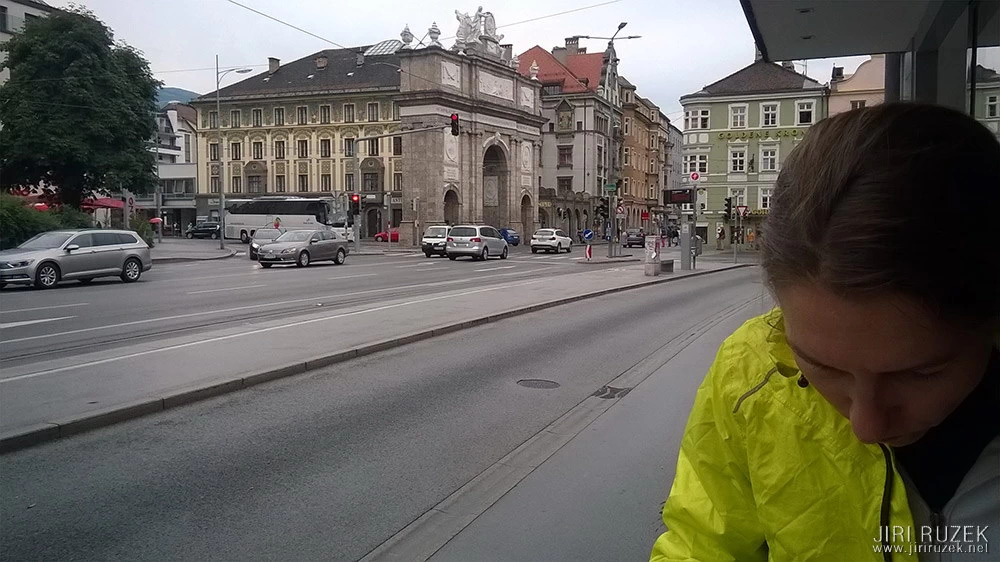
After a slightly rainy breakfast in Innsbruck we set off in our rain gear towards the Brenner Pass. It’s only around 40 kilometres to the Italian border, but the road (full of bikers) winds incredibly and took us over an hour.
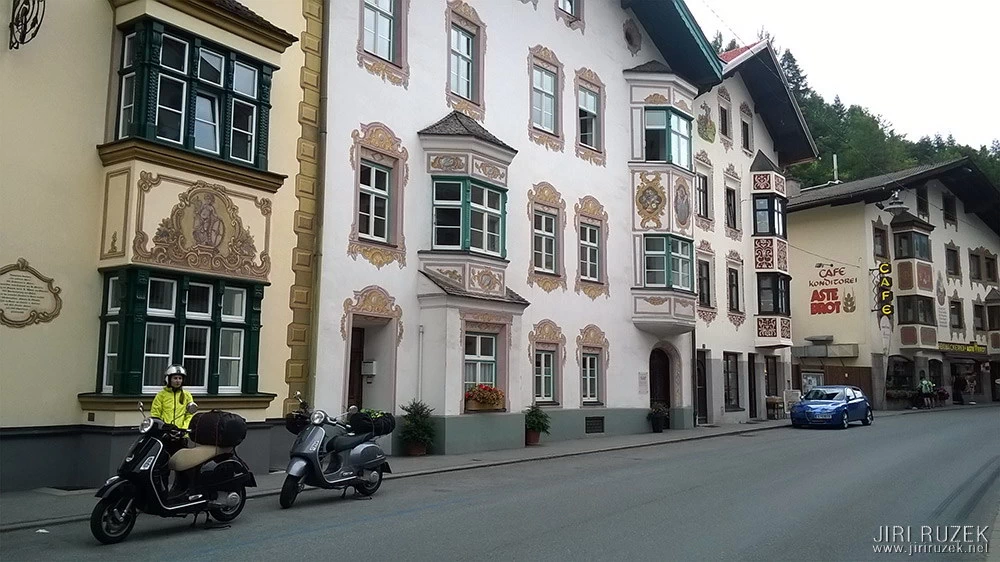
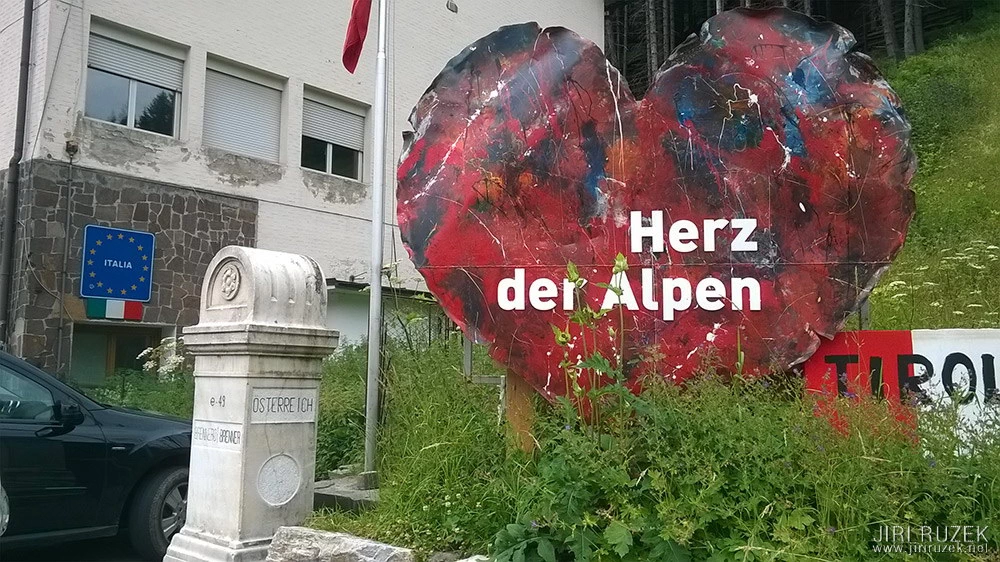
Even though northern Italy at Brenner is markedly Tyrolean, including bilingual signs and village names, you recognize at once that you’re in Italy. Everything is a bit more cheerful and playful; Austrian discipline and settledness give way to the Italian style and exuberance. At every step the Italians show that they love life. The road still winds, but more kindly, and you can go much faster.
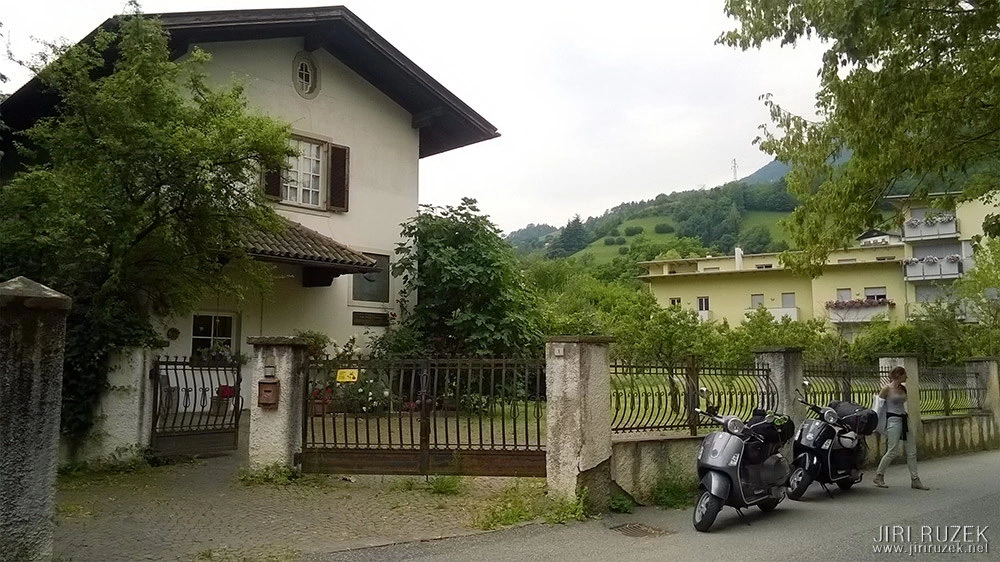
In Brixen (pardon, Bressanone) we stopped for a break at the house of Karel Havlíček Borovský, only about 200 metres from the main road. In Bolzano we had a snack in a park and rode through Trento without stopping. All the way to Verona we had breathtaking mountains, mountain streams and rivers around us; a bit below Trento we felt for a moment that we could smell sea air, even though the sea is still hundreds of kilometres away. Around Trento it was also incredibly windy, at moments we thought we wouldn’t make it. We rode through Rovereto without stopping, there was no time.
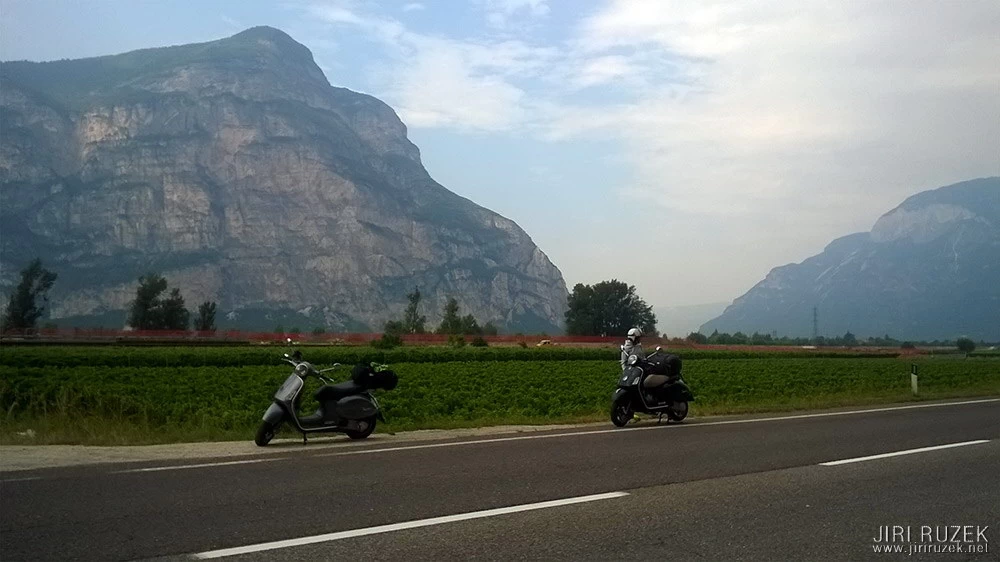
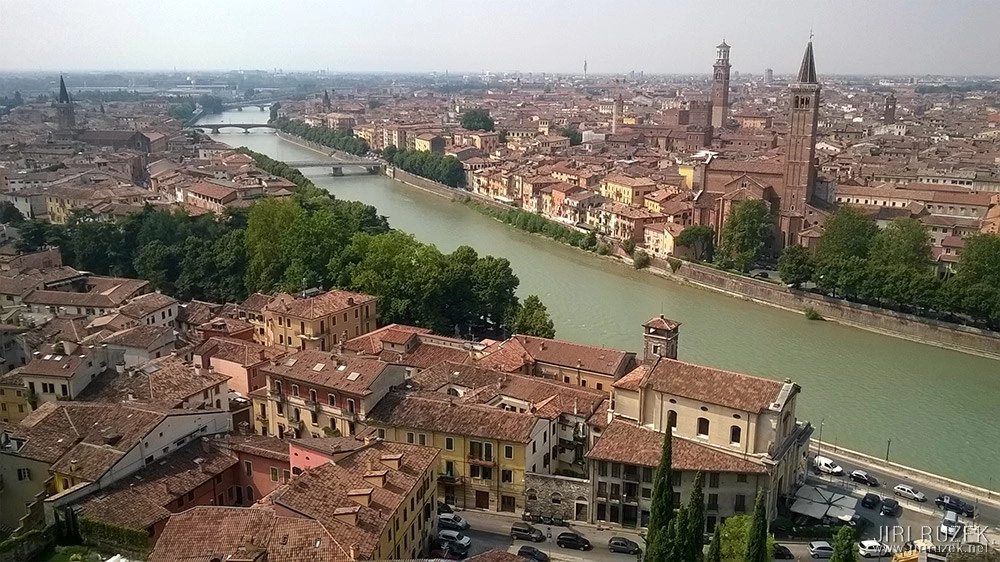
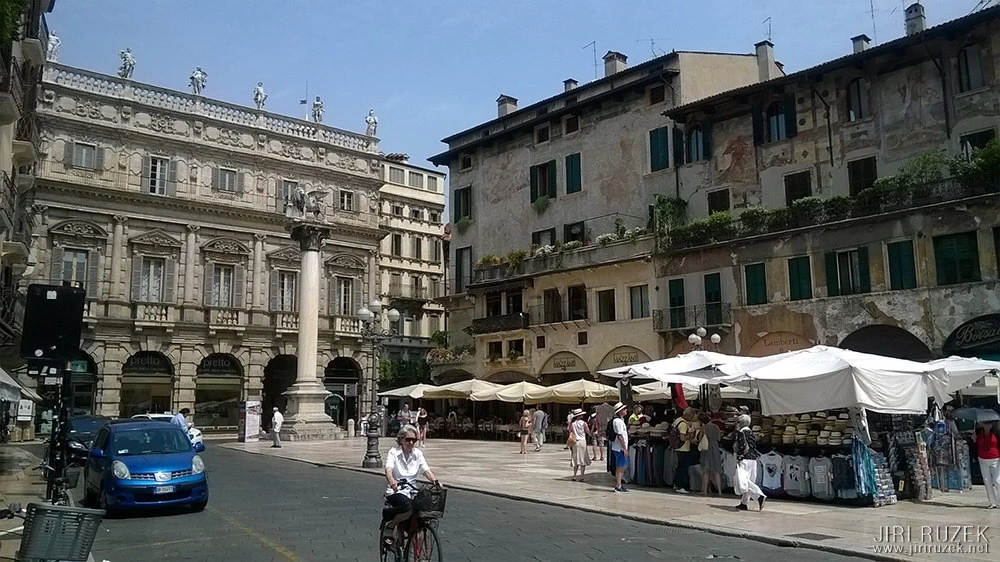
By the original plan we wanted to get from Bolzano all the way to Venice and stop in Verona only briefly. Thanks to the delay we anchored here for the night and didn’t regret it. The navigation led us to Castel San Pietro campsite, lying really on the castle directly above the centre of beautiful Verona. Our Vespas parked on a viewing terrace a short way from the tent and looked down on the red-brown Veronese roofs. After dinner in the historic centre right below the castle (lots of horse meat gets served here; I had bigoli, thick spaghetti, with excellent donkey ragù) we took a walk, slept, packed the tent in the morning and, with our luggage on the Vespas, stayed in the centre for the whole morning. Florence is beautiful, but Verona (at least the old centre) came across as a perfect urban whole. Actually perhaps not perfect, a bit worn, at the same time stylishly colourful and welcoming, like Rome for example. Compared with sprawling Rome, where you can discover things for weeks and weeks, I’d recommend a visit of about two days. After that you might, as in Florence, start to get bored unless you have friends, work or some specific programme here. Other Italian cities were waiting for us.
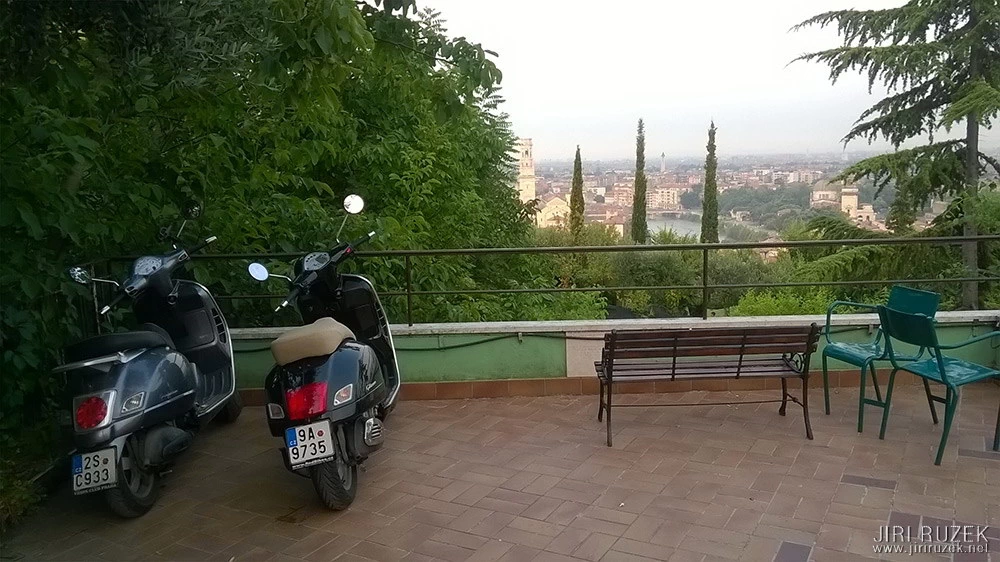
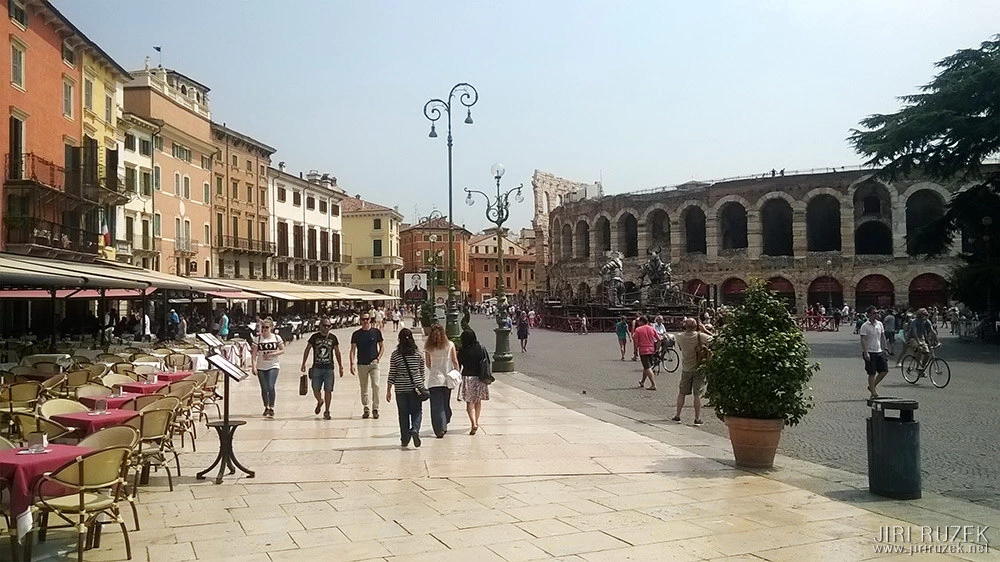
Campsite price 37 EUR, distance about 290 km.
Day 4 – Vicenza, Padua, Venice
By Vespa across the sea to the city of loose women, hawkers and clowns
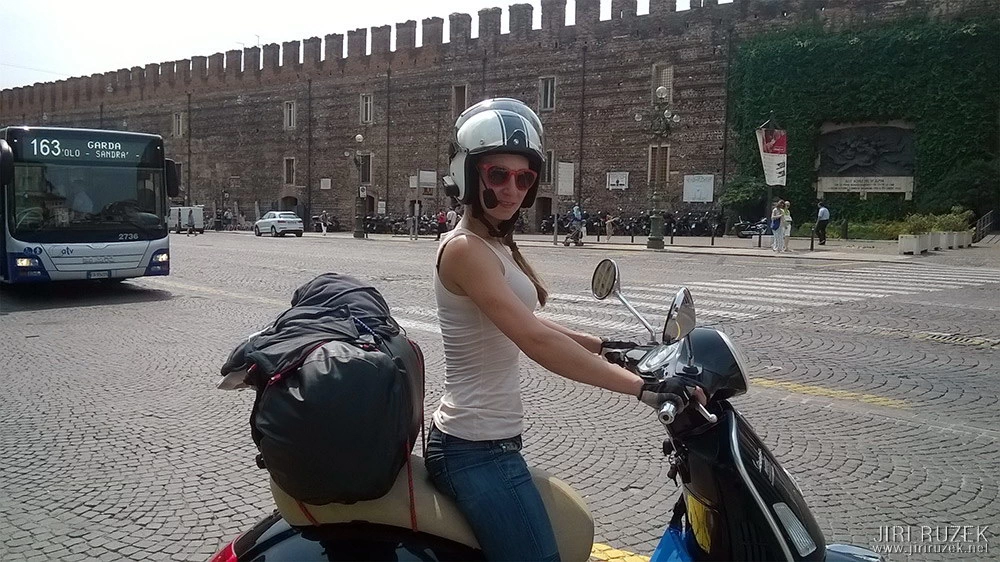
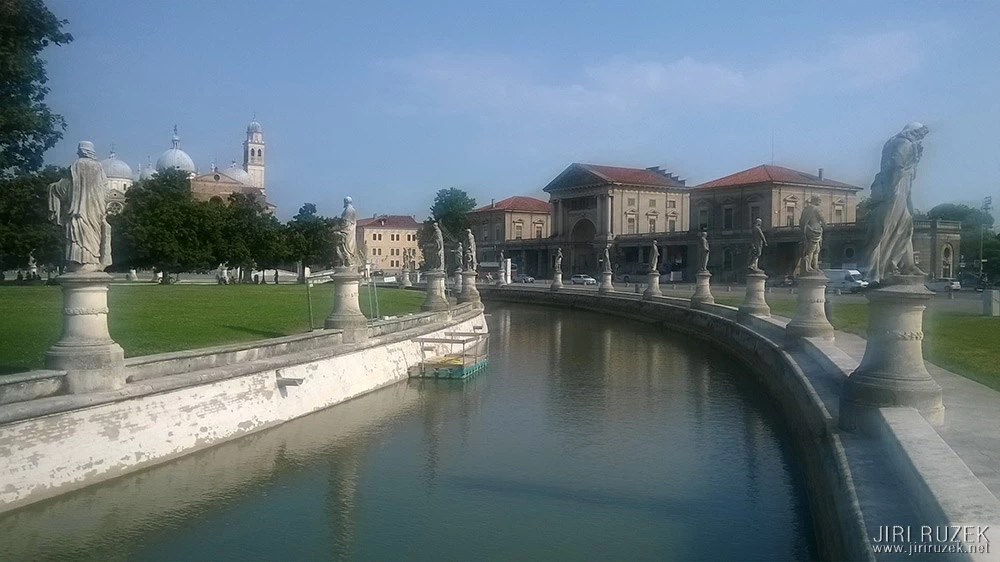
With Verona the mountains disappeared and the ride through the Veneto was (apart from a bazillion roundabouts) smooth but boring. This region boasts beautiful cities, but the landscape is flat and uninteresting. From Verona to Venice it’s only about 120 kilometres, and with that knowledge we wrongly settled into a leisurely pace. We left Verona only after noon, lingered rather pointlessly in Vicenza (a pretty little town, but Italy offers dozens like it, and an hour’s visit was more than enough for us). Padua was more interesting, for me anyway; Lída wasn’t much taken. I recommend a visit; you’ll definitely have a few hours of things to admire here.
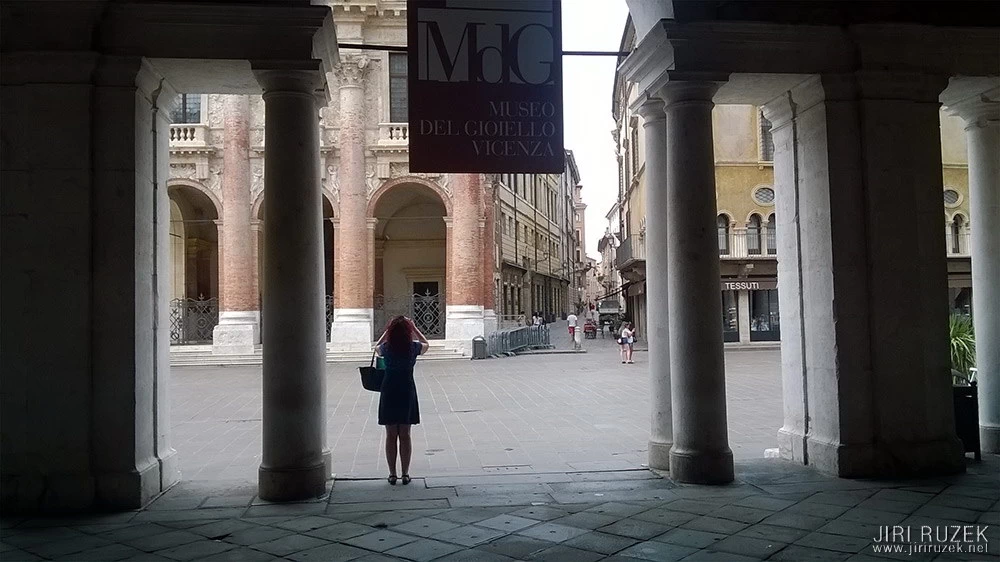
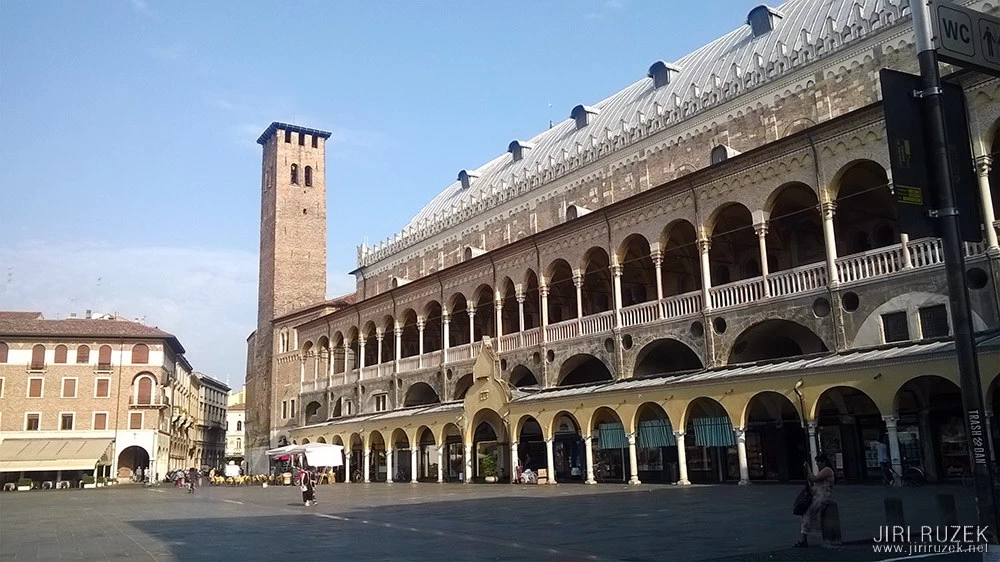
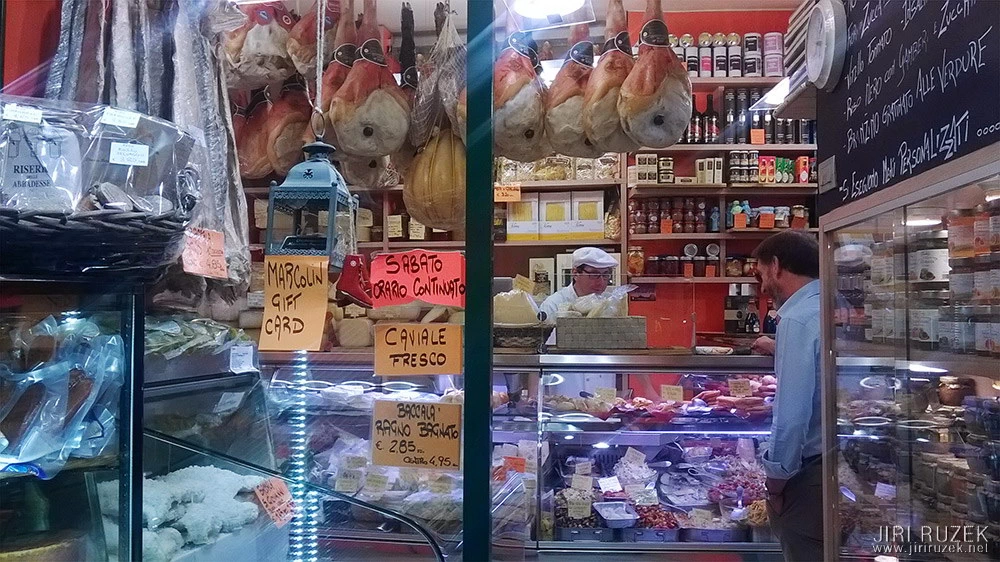
From several campsites around Venice Lída picked Fusina campsite, because a water bus to Venice runs straight from there. But you mustn’t arrive in the evening; the last boat back returns at about 11 o’clock. So we got on one (my) Vespa for the first time and set off towards Venice. From Fusina it’s just under 20 kilometres. The road isn’t pretty at all. Venice is Venice, but the surroundings are industrial and dirty, and the roads were lined with cheap prostitutes and their pimps on bicycles.
The last 4 kilometres of the route are a bridge over the sea. When you arrive in Venice by train, your jaw drops here: the train rides over the sea. When you ride here on a Vespa, and at night too, your cheeks are a bit clenched. The bridge has two lanes in each direction. One has the track of a single-track tram in the middle, and you don’t want to ride there because the brute is properly slippery, so you’re left with the other narrow lane; in both you have to keep pace with the cars, which go about 90 km/h even though the limit is seventy.
Behind the bridge is a collective car park (in Venice only boats run). It’s fairly expensive, but we are Vespa riders, and they park anywhere and always for free. So we parked among the other scooters and motorbikes, right by a sign warning that you’ll definitely be towed.
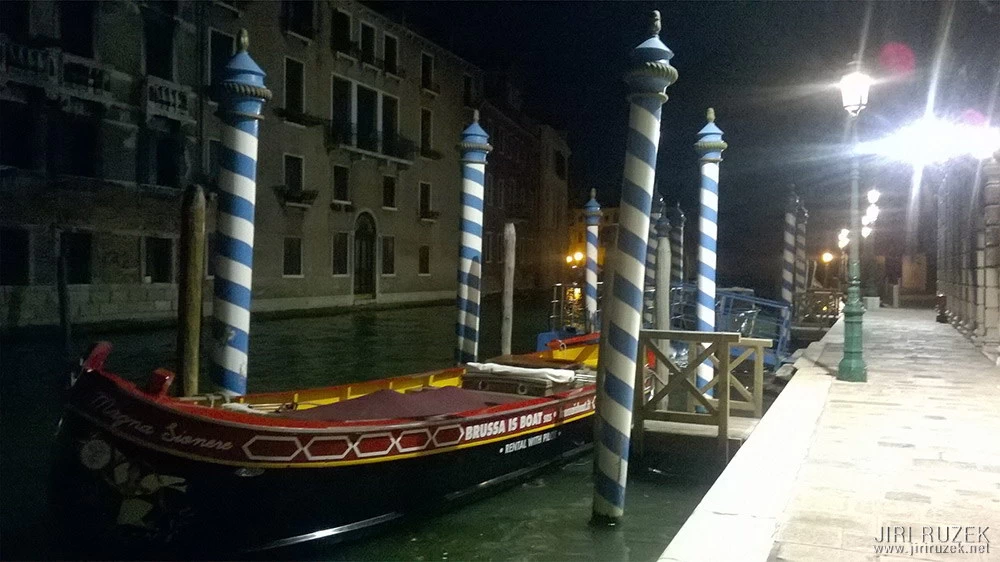
I’m not very fond of Venice. It’s a beautiful city, or rather it would be if they drove out at least half of the hawkers, clowns and tourists. At night it was all dark, because nobody lives here, people only work here, they live elsewhere. Only the restaurants and the last stalls were lit. Still, dinner was good, and because we weren’t towed, we went to sleep around an hour after midnight.
Campsite price 28.20 EUR, distance around 170 km (including the night excursion)
Days 5 – 8 – Trieste, Rovinj
Croatia on the grill
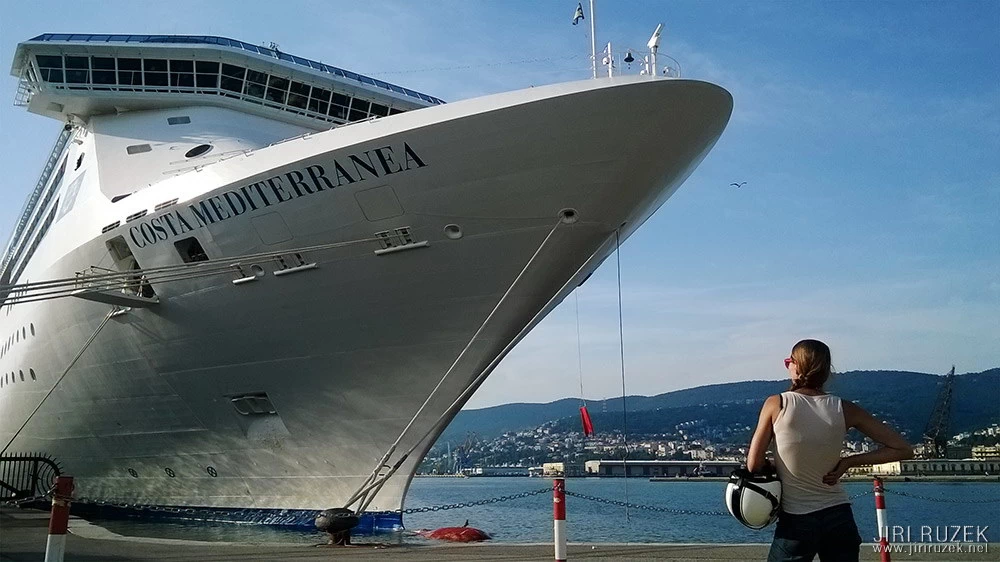
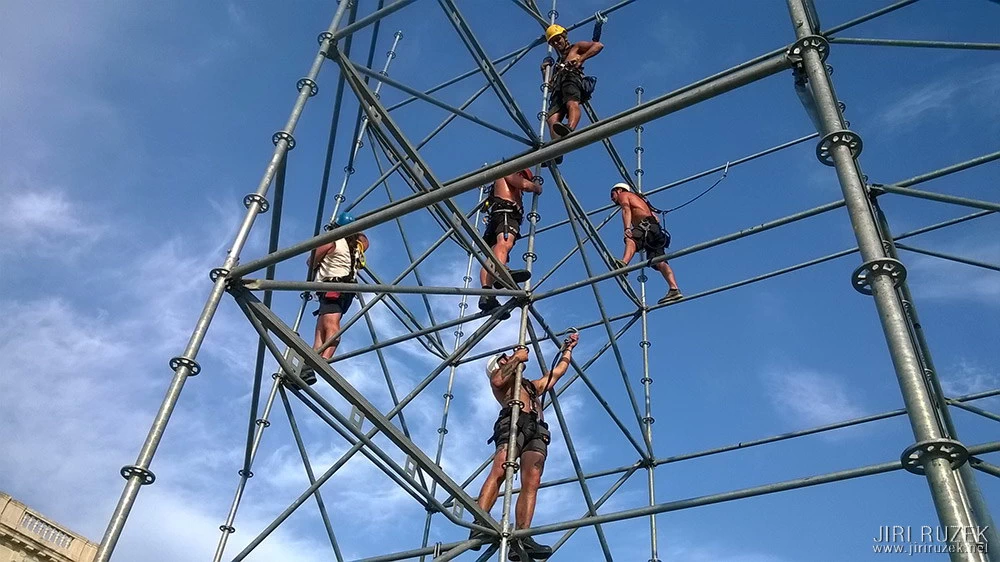
In the morning we took a wrong turn and found ourselves on the bridge to Venice again. You can’t turn around there, so in the end we both rode the bridge over the sea in daylight too. To our next stop in Trieste there were around 170 km and to the goal in Croatian Rovinj something like 300. In Trieste we enjoyed a beautiful view over the city and, in the city itself, probably the nicest harbour we had come across in Italy. Late in the afternoon we crossed the border just beyond Trieste, rode through Slovenia in about half an hour and stood at the border with Croatia.
Here, for the first time on our trip, we met a border check; the Slovenes wanted to see ID cards.
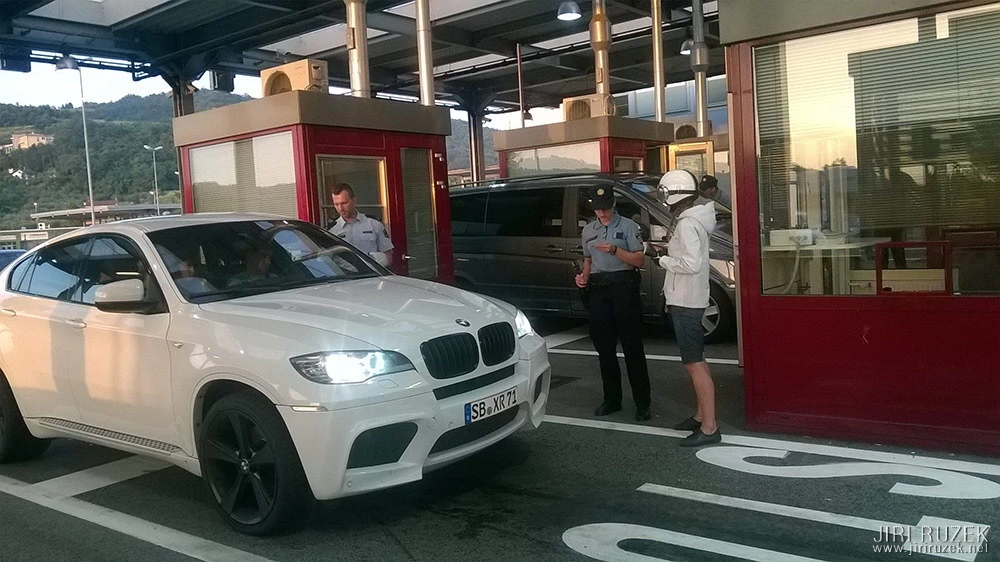
The Istrian peninsula on the route from Trieste through Slovenia to Rovinj is hilly, you constantly climb and descend in endless serpentines. In Slovenia they are smoother and on nice roads, in Croatia sharper and the surface is milled and patched in many places.
During the ride it got dark and turned very cold; we arrived late at Amarin campsite, where we wanted to spend four nights, and reception was closed. But we’re not in Austria here, and they wouldn’t let us into the campsite for the night without registration. We had no water or food, and camping illegally doesn’t pay off much in Croatia; this country lives mainly from tourism and high fines threaten.
Another problem was that we hadn’t yet withdrawn Croatian kuna and the cash machine by the campsite was out of order. Dirty and tired, we went to the adjacent konoba (restaurant) Bruna. It was past closing time, but a few guests were still sitting there, and the owner came to meet us with a smile and welcomed us in Italian. We asked whether they take euros or cards and explained our problem. He didn’t stop laughing, as if his best friends had arrived, and told us not to trouble ourselves with silly things. The kitchen was supposedly already closed, but he had a big plate of ham, cheese and olives prepared for us. We thankfully declined the wine, so we at least got a bottle of water and another one for the night to take with us. All free. Thank you once again for the amazing generosity.
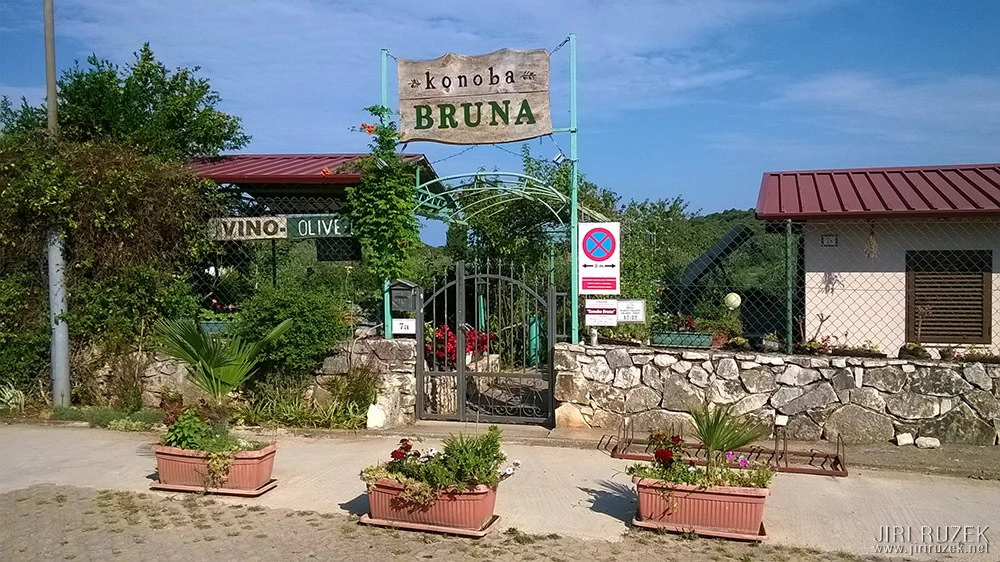
After the meal we quizzed the Czech-speaking waiter about sleeping under the open sky. He told us on no account to pitch the tent, but that it was no problem to ride to the beach and sleep on the mats next to the motorbikes. That it’s common for a couple to stay overnight on the beach. He even showed us which way to go. We got on the Vespas and rode deep into the night along an incredibly dusty white-gravel road as far out towards the beach as we could, which was probably a mistake.
We reached the end of the road and looked for a place to lay our heads. Barely a few minutes after us a car arrived and parked just a few metres from us. The driver got out, lit a cigarette and walked around. It occurred to us that he was probably waiting for someone here, and after a few minutes a second car did indeed arrive. Its driver got out too and behaved just like the first. They didn’t communicate with each other at all, only walked about, disappearing into the darkness of the surrounding bushes, and when they reappeared they were closer to us. When both, like zombies, came to within about four metres of us, it dawned on us that the point of their interest was us. Only we had no idea why. If they wanted to kill us, rob us, rape us, why were they pretending to be two strangers and circling us like this to get closer and closer, they could simply have come straight over.
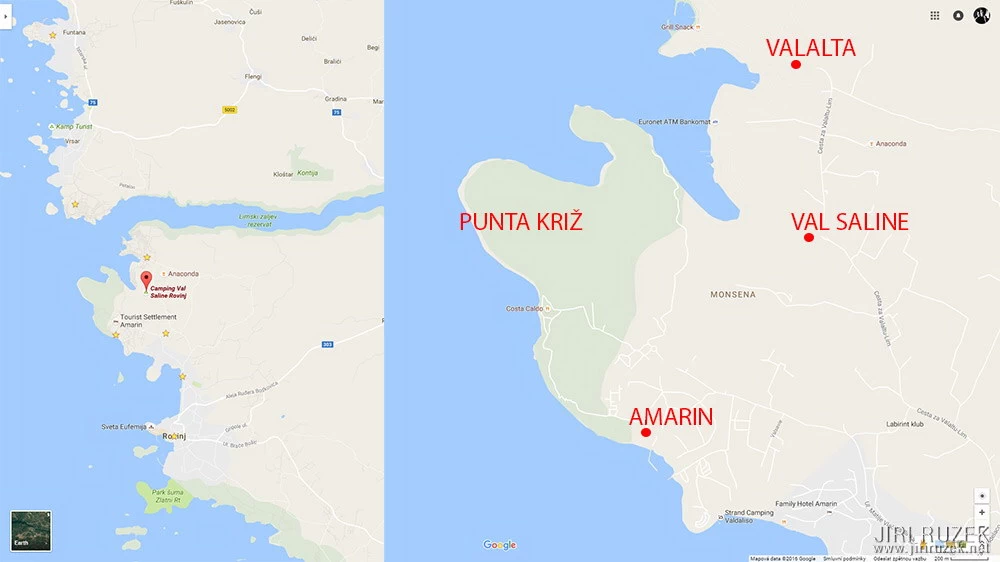
The situation grew more and more unpleasant and we weighed our options: speak to them, or quietly get on and leave. I asked whether we could help them somehow, which wasn’t the best question, as we realized later. It was Lída who asked much better: „Guys, what are you doing here?“ and shone her Vespa’s headlight on them. One muttered something disapproving in Italian and went back to his car, the other vanished into the bushes without a word. At that moment it dawned on us what this was probably about and we collapsed into fits of laughter. We weren’t yet sure, but it was later confirmed that we had accidentally ended up at the internationally famous Punta Križ beach, where couples, swingers and voyeurs, loiterers and chasers (you understand correctly, onanists) gather day and night for swimming as well as sex. While we waited for them to leave, they waited for us to start the action. Instead we got on the Vespas and went looking for a quieter place than a beach. I’ll come back to the topic…
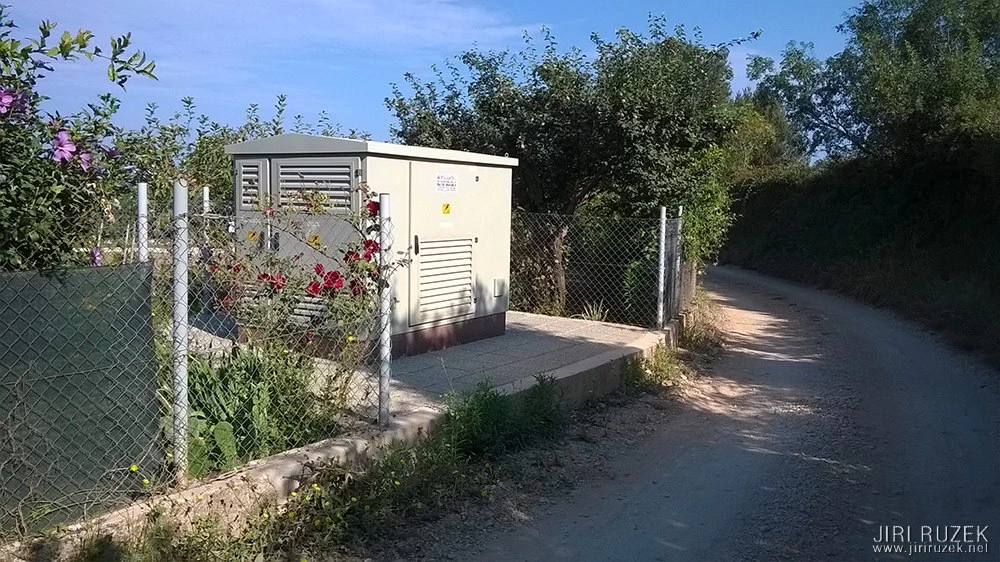
We returned to the campsite and I suggested sleeping in the car park, Lída found it too public, so in the end we slept hidden from view behind a small transformer station.
In the morning we went to register at Amarin, where they asked us to choose a plot first. Thanks to that we found out that we didn’t like the campsite at all, and instead found probably the nicest one in the area, hardly a kilometre away as the crow flies, Val Saline campsite.
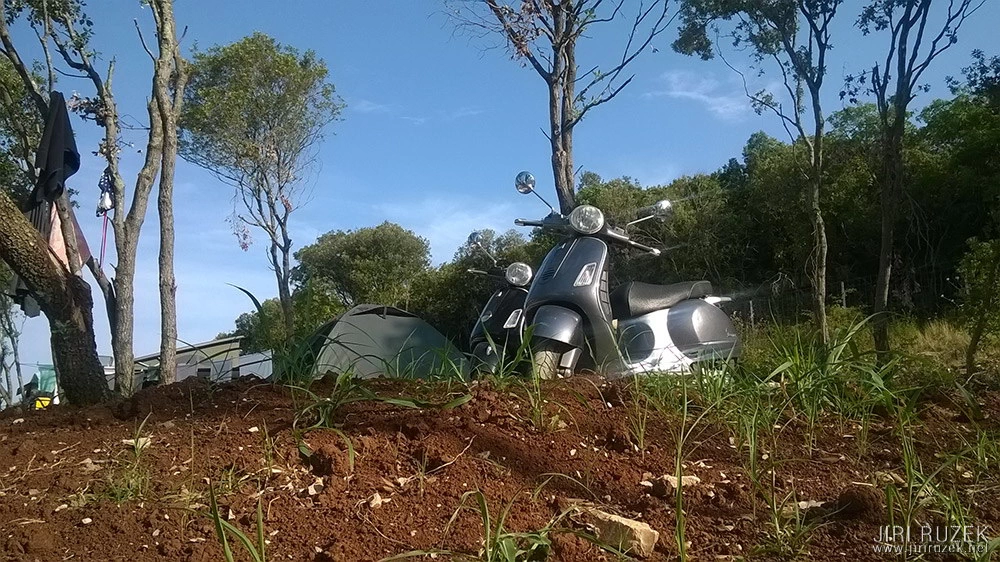
The campsite belongs to the company Valalta, like the neighbouring naturist campsite of the same name. That one is both the largest and also markedly the most expensive resort in the area. Our Val Saline is younger and therefore also more modern and luxurious; Valalta campsite, however, was packed with thousands of naked people mostly from Germany, Austria and Italy, plus many Slovenes and Dutch. In fact the make-up of both campsites, and perhaps of the whole of Istria, was quite similar.
Since at home too we like to swim and sunbathe without swimwear, we went to Valalta. We’re not naturists and don’t feel the need to walk around naked all day, but we’ve got used to the comfort and freedom of sunbathing without white stripes, wet swimsuits, swimsuits you don’t fit into or which are completely out for this season.
We also went to the aforementioned famous Punta Križ beach. This time rather by day. Again we rode along the dusty road behind Amarin all the way to the beaches. The sea is open here, the beaches natural and nicer than at the campsites. The first hundreds of metres were sparsely populated by „textiles“ (visitors in swimwear); further on, swimwear thinned out, and suddenly we found ourselves on a roughly two-hundred-metre beach full of naked people. Apart from nudity we saw nothing special, only on a rock at the end of the beach a sign saying that this is the swingers‘ beach and that further on a gay beach continues. Lída didn’t see the sign, but she did read, every 50 metres, that all improprieties are strictly forbidden on the beaches. We stayed lying on the rocks until evening.
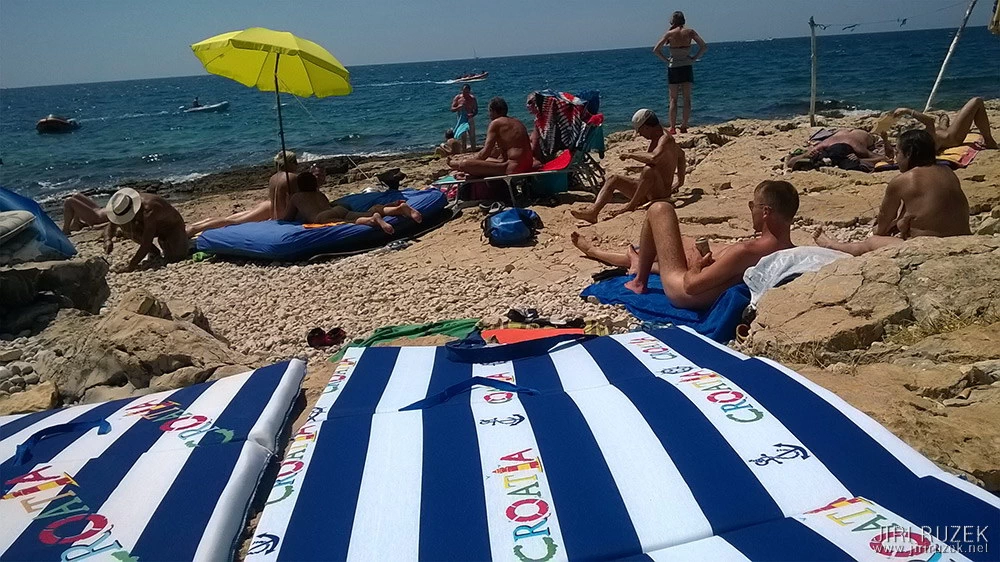
For a while nothing special happened, but after a few minutes we began telling each other „over there, on the left, on the right, right in front of you“… I won’t describe details, but everything you can probably imagine in the privacy of your bedrooms was on view here completely in public. Clarity of the situation was ensured by dozens of chasers, who always gathered in the right place (at a distance of 1 to 5 metres from the object of interest).
Tanned Croats, Slovenes, Italians and others offered free massages on the spot, or a straightforward invitation to action. We also met a likeable Slovene whom we had got to know in a bar the night before. With our eyes popping out we showered him with questions. What about those signs, the bans, is this really normal here? He laughed and said it always had been. A few years ago, he said, it was hard going, the beach was full of guards who uncompromisingly kept order. But fines supposedly happened only rarely, when someone was cheeky to a guard. The guard would then call the police and they did the fining.
Today? They’re still here, but they don’t see. They sit by the woods or at the bar, and our new acquaintance says they’re ours, friends. As if to prove it, within an hour a white-uniformed guard appeared, headed straight onto the beach and, instead of scolding disobedient visitors, greeted the men with a broad smile and hugged and kissed their female counterparts on their bare shoulders and backs. He stopped by us too.
In Rovinj I also heard Aramaic for the first time in my life, the language that Jesus probably spoke. At night, on the way back from the bar, a black Audi stopped at a crossroads about a kilometre and a half before the campsite, and in an elevated mood we greeted the driver, and I asked whether they’d take us the short distance to the campsite. We got in; inside were three tanned men (everyone here was, except me and a few Dutch), we exchanged a few words in English and then they talked among themselves in that strange language, probably about us, we had got used to that here. They drove us to the campsite and asked: „Want sex?“ „No, thanks.“ „Then good night.“ … Lída said I’m a terrible shot 🙂 I was glad we had heard the ancient language that today only about half a million people on the whole planet speak.
Well, enough; Lída says that compared with reality I’m writing this very decently anyway, and whoever wants to know more can invite me for a beer 🙂
Oh, I almost forgot, beer… Jiří, will you have a beer, a little wine? I can’t, I’m driving… That doesn’t matter, you can have two beers, 0.5 per mille is allowed here. And there are no cops here, and if there were, they’re ours… A remarkable country, this Croatia.
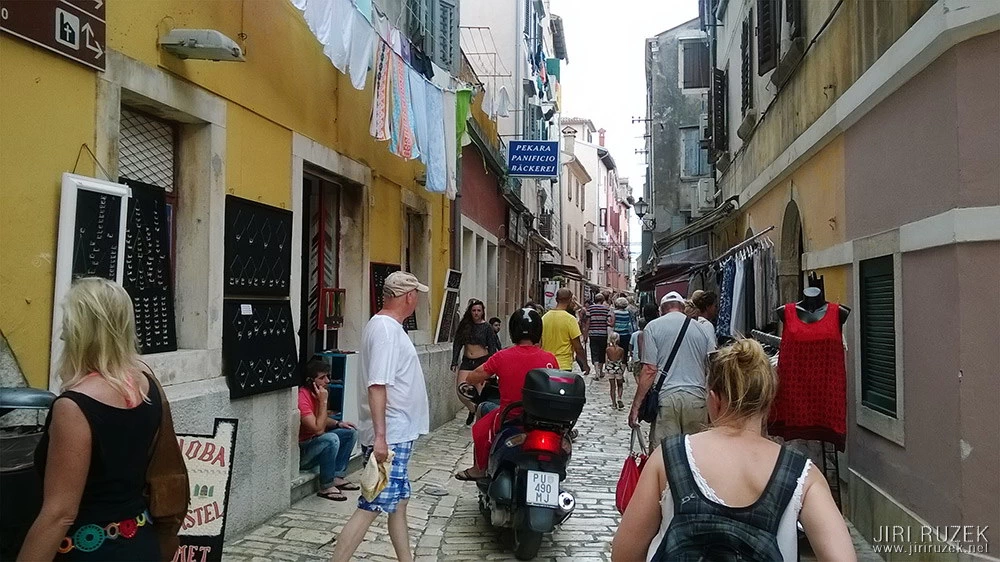
In Istria we mostly rested and enjoyed the local Mediterranean cuisine, grilled dishes (on the grill) and delicacies with local truffles. Our new Slovene friend also invited us to one splendid dinner at Agro konoba Miro Roma (fish, raw and cooked prawns, fish carpaccio, octopus salad etc.), and on top of that gave us an expert commentary and, if needed, a practical demonstration of how to eat what (you know, the slippery little devils). With fish he recommends the excellent white wine Malvasia, and for a bronze tan olive oil with lemon and rosemary; incidentally, you’ll then smell lovely.
During the conversation I mentioned that my exhaust sounds like an Akrapovič; I automatically assumed he knew possibly the most famous Slovenian product, but his answer surprised me: „Igor is a really nice guy, he started in a garage, now he makes millions. But I know his wife better.“ To our astonished look he replied: „Slovenia has only two million inhabitants, we almost all know each other.“
I actually have to explain that exhaust. At the start of the trip it had a pleasantly mature sound, but with the growing kilometres it gained strength and on the way back it was already roaring like a wounded Harley Davidson.
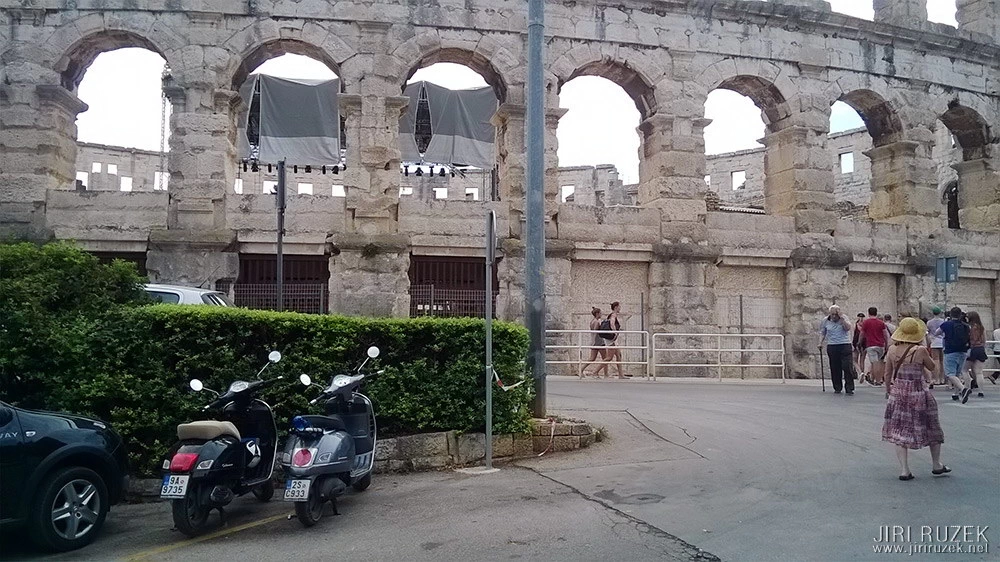
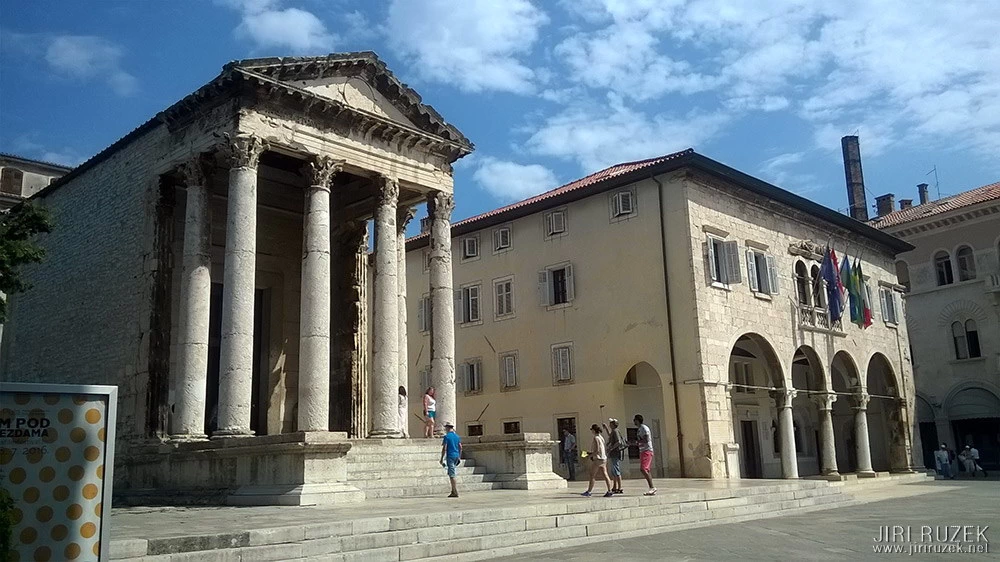
For an excursion we went only to nearby Pula, which boasts an ancient arena, the Temple of Augustus and other monuments. The city didn’t impress us much; we had already seen too much beauty on our trip, and Rovinj struck us as far more picturesque.
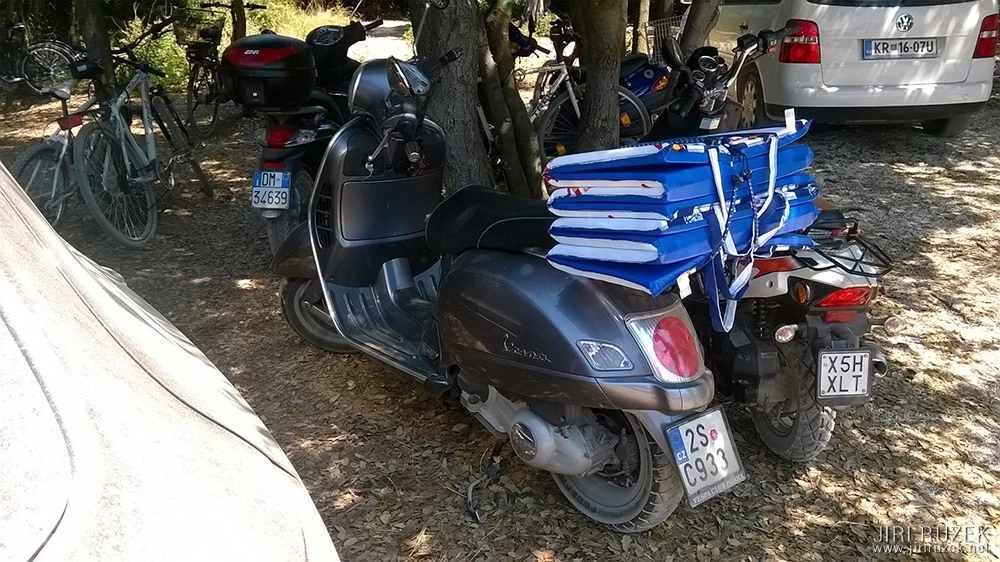
On the very first day we bought beach shoes at the market in Rovinj, which is almost a necessity on the local pebbles, and at the Plodine supermarket sun loungers for the natural rocky Punta Križ beach. Together with a jar of truffles, they were the only souvenirs we brought home from the trip.
Price-wise Croatia came out the most expensive of the whole trip, the campsites especially were markedly dearer. At Amarin we’d have paid over 40 EUR a night, Val Saline came to 49 EUR a night and at Valalta it would even have been over 70 EUR. Next time we’ll rent an apartment; you can find them for the same or less money.
On the last morning a dolphin swam up to say goodbye to me at the beach by the campsite. Surreal, but nice 🙂
Campsite total 147 EUR, distance about 300 km from Venice to Rovinj plus around 150 km of local excursions
Day 9 – Ljubljana, Hramše
A bikers‘ paradise and a mountain storm
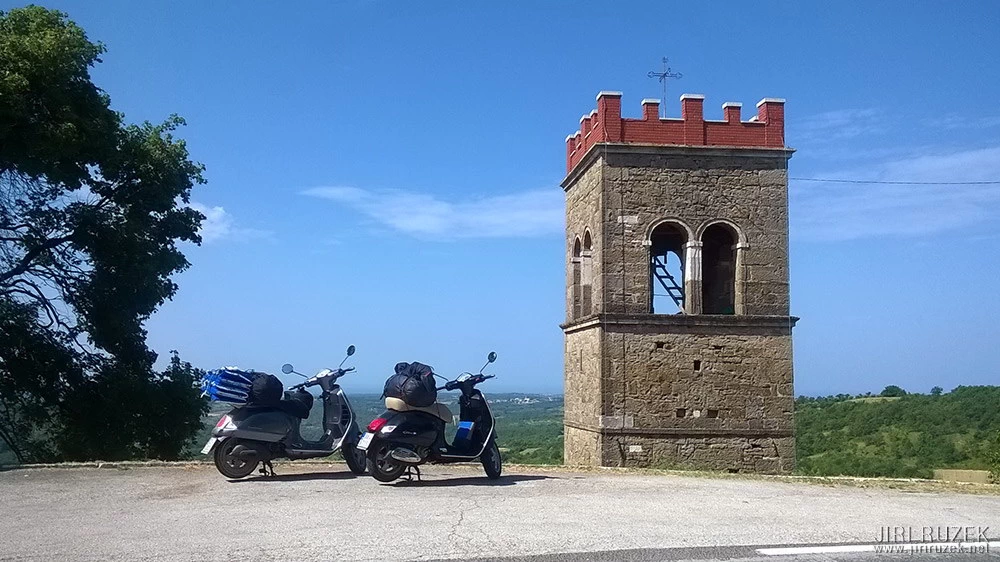
On the Croatian side there was a queue of about two kilometres at the border with Slovenia. These are the moments when a person on two wheels has the upper hand. Whether you spend half an hour creeping forward or show the officer your ID in three minutes, there isn’t much to think about. Incidentally, I showed him the ID from a distance of about five metres, with a smoke-tinted visor covering my whole face.
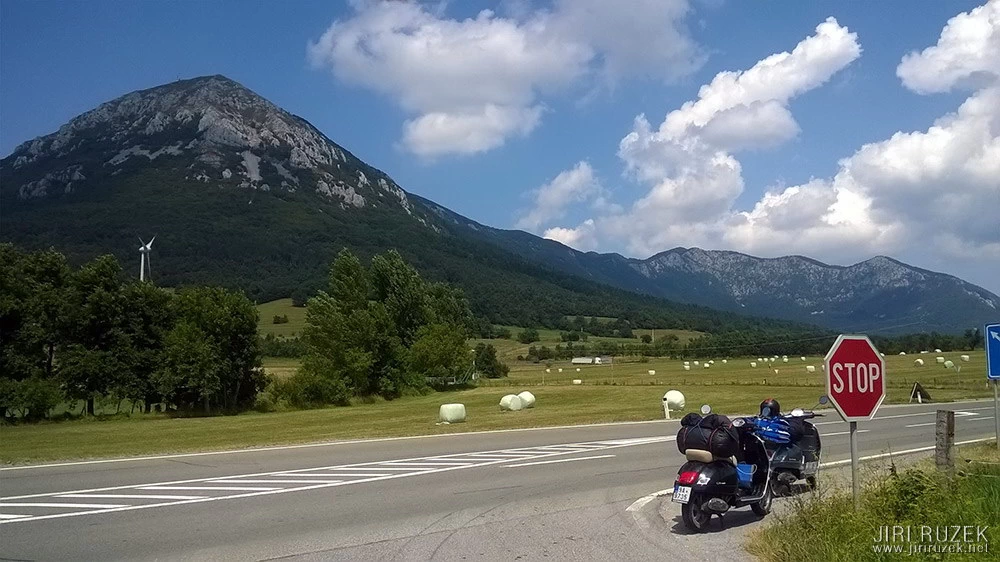
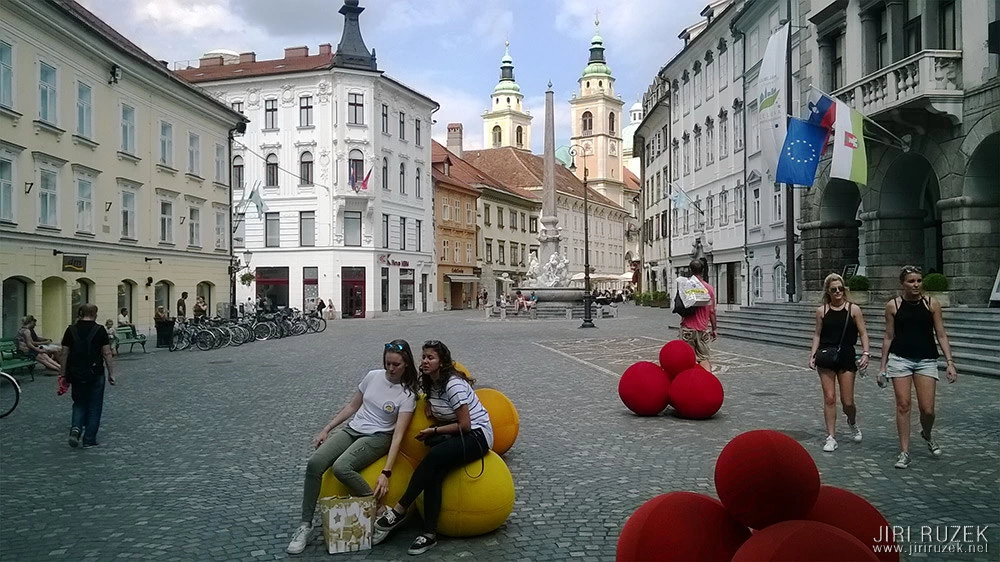
The ride through south-western Slovenia to charming Ljubljana was absolutely fantastic and we understood why bikers love Slovenia. Little traffic and beautiful roads between mountains, cows, sheep, goats, horses and donkeys grazing on the endless meadows and slopes around. Beyond Ljubljana to the north-east towards Maribor it isn’t like that any more, but it was still one of the best rides.
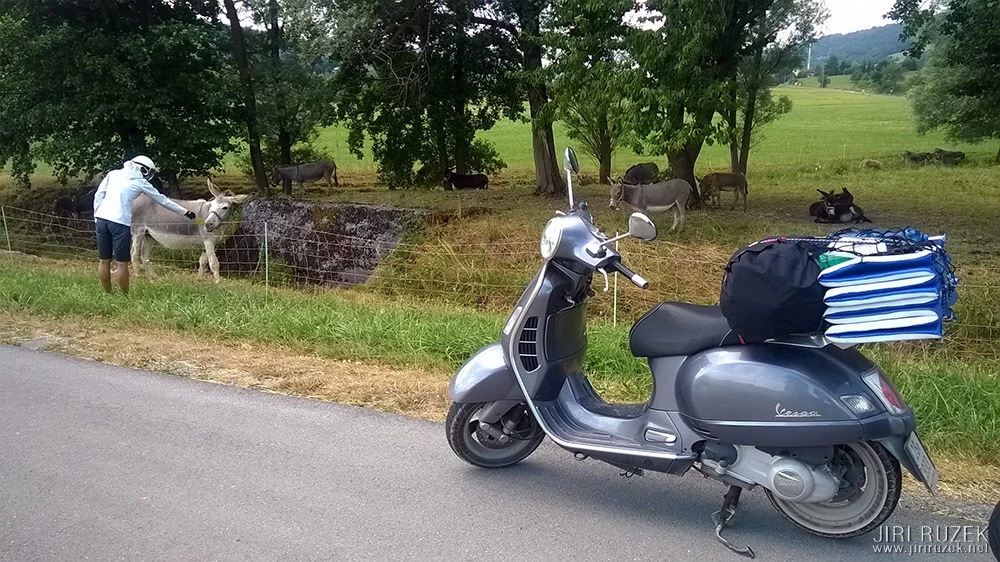
We didn’t reach Maribor, our goal. About 60 kilometres remained when a storm broke and before we could pull on our rain gear we were soaked through. We pulled off to a forest and stood there, completely pointlessly, for about an hour under the trees; water ran down us in streams and even the rain gear was no use any more. When we decided to set off and found the first bus stop, we sheltered under its roof and within a minute it stopped raining. We no longer felt up to the ride to Maribor, so Lída found a hostel online in a nearby town, and we set off for it with the help of the navigation. But I look at signs, especially when I’m cold and damp, and so right at the start of the road I had noticed an offer of accommodation. After about two kilometres we stopped in a little village called Hramše and were grateful for a dry and warm bed. The view from the window, like in a fairy tale about Honza, was a pleasant bonus. And as a little miracle we even got scrambled eggs for breakfast. On the wall hung an advertising poster for Lobkowicz beer. We said goodbye, thanked them, paid and rode on.
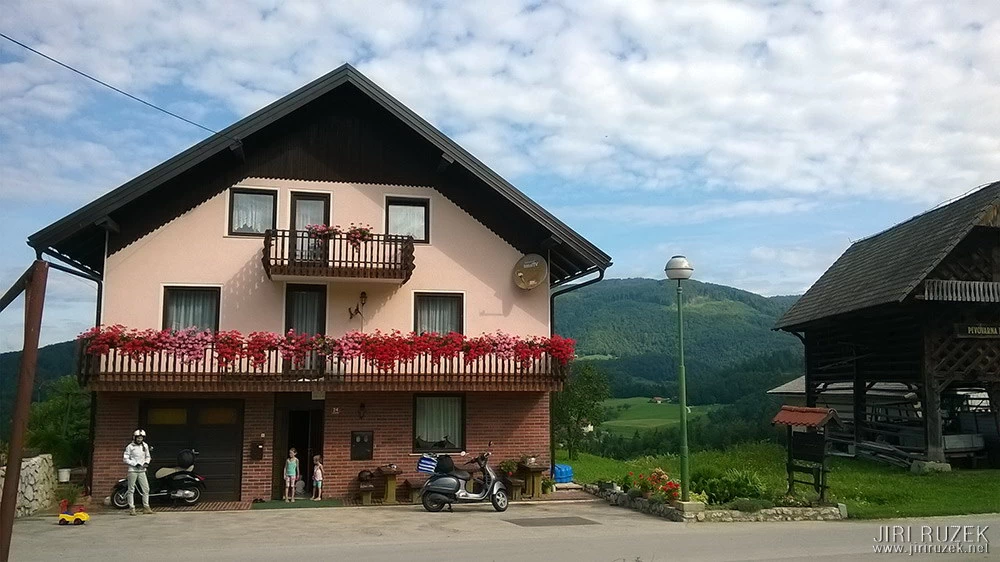
Price of the night 40 EUR, distance about 270 km
Day 10 – Maribor, Graz, Vienna
Interpol, a petrol station and a kangaroo in Austria
At a petrol station somewhere along the way we parked next to two motorbikes with Slovenian plates, and on one of them lay a map with the Czech title „Rakousko“. A Slovenian couple was resting there, just returning to Koper from Stříbro in the Czech Republic. They had managed the trip in one day (we had it split into three) and were so glad to meet us that they wouldn’t let us pay for our cappuccino.
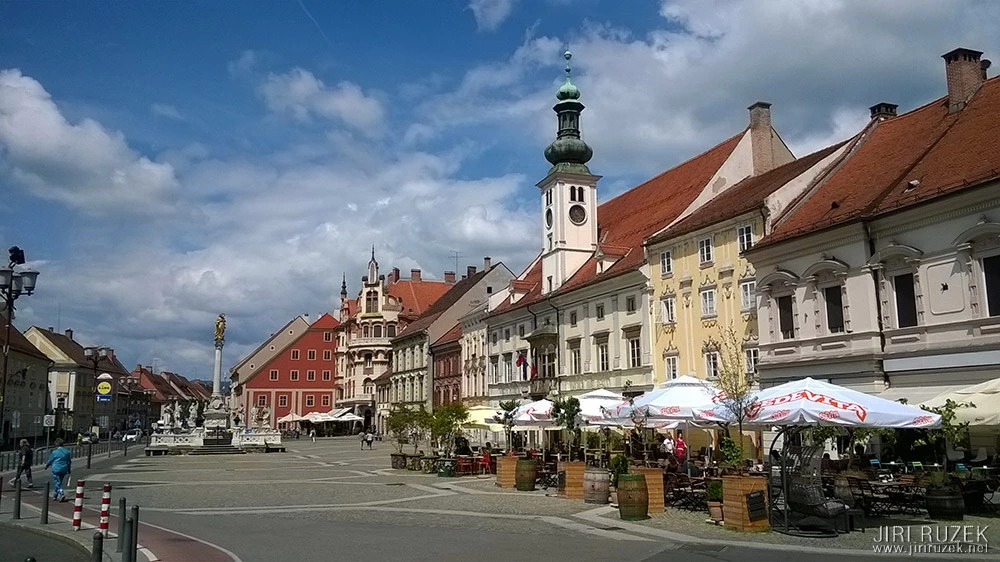
In Maribor we stopped barely long enough to stretch our bones and flew on north to the Austrian border. Here we were checked at the border for the third and last time during our trip. This time too we had to ride past a long queue, and the Austrian officer took our documents and ran them through a computer. After a while we were evaluated positively (that is, negatively) and our wheels were allowed back onto once-imperial soil.
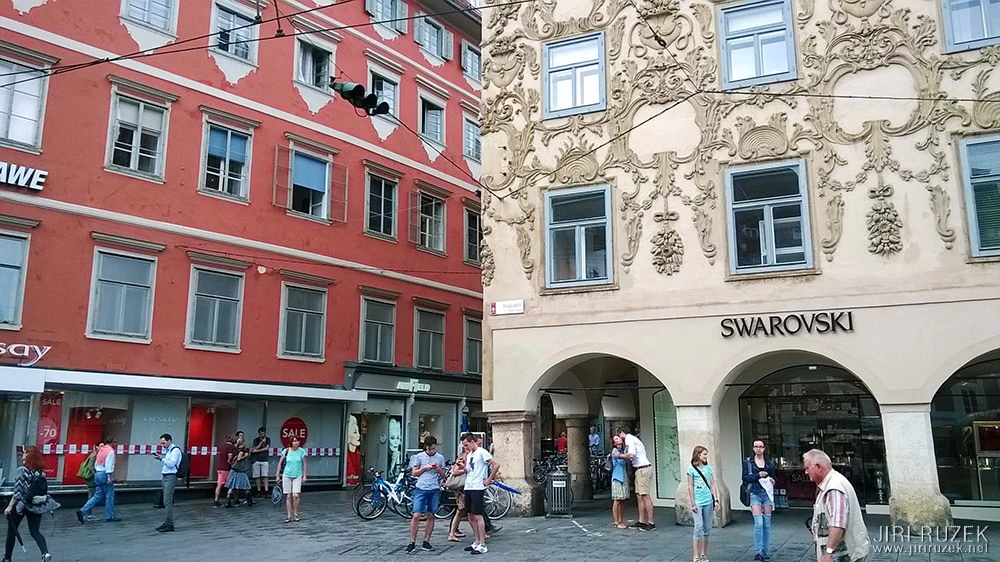
Just a few hundred metres from the centre of Graz another big rain caught us. We immediately pulled in under the canopy of the nearest petrol station and waited. For an hour and a half. It was a very small and shabby self-service station, but with very obliging staff. A young man made us coffee (for one euro eighty), chatted with everyone sheltering from the rain here, fuelled, parked and re-parked and so on… I helped some Austrian change a punctured tyre. We didn’t consider the time here lost and definitely weren’t bored.
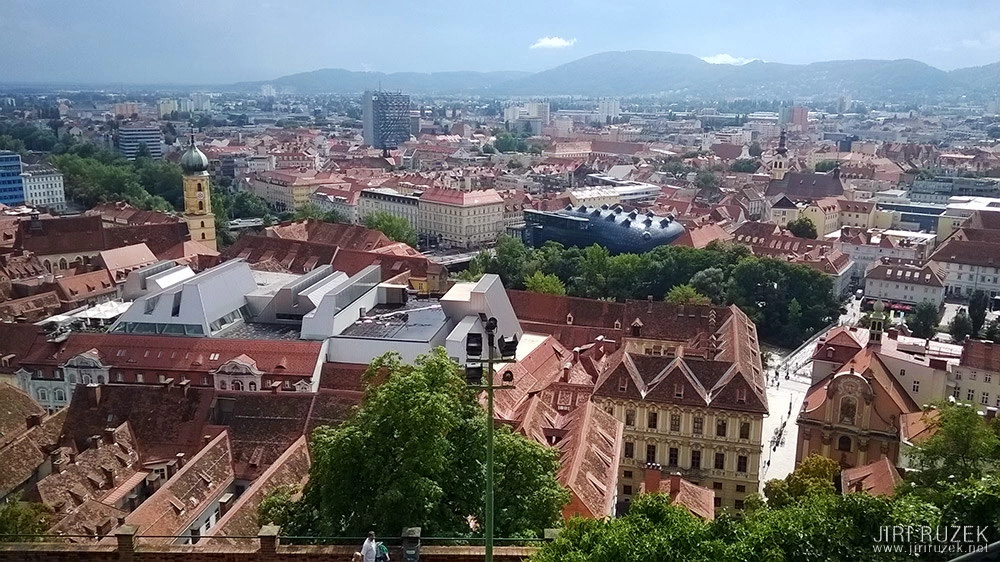
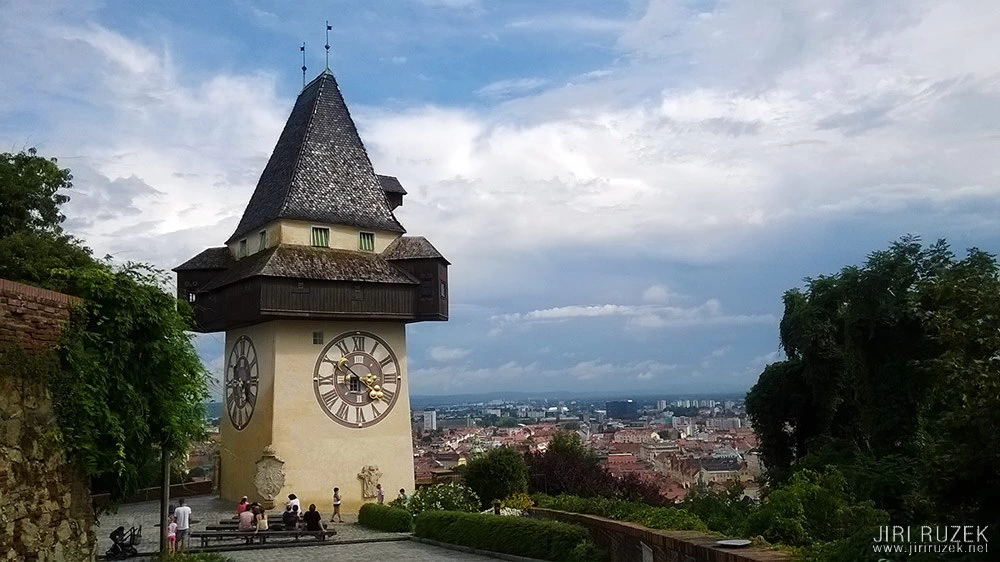
In the centre of Graz itself we spent about an hour, glimpsed the Kunsthaus and the city from the castle lookout and finally set course for Vienna.
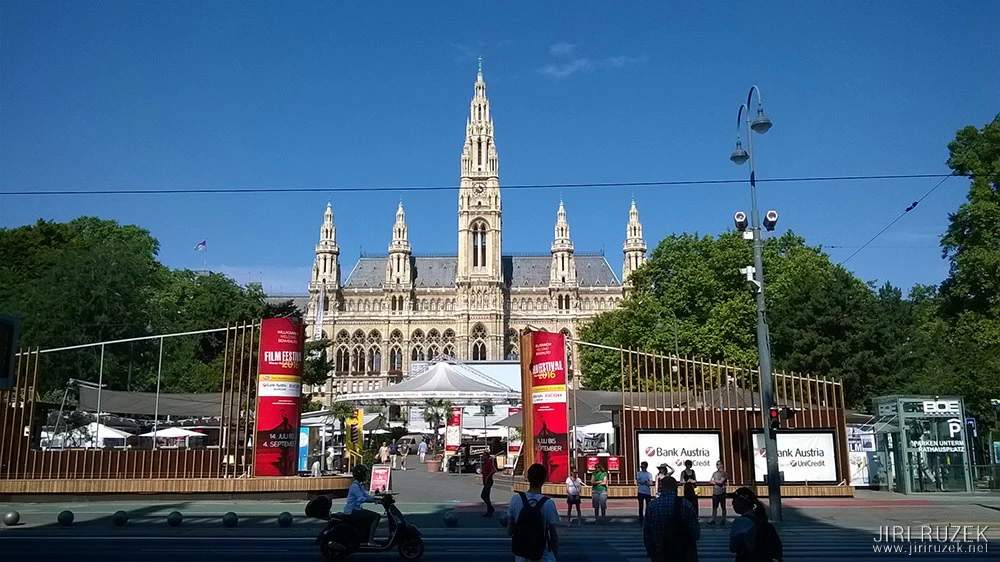
After an exciting ride through evening Vienna we reached Neue Donau campsite before ten, so we could still register and pay in the evening. Of all the campsites it was probably the ugliest, but solid, and we only needed one night, nothing more, and for that purpose it served perfectly. At eleven we decided to visit Vienna by night (one reason was hunger, the only shop in the campsite closed right after our registration) and half an hour before midnight we were already choosing dinner in the park in front of the Rathaus (city hall), where to our luck a gastronomic festival was just taking place. Everywhere else was already closed. We stopped at an Australian stall and for a ridiculous price had kangaroo steaks, a tuna steak and chips. Before we finished eating, midnight struck and all the stalls closed within a minute; I didn’t even get a coffee. We strolled for another hour through the empty streets of the centre – Vienna surely was alive, but we didn’t know where and didn’t care, we wanted to sleep. I had that coffee at a petrol station near the campsite.
By the way, one of the most common slogans used on tourist souvenirs in Austria is „No kangaroos in Austria“. Probably because of the Americans, they’re such sweethearts…
Campsite price 22.50 EUR, distance about 340 km
Day 11 – from Vienna to Prague
Brothels and casinos without brakes
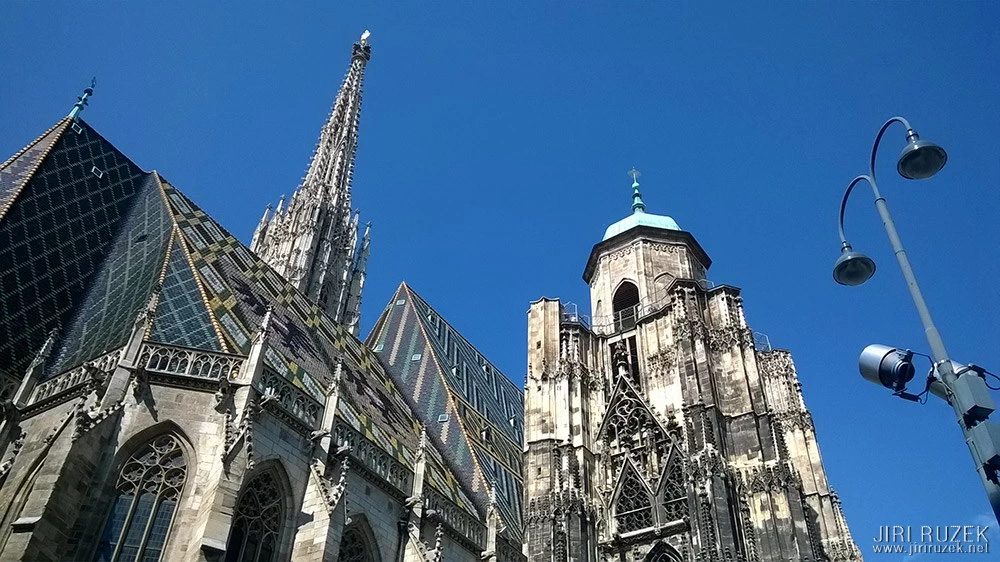
Packed again, we visited Vienna once more in the morning. It’s fascinating, impressive, majestic, in short, magnificent. At first glance it’s a very rich city. But its magnificence is so magnificent that it can get boring. That’s why I like Rome or Berlin so much (I know I’m repeating myself), where there’s nothing and suddenly Something! In my opinion Vienna lacks that. Every building here is magnificent and after an hour you feel you’re still in Pařížská Street or on Na Příkopě. There’s nothing that would surprise. Otherwise Vienna is surprisingly calm.
My rear brake stopped braking. Fortunately the front one worked flawlessly and I had 300 kilometres ahead of me to learn to control the throttle and the entire braking system with one hand.
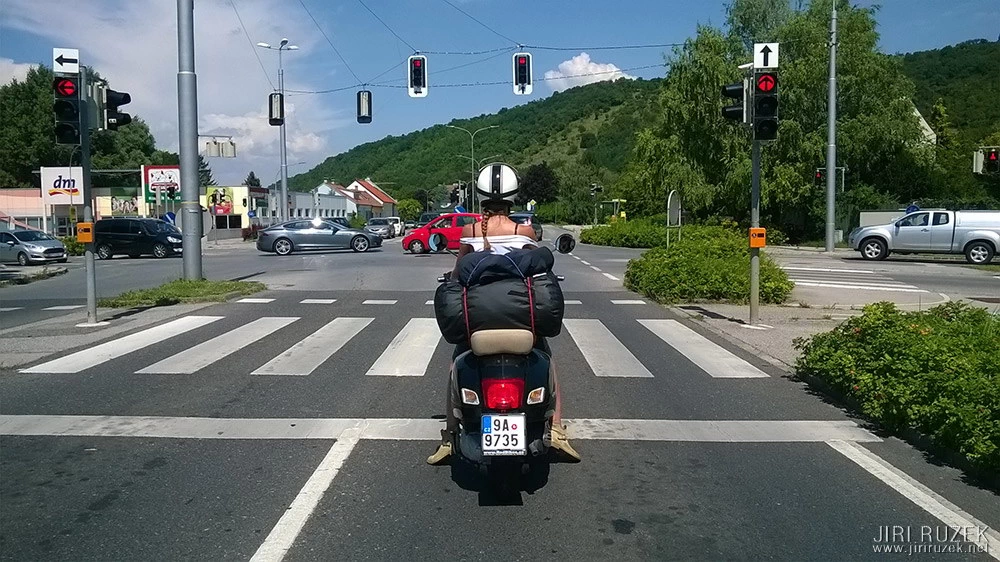
On the way to the Czech border nothing worth mentioning happened to us. Except at the border. No other country welcomed us in a similar way. At other times I don’t realize it so much, but this time we had repeatedly crossed the borders of six European countries, and at our last crossing it struck me as particularly striking and somewhat sad.
The first thing to be seen in the Czech Republic was brothels and casinos. And billboards inviting you to brothels and casinos. The business card we have, we make ourselves. A pity.
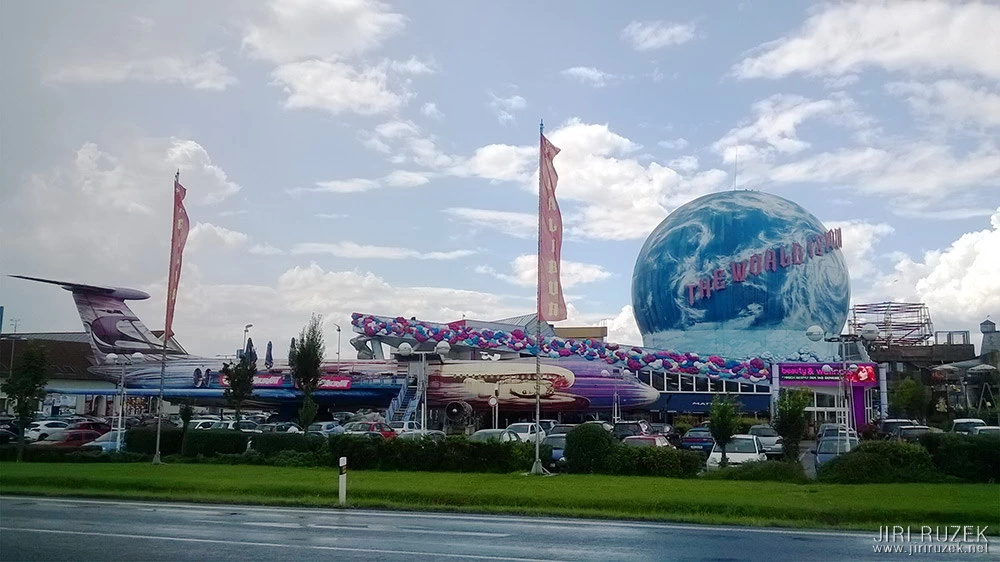
Enough sadness; beyond Znojmo we turned left towards Dačice, Telč, Pelhřimov and Vlašim and enjoyed one more day of Vespa-ing on a long but beautiful route through the Vysočina and South Bohemia. At Benešov we finally got onto the motorway and a little later, with almost exactly 2500 kilometres on our trip meter, rolled into evening Prague to the mighty roar of my exhaust.
Distance about 340 km
Security of belongings
Before the trip we worried about the security of our luggage while we wanted to explore a town. Taking the duffel off a Vespa, fastened only with bungee cords, is a matter of two minutes. In the end, without exception, in every town we parked as close to the centre as possible and left the Vespas, luggage included, to fate. We always returned with slight apprehension about whether the Vespas were there and our luggage on them, but nothing at all ever went missing, not even things placed on the duffel under the net.
At campsites we charged electronics at the socket by the washroom. We had a solar power bank, but even that charged faster from the mains than in the sun, so we left it to charge by the washroom and went to the beach, shopping, on an excursion and so on. Every day. On the third day it vanished. Right next to the washroom stood the caravan of some Dutch people, who thought someone had left it there, and, nicely visible so we’d know where to go, plugged it into their own socket and charged it for us.
Note: don’t try any of the above at home, neither will we, whole Vespas get stolen here.
Czechs on the road
None of the destinations on our trip, perhaps except Venice and Vienna, is a typical Czech holiday destination. We overheard Czech in Verona, Venice, Trieste, Rovinj, Ljubljana, Graz and Vienna, each time perhaps just once. Slovak we heard somewhat more often, even Russian was rare.
Once we overheard a Czech sentence on Punta Križ beach too. We were just in the water when a middle-aged man near us said to his wife: „for heaven’s sake act normal“.
We also had some nice confusion with languages. Neither of us speaks German, only polite and common shopping or tourist phrases. And although we could have got by with English everywhere, in the first day and a half we used so many little German phrases that the first Italian sentence beyond Brenner threw me off. Well, I don’t speak Italian either, but it’s still about ten times more than German. The day after our return, though, I won first prize in the raffle at PragoVespa, and it included an Italian course, so I promise it will be better next time. In Slovenia and Croatia we felt at home. As the old gentleman in Hramše said, our languages differ by no more than 40 %. Mostly we spoke there my favourite Slavic mix and always understood each other. Only sometimes that 40 % difference can lead to funny situations. For instance the Croatian word „pušit“ and the Slovenian „kadit“ both mean „to smoke“. And of course our word „úžasný“ („amazing“) means, as almost everywhere else in the world, the exact opposite, it’s a strongly negative word. And so on.
Vespa-ing abroad
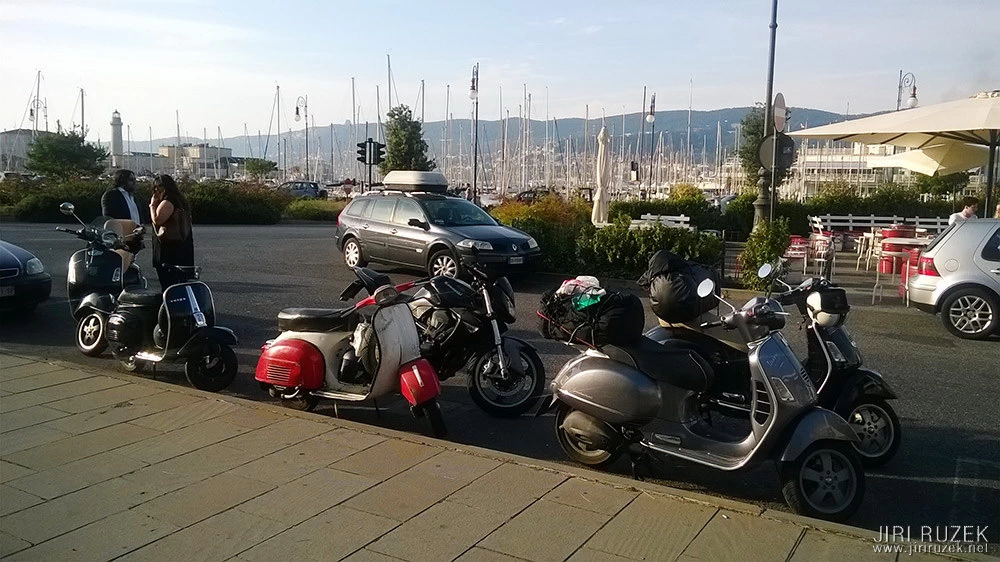
Riding went well everywhere, and it may be hard to believe, but best of all in Italy. The Vespa is simply at home here. No, that’s of course not the whole reason. It took a while to get into the Italian rhythm, but then everything went smoothly. The point was mainly to keep pace with them regardless of traffic signs. If the sign said 30 and everyone went 80, we couldn’t go otherwise. Italians take traffic signs more as recommendations, and the only major rule seems to be don’t hit anyone and don’t get hit. Even Italian road signage seemed very clear to us, with the exception of prohibitions; imagine an ordinary no-entry sign and beneath it a text explanation in Italian, say that no tractors from 7 to 14 hours. In Italy it was also easiest to avoid motorways while following them closely. And above all, in the bustle of Italian sovereignty, but also tolerance and nonchalance, our mistakes and cheekiness got lost.
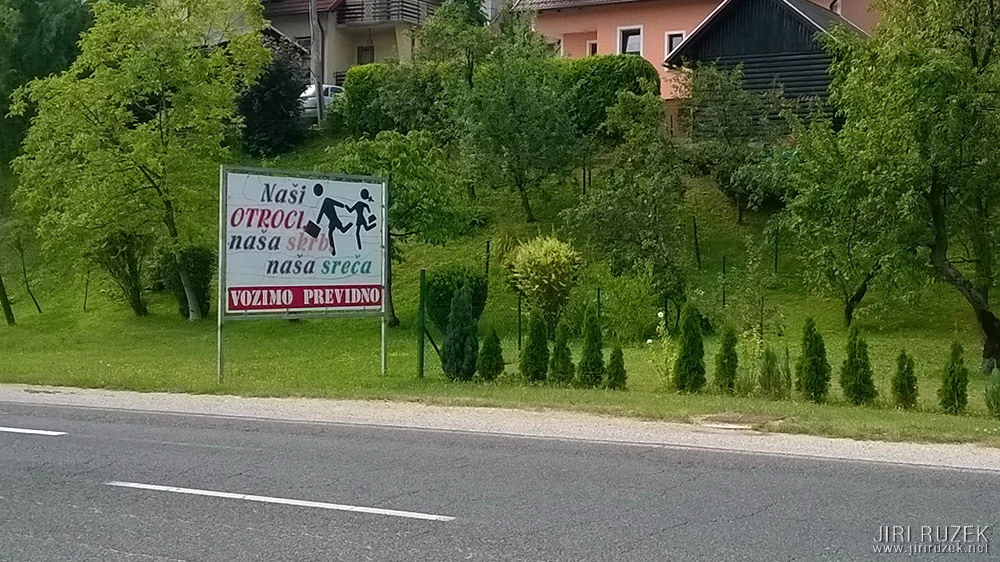
As I wrote, Slovenia was a paradise for rides, but the signage struck us as the worst here. Specifically, direction signs often didn’t show the significant city but some smaller town in the given direction. So when we weren’t just following the navigation, we often had to check on the map which towns lay ahead. No Slovenian sign gave the number of kilometres to the named town either.
The best roads were in Germany, Austria and Slovenia, the worst at home in Prague and off the main routes. I’m not talking about the D1 motorway, but we rode only a bit of it and that bit was decent. Even the few milled kilometres in Croatia weren’t pleasant, but the rest of the Croatian roads were fine.
Landscape: what appealed to us most was the ride through the Alps from Salzburg to Italy (their character changed along the way); the whole of Slovenia was beautiful too, though mainly its western part. We also enjoyed Šumava and Bavaria a lot. And after returning to Czech territory we realized again how beautifully and completely differently things are at home.
We didn’t count petrol costs exactly, but we estimate them at roughly 4,500 crowns, so a bit under a crown per kilometre.
Breakdowns and losses I have described: the petrol hose, rear brake and exhaust gasket on my Vespa; Lída’s came through without losing a petal. No collisions.
As Vespa riders we naturally met and watched Vespas along the way. They were everywhere, we could have counted hundreds. There are many in Italy, but scooters of other brands are strongly represented too. The biggest share of Vespas we noticed, by feel, was in German Passau, and there were many in all the Austrian cities too. And of course we were delighted when someone said to us with admiration: „Did you really come all the way from Prague on these?“.
One more oddity. At home almost all bikers greet one another; out there almost nobody answered our greeting.
Internet connection
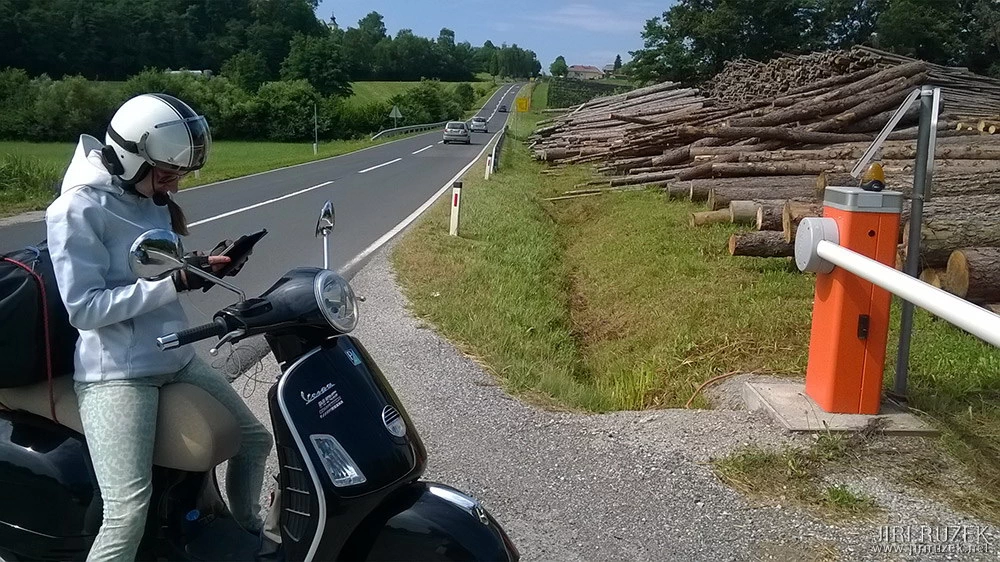
Even though we both had offline navigation, data always comes in handy. I have an Italian Tim card, Lída had Czech data. All three Czech operators have downright thieving prices compared with other European countries, so it always pays to buy a card at your holiday destination. But there are also cards for Europe-wide connection at great prices, e.g. the Spanish Orange Mundo with the Go Europe service; we’ll have it for the next trip. A big advantage is a dual-SIM phone, you don’t have to swap cards back and forth.
Again, the same or differently?
Definitely again, we did it and it was great. We’ll keep riding, Vespa-ing is freedom. Even though we’re capable of going fast enough on a motorway, we’re no mile-devourers and would rather enjoy the beauty around at a reasonable speed. We hardly worry about where to park and never about how much it costs. When we don’t want to, we don’t stand in queues. We can happily stop every five kilometres if we have a reason or the urge. When it’s hot, we ride in a T-shirt and shorts …
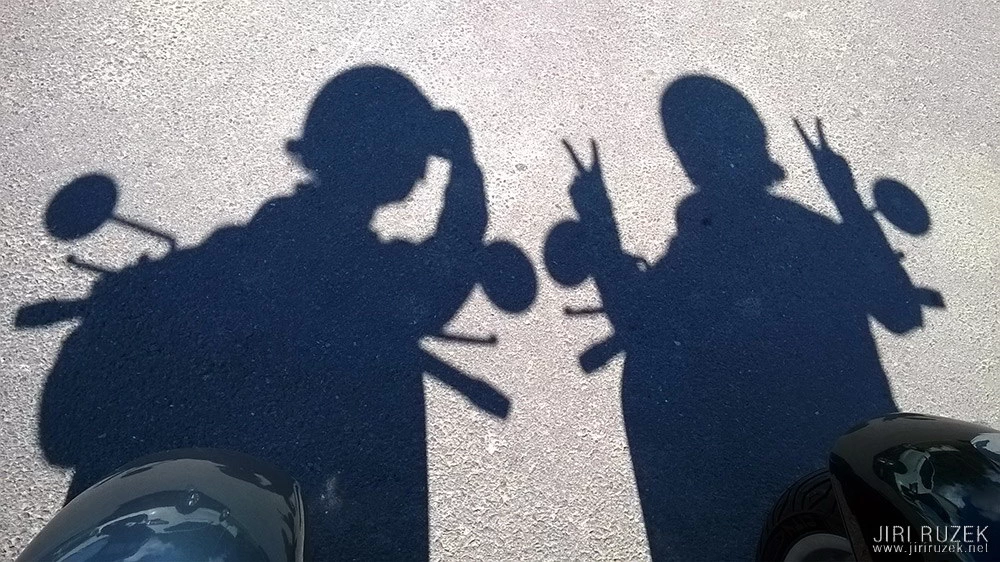
This trip was the first of its kind for us and besides incredible experiences it also brought us a lot of lessons. The whole trip was a big challenge and both we and our Vespas coped with it (I take the shortcomings of mine as a positive, nothing serious happened and it told me itself what it wants improved and fine-tuned).
On one change, though, we agreed. We’ll ride long distances, but with fewer destinations. Instead we’ll head for one goal and then perhaps explore the surroundings. For some interesting places we simply had too little time.
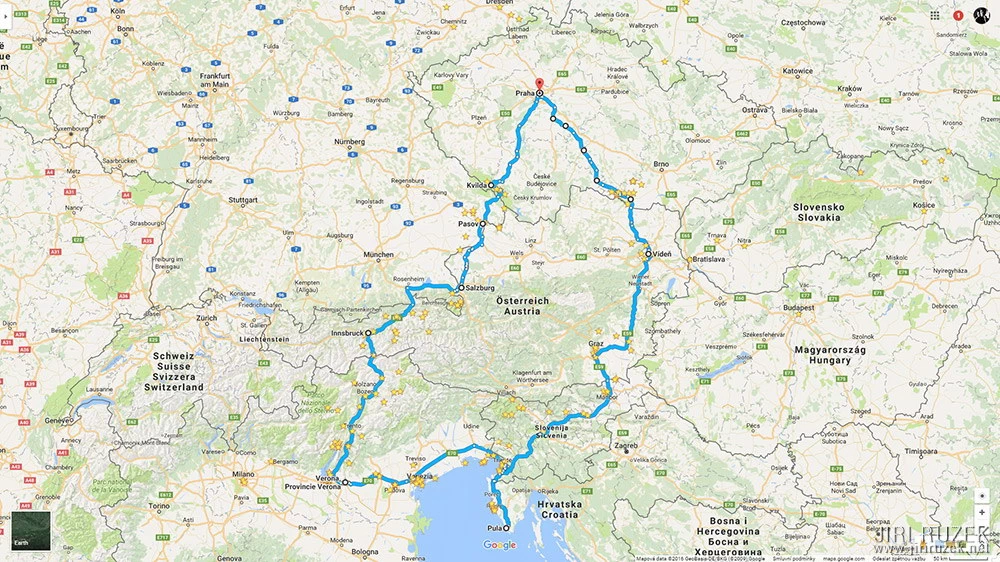
It stopped raining long ago and the article is done. It couldn’t be shortened more; the experiences are untransferable anyway and not even photographs come close to capturing them. By the way, I left the camera at home and shot everything with a phone only, a holiday is a holiday 🙂
Have a nice summer, everyone 🙂
P. S. If you want to know why a Vespa is not just a scooter, look at the timeline of the Vespa’s 70-year history and you’ll understand …