This page was translated by AI. Please be forgiving of any mistakes.
‹ Photo Notes · 15 října, 2014
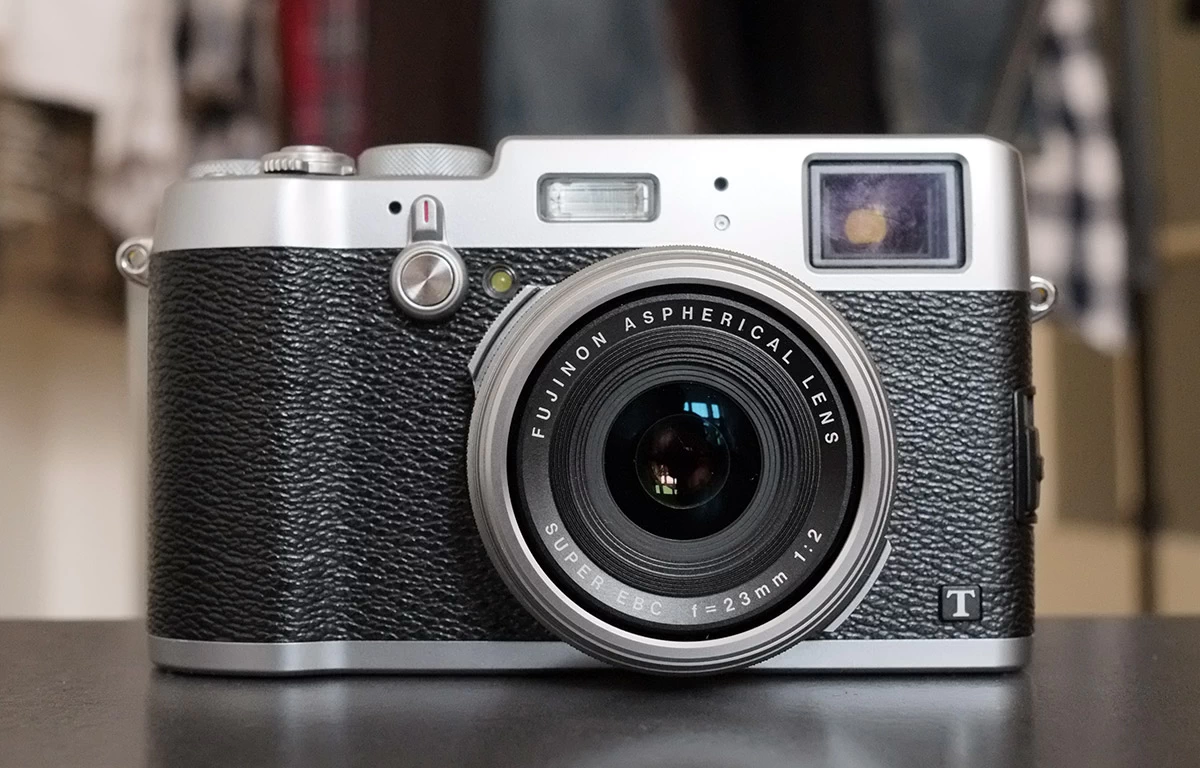
Just two days after the end of the biggest world photography fair, Photokina 2014, a pre-production sample of the newest Fujifilm X100T camera came into my hands. I came up with the idea of inviting the two previous models, the X100 and X100S, to the testing.
My plan was clear – to examine the new X100T gradually, compare it with its predecessors and write down new observations daily in the form of a diary. And on top of that take documentary photographs and video. Except that plans are one thing and an intervention of a higher power is another. In this case there were two interventions. Of the original ten days for testing, fewer than four days remained, then the X100T had to travel to Poland for a press conference. And when I returned home from Fujifilm, where I had handed it over properly, I found that one SD card was missing, with some photos on it but above all a lot of video. For the actual joint test of the X100, X100S and X100T I was left with 20 hours including sleep.
I realize that the tested unit, number 119, may differ from the final product, so I make no judgements and my conclusions concern only this unit.
I won’t drag it out, let’s go to the description and comparison with the predecessors. I’ll concentrate mainly on comparison with the X100S, because that is what interests anyone these days who is thinking about an update or is about to buy their first X100? camera. I added the old X100 to the comparison mainly because this veteran kicked off the whole successful X series and for some photographers is king to this day. So we’ll see…
Design, display, buttons
From the front all three are almost the same; the changes are at the back and there are a whole lot of them. The new, large display has a diagonal of 3 inches (2.8 on the previous models) and a resolution of 1,040 thousand dots – more than double the 460 thousand of both predecessors. The difference is noticeable and very pleasant. The display is neither rotating/tilting nor touch. But if it were, some would love it and others couldn’t stand it. A solution might be to offer both models and, according to sales figures, to focus in future on both or on the markedly more successful one.
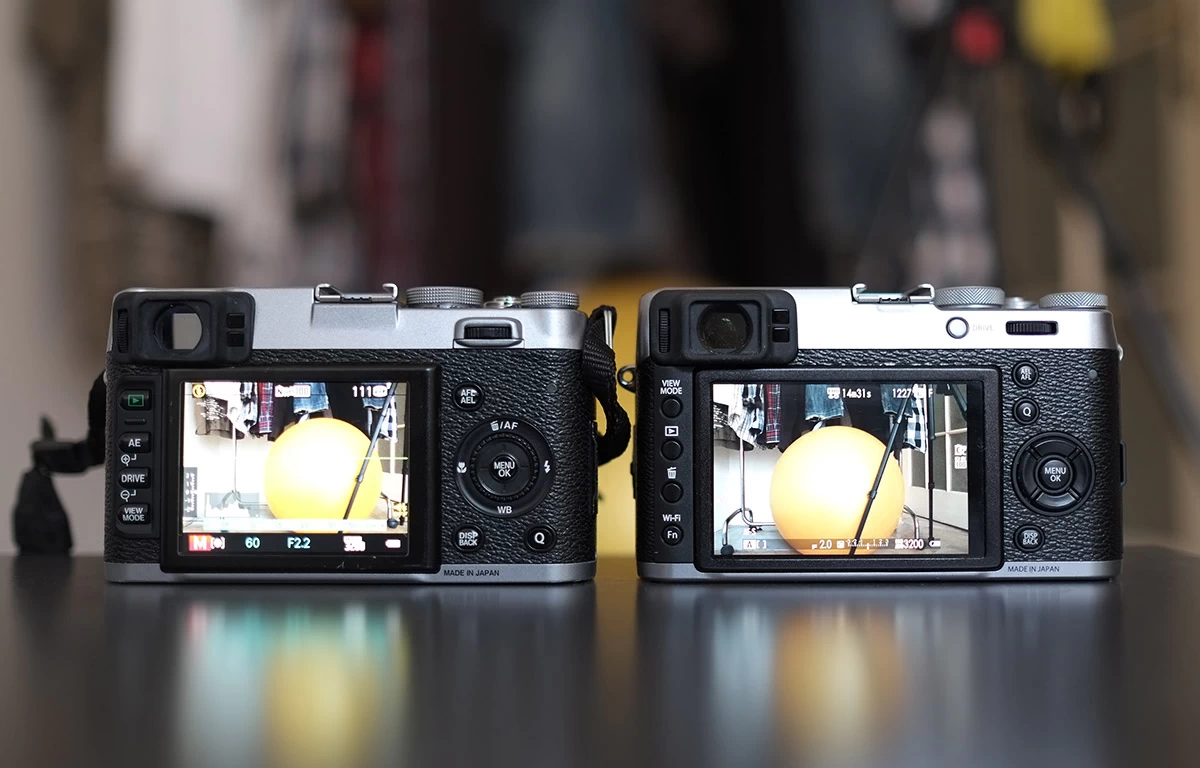
The biggest change at the back is the buttons. I’ll probably sadden fans of the rear rotary control; Fujifilm has retreated from it with the X100T and in its place you now find four buttons arranged in a circle exactly as on the X-E, X-Pro or X-T models. The upper horizontal rotary control stayed in its place. The arrangement of the other buttons at the back left me slightly puzzled. It is commendable that Fujifilm listens to the wishes and complaints of its users, but in this case I’d say too much. In Japan they should finally decide how best to lay out the buttons and leave it be. Every model has the buttons completely different, and when somebody owns two different cameras, they have to get used to two different ways of operating them.
I consider moving the „play“ button to second place entirely illogical. View Mode is an unimportant control for me and suits me perfectly in the upper part above the display (on the X-E1); its fourth (last) place on the X100 and X100S seems more logical too. I also miss the button for quickly switching the ND filter on/off, which was at bottom right on the first X100; on the X100S there is Q (quick settings) and on the X100T you find only an empty space, Q having been moved up above the cross controller, where on the contrary it doesn’t bother me. I understand that most non-photographers didn’t know what an ND filter was and the button did them more harm than good, but browsing the menu for it is like physically pulling the ND filter out of a pocket, screwing it on and then unscrewing it and putting it away. I have no objections to the other buttons.
At bottom left, where on the X100 and X100S the display mode was switched, there is now a Wi-Fi button. Pleasant.
I was very pleased that the X100T has 7 programmable buttons. So you can put even the ND filter anywhere you like.
The rotary control for exposure compensation now offers ± 3 EV (previously 2 EV).
The aperture ring has also been improved; aperture values can be set in 1/3 steps.
Viewfinder
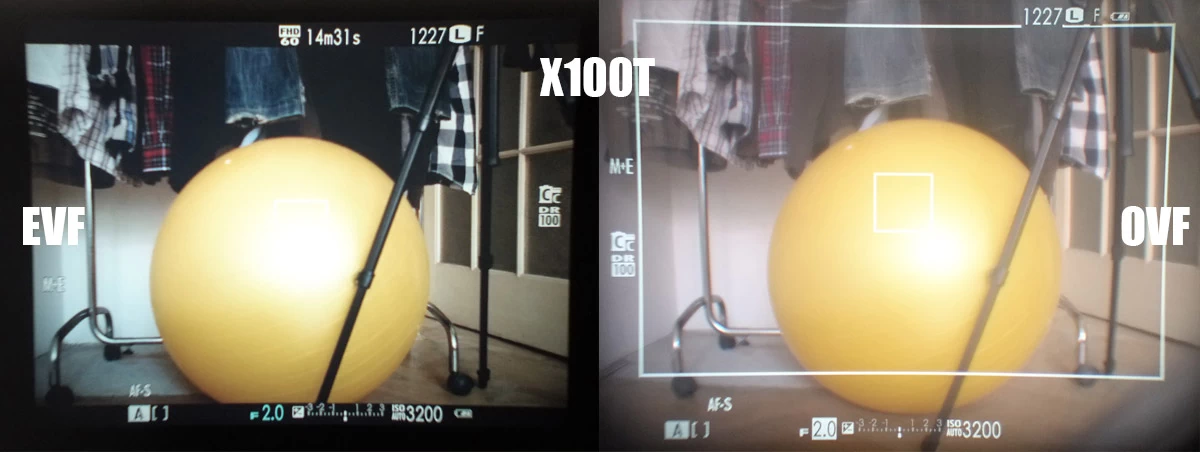
I should probably write viewfinders, because the X100? models and the X-Pro1 have a marvellous hybrid viewfinder that allows a choice between electronic (EVF) and optical (OVF). The X100T extends the hybrid viewfinder with another term – ERF (electronic rangefinder); I’ll get to it later.
The electronic viewfinder (EVF) has the same parameters as the X100S, but is markedly faster and feels better. In practice this meant that when I looked at a not very contrasty scene, say a room in daylight, it happened that I didn’t know whether I was looking through the transparent optical one or at a tiny electronic display. The quality is truly excellent.
The optical viewfinder (OVF) has also been improved; it still doesn’t cover 100 % of the scene, but this figure rose from 90 to 92 %. Compared with older models it can adjust (shift) the white frame of the scene in real time depending on whether you photograph a near or distant subject.
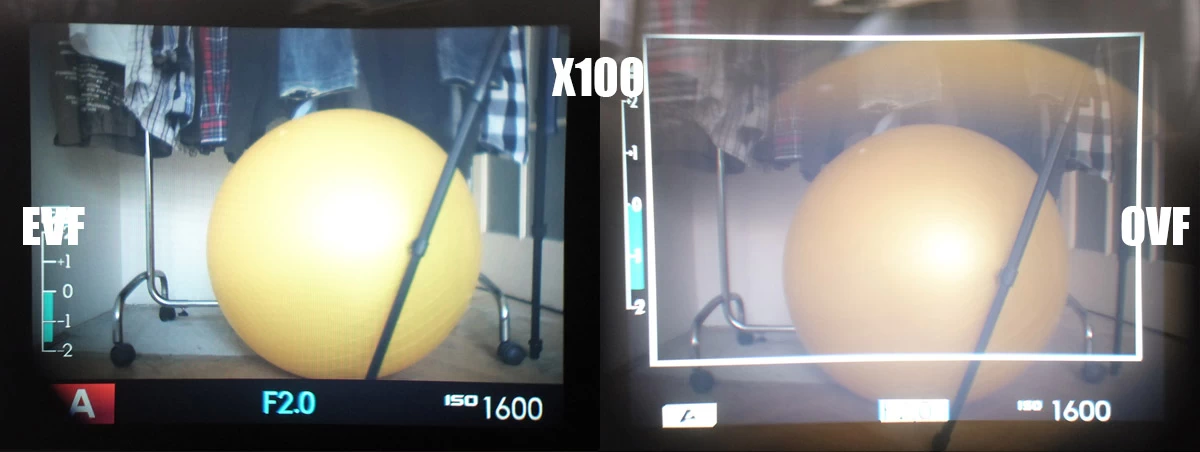
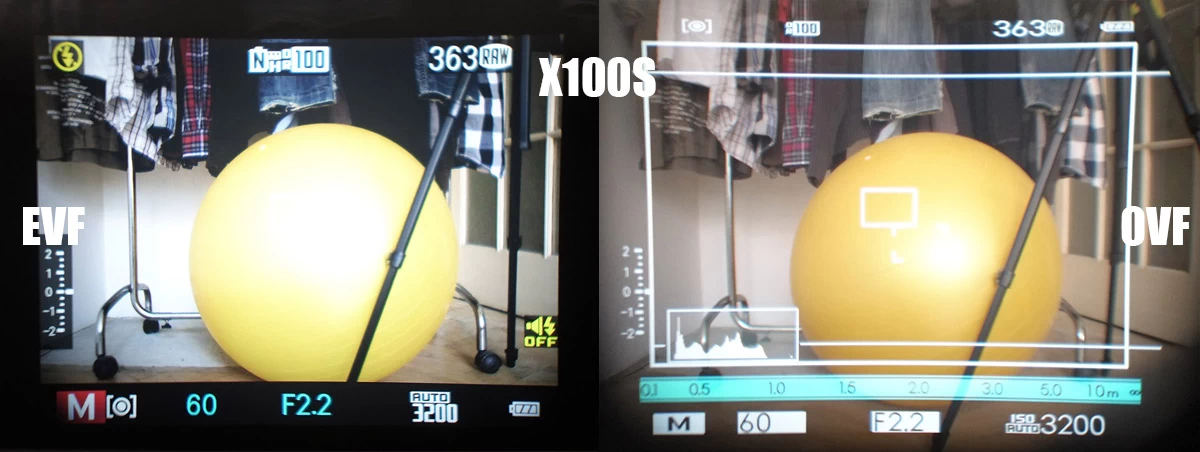
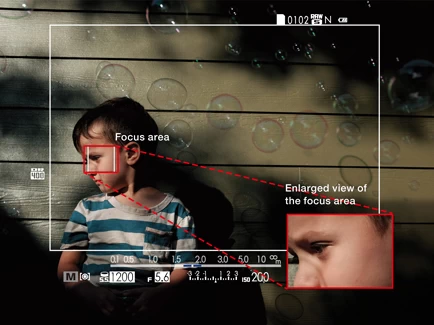 The electronic rangefinder (ERF) is probably the most striking novelty of the hybrid viewfinder – even when you shoot through the OVF, you can electronically display in the bottom right corner an enlarged detail of the spot you are focusing on. Besides focus you thus have the correct exposure immediately under control too. An amazing thing.
Electronic shutter
As you probably know, all previous models of the X series offer 1/4000 of a second as the shortest shutter time. That is a nice time for freezing almost any movement, but it isn’t enough for light. The lens of the X100? series has an aperture of 2.0 and interchangeable lenses for the other X cameras reach values of 1.4 or even 1.2. Then daylight in the street is enough, and with the combination ISO 200, aperture 1.2 and a time of 1/4000 s too much light still falls on the sensor and the photos are overexposed. Then nothing remains but to close the aperture down and say goodbye to shallow depth of field.
The X100T solved this problem with an electronic shutter with a shortest time of 1/32000 s. It is not possible, however (at least on the unit I tested), to work with it manually; it worked for me only in automatic mode. In fact at first it didn’t work at all, so I wrote to Tokyo for help and the next day I received a firmware upgrade, after which everything came up and I could enjoy the short times.
One thing I didn’t like and I’d be pleased if the final product handled it differently – when you choose electronic or mechanical + electronic shutter in the menu, the option to use the internal flash and ISO higher than 6400 is automatically switched off. It’s logical, but I’d build it the other way round – when you raise ISO above 6400 or switch on the flash, the electronic shutter should deactivate automatically and activate again on returning to „normal“ mode. As it is, because of the flash or higher ISO you have to go into the menu and switch the shutter type.
Focusing
Overall I’d compare the focusing to the X-E2 and X-T1 (but I didn’t have them together for testing, so take it with a grain of salt).
The X100T can now recognize faces – a fine function for parties and family in the mountains; I switched it off at once. I like to choose which face I focus on.
The manual focus assistant offers a multicoloured „focus peaking„, which is a highlighting or outlining of the focused parts of the scene, and a „split image“ as we know it from old cameras – the vertical lines of the image split and meet when the subject is correctly in focus. All this still happens under magnification, so manual focusing is really comfortable and precise.
The focusing speed I would also subjectively compare to the X-E2 and X-T1. In good light conditions all tested cameras focused similarly and fast enough (yes, including the notorious sloth X100); after moving to worse conditions it was clearly noticeable that the focusing of the X100T is about twice as fast as the X100S.
I know, these are feelings, not exact data, but in practice it isn’t much about exact numbers, rather about a feeling of usability, sufficiency and comfort. On top of that, thanks to the markedly shortened testing time I had only a few minutes for the focusing test itself. But it certainly felt faster.
Classic Chrome
I looked forward to the new film simulation, which Fujifilm called Classic Chrome and which brings Kodak’s Kodachrome into Fujifilm cameras (but don’t tell anyone, it’s a public secret), perhaps most of all.
How to describe it … a warm tone, slightly desaturated, yellow goes pleasantly towards brown or beige, brown doesn’t go towards red … in short, fantastically pleasant to look at. I hope the new firmware brings this goodie to my X-E1 too. Apart from comparison tests I didn’t shoot in any other mode the whole time. Wonderful!
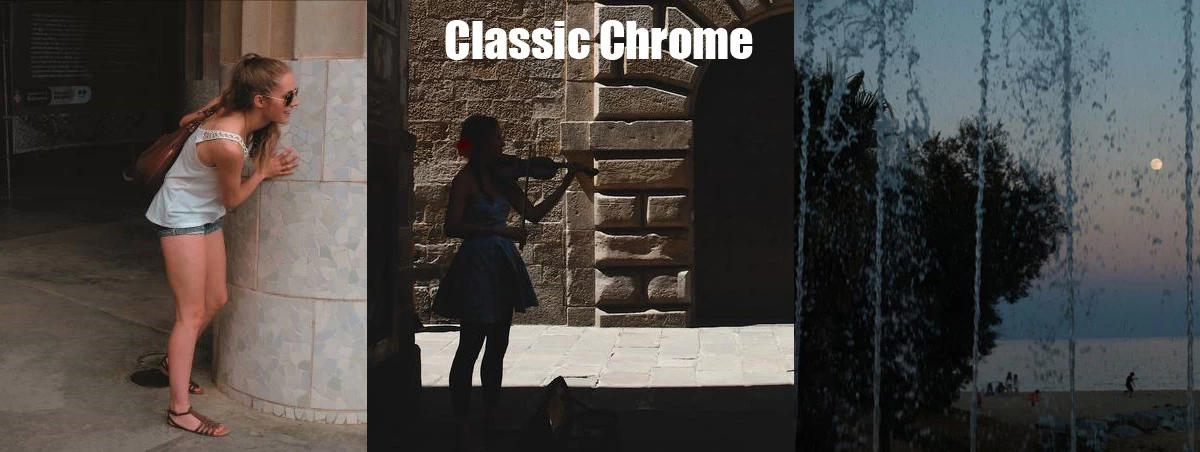
Now you may have realized why I’m describing photos and why there haven’t been any here until now. It’s simple, the X100T was lent to me with one small but fundamental restriction, and that was
A ban on publishing photographs
Unpleasant, but that’s how it is. Needless, because it shoots splendidly, no disgrace threatens, but I must keep the agreed rules. Never mind, let’s move on …
High ISO – noise
Originally I wanted to use the title Photo quality, but it hasn’t changed, it is as good as on the X100S and other cameras with the X-Trans sensor. The resolution hasn’t changed; the X100T too offers a sufficient 16 megapixels (a disappointment for those who expected at least 24, for me it’s enough). But the upper ISO limit has moved up to 51200 (the same as the X-T1). With it the noise limit has moved too; at the highest value the photos are of course unusable (as with all cameras regardless of brand and price). I wouldn’t dare claim how high an ISO is still usable, because that depends on light conditions, on what you want to do with the photo etc. I’ll limit myself to saying that there is an increase in quality, by at least one step, but I’ll leave the rest to you.
Video
I’ll limit myself to a list of parameters, there was no time to test. Compared with the X100S (1080p@ 60/30 fps) the X100T records in modes 1080p@/720p@ 60/50/30/25 fps. The built-in microphone is stereo (mono on older models). During video recording the camera remains under your control, so at last it is possible to stop down the aperture, say, but bear in mind that the aperture is stepped and you can see it in the video.
(R)evolution?
Definitely evolution, but a proper one. Sure, we might have wanted a bigger viewfinder, higher resolution, full frame, a tilting display and a watch with a water jet as a free gift. But look how much I’ve described, and I’ve been nowhere near describing everything; I mostly concentrated just on improvements.
If I owned an excellent X100S, I probably wouldn’t go mad over selling it and switching to the X100T (but I know a lot of people do exactly that). But if I were deciding on buying a new X100? camera and wanted the best, the choice of the letter T at the end would be clear; apart from a few mentioned subjective exceptions it is an excellent camera in all respects and I didn’t want to part with it at all.
And what about the X100?
It has somewhat faded from the comparison, because there’s not much to compare here; the X100 is a completely different camera. It is a legend thanks to which we have the whole X series, but today, apart from the name and design, it has little in common with this series. It works on a different sensor with 12 megapixels, compared with the new models it offers minimal comfort (rather maximum discomfort), is known for its slowness (although that improved greatly after firmware upgrades) and completely different photos come out of it.
Except that for „completely different photos“ I should probably write an exclamation mark, because despite all its shortcomings it is exactly the character of the photos that for a number of photographers remains an insurmountable peak. Perhaps it wouldn’t be out of place at all to add to the new X cameras a simulation of the good old X100. If the new ones can handle it …
For now I’ll look forward to Classic Chrome.
update 26.11.2014
The X100T at the specialist shop FUJIFOTO with a lowest-price guarantee costs 32,990 CZK and at MEGAPIXEL 33,990 CZK.