This page was translated by AI. Please be forgiving of any mistakes.
‹ Photo Notes · 5 května, 2018
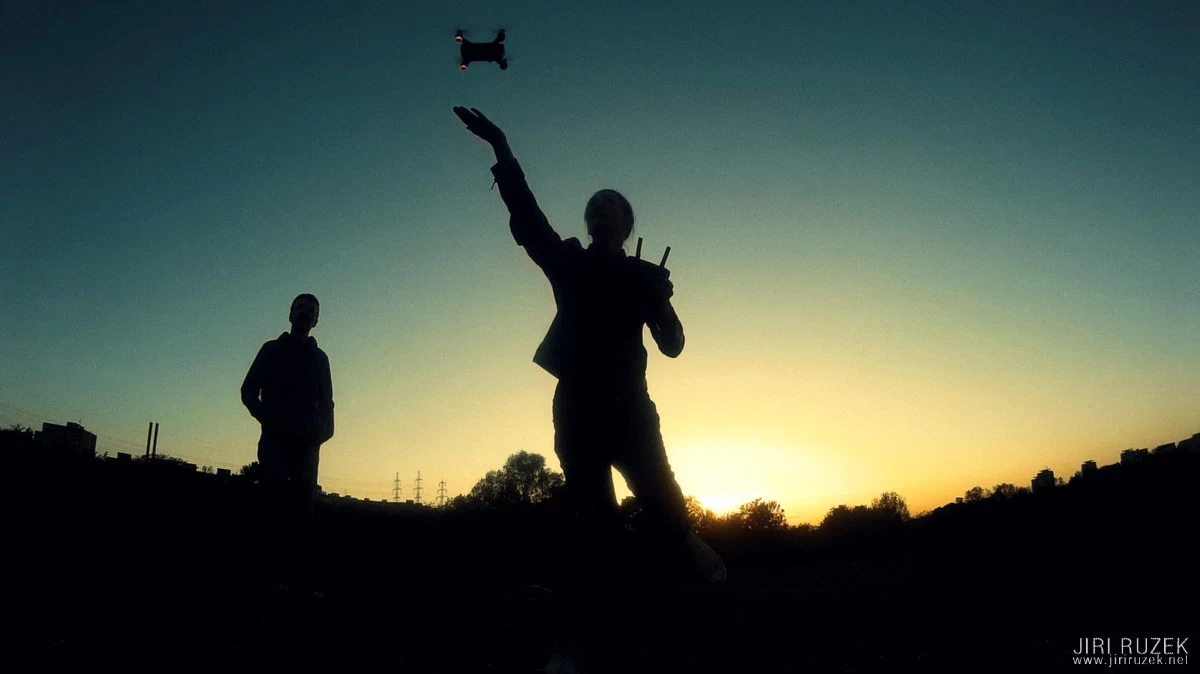
fly and film…
Hey, write something about drones. Well, I don’t know that much about drones, and there’s loads of information everywhere from people who really know what they can do. Yeah, but it’s mostly written by sellers who want to make a buck, or by people who understand it too well, and then I don’t understand it. And your storytelling amuses me, try to write it up… I already picked a camera because of you, and a drone sounds fine too, a guide will come in handy…
Alright. Not word for word, but a similar conversation took place with a friend over beer. So you could say the reason for this article is that whenever I experience or am experiencing something, I pester everyone around me with it.
I got into drones by mistake
Sometime at the end of 2016 a DJI Osmo camera landed at my place for testing (DJI Osmo). A camera with 4K resolution, fantastically stabilized by a three-axis gimbal. I shot something with it and, after a few weeks, returned it reluctantly. I hadn’t heard of the DJI brand until then, but by coincidence a few days later I showed up at an event where, besides Osmo cameras, there were also DJI drones. The hit there was the new Mavic Pro. Of course I liked the drones, but I took them either as a tool for filmmakers or as an overpriced toy, so I took no interest in them.
Except that in the following weeks they began to haunt me at every step, and in spring came the turning point.
So that it fits under the saddle
Líďa and I ride Vespas, and in spring we got the crazy idea to set out from Prague to the Balkans, get all the way to Albania and then back. And we wanted more than just photos. GoPro cameras were a given, but a drone would be even better.
But which drone to choose?
There are loads of drones, and in the barely a year that has passed since our decision there are even more, prices are falling, and manufacturers outdo each other in adding and refining features. To find your way around it and to fly without getting ripped off…
The basic question is: do I want to fly, or fly and film? Drones for flying (FPV) can be bought for a few hundred crowns. Really, today you can get them for under five hundred and you’ll certainly have lots of fun with them. The vast majority of them have a video camera, but its quality is not suitable for shooting video at all. We had to look at the video drones category, which is priced somewhat differently.
That Mavic was great, something like the Osmo in the air: also a 4K camera, also three-axis stabilization, and even foldable (when you ride Vespas, dimensions are among the most important factors). But a Mavic is bought by someone who is clear about what they want, has some experience with drones and knows they will be seriously dedicated to them. Say, someone who has a Phantom and wants something similar but smaller. Not someone who has sent at most a paper swallow into the air. You can’t do it, you’ve never done it, it will surely fly away, drown or smash against the rocks; even pros admit how many drones they’ve already gone through… A beginner more or less expects to lose the first drone quickly, so they’d rather have something „to try out“ and not literally drown several tens of thousands.
DJI Spark – we were heard
In May 2017 exactly the kind of drone we were looking for saw the light of day: the DJI Spark.
Wait, I keep talking about one brand as if nobody but DJI made drones. Of course we looked at competing models (e.g. the Yuneec Breeze or Parrot Bebop; there are plenty of makers), mostly cheaper, but either they lacked that compactness or the reviews came out worse. Around that time a big comparison of video drones in dTest had just come out; the Spark, as a hot novelty, was missing from it, but all the top places were taken by DJI drones. And people went crazy for the new Spark; it literally became the king of the season.
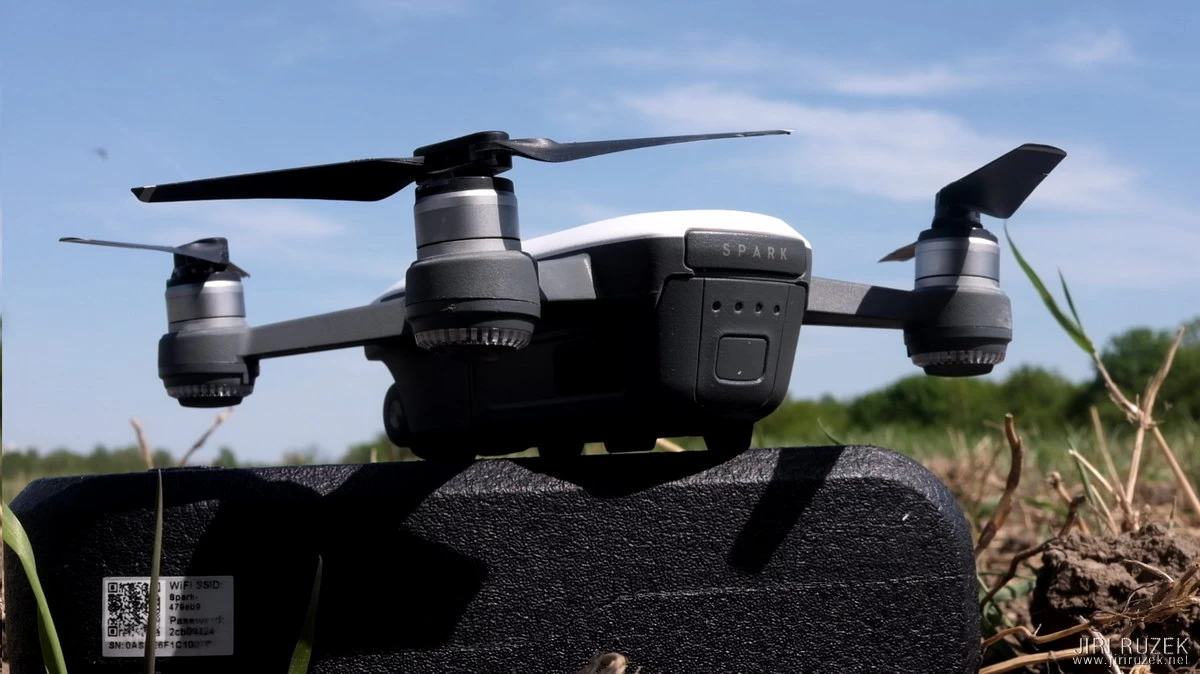
It’s small. It’s not foldable like the Mavic, but even without that it’s a tiny thing and weighs almost nothing. Ideal for trips. It’s also markedly cheaper than the Mavic. Of course, cheaper isn’t free: the gimbal stabilizes only in two axes, video is max FullHD at 30 frames per second and it doesn’t work with profiles like D-log and so on… More differences could be found, but hand on heart, as a first drone, the one you’re going to drown anyway, it offered more than enough.
Except it wasn’t on the market. Almost all Czech shops uniformly stated a restocking date of 20 July. And that was the day we had planned to leave, and we wanted to try everything before the trip. Luckily, after a thorough explanation of our urgent situation and thanks to the willingness and flexibility of the people at FotoŠkoda, it reached us a week earlier.
In the ad everything is easy
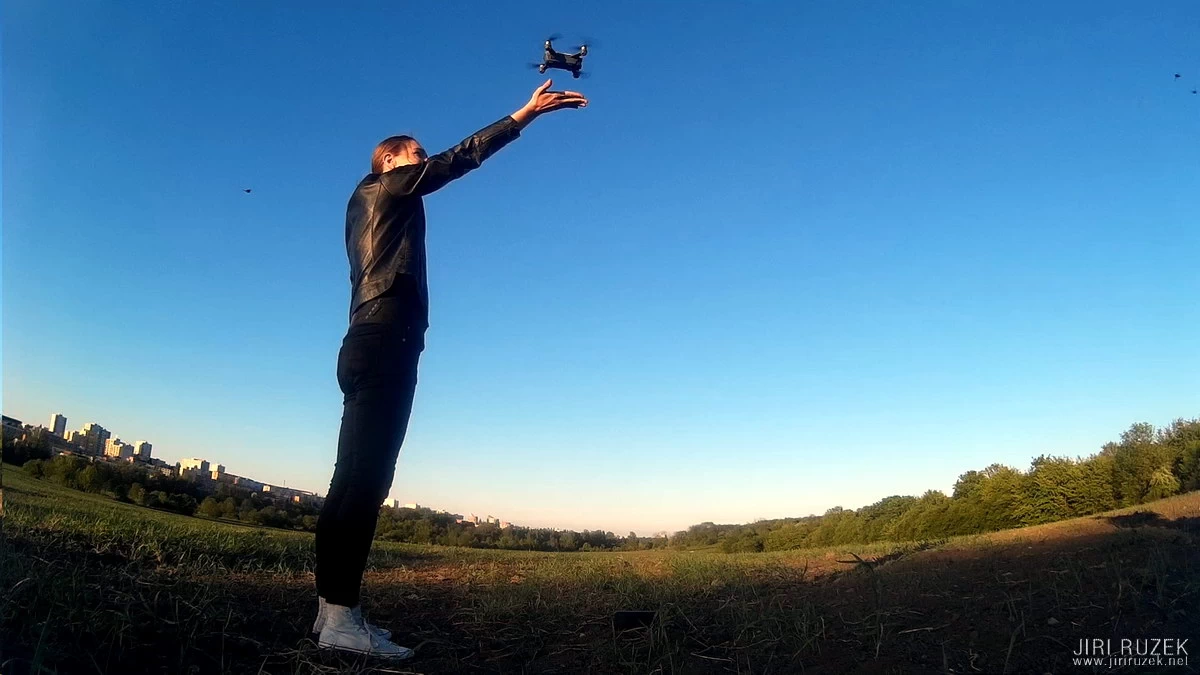
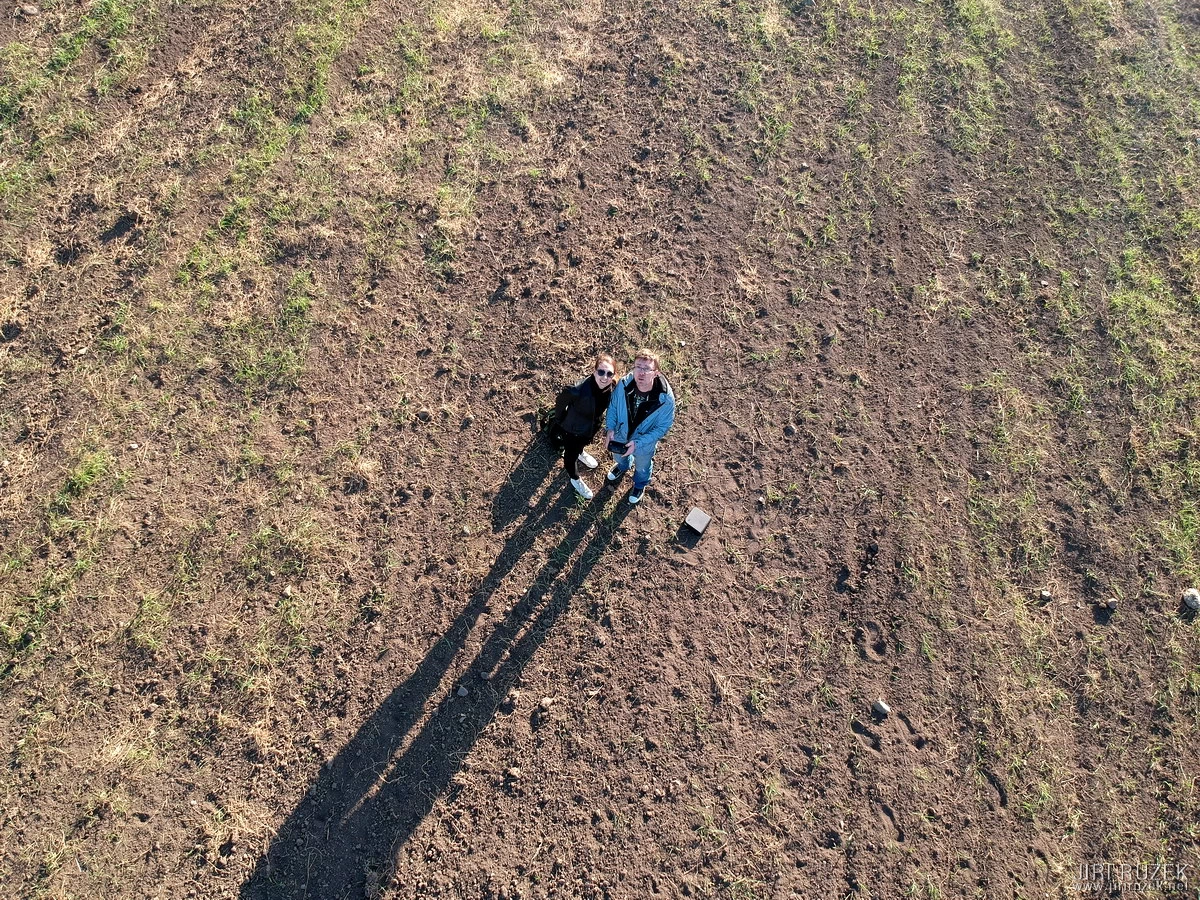
Flying a drone is easy and fun, as all the promo videos show, not only for the Spark and not only from DJI. The Spark can additionally behave like a selfie drone, and that is also easy and fun: you put it on your palm, show your face to the camera, it remembers you and then obeys you like a flying puppy. You give it commands with simple gestures of one or both hands. It flies around you, moves away, returns, takes your picture, lands back on your palm, all on command. And of course it has sensors that reliably detect obstacles, so it doesn’t even crash but nicely flies around the obstacle. Once more: easy and fun… but you know how that goes, right….
I unpacked it in the kitchen, put it on my palm at eye level, made a face at it and (I don’t know, maybe I scared it) before I could give the first command, it threw itself back and within a second or two reversed into the sink (luckily without water). The second attempt ended behind the piano (yes, we have a piano in the kitchen), and when a friend came over for wine and wanted to make (like in the ad) a dronie (a selfie from a drone is called a dronie), it landed behind the fridge; there was no dronie, but there was a ton of fun. I think ours is a bit afraid of people and also a bit claustrophobic…
The drone went into its box and we gave up further indoor attempts. Neatly under the saddle, we drove out to a wide field and learned at least a little there before leaving for the Balkans. It wasn’t enough.
Panic is the right word
A first drone is probably like a first motorbike. Panic accompanied us at every movement; we were constantly afraid it would fly away, that we’d drown it, smash it… When it was 30 metres away it felt like a kilometre. It can return home by itself, but does it really know that home is here in this field where I’m standing, or will it fly home to China?
By the way, that „under the saddle“ was also quite a silly idea. It is a safe place, but throughout the trip a fifty-litre motorcycle bag was strapped to the seat with several bungee cords, and more and more other stuff on it (a tent, a bottle of water, a bottle of rakija, wet shoes…). So when we stopped somewhere with „oh, it’s beautiful here“, we didn’t even remember that under that saddle and that pile is the drone… Besides, you can’t fly everywhere… Well, over the whole trip we lifted it into the air only about six times. And it wasn’t worth much.
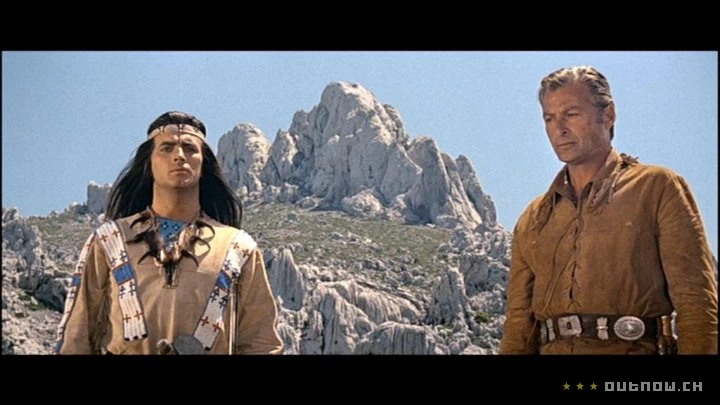
Panic didn’t let us fly far, and we made lots of other beginner mistakes as well. The biggest adrenaline we got was probably near Zadar at a place where many Winnetou scenes were shot. Everyone knows that mountain. We drove to it for a long time along climbing serpentines, with only white gravel under the wheels and „beware, mines“ signs all around the road. When we switched on the Spark, we found that the battery was charged to only 35%. We had forgotten to charge on the way and had only one. A fully charged one lasts at most 16 minutes, more likely 12 to 15. So we lifted the drone at least a little, but the mountain was too close and didn’t fit into the frame (the Spark isn’t as wide-angle as, say, a GoPro). But with the battery capacity dropping drastically, we didn’t dare to back it up over the minefield.
In Mostar we tried to lift it on a rooftop terrace, but the wind tossed it so much in the air that panic again prevented us from flying farther or higher, and we hovered, or rather fluttered, some 5 metres above the roof, and none of that beautiful city was visible. And so on…
One more thing about those sensors and crashes: the sensors detecting obstacles are only at the front and underneath. A collision with an obstacle therefore threatens when moving backwards, sideways and upwards. Keep that in mind.
Without extra batteries and a controller it’s nonsense
The Spark is sold in two versions. The basic version contains only the drone, one battery, spare propellers, a USB charger and a practical simple carrying case. The more expensive Fly More Combo additionally has a remote controller, another battery, a charger for 3 batteries + 2 USB outputs, propeller guards and a nice bag that carries the drone + two more batteries + the remote controller.
You definitely need more batteries; one is pitifully few (16 minutes max). We recommend at least three. Over time, besides batteries, we also bought a portable charger/powerbank that can charge 3 batteries even in the field, so it doubles the flight time. With three batteries we manage an hour and a half of flying, which is seriously and finally more than enough.
And without the remote controller you reduce the Spark to just an expensive toy. The mobile app is excellent, but smooth control through the phone display is almost impossible, and you’ll also be markedly limited by distance (if I’m not mistaken, max. 50 metres). With the controller you can go as far as …
A bit too clever a fly
And with the controller you can fly up to two kilometres! Unfortunately (or maybe thank God) that is not true on our continent. The Spark isn’t just a camera and four motors with propellers at the ends. It’s a small computer, similar to your phone. In flight it communicates with an average of 17 satellites, which confirm its GPS coordinates. From time to time it downloads new firmware and also a database of flight zones and restrictions. So it can easily happen that it stops in flight and a message appears on the display that you may not fly into that area. By the way, the individual batteries download firmware too, be prepared for that; I experienced it in Milan, where one battery was fine (the update had run at home in the evening) and the other wouldn’t let me take off until it uploaded the new data. And before I forget, all your flights are recorded in more than enough detail, so no silliness around military sites, presidential palaces and the like 🙂 It’s easy to find out which drone it was and what exactly it was doing.
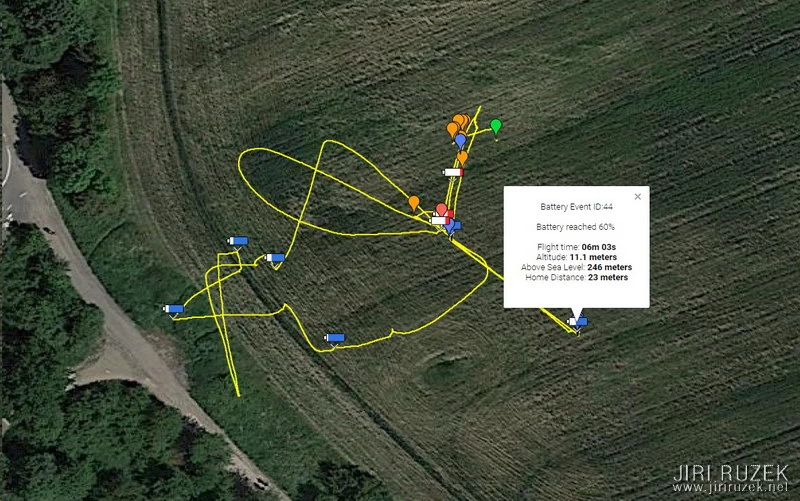 Have a look at a detailed log of one of our practice flights.
How the Spark communicates with the world is also tied to how far it can get from you. The remote controller communicates on a frequency of 2.4 GHz or 5.8 GHz. I’m no expert, but simplified: in America the radio rules and restrictions of the FCC apply, in China SRRC, and in Europe we have CE. And because the Spark knows this well, thanks to signal strength the same drone will fly up to 2 kilometres from the transmitter in America, in China at most 1.2 km, and in Europe at 5.8 GHz the limit is 300 metres and if you switch to 2.4 GHz you’ll get at most 500 metres away. There are cases where it goes farther, but the CE limits are set like this. In any case, at such distances you’ll be almost 100% without a video signal, which is sometimes unstable or disappears completely even at a few tens of metres. Sometimes you can still control the drone, you just don’t see on the phone where it’s flying and looking. Sometimes you lose control completely and the drone uncompromisingly announces that it’s returning home. In the better case…
Even in Europe the Spark app can be hacked to use FCC instead of CE. It isn’t legal, but it works. And you can fly much farther than two kilometres. Spark owners who enjoy breaking records have already gone beyond 5.5 kilometres. On one battery they manage to fly an unbelievable 11 kilometres. And occasionally drown the drone while doing it…
But the FCC standard isn’t only about breaking records. Of course you’ll try it „you men are all the same“ (well, you women too; Da Vinci would never have painted a helicopter, in fact the first concept of a drone, if…); my record so far is 981 metres in distance and 342 metres in altitude. But my interest is not to drown or lose the drone. What matters is to have a stable signal even at a distance of, say, „just“ 300 metres. I don’t want to lead anyone astray, but there are places where people devote themselves to this subject. It’s true that most of them go after breaking records. I don’t (I’m not like every man, 981 metres is enough for me for now).
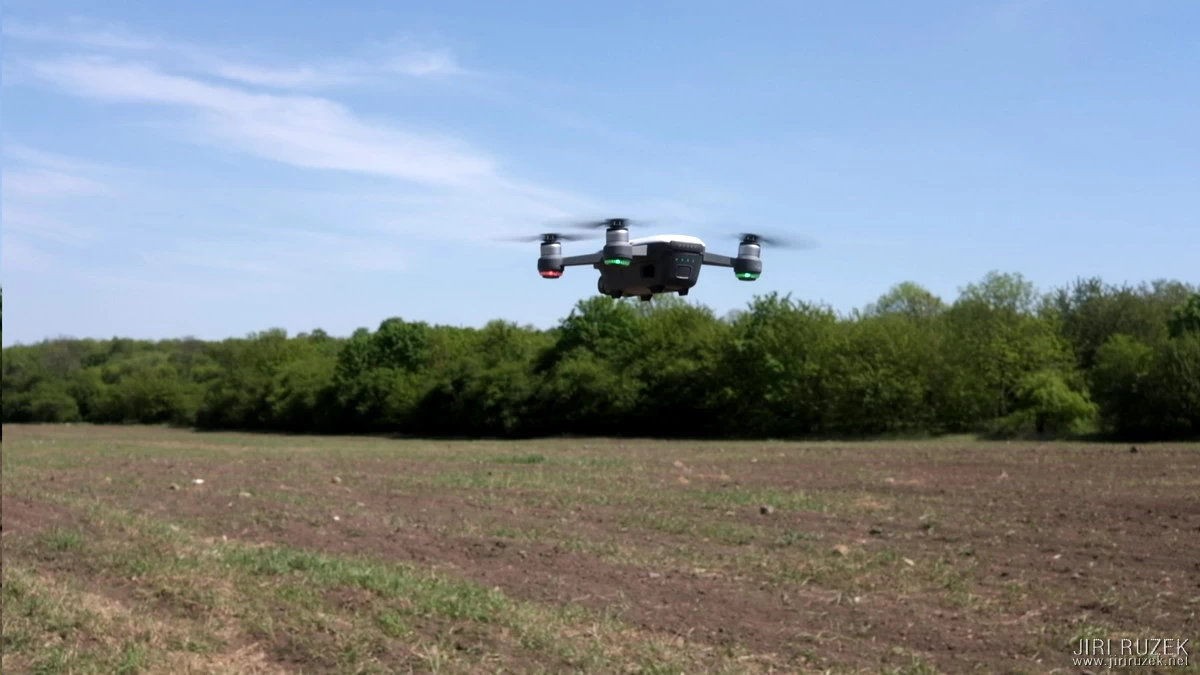
So it won’t fly away? It won’t fall?
It can. On YouTube and in forums there is plenty of proof that it happens. Also in online classifieds: I myself bought a whole „combo“ cheaply from an ad, without the drowned drone. But in the vast majority of cases it was pilot error (whether they admit it or not).
The drowned one drowned because in the air its … how to put it … backside fell off. Literally: the battery was clipped in badly, over the water it detached from the body and two dead pieces fell down. When I learned that, I ordered for a few crowns a safety battery holder. You never know.
Another thing is those sensors (front and bottom): the Spark can fly out and come back beautifully, it can follow you, circle around you and so on… Sometimes it has to back up while doing that, or you force it to by the controller’s control sticks. Keep track of obstacles.
One more note on obstacles. The Spark reliably recognizes a glacier, a mountain, a building or a tree in its way. It also recognizes a person. It often fails to recognize „thin“ obstacles, though, that is, branches without leaves or (heaven forbid) say high-voltage wires. Again: keep track of the terrain and maintain a reasonable flight altitude (also for the „return home“, the so-called RTH return to home).
Don’t fly in bad weather and don’t fly where you can’t see. Don’t try to break distance records at all costs (loss of signal threatens and so on). In the fast sport mode the sensors switch off, so definitely use sport only in an open and clear space.
Especially when flying over the sea, mountains and the like, watch the battery state. Flying full speed straight ahead until 50% battery doesn’t pay off: on the way back you may fly against the wind, the flight will be much slower and battery consumption greater, and there’s a big chance the drone won’t make it.
And again the panic. The pilot gets unsure and starts twisting the joysticks in all directions… this is a common cause of crashes.
Train. In an open area (in a field). Get rid of the panic, as we did, and gradually you’ll dare to attempt more complex and bolder things (such as filming a bison at a distance of 700 metres).
Watch videos on YouTube too, there are loads; there are excellent videos about the Spark by e.g. Francis Darracott. Read the forums, for example the official one at DJI; your problem has most likely been solved by someone, and maybe even solved.
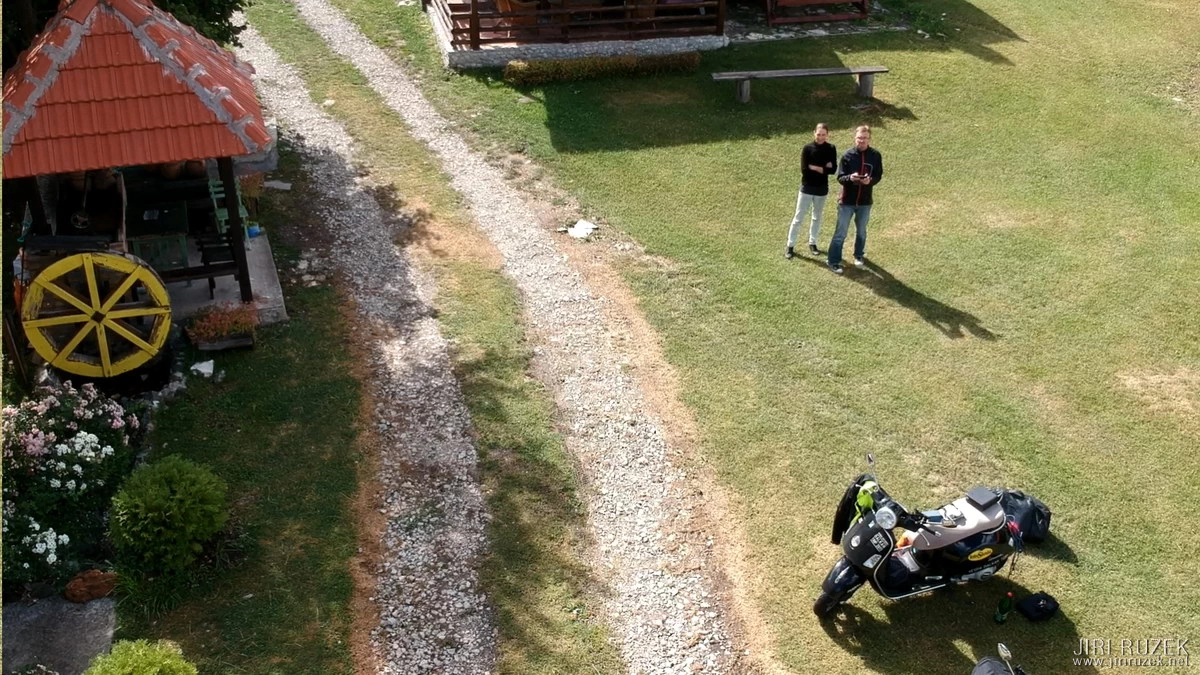
Make a checklist
I recommend writing a checklist (or building it up gradually with experience) that you always run through, tick off, and thus avoid situations where you drive an hour to the longed-for location (see the Vinnetou mountain) and there you find that you don’t have an SD card in the drone, that the SD card is full and you have no other, that your batteries aren’t charged, that you left two of three batteries at home, that the battery, drone, controller or app aren’t updated to the latest version, that a snowstorm is approaching, that a military exercise or an air show is going on in the area, that you forgot to replace the propeller you broke yesterday and don’t have a spare with you, that you didn’t check whether the battery is properly clicked in, that you beautifully and UNREPEATABLY flew past a flock of birds but forgot to press the video record button, etc. etc. A good half of that is my own experience, including those birds.
Technical note: ideally you’d have the checklist in your phone, and there are various apps for that, but the moment you launch the DJI Go app for controlling the drone and attach the phone to the controller, it’s no longer so ideal… That is, unless you have two phones. Then probably better paper (and for some other checklist, add a point „don’t forget the paper with the checklist“).
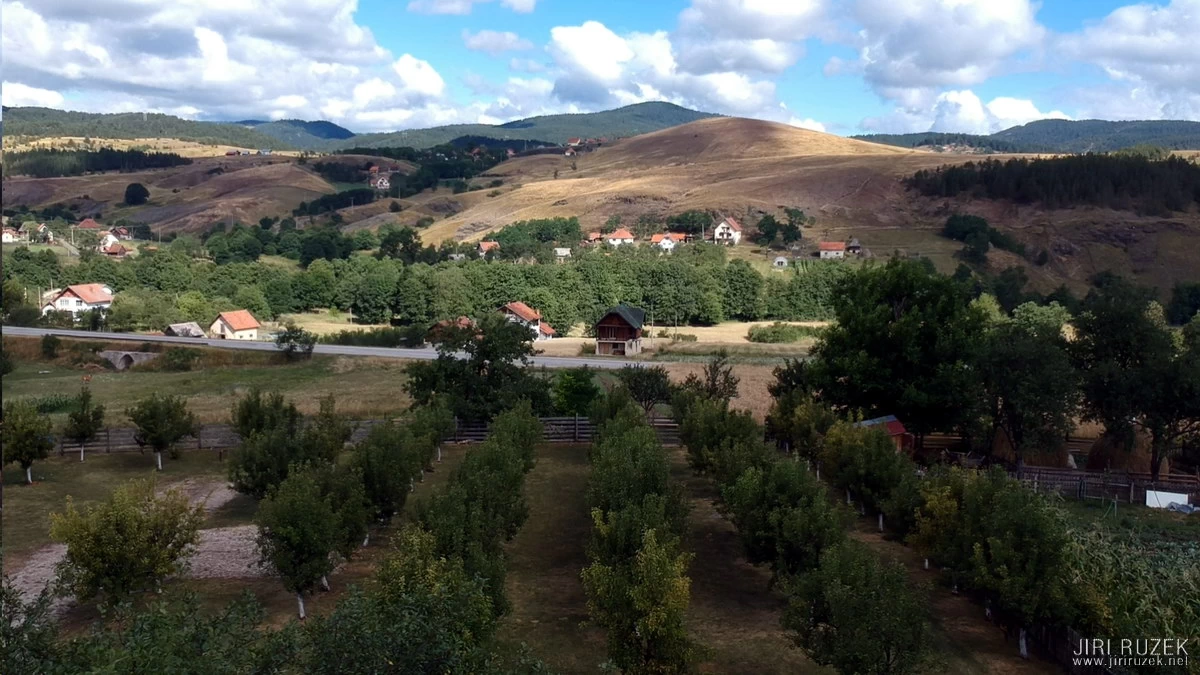
And for video, a plan
This is also my own experience, but others have it similarly. You get to that mountain, lift the drone and … what next? You raise it higher, fly a little forward, stop, turn right, fly a bit further, left, back up a little, descend a little, turn … … Suddenly the drone runs out of battery, lands, and you don’t have a single decent shot.
Come to the location, look around, take out a piece of paper and write down a few points, e.g. a low fly-over above an avenue, a bird’s-eye view above me, a sideways fly-by, this and that… five usable shots. You’ll find that if you follow the plan, one to two minutes for each of them is enough, and you’ll still have a piece of battery capacity left for some experiments.
One more note on video: you don’t have to shoot everything only from a great height. Take the drone as a mobile camera that you can shoot from, say, eye level. Thanks to smooth movement in all directions you get advantages similar to a camera on a jib or on a moving car.
Above all, safely
There are so many bans that you’ll think there is actually nowhere to fly. That’s not quite true. Study, read Supplement X, download the app. At first you won’t understand much, but you’ll get used to it; we’re still learning too. For a motorbike you need a licence and you then have to ride according to regulations. The Spark is tiny and won’t carry you, but it’s still a participant in air traffic. If you’re not sure about the regulations, at least use your head and don’t fly over people or where there is greater danger of causing damage. I know of people who take out special insurance for flying a drone.
By the way, after studying the regulations you’ll find that with the Spark and other small drones (in the category from 0.91 kg up to 7 kg) the basic rule is „safe distance“, which is not defined in any way. So don’t be too afraid…
The king is dead, long live the king
The Spark hadn’t been on the scene even a year when DJI released a new hit into the world: the Mavic Air. In size, price and really almost everything it sits somewhere between the Spark and the Mavic Pro. From the Mavic it has the more professional video, from the Spark those cute selfie functions. It’s better than the Spark. It’s also more expensive. Many people are moving to the new model, many are staying. We are really only getting to know our Spark better after three quarters of a year, and we’ve equipped it a lot (more than the Fly More Combo offers), so we’re not planning any switch for now. The Spark fits under the saddle (this year it will rather be somewhere more at hand) and for our purposes the video quality is more than sufficient.
A real newcomer, the little prince, could be called the Tello drone. It is made by the company Ryze Tech, though in close cooperation with DJI and Intel. In our country it costs just under three thousand and it’s something like a small mock-up of the Spark with an HD camera. Ideal for those who’d like a small and cheap drone but don’t want to buy some unusable junk.
China isn’t the same as China
Drone prices have fallen markedly compared with last year. The offer of cheap drones from China is excessive, toy drones are sold at prices under 200 CZK, and imitations of popular expensive drones, say those from DJI, you can buy for tens of euros, that is hundreds of crowns. Did I already mention that DJI is a Chinese company? Yes, China copies China. With those cheap drones you have to count on poor quality and bigger promises than reality. But that doesn’t matter at all; that competitive pressure drives technical progress forward and pushes prices down. An imitation of the Spark or Mavic for 800 CZK probably won’t do the same as the original, but the very fact that such cheap drones learn the functions of the expensive ones suggests that we’ll soon see much more interesting things than we know now.
Nor does the competitive competition sleep, for example the mentioned, also Chinese, company Yuneec or the French Parrot. And there is much talk now about novelties from (again Chinese) PowerVision. It often speaks of its drones as robots. Robots that can fly, swim, dive, search and even catch fish. And so on… Big things await us.
Are drones expensive?
It depends on your angle. If you take them as toys, they are expensive. You can still buy one of those super cheap ones. But if you want to film or take photographs, you can say they aren’t more expensive than cameras, in fact the opposite. For the price of a moderately decent camera you can buy a top drone.
Flying drones is fun and relatively easy… have a lot of fun, and may your drone always come back, so that you don’t return home with just an empty box 🙂
And once again a big thank you to the people at FotoŠkoda, because a company is always about people.