This page was translated by AI. Please be forgiving of any mistakes.
‹ Photo Notes · 28 dubna, 2014
How does perspective behave with a short or long focal length? Look at three simple, easy-to-follow examples.
Put simply, perspective is inversely proportional to the focal length of the lens – the shorter the focal length, the greater the perspective, and vice versa.
Standard lenses with a focal length around 50mm render the scene roughly like the human eye; anything shorter increases perspective and anything longer reduces it (shortens, suppresses, compresses…).
For my experiment I used 4 roughly equal camera boxes and Fujifilm lenses. I don’t spend much time photographing still lifes, so I didn’t particularly care about the aesthetics of the scene or the details of composition, nor did I bother with retouching and other edits; it was purely about the rendering of perspective.
Lenses used: Fujinon 56mm/1.2, 23mm/1.4 and 14mm/2.8 (the 35mm-film equivalents are 84mm, 35mm and 21mm, but that concerns only the angle of view, not the focal length – see the previous article about the crop factor).
56 mm
56 mm is almost a standard focal length, so the perspective is very natural. You can easily judge the size and distance of the individual boxes. You’d achieve an even more natural effect with a 50mm lens; 56 mm already compresses perspective very slightly.
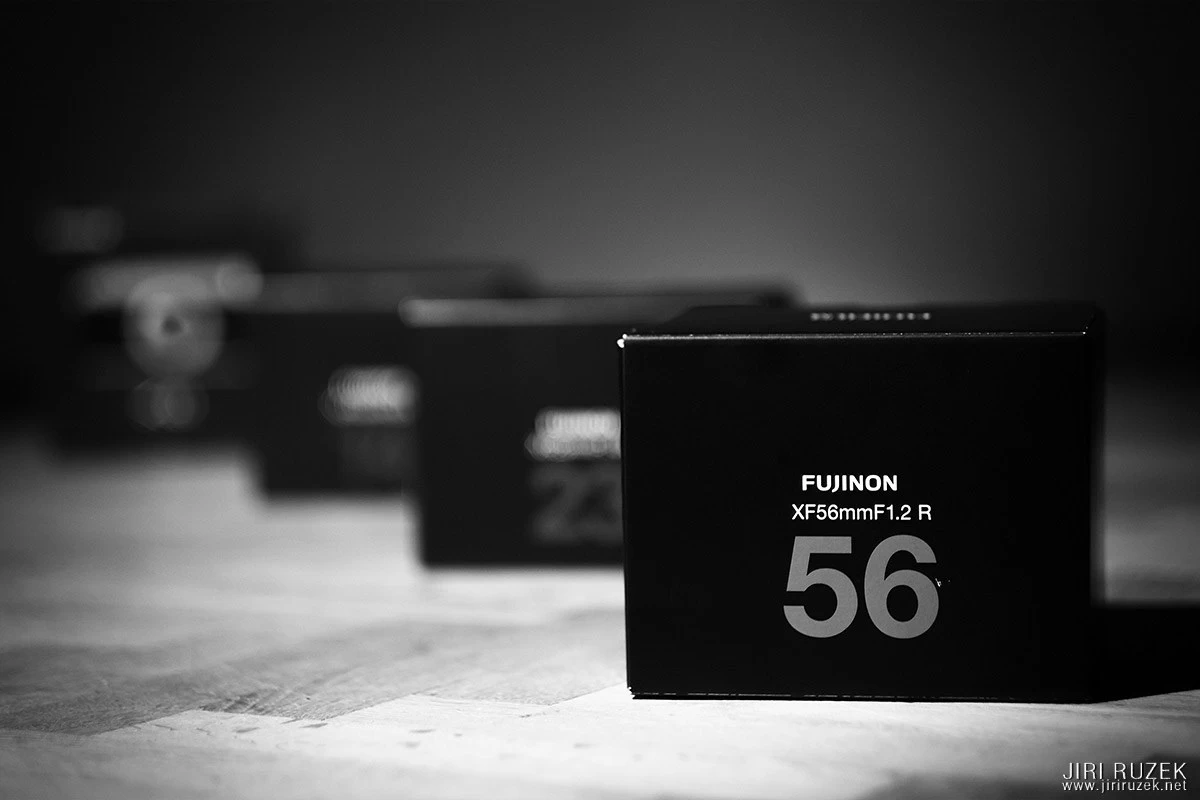
Fujinon XF 56mm F1.2 R, @f1.2, 1/125 s, ISO 320
The 35mm-film (or full-frame sensor) equivalent of 56 mm is 84 mm, which ranks it among the most popular portrait lenses.
23 mm
With a 23mm lens the perspective increases markedly (the focal length is less than half), the second box looks half the size and clearly distant from the first, while with the more distant objects, i.e. the third and fourth boxes, such distortion no longer occurs.
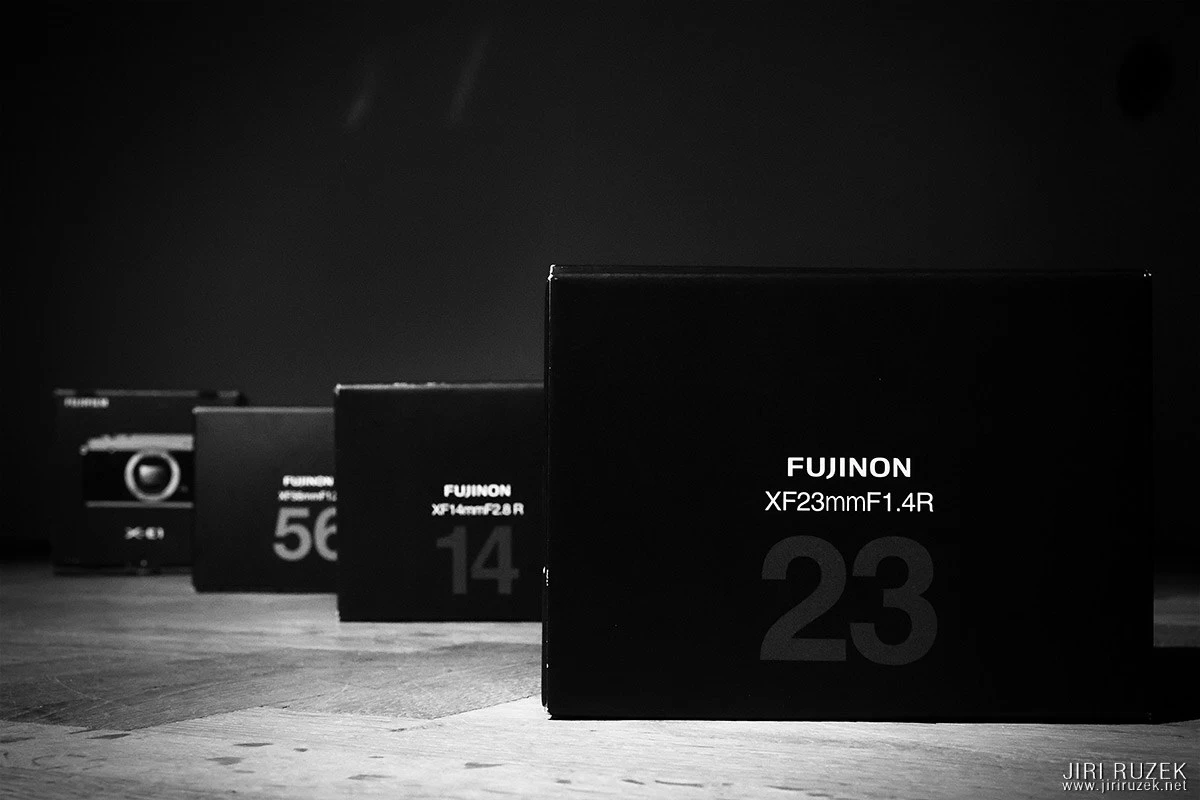
Fujinon XF 23mm F1.4, @f8, 1/125 s, ISO 6400
The equivalent of the 23 mm lens is 35 mm. This focal length is popular for street photography, and for me it is the most-used lens for photographing the figure and nudes in general. Thanks to its not excessive distortion of perspective it lets me work with the body, sensitively lengthening, enlarging, reducing.
14 mm
The distortion of perspective in a photograph taken with a 14mm lens is very strong; the distance between the individual boxes has increased markedly, as has the impression of a difference in sizes. Notice how the effect gradually fades here too – the difference in size and distance between the first and second is the greatest, between the second and third it is still significant, though not as much, but the difference between the third and fourth is already entirely negligible.
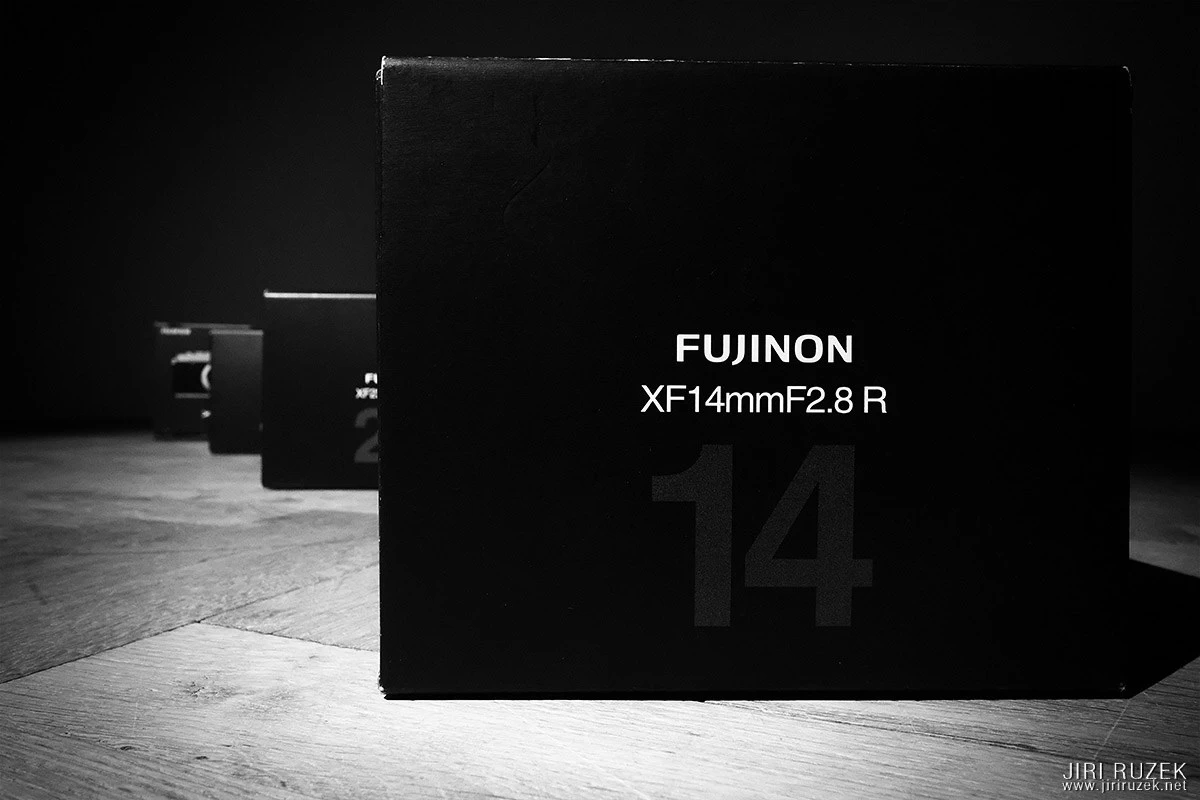
Fujinon XF 14mm F2.8, @f11, 1/60 s, ISO 6400
The angle of view of a 14mm lens corresponds after the crop factor to 21 mm on 35mm film. It belongs among extremely short lenses. Used incorrectly it deforms strongly, which is why it is little used for photographing people. I shoot with it often, mostly to obtain wide space around the figure.
In the following photograph you can see the real ratio of sizes and distances of the individual boxes.
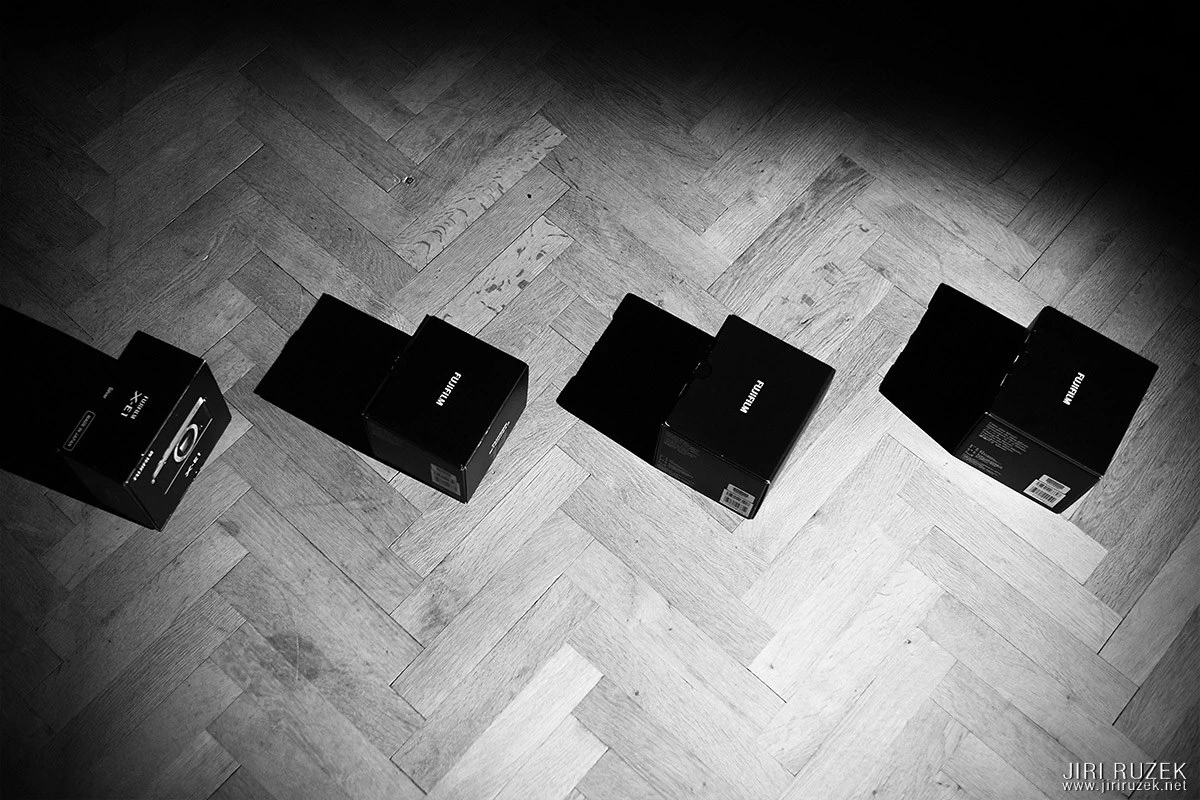
Examples from practice
And this is how I use the properties of different focal lengths when photographing nudes, portraits or anything else.
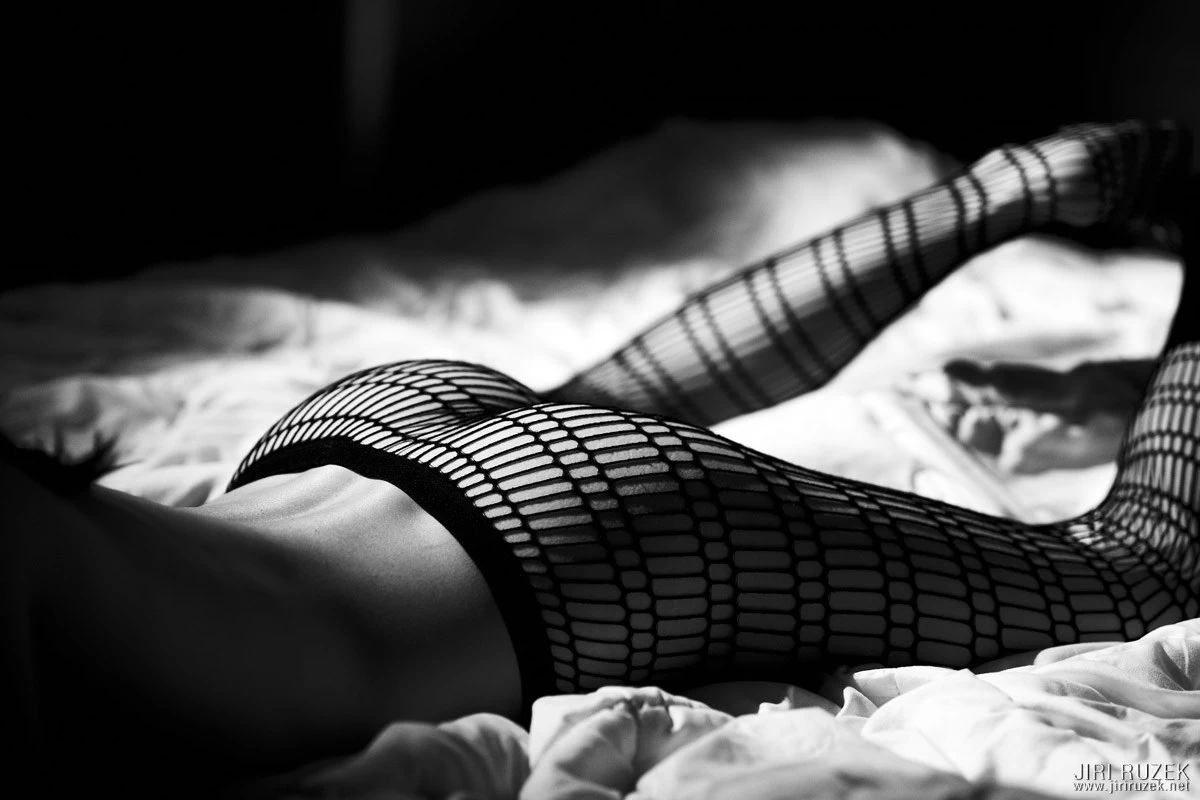
Nikon 50 mm/f1.8 – in time I’ll add a photograph from the Fujinon 56 mm (it is so new that I don’t have photos yet)
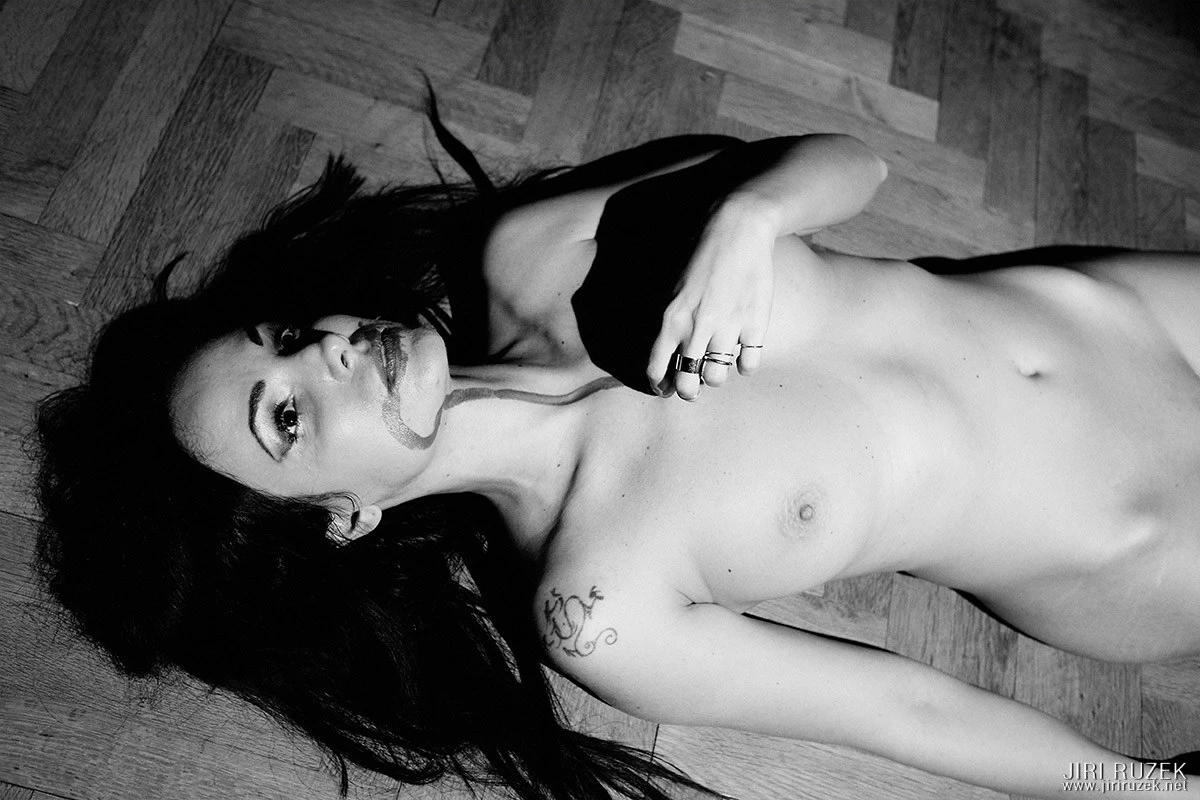
Fujinon XF 23mm/f1.4 – with sensitive handling you are not aware of the distortion at all.
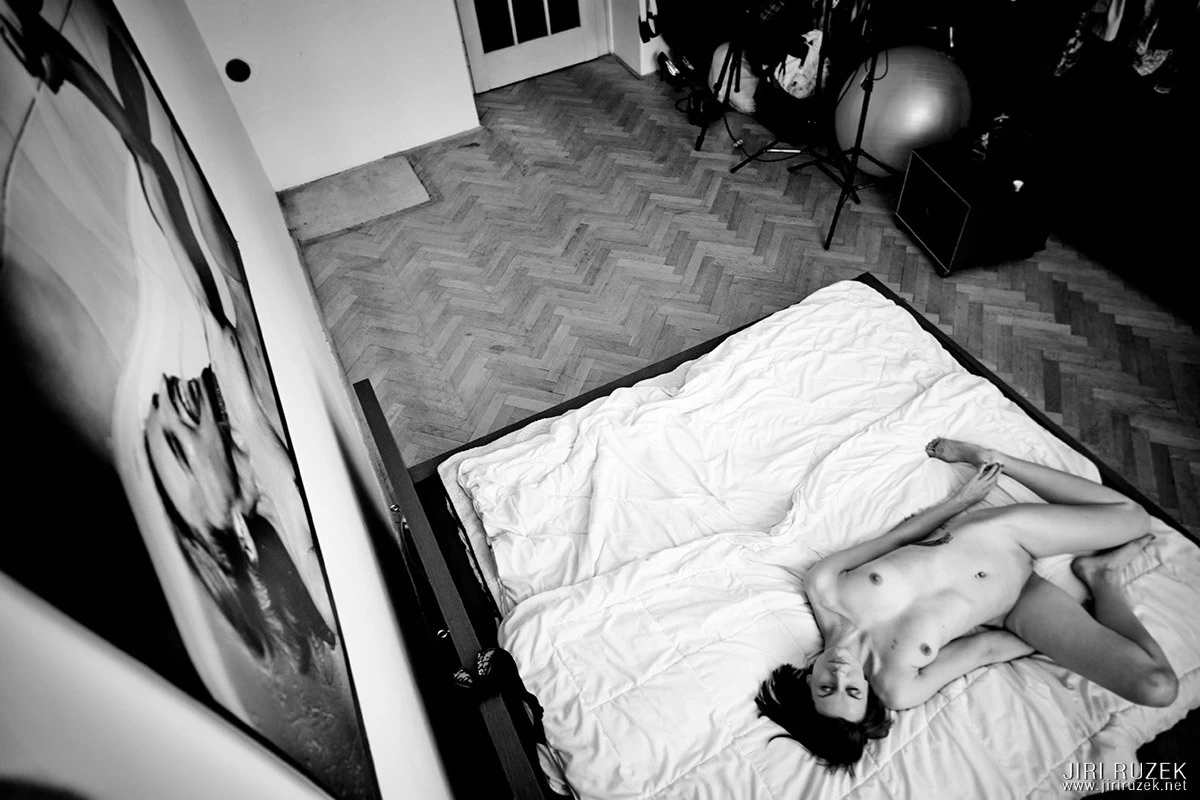
Fujinon XF 14mm/f2.8 – the photograph shows a pronounced distortion of perspective.
If you’re interested in the use of individual focal lengths in practice, sign up for a nude photography workshop