This page was translated by AI. Please be forgiving of any mistakes.
‹ Photo Notes · 6 září, 2012
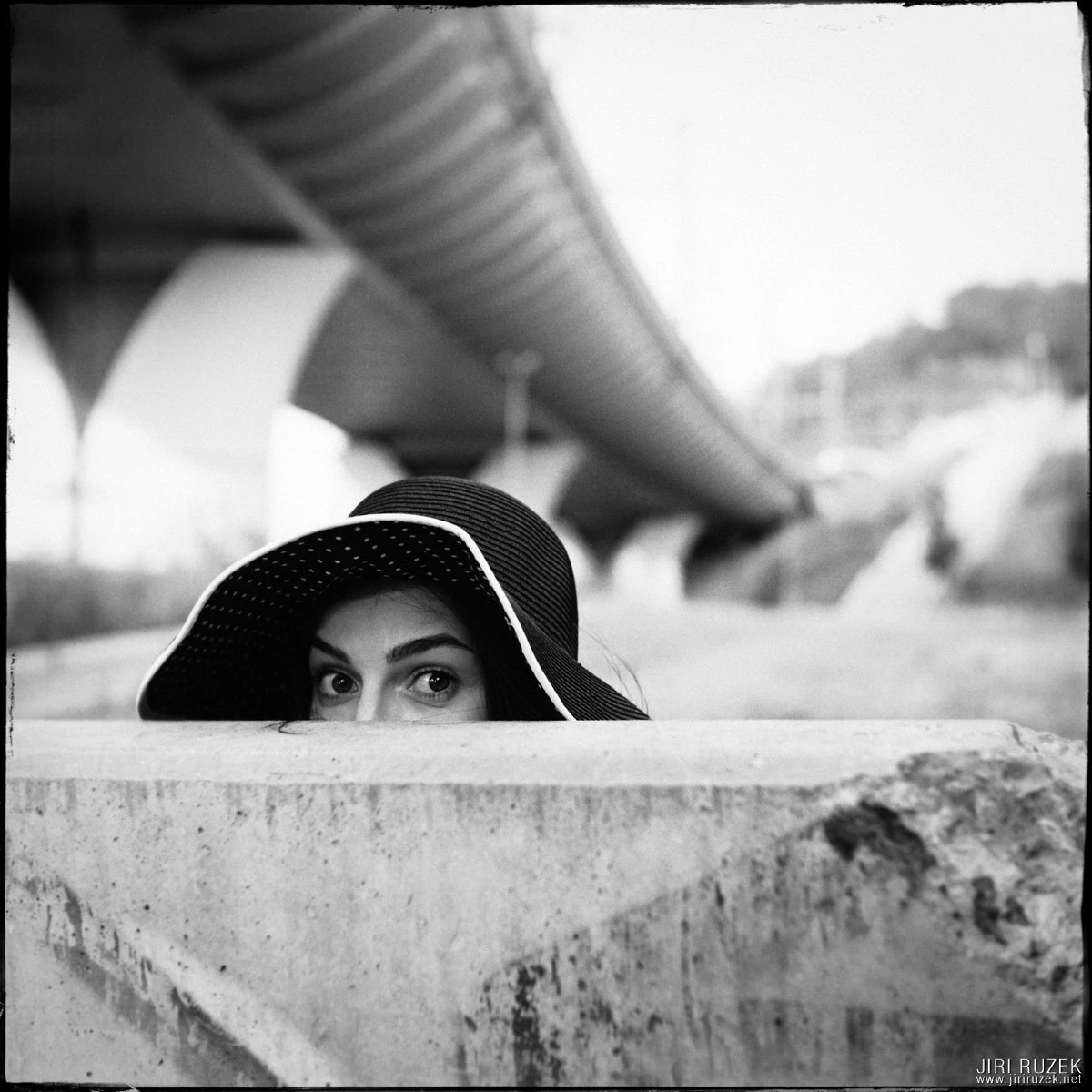
Some people may not even know that there is an aperture in the lens of their camera; they shoot everything on „auto“ and what goes on inside doesn’t interest them. For some it may come in handy to know that the aperture doesn’t serve only to stop down or open up the light, but can also do a few clever extra tricks.
Controlling the incoming light
The basic function of the aperture is to stop down or open up the camera lens. Just as we squint our eyes in the sun and open them wide in the dark, with the aperture we regulate the amount of light falling on the film or image sensor. The meaning is clear, we want a correctly exposed shot, so it is necessary to regulate the light (and the exposure time; but today we’re talking about the aperture, the „time“ will be for some other time).
People often mix up the terms „small/large aperture„:
- Small aperture, small f-number = little stopped down (a big hole in the lens – hence shooting „wide open“, lots of incoming light)
- Large aperture, large f-number = heavily stopped down (a small hole in the lens, little incoming light)
Depth of field
Depth of field, in English depth of field (the abbreviation DOF is used all over the world), is in practice what people mean when they say: „your photos have such a beautifully blurred background/foreground and only what should be sharp is sharp„. Yes, with depth of field we pick out the important details of a photograph and suppress others, and among other things we also use it for artistic purposes. We give photographs sometimes drama, sometimes an ethereal touch and the like. From the artistic point of view, then, depth of field is of great importance.
Depth of field is directly influenced by the aperture. Other factors are in play too, such as the focal length of the lens, the size of the recording medium or the distance of the photographed object, but by setting the aperture we can immediately determine whether the photograph will be sharp from one metre to infinity or whether only a few centimetres or even millimetres will be sharp.
The principle is again easily explained with our eyes – a short-sighted person squints when looking into the distance and thereby focuses. With greater stopping down we thus get greater depth of field, and with a low f-number, conversely, a small one. Today we mostly set the aperture with a dial on the camera body, but lenses with an aperture ring often have metres marked „from – to“ and thereby show us what will be sharp in the photograph depending on the aperture setting. When working with a very small depth of field it can easily happen that you shoot, for example, a portrait with beautifully sharp ears, but the eyes are no longer sharp. Only practice will teach you to avoid this bugbear.
Contrast
Again put your eyes to work – you squint, dark areas get even darker and the contrast of the scene rises. With open eyes you see finer transitions between light and dark. Translated into photographic language, little stopping down = low contrast, heavy stopping down = high contrast. Try it and you’ll understand. Correct exposure we of course compensate with the exposure time of the film or sensor, otherwise we would get only a dark and a light photograph.
In connection with contrast, photographing lights, reflections and the like can also be mentioned. Shoot, for example, a lit light bulb. With the lens opened up there will be a big white blob in the photograph; with the lens stopped down the bulb is rendered concretely and from the centre outwards striking rays of light spread out. You can work similarly with the sun, for instance.
One more thing I shouldn’t forget – for most lenses, „wide open“ gives a softer rendering, meaning the lens doesn’t render details as sharply as when we stop down a little. Some lenses are almost unusable at fully open aperture.
That’s all for today, play and experiment.
Want to learn more? Visit a nude photography course.