This page was translated by AI. Please be forgiving of any mistakes.
‹ Photo Notes · 5 listopadu, 2014
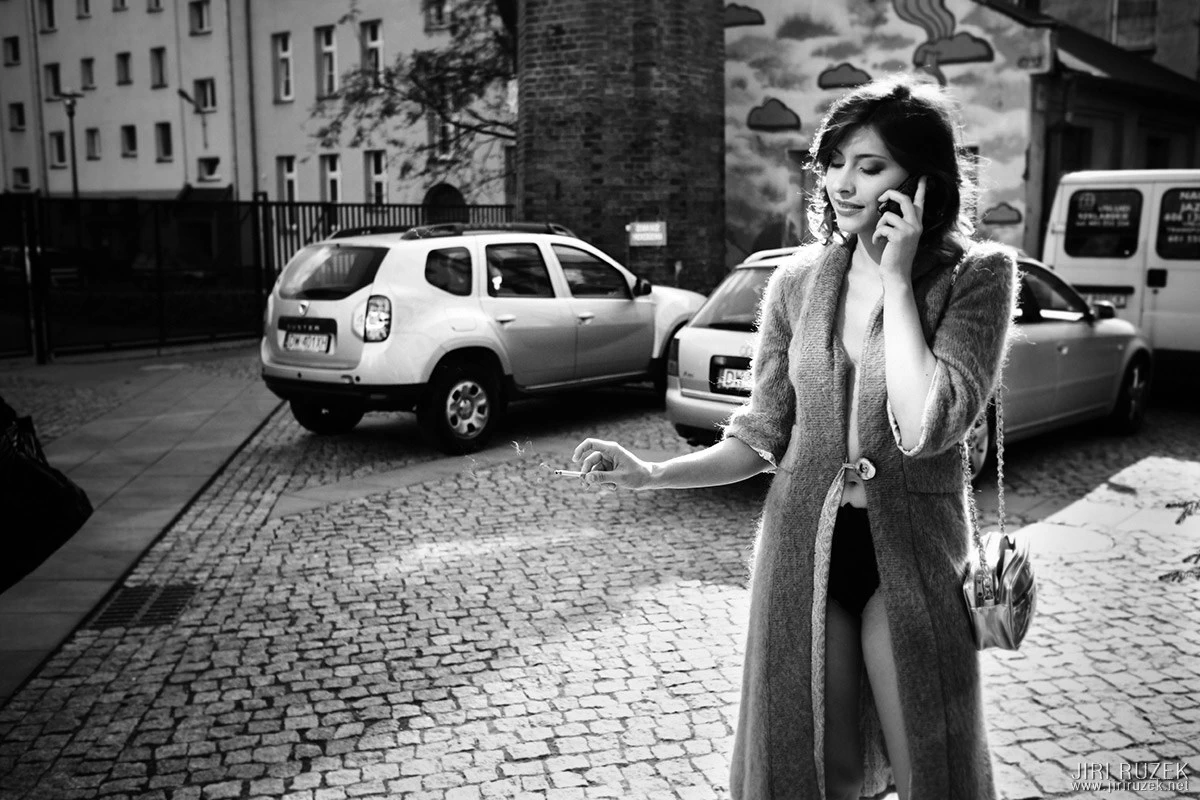
Although I don’t use reflector boards, I have nothing against them; rather against the way they are used, which stems from bad photography textbooks or a misunderstanding of the good ones.
For the vast majority of my shooting I use one light source. Outdoors it is the sun or an overcast sky, indoors one continuous light (mostly a sharp point-source Dedolight). Another situation is that I use whatever light I have around me – outdoors at night it’s the light of street lamps, shop windows and house windows, indoors it can be the light in the bathroom above the mirror, lamps on bedside tables or a glowing television screen. Apart from the Dedolight it is all natural use of light; the Dedolight, on the contrary, lets me arrange dramatic scenes to suit my mood.
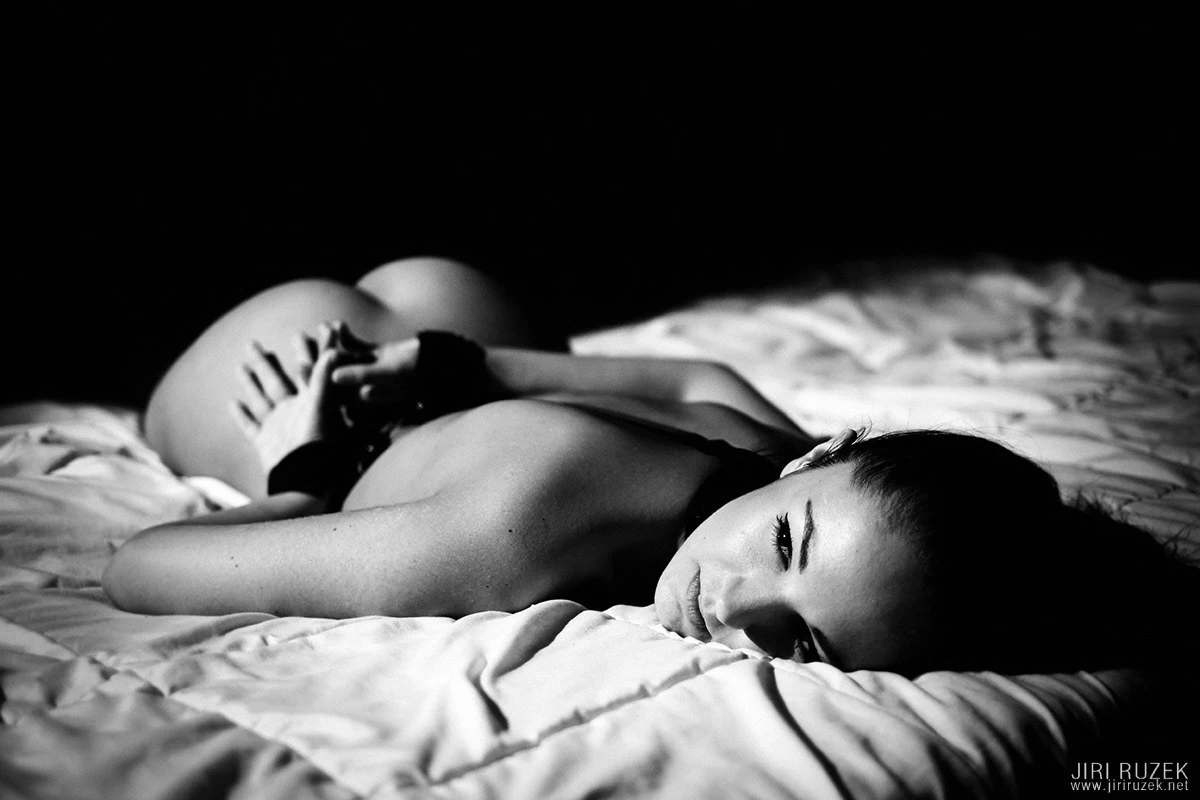
At almost every workshop somebody wonders how I can shoot with one light and without a reflector. Sometimes someone even pulls a small silver reflector out of a backpack and demonstrates how to improve it… And my hair often stands on end.
In my opinion the blame really lies with bad or misunderstood books on photography and even a number of lecturers who then pass it on.
But what actually is wrong?
What is wrong is that they pull out a small silver reflector and, like a mirror, „nicely“ light the face so that it has no shadows, except that instead of that they even create shadows in the opposite direction. And the crowning touch is when they use a gold one instead of silver, because it warms things up. Do you see?
The result is unnatural
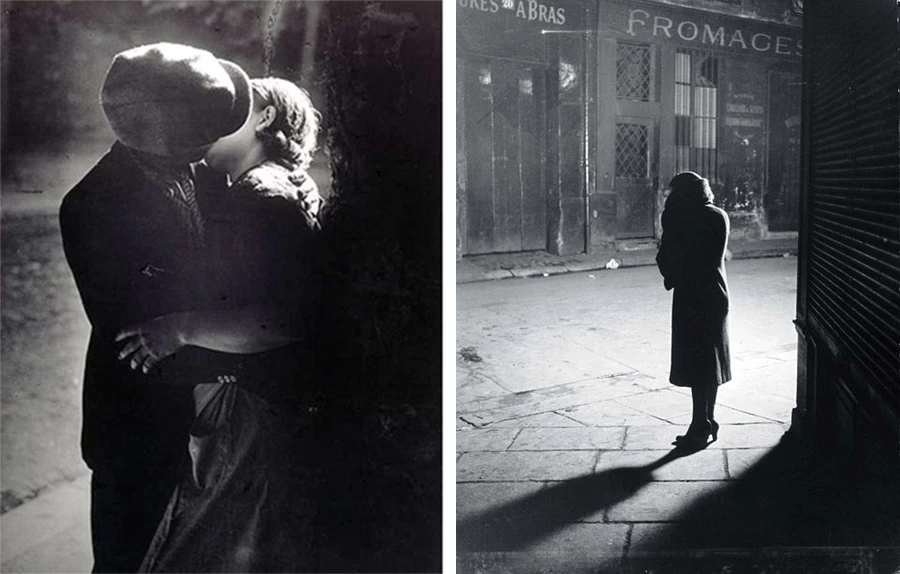
Now a detour to the classics of photography. Do you think that, say, Brassaï or Cartier-Bresson used reflector boards? No, they photographed wonderfully natural photographs in a natural environment. Is it dark there? So what? I photograph what I see. Darkness and shadows are surely so sexy; without them a photo is flat and boring. And when I pick a scene, it’s for its atmosphere, so of course I want to keep it. There is nothing wrong with silhouettes either. Probably nobody would dare argue that the gentlemen mentioned photographed badly.
The best reflector is a white wall
I don’t use reflector boards, yet I reflect light. I use the natural environment for it, and thanks to that I photograph what I see.
That a large white surface is an ideal means of reflecting light was discovered long ago. And of course photographers felt the need to create mobile reflecting surfaces that could help them where a suitable wall is missing. Gradually even more mobile reflectors appeared, so today almost everybody has, say, a 30-centimetre one in their backpack, and when folded they don’t even know they’re carrying something extra. And because we like universal products, two or more in one, current reflectors are mostly 5 in 1. White, silver, gold, black and transparent.
White reflects soft light and reflects less of it. Silver reflects much more, which is why it is (unfortunately) so popular. Unfortunately because it is hard and unnatural, similar to a mirror. Gold is very similar in this, and moreover changes the colour temperature – another step towards unnaturalness. Black is a source of tips from the experienced to beginners – it is said to reflect darkness and shadows. That is of course nonsense; it serves precisely to prevent reflections (black doesn’t reflect light), and thereby a natural shadow arises on its own. And finally the transparent one is placed between the light source and the photographed subject and softens the light.
You’ve probably gathered which three I consider useful and which two I would throw away. But if it’s made, it presumably makes sense and we’ll use it, no? Yes, but with consideration…
Another problem is size. A half-metre board is a small reflector that looks unnatural when it reflects. That is the advantage of that large white wall – it reflects more softly and over a large area.
A beautiful example can be found in film – filmmakers use huge white walls for reflecting, never a small silver reflector.
If you have a small reflector, you needn’t throw it away, but use it for macro, flowers, small objects, never for something as large as a person.
Don’t reflect when it isn’t necessary, and when you do, do it sensibly
So far I haven’t felt the need to devote time to reflector boards at workshops, but since I’ve devoted energy to this article, and since I keep seeing those small silver ones around me, I’ll probably put it on the programme. At least for a while…
Have a nice day, everyone 🙂