This page was translated by AI. Please be forgiving of any mistakes.
‹ Photo Notes · 15 června, 2014

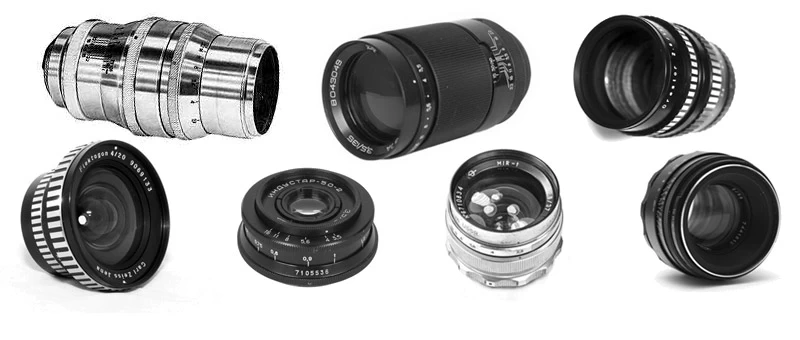
When more than 10 years ago I was switching to digital photography, I carried all my analogue photo equipment to the second-hand shop at Pazder’s, and all my Zeisses, Pentacons and Heliosses said goodbye …
But everything meant for eternity eventually passes. And so it happened that after 10 years I began buying manual lenses again and am enjoying them immensely.
Using MF lenses on a Nikon was impossible for me, because there was no optical aid (old cameras commonly used a split image on the focusing screen) and there were too many rejects. Today (no, I don’t want to talk about Fuji) I have a similar assist on the camera, and although rejects remain, they are at a reasonable level.

What are the (dis)advantages of manual lenses?
I’ll start with the biggest disadvantage, and that is precisely manual focusing. MF lenses are definitely not suitable for anyone interested in speed. A manual lens takes time. But anyone who shot fifteen and more years ago, anyone who likes to think for a few seconds over a scene, knows this perfectly and it is no limit for them.
Another disadvantage can be imperfection compared with modern lenses. Actually seeming imperfection, because the more I shoot with MF glass many decades old, the more the character of their output amuses me. The perfection of current lenses is often overwhelming, but sometimes even boring. At present I own 3 AF Fujinon lenses. All are supermodern, fast, beautifully sharp across the whole frame and deliver splendid colours and contrast – exactly what every photographer longs for.
Beside them I currently have 5 old MF lenses, none of which equals the perfection of those modern gadgets. All of them are, however, surprisingly sharp, most of them even wide open, and with some it makes no sense to stop down because no visible increase in sharpness occurs.
Some have a particularly imperfect bokeh – for example Helios lenses are popular for their somewhat crazy „swirly bokeh“ – it truly sometimes looks as if the background were spinning in a whirl. The colour rendering is very pleasant on all of them, and a big surprise for me is the contrast – it is markedly lower than on the new gadgets. But it is incredibly pleasant. The reality is that there is nothing wrong with photos from Fujinon lenses, they are perfect. But when I lay unedited photos side by side, that softer contrast is actually more pleasant to me – which is a paradox, because I add a lot of contrast to all my photos anyway.
Old lenses also often have problems with backlight – but is that a problem? After all, you can play beautifully with those reflections and light veils…
Another indisputable advantage of old manual lenses is their price. Prices of even very good lenses in second-hand shops and classifieds start at a few hundred crowns and end at a couple of thousand. The sum of the prices of all the MF lenses I currently own is less than a fifth of the price of each of my new AF lenses.
German or Russian?
In the past our lands were dominated mainly by the Russian Zenit and the German Praktica. Both brands were united by the type of mount, or rather a simple thread designated M42 (Praktica later had its own bayonet too). To this day thousands of old lenses with the M42 thread remain in households. Most of them come from Russian production (actually Soviet, because individual factories were outside Russia, in Ukraine, Belarus, Latvia etc.). We know them under the type names Helios, Mir, Jupiter, Tair, Industar, Peleng etc.
A similarly large number of M42 lenses originates in the former GDR. The best known is of course Zeiss, then for example Pentacon, before nationalization known as Meyer Optik.
Prices of German lenses are mostly two to three times those of Russian ones. It can’t be said, though, that their quality is several times better or even generally better at all. It is a well-known fact that most glass of Soviet production are copies of German brands; Stalin liked to have whole production lines brought from Germany and often added experienced German engineers to them. Thanks to that, the Helios 44-2 arose as an almost exact clone of the German lens Zeiss Biotar 58/2, then the Mir-1 37/2.8, built on the concept of the Zeiss Flektogon 35/2.8, the Jupiter 37A 135/3.5 as a copy of the Zeiss Sonnar and many others.
Russian lenses are often compared with the German originals and it is hard to say who comes out the winner. Some point to German precision and Soviet sloppiness, some claim that such-and-such a Zeiss has better contrast than its Russian counterpart, others won’t hear a word against the various Jupiters and Tairs and say they’ve found nothing sharper or nothing with such an interesting character etc. And some would not sell either of the two almost identical lenses for anything. In my opinion it is just a matter of personal preference.
Besides price, there is one more fact in favour of Russian glass – it is almost immortal. German Zeisses were lubricated with organic lubricants, which sounds sympathetic, but as a result such lubricants dry out, and if you don’t shoot with a Zeiss often, the blades of its aperture stick together. It is therefore quite common for lots of Zeisses to go to service for disassembly and repair. The synthetic lubricants in Russian glass hold and hold, even if you leave the lens lying idle for years.
The M42 thread was also used by Pentax, so besides German and Russian glass it is worth mentioning, for example, the excellent Japanese Takumar lenses. Those too can be bought today for next to nothing.

What is needed to use MF lenses?
Only a simple adapter that has an M42 thread on the front and on the back a bayonet matching your camera. One piece is enough for all M42 lenses. Of course you needn’t limit yourself to lenses with the M42 thread; on the market you’ll find other gems, and an adapter is easy to get for them too.

The question arises whether our hunt for better and the best doesn’t ultimately lead to a certain sterility. We constantly deal with megapixel counts, bit depth, focusing speed, shooting speed and dozens of other parameters. On the other hand we still nostalgically recall analogue photography, we still admire the dynamic resilience of celluloid film and its special character. By using relatively simple manual lenses you have the chance to come one step closer to the look of classic photography.
Visit the next nude photography workshop