This page was translated by AI. Please be forgiving of any mistakes.
‹ Photo Notes · 15 srpna, 2014
I don’t remember whether two years ago we threw any coins into the most famous fountain in the world; if we did, the superstition works, because when we were choosing a holiday this year we could have gone anywhere we hadn’t been yet, and still we chose the eternal city again – Rome.
So much has been written about Rome that at first glance there is no point in writing anything more, yet I’ll allow myself to share impressions, experiences and lessons, and add a few hopefully useful tips.
I warn you that this will be a read as long as the Via Appia Antica. Allora, let’s begin…
List of chapters for quick navigation:
- Let’s tour Italy
- Preparations
- I don’t have my ID
- The suitcase – thanks, EasyJet
- From the airport to the hotel
- Public transport
- Off into the city
- Symbols of Rome
- Under scaffolding
- The typewriter
- The Capitol at night
- Campo dei Fiori
- The Jewish ghetto
- Tiber Island
- Trastevere
- Aventine and the keyhole
- Testaccio
- By metro to the sea
- Ostia Antica
- Via Appia Antica
- La Scala Santa
- The Column of the Flagellation
- Basilicas and churches
- Fountains
- Vatican Museums and the Sistine Chapel for free
- Cocco fresco, cocco bello
- We need internet
- Vespa, Fiat, Twizy…
- Water
- Where to go to the toilet
- Coffee standing up
- Ciao the wrong way round and good evening after lunch
- Food
- Supermarkets
- Ice cream
- Map of Rome
Let’s tour Italy
The whole idea of returning to Italy arose sometime in December, when I read Voskovec and Werich’s… rather Werich’s wonderful book Italian Holidays. In his inimitable way he describes how in the 1950s he set out by car with his daughter Jana for the Apennine peninsula. By coincidence, his route included three cities (Venice, Florence and Rome) that we visited in the opposite order by plane and train in 2012. Compared with a precisely planned holiday (booked flights, hotel, tickets here and there), I was thrilled by the freedom of decision in the sense of „turn left, say, there’ll surely be some guesthouse here“. Lída at first didn’t share this enthusiasm of mine in any way, but a few days later she read the book too and we were both hooked. The planning of the trip began.
In the end we ended up like Babylon, we overdid it – a bit further is Verona, Vicenza, but while we’re so close we must go to Piacenza to see Franz, that is really only a short hop from Milan (no, we won’t go to Turin, that’s already very much towards France and in the end it would draw us to Lyon or Nice and Marseille, and from there Barcelona is already quite close …). So in Milan we’ll turn towards Genoa, where Giangiacomo lives, then to Florence, finally to Rome, and what about Naples, etc. etc. … When our trip climbed to 4000 kilometres, we scrapped it completely and ordered flights and a hotel for eight days in Rome, to which we later added a one-day train trip to Florence.
Preparations
I like returning to places I already know; I feel more at home there, and although I’m deprived of the shock of first impression (the Pantheon, the Colosseum and St. Peter’s Basilica no longer seem so unbelievably huge), I can enjoy a city connected by familiar points more. I can set out just like that, in this or that direction, and let myself be surprised by everything I didn’t meet and discover last time because I didn’t walk one street further.
Preparations went on continuously from the beginning of the year. At first it was planning that car trip, and straight after that the energy concentrated on Rome itself. Reading blogs, guides, articles of the kind you are reading right now, consulting Italian friends, reading reviews etc. The basic tool became TripAdvisor.com and above all its offline mobile app Rome City Guide. In it we saved on the map places we wanted to visit, tips for the best ice cream, the best lunch and many others. TripAdvisor has similar apps for most tourist-interesting cities and it wasn’t the first time I’d used it like this. Its advantage is that it works offline, so anytime and anywhere you can look up, for example, the best restaurant nearby and read reviews even when you’re not connected to the internet. The second useful app was Evernote, where we collected notes and information and where, by the way, this article is being written right now.
This is what the list of visited places looked like at the end.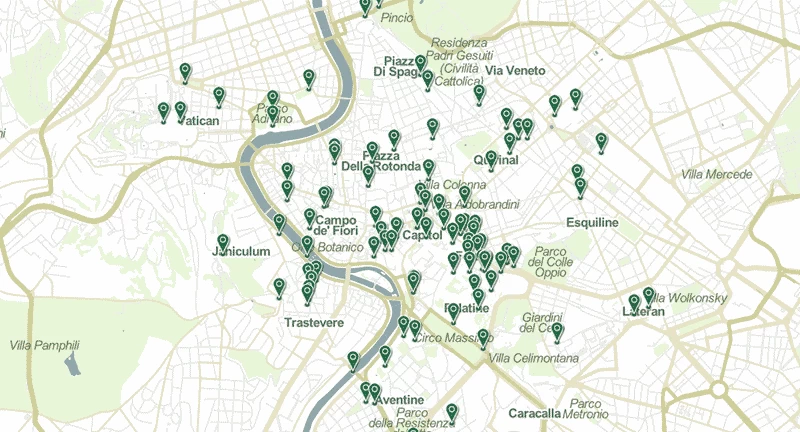
I don’t have my ID
Do you know the scene with the lost passport from the film Účastníci zájezdu? No way, we were thoroughly prepared for everything, everything was working and nothing could surprise us. On Thursday I had a private workshop, in the evening my son Jirka arrived in Prague (now you know the whole crew), on Friday we bought the last few necessities and in the evening went to Parukářka to enjoy the view of Žižkov and have two good Czech beers at a Czech price before departure.
We left the packing for the morning, plenty of time until lunch. Lída went for a morning run and at 9 o’clock it came out of Jirka that he had probably lost his ID card at Parukářka.
To cut it short – instead of calm suitcase packing, the skirmish line of our three-person search team combed every square metre of Parukářka. The homeless men told us for a twenty that they had found the ID of a young blond boy and given it to the barmaid at a stall. We dashed home to the net, searched for and found the lady’s phone number plus the information that she should be there before one o’clock. She never once picked up the phone. At one o’clock a taxi came for us at the Olšanka hotel and we, with hastily packed suitcases, waited for the lady to come and open the stall. Scenarios of backup plans swarmed in our heads – we fly alone, order Jirka a flight from Rome and guide him in detail to get to us a day later; we throw the tickets down the drain and all three fly a day later; we throw all of Rome down the drain, take a train in the afternoon and go to Berlin; etc. etc. The gate at the airport closed at 14:15; we set ourselves a gallows deadline of leaving Žižkov at 13:15. The lady came after half past one. We left sometime around 13:40, the taxi driver drove 50. We nevertheless arrived at Terminal 2 at about 14:00.
We ran through the airport and only on the plane did we believe we’d made it and were all three flying as planned. In that hurried packing we didn’t even forget anything essential.
The suitcase – thanks, EasyJet
We had only three small carry-on suitcases and it happened that Lída’s didn’t fit in height by some two millimetres. On the spot she had to pay 1350 CZK and the suitcase went into the hold. There were more similarly afflicted and angry people. In Rome we found that the suitcase, which wasn’t locked, had been slit open and robbed. There was hardly anything to steal, the damage was under a thousand, but a quality suitcase is fit for the bin. On the return flight with the same company Lída paid in advance an unnecessary 600 for check-in, because the Italian looked at how much it overhung, smiled and waved it away. We thank the Czech EasyJet staff for this.
From the airport to the hotel
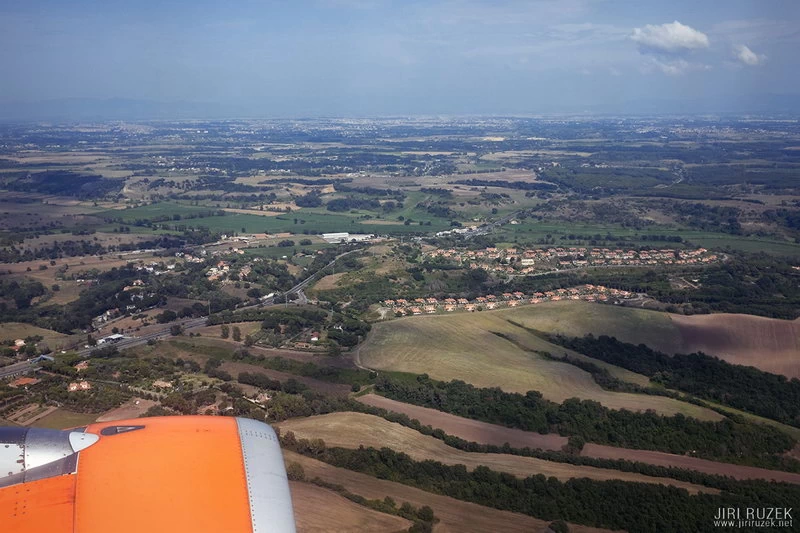
After landing and stepping out of the hall of Leonardo da Vinci Fiumicino airport, this time we weren’t met with such a slap of temperature as two years ago, when temperatures were around 37 degrees; this year it was a pleasant 30. The fastest transport from the airport to Rome is the Leonardo Express train, which runs non-stop for 30 minutes to Termini station; a ticket costs 14 €. For 8 € you can take a regional train, or you can choose a shuttle bus at a price of 4 – 5 €. You buy tickets in the airport hall. We took the bus for 5 € per person and thanks to a splendid traffic situation we were at Termini earlier than we expected.
note: you get back to the airport the same way; you buy tickets at Termini directly at the buses standing at the side of the station.
On the way we had got properly hungry, so right by the station we declared a „food“ action. And believe it or not, our first Italian meal was a kebab!
Finding a cheap hotel in Rome is not hard at all; the competition is enormous. Perhaps the greatest density of hotels is around Termini station; they’re cheap and their standard varies. We chose hotel Zara a bit closer to the centre. It lies on Via delle Quattro Fontane, almost at the corner with Via Nazionale, which connects Piazza della Repubblica and Piazza Venezia. The hotel’s location proved very strategic. The nearest metro is at Repubblica, but Termini is so close that it isn’t worth riding that one stop. Yet the hotel is far enough from the station to spare you that peculiar company of people moving around main railway stations. Along Via delle Quattro Fontane you reach in one direction in about 10 minutes the spot right above the Spanish Steps, in the opposite direction after 5 minutes you are at the papal basilica of Santa Maria Maggiore (Our Lady of the Snows), one of the most important and most beautiful churches in Rome.
If you look down Via Nazionale, you’ll see fairly nearby (about 3 bus stops) the giant monument to Vittorio Emanuele II. There’s nothing special about that, because its position and size guarantee that it is visible from almost anywhere in the city. More on that later…
The quality of the hotel’s equipment and services pleasantly surprised us. Hotel Zara is not among the cheapest you’ll find around Termini, but it was definitely not expensive. The receptionists (all men) were friendly, or at least polite and helpful.
If you’re looking in Rome for decent accommodation in a good place for decent money, we can calmly recommend Zara.
One more warning – in Rome a tax per hotel guest of 2 € per night and person is paid. This amount is not included in the hotel price and is paid on the spot; it’s good to count on it, in our case – 3 persons, 8 nights – it came to 48 €. For comparison – in Venice we paid 5 € per night and person.
Public transport
Like Prague, Rome has a metro, trams and buses, allegedly also trolleybuses, but I never met one. The metro has only two lines, A (red) and B (blue); line B forks north of Termini, which is also the interchange station, but you’ll 90 % not venture into those parts. The city can’t afford more metro lines for the simple reason that wherever they dig, there are archaeological finds. There aren’t many trams in Rome either; most urban transport is handled by buses. Romans, like probably everyone in the south, reportedly like to strike, but fortunately they are organized in several trade unions and reportedly never all strike at once. We experienced no strike.
A single ticket valid for 100 minutes costs 1.50 €, a day ticket 6 €, a three-day 16.50 € and a weekly one, which we bought, comes to 24 €. The day ticket doesn’t last 24 hours but until midnight of the day on which you validated it. The three-day and weekly ones are similar, so don’t rely, as in Czechia, on it lasting until lunch… You validate it only once, on the first ride.
All these tickets are valid for the metro, trams and buses, trolleybuses (I don’t recall meeting one) and some regional trains. With a city transport ticket you can even get to the sea, and I’ll return to that too.
In the offers you’ll find various tickets combined with entrance to different museums or monuments. It depends on your plans and preferences …
Off into the city
Tempting as it is, I won’t describe all our wanderings around Rome, that would be a book. Besides, experiences are often incommunicable, so again I’ll rather try to convey information. Still, I won’t avoid impressions; in Rome that really isn’t possible.
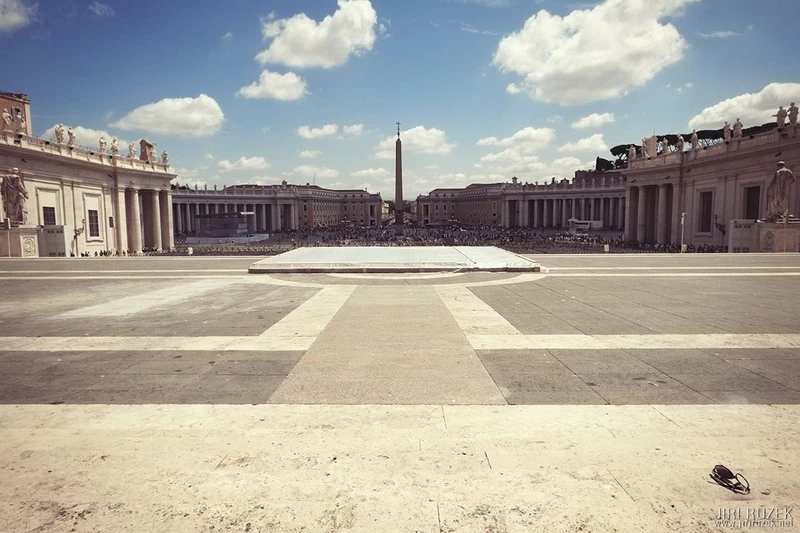
That Rome is a wonderful city is generally known. Prague with its more than thousand-year history is amazing, but it can’t equal Rome, founded in 753 BC. Literally around every corner something stuns you, and soon you begin to realize the notion of „scale“. Strolling through Prague you come to the Astronomical Clock, the Powder Tower, Charles Bridge etc. All of it is beautiful, but small compared with the Roman monuments. Not only the Colosseum but also the Pantheon, St. Peter’s Basilica, the whole of St. Peter’s Square, the Vittorio Emanuele II monument, the Trevi or Quattro Fiumi fountains, Trajan’s Column and many other buildings and monuments, all of it is literally huge. Any church in the suburbs is enormous compared with our St. Vitus Cathedral. This impression is moreover reinforced by the fact that you often walk through narrow picturesque lanes, like Karlova street in Prague, and suddenly the Pantheon stands in front of you. In short, shock after shock.
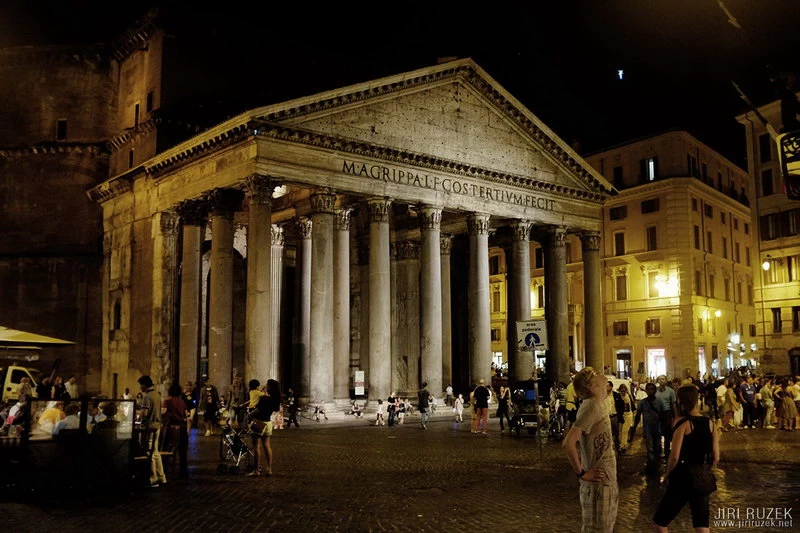
There’s no point in even describing impressions of the best-known attractions, or whether it’s worth visiting this and that. Everything is worth it and you have no chance of managing it all, so go anywhere, and leave what you don’t manage for next time. I’ll rather share impressions of the less hyped places and add a few tips. The biggest and best known I’ll mention only briefly.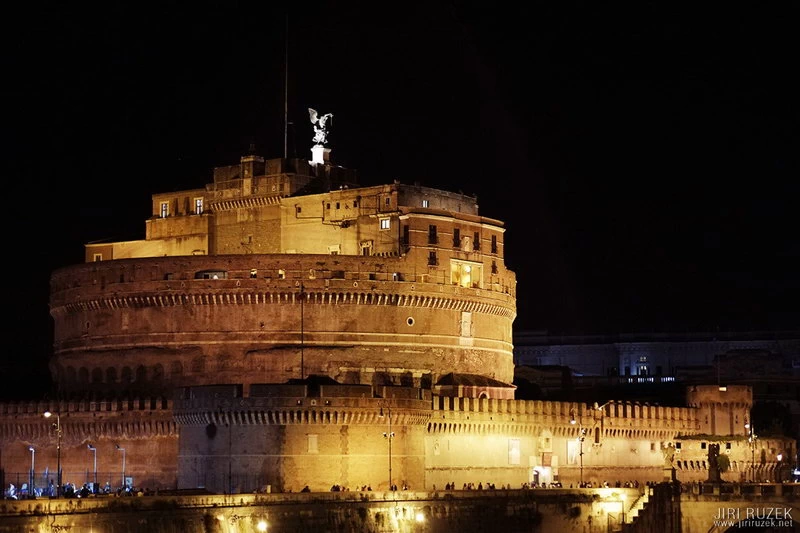
Symbols of Rome
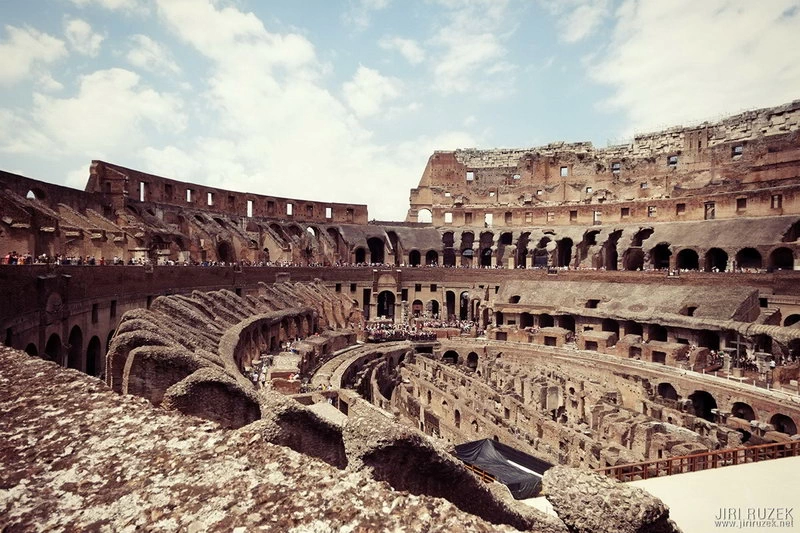
When you say Rome, everyone of course thinks of the Colosseum, the Roman Forum, the Vatican (square, basilica, museums and the Sistine Chapel), the Pantheon, the Trevi Fountain, the Fountain of the Four Rivers, Castel Sant’Angelo, the Spanish Steps, the Circus Maximus etc. All of it is definitely worth a visit, except perhaps the Circus Maximus, which is just a huge area, but if you like walking around Letná, you’ll like it here too.
Admission
The Colosseum and the Roman Forum have a joint admission at a price of 12 €. It is valid for two days with one entry to each of the places. I recommend splitting it over two days, otherwise you’ll collapse with fatigue. Up to age 15 (inclusive, and from 65) admission is free, but you still have to go to the ticket office and ask for a ticket; entry is through turnstiles.
St. Peter’s Basilica in the Vatican is free; entry to the dome costs 7 € by lift (plus 320 steps) or 5 € on foot (537 steps). Nothing for claustrophobics and people suffering from vertigo.
Under scaffolding
The Trevi Fountain is drained and under scaffolding. The Spanish Steps are not under reconstruction, but the church of Trinità dei Monti above them and Bernini’s Barcaccia fountain below them are. Scaffolding covers part of the Colosseum too, but it’s nothing that prevents making fine photos there. And the lower part of the Pyramid of Cestius is covered as well.
The typewriter
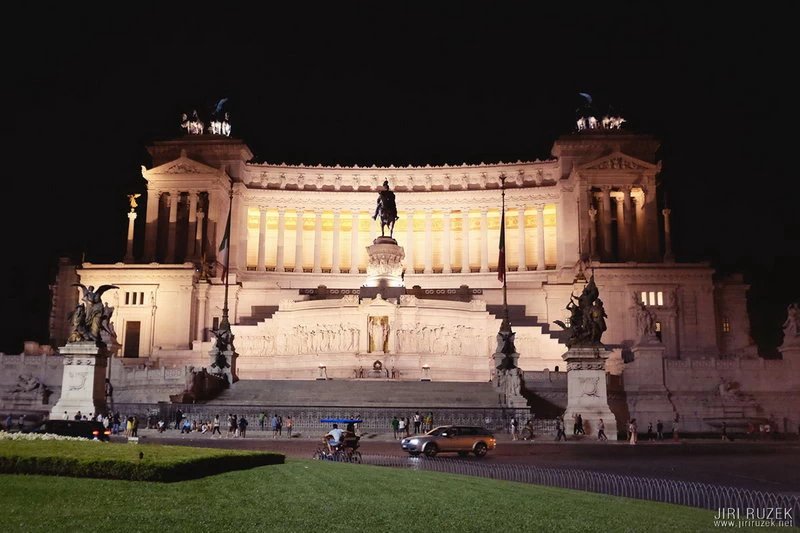
The neoclassical monument to Vittorio Emanuele II dominates not only Piazza Venezia but, with a bit of exaggeration, it could be said all of Rome. It is the largest monument in Italy. King Victor Emmanuel II united Italy under one kingdom in 1861 with the military help of General Garibaldi. Thanks to its appearance the monument has earned a number of nicknames, for example the „typewriter“ or the „wedding cake“. Romans claim that the most beautiful view of Rome is from its roof, because it is the only place in the city from which the typewriter itself can’t be seen. You’ll soon understand that it is true.
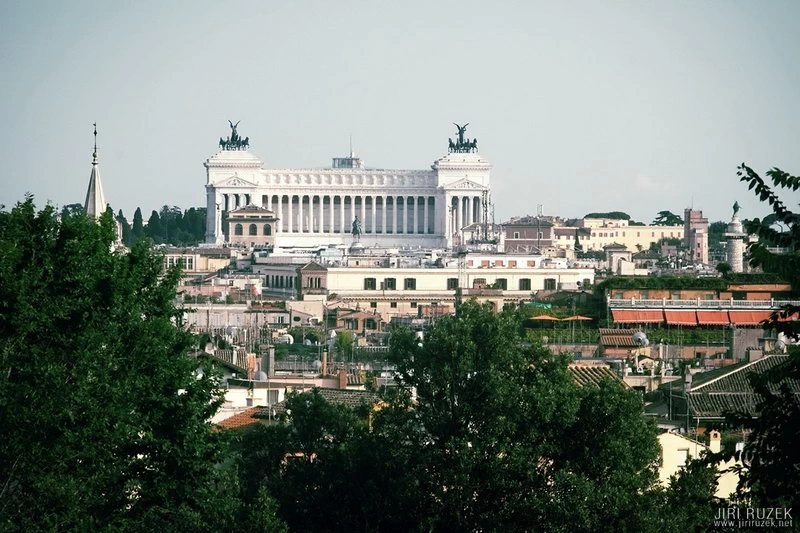
You will quite certainly see the monument often up close too, since Piazza Venezia is an important crossroads that can’t simply be avoided.
The Capitol at night
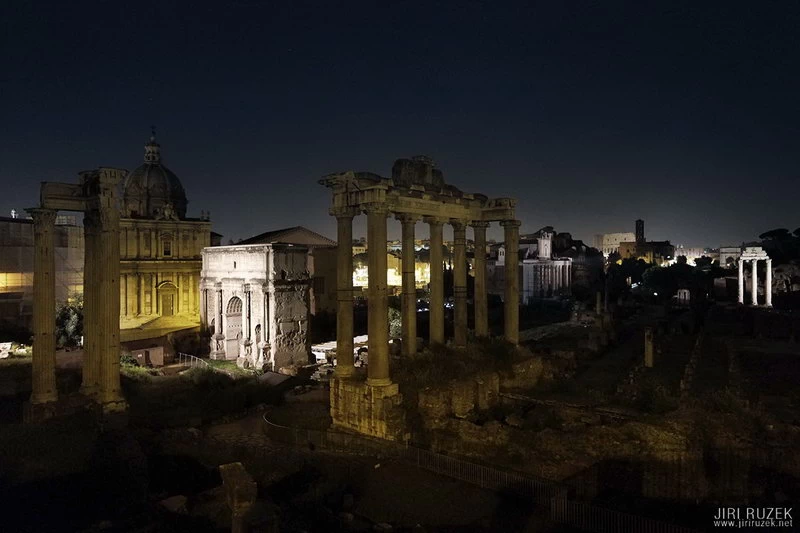
The Capitoline Square is the work of Michelangelo and brings a refreshing bit of Renaissance into ancient-baroque Rome. In its centre, though, you’ll find the only equestrian statue surviving from antiquity. It was saved from destruction by Christians by mistake, because it was thought to be a statue of Emperor Constantine. The square seems a little tucked away behind the enormous „typewriter“. Perhaps thanks to that it is somewhat calmer than the surrounding places. Besides the equestrian steps, by which you’ll probably arrive, two more interesting paths lead from the back of the square. The left one takes you to a column with the mythical she-wolf Lupa Romana and offers a nice view. That, however, can’t compete with the view of the Roman Forum, which you reach from the right side of the square. Especially at night it is one of the most breathtaking scenes Rome can give you. It’s just a pity that the Forum itself isn’t lit a bit more. But you definitely must not miss this.
At night don’t miss the Pantheon or St. Peter’s Square in the Vatican either – beware, it closes at 23:00 and then you can admire it only through the fence. The Spanish Steps deserve a night visit too, and certainly the enchanting little streets, say around …
Campo dei Fiori
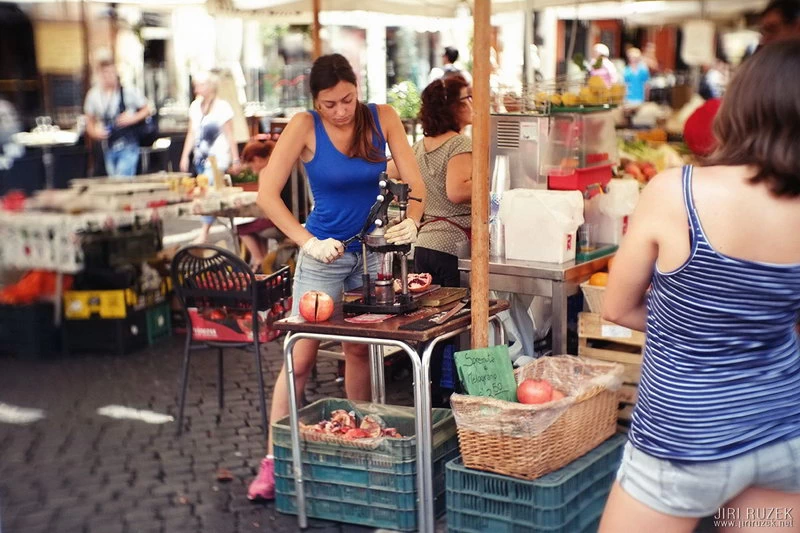
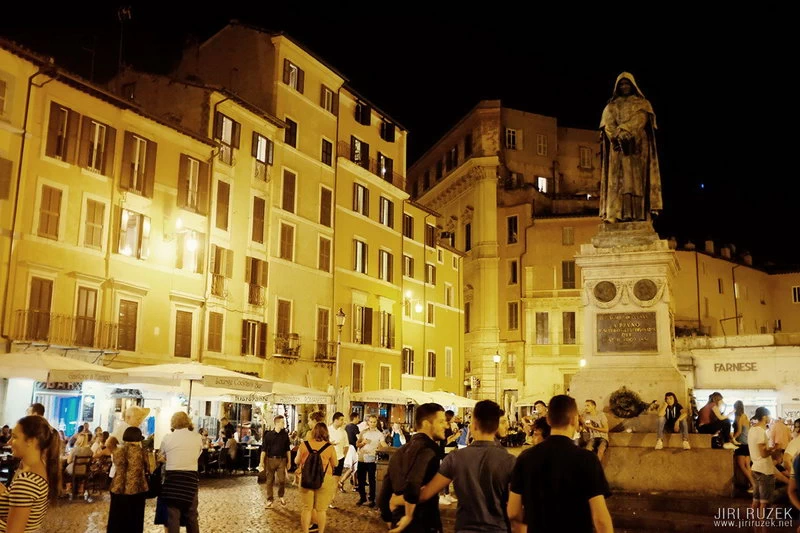
One of the most picturesque Roman little squares, with a statue of Giordano Bruno, who was burned here in 1600, lies not far from the well-known Piazza Navona. In the morning there is a famous market where you can buy fresh vegetables, bread, pasta, spices etc. After lunch everything is packed up and the square lives a cheerful social life far into the night.
Unfortunately the genius loci of this place is mentioned in every tourist guide, so Campo dei Fiori is full of tourists from morning to night and even the stallholders‘ offer is partly touristy. For example they sell nonsensical spice mixes named after popular dishes. I asked what is in the mix for cacio e pepe; apparently salt and pepper. That I’d still accept, but a carbonara mix of two kinds of onion and I don’t remember what else, because the only spice in carbonara is again pepper, possibly salt. Maybe Babica mixes it for them ….
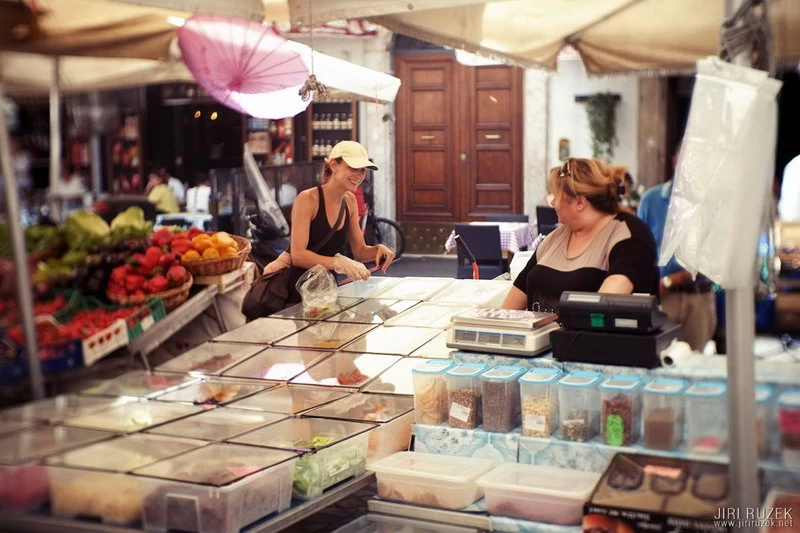
Don’t be put off by the tourists, and include a walk around Campo dei Fiori and the surrounding lanes in your programme once in the morning and at least once at night; you won’t regret it.
The Jewish ghetto
Just a few streets south-east of Campo dei Fiori is the Jewish ghetto. If you’re not particularly interested in Jewish themes and history, this part of the city may look somewhat uninteresting. An evening stroll may convince you of the opposite. In this area you can also taste for 5 € a popular local speciality, Carciofi alla Giudia (Jewish-style artichokes). It tastes a bit like classic Czech potato crisps. We had quite a pleasant dinner here, but the prices were somewhat „Jewish“ and the standard rather touristy compared with other places. But that may have been just our experience.
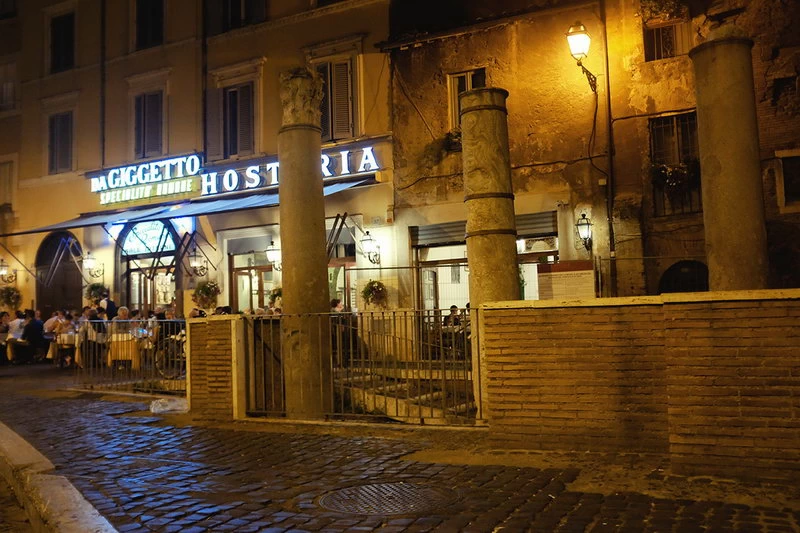
When after dinner we walked 50 steps and found ourselves behind the illuminated Teatro Marcello (a theatre from 13 BC, which inspired the later construction of the Colosseum), our jaws dropped in amazement again.
Tiber Island
To the island Isola Tiberina one bridge leads from each side of the Tiber. The bridge Ponte Fabricio leads directly from the Great Synagogue and Teatro Marcello, the bridge Ponte Cestio takes you to the other side of the river into Trastevere. I recommend the island for an evening visit; it is very lively. In the open-air cinema here the summer film festival Isola del Cinema takes place every year.
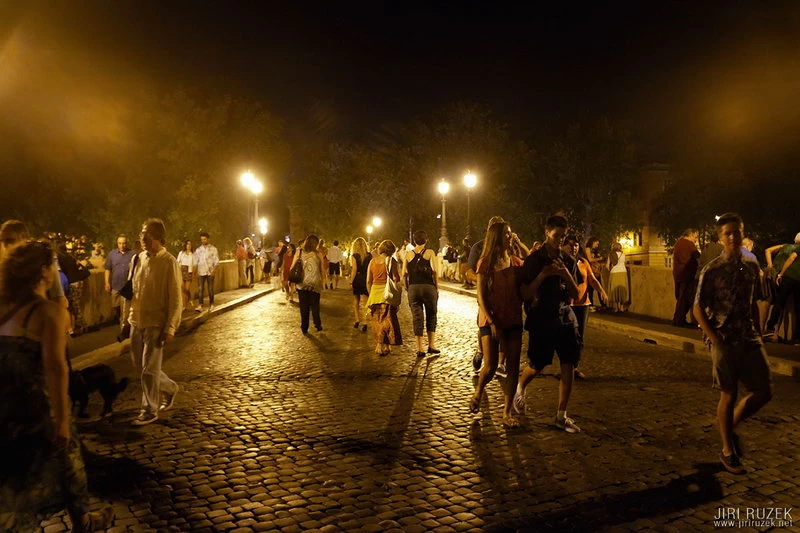
By the way, this only Roman island also serves as a good orientation point on the map. The Tiber winds through the whole of Rome like a snake and thanks to the island you can orient yourself easily and quickly at any time.
Trastevere
Trastevere belongs among our favourite districts. Our friend Francesca lives here too, with whom we stayed two years ago, and this time as well we met in Trastevere and after a walk sat far into the night in a bar garden.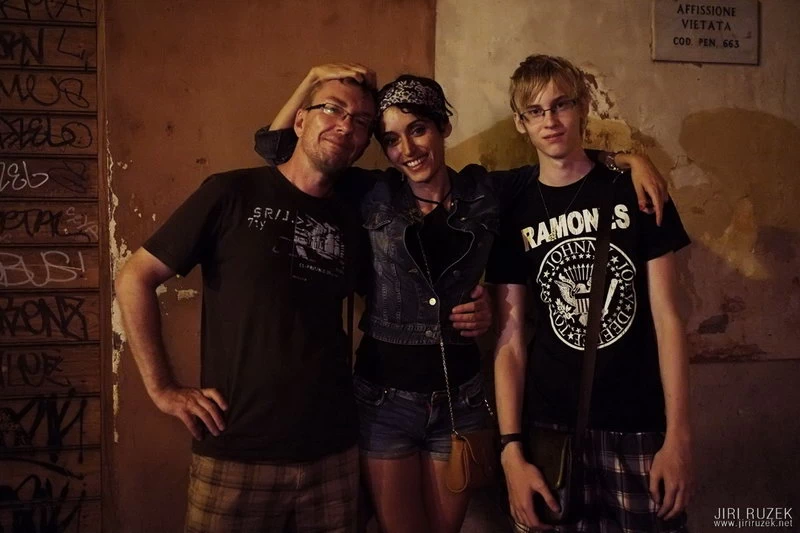
Karel Čapek compares Trastevere to Prague’s Malá Strana. This is probably the liveliest place in the whole of Rome; the lanes are beautiful and full of people similarly to Campo dei Fiori, but here you mostly meet the local population, even though tourists have penetrated here too. You’ll find perhaps the greatest concentration of pubs and bars, the food here is renowned and often at more pleasant prices than on the other side of the Tiber. We ate splendidly in the garden of the restaurant Da Vittorio.
You get to Trastevere from the Jewish ghetto via Tiber Island, or further north from Campo dei Fiori via Ponte Garibaldi or Ponte Sisto; tram no. 8 goes here too – once you cross the river, you’re here.
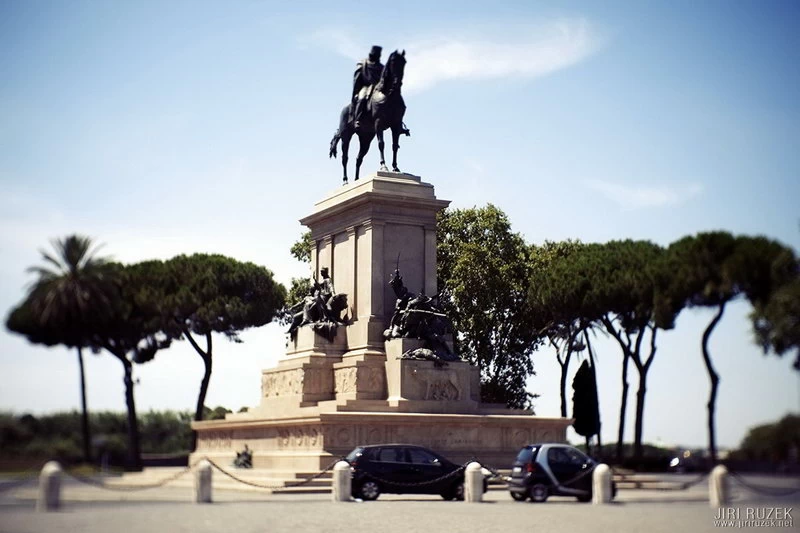
I recommend a daytime and an evening or late-night walk. In the daytime from Trastevere you can set out, say, for the nearby hill Gianicolo; there are two viewpoints over the city – the most famous is right at the top by the monument to General Garibaldi (Piazza Giuseppe Garibaldi), the second is about halfway by the fountain Dell’Acqua Paola. I think you needn’t climb all the way up; the view is fairly similar in both places. On Piazza di Santa Maria in the centre of Trastevere it is worth visiting the Basilica di Santa Maria in Trastevere, one of the oldest Christian churches in the world. It looks unassuming, but the interior is again impressive.
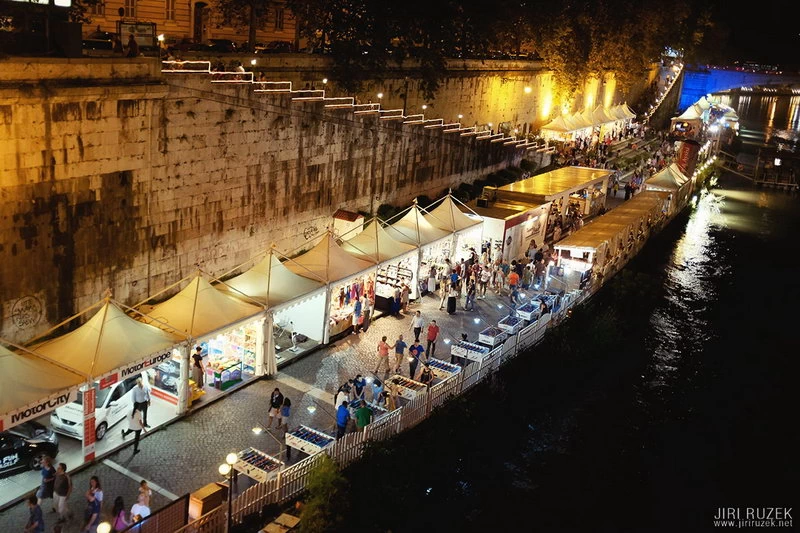 At night don’t miss a walk along the Tiber embankment with hundreds of stalls and various attractions. In the lanes to the right of Viale di Trastevere, which continues from Ponte Garibaldi and which you recognize easily by the tram tracks, you can wander without a plan among dozens of bars and restaurants.
From street vendors you can buy beautiful artistic jewellery and other things – here truly Italian handmade work is offered, not „vaneuro“ trinkets from illegal immigrants. Since we’re at stall selling, I must mention the biggest Roman flea market, held every Sunday morning at Porta Portese.
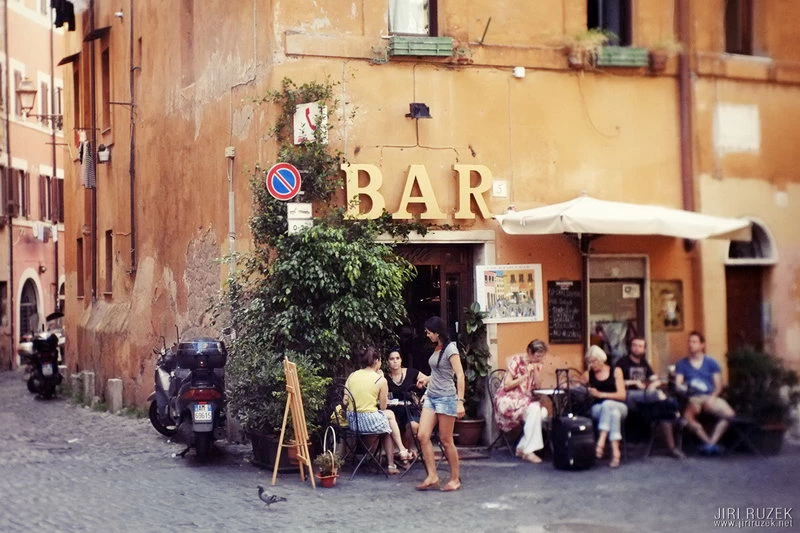
I could write about Trastevere for a long time, but there are other interesting places too. Still, believe nobody who says „there’s no point going there, because there’s nothing important there“. Nothing important perhaps, but you will certainly not forget a visit to this district.
Aventine and the keyhole
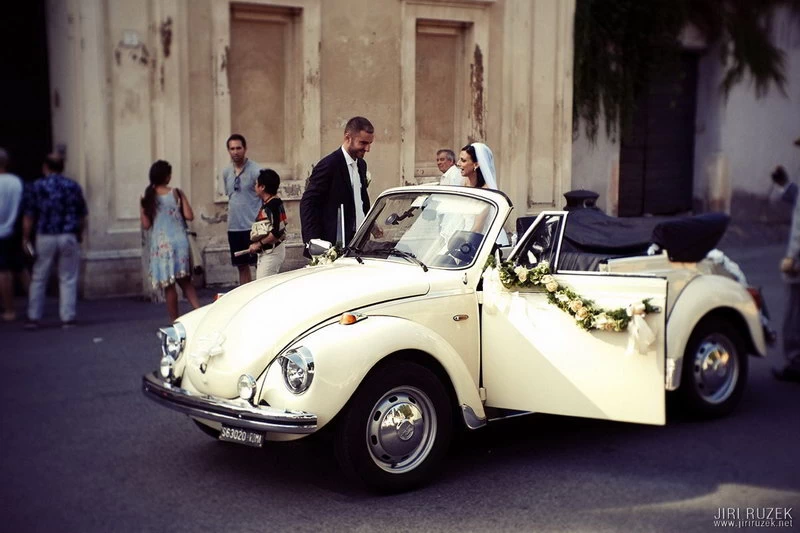
On the Aventine Hill is one of the popular Roman attractions, called the keyhole (il buco di Roma). The Aventine is a quiet resting place; on the way you’ll meet the Orange Garden (Giardino degli Aranci) with a view of Rome, you’ll continue past the Basilica of Santa Sabina, where you may meet a wedding, and when you reach an unassuming but funny attraction, you’ll know. In front of the gates to the grounds of the residence and church of the Order of the Knights of Malta a queue of people stands all day (it isn’t long, you won’t wait). Each of them, when their turn comes, bends down to the keyhole to catch a glimpse through the ornamental bushes of the dome of St. Peter’s Basilica.
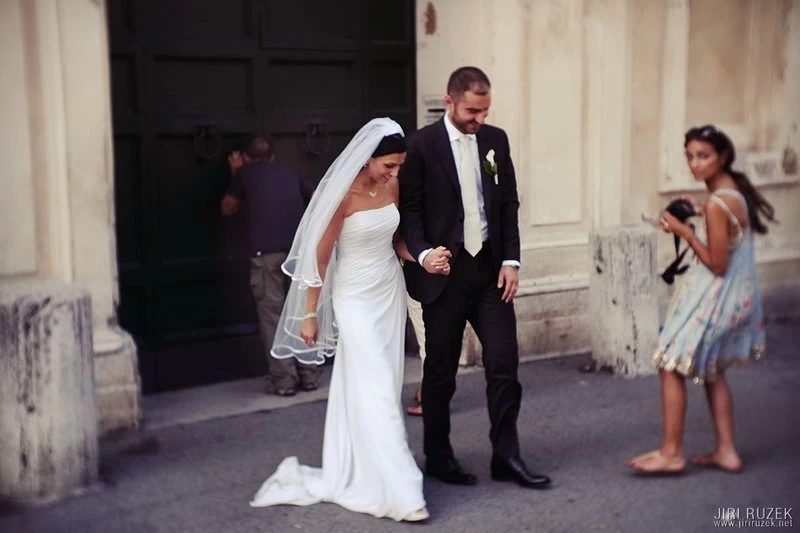
Silly? Yes, but cute and funny, or at least amusing. We peeked, laughed and willy-nilly had to put this attraction on the list of what we can recommend to anyone. 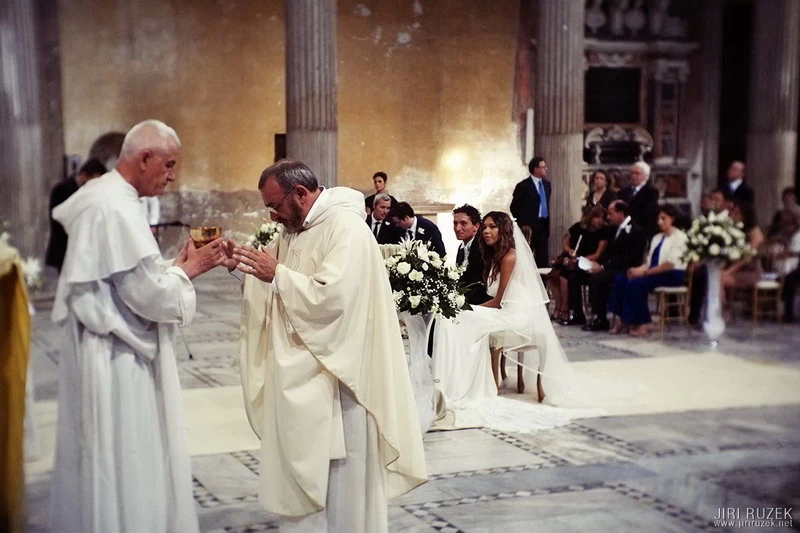
Testaccio
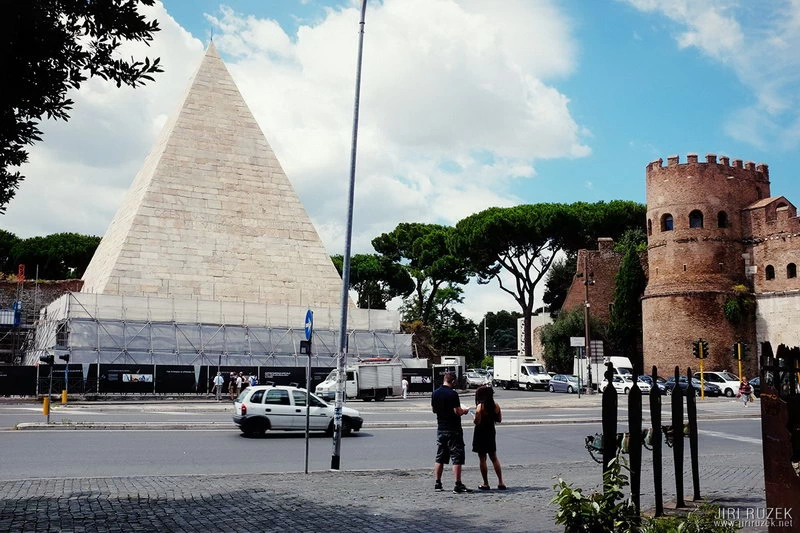
From Porta Portese in Trastevere you can cross the river via the bridge Ponte Sublicio. Another option is a walk from the Aventine hill, or take metro B to the Pyramide stop and head towards the river. Testaccio is not a tourist area, but if you want to eat well, go precisely here. They cook for locals here and you can tell; we visited Ristorante Il Cantinone and later right by the river Trattoria Lo Scopettaro confirmed its reputation. In both places we got splendid food, and in Lo Scopettaro the owner even came and gave us a discount (service and drinks free), just because he was in a good mood. Italians may laugh at you if you talk about Lo Scopettaro, because this word has exactly the two meanings (cleaning and sex) of the Czech „šukat“.
If you’ve just got the feeling that I’m a nutter who drags himself across half of Rome for a nosh, it isn’t quite true. Each time we combined it with a trip to the Pyramid of Cestius, from where you can ride …
By metro to the sea
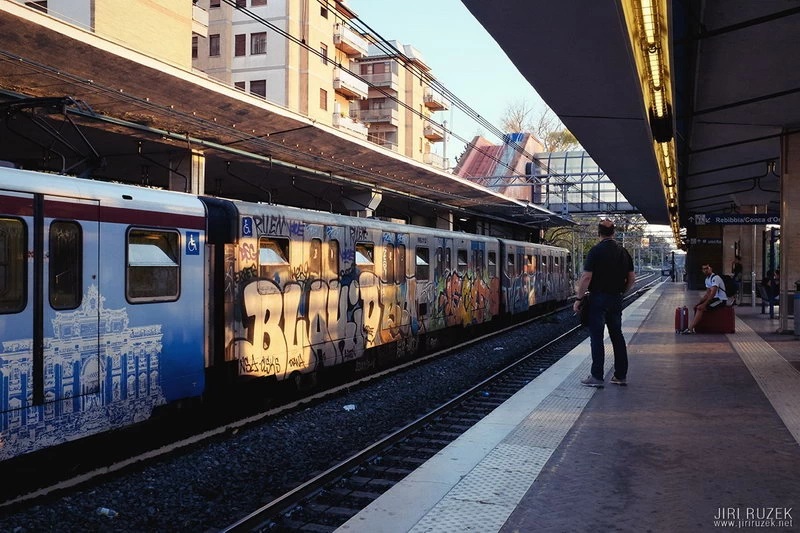 It surprises me when somebody comes back from Rome and doesn’t know that they could have bathed in the sea every day. Yet from the city a metro (I call it a metro, but it is actually a suburban train) runs all the way to the beaches. The advantage is that you can travel on a city transport ticket.
Take metro B to the Pyramide stop and change to the train (paradoxically, by changing between the two platforms the name of the stop changes and you’re at Porta San Paolo – this name applies to the train route) and ride to one of the last four stops (Lido Centro, Stella Polare, Castel Fusano or Cristoforo Colombo). We tried them all and most recommend the first two. Walk a bit around the beaches and you’ll find out for yourself which of them are free.
Don’t burden yourself with looking for the right train; the one standing at Porta San Paolo always goes to the beach. And I don’t recommend running after a train at all, because it runs all day every 15 minutes and it’s better to wait, since then you’ll sit down. Some trains are air-conditioned, others not, and standing for a bit over half an hour in subtropical heat is nothing uplifting.
At night this train is replaced by bus N3, running from/to Piazza Venezia (by the typewriter).
Ostia Antica
On the way to the sea or back you can get off at the Ostia Antica stop, where just a few hundred metres from the station lies the ancient port city of Ostia Antica. In preservation it equals Pompeii. You won’t find the harbour here any more, though, because the sea has receded by several kilometres in the meantime. Uscita lato destro (exit on the right) and then turn left, in the direction from Rome to the sea. We didn’t make it, next time…
Via Appia Antica
Of the originally almost two-hundred-kilometre most important road of the Roman Empire, whose construction began in 312 BC, only a small part has been preserved. It is in the southern part of Rome and continues towards the south-east. It is a popular place for walks and the Catacombs of Callixtus, with the tombs of many popes from the second to fourth centuries, are worth a visit too. This place, too, is still waiting for our next visit.
La Scala Santa
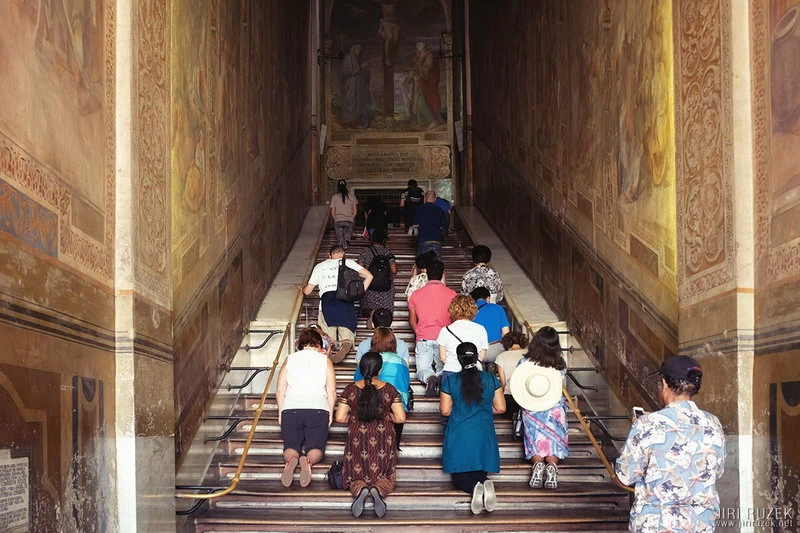
The Holy Stairs, on which according to legend Jesus walked in Jerusalem to Pilate, were brought to Rome around 326 by St. Helena, the mother of Emperor Constantine. You may go up only on your knees, one prayer per step; there are 28 steps. The Holy Stairs are inside a building standing across the street opposite the Basilica of San Giovanni in Laterano, which you should definitely look into as well.
Take metro B to the San Giovanni stop, walk through the gate Porta San Giovanni and you’re there. You can’t miss this.
The Column of the Flagellation
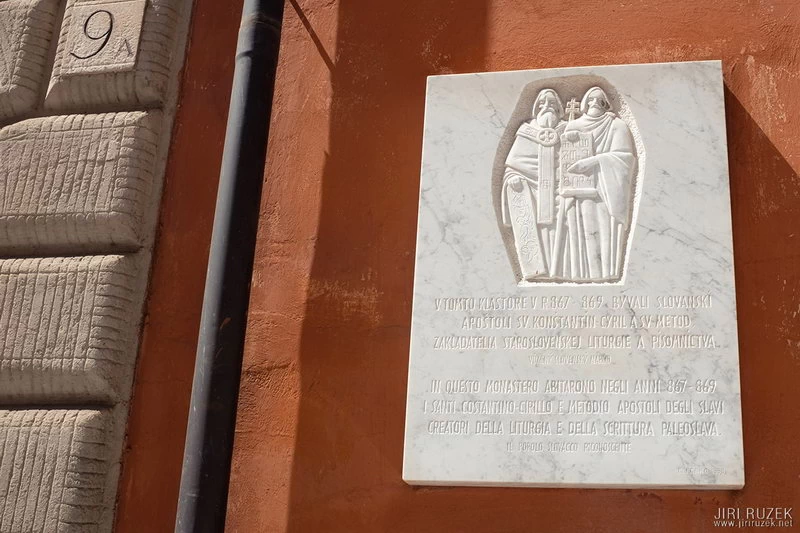
Since we’re on relics, not far from the Basilica of Santa Maria Maggiore towards the Cavour metro stop is the outwardly unassuming and seemingly small Basilica of Santa Prassede, famous for its early Gothic mosaics, but above all for the fact that in one of its chapels is the column on which Jesus was allegedly scourged.
Unfortunately it was closed, but even so the basilica offered us one curiosity. On its façade is a bilingual stone plaque, the first part of which was surprisingly intelligible: „V tomto kláštore v r. 867 – 869 bývali slovanskí apoštoli sv. Konštantín-Cyril a sv. Metod, zakladatelia staroslovenskej liturgie a písomnictva. Vďačný slovenský národ“ (in Slovak: the Slavic apostles St. Constantine-Cyril and St. Methodius lived in this monastery in 867 – 869, founders of the Old Slavonic liturgy and literature. The grateful Slovak nation).
Basilicas and churches
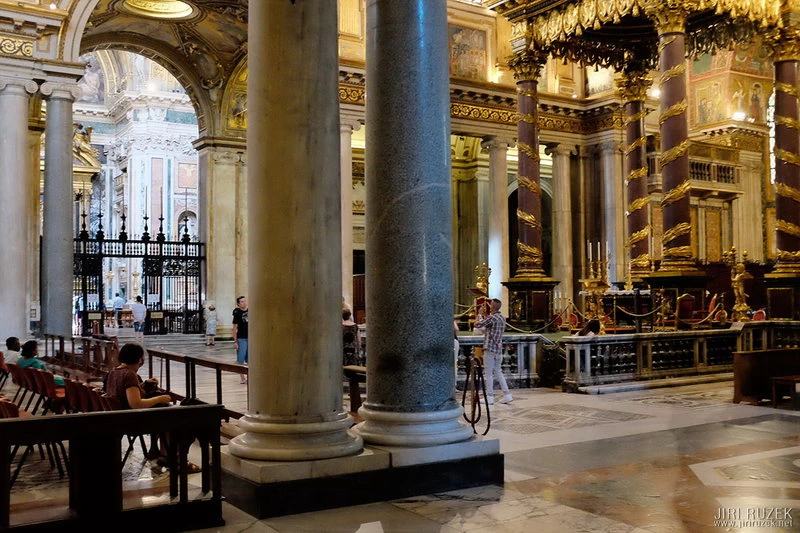
Rome is not only St. Peter’s Basilica; interesting churches worth visiting are literally everywhere. When you walk past and it is open, go inside, you won’t regret it, and if nothing else, you’ll cool down for a few minutes in that heat. In all churches bare shoulders and knees are forbidden. For men that is mostly no problem; for women the solution is to carry one or two scarves in the handbag, with which they cover those sinful joints before entering the church.
Fountains
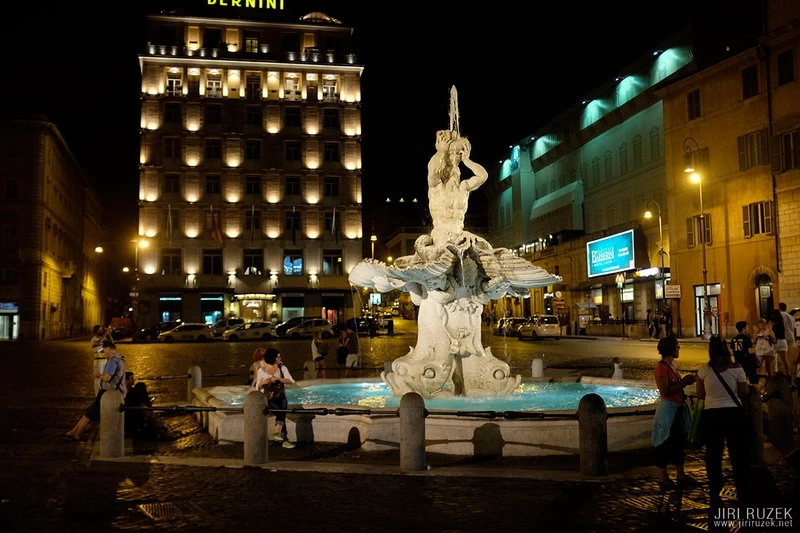 Rome is a city of fountains, so they cannot be omitted. The best known of them, the Fontana di Trevi, is currently without water and under reconstruction, like the Fontana della Barcaccia below the Spanish Steps. Other well-known ones include the Fontana dei Quattro Fiumi, Fontana del Moro and Fontana del Nettuno, all three on Piazza Navona, the Fontana dell’Acqua Paola on the Gianicolo hill, the Fontana di Ponte Sisto opposite the bridge Ponte Sisto in Trastevere, the Fontana del Tritone on Piazza Barberini, the fountains on Piazza San Pietro in the Vatican and literally dozens more.
Vatican Museums and the Sistine Chapel for free
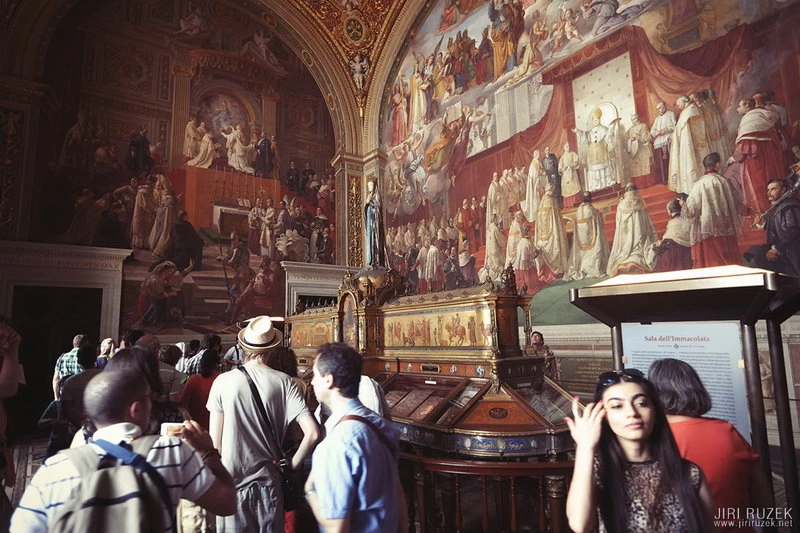 The regular admission is 15 €, but every last Sunday of the month you can walk through the museums, including the Sistine Chapel, for free. That was our case too. The long queue in front of the museum entrance is notorious, but don’t worry, it moves fast and in some 10 minutes you’re inside. You can enjoy the museum spaces in peace and photograph without restriction; it is worse with the famous chapel. The tour route is designed so that the Sistine Chapel is out of sight for a long, long time, even though there’s a signpost at every corner. It leads visitors through the entire museum, because everyone regards the chapel as the goal. That you are finally approaching it you’ll tell by a crush starting to form around you and the atmosphere beginning to thicken in a peculiar way. You pass signs forbidding photography, step inside and …
I wanted to get out. I don’t know what the chapel looked like; my only impression was that cattle in a very bad barn may feel similarly, and words like concentration camp came to mind too. The cause was a group of some six or more Italian wardens whose job was seemingly only to enforce the ban on photography. From all sides they ran into the crowd and yelled at people in a manner you would never imagine in connection with the sign „holy place“. We pushed through the crowd and within a minute were out of the chapel. Beyond that it was calm again and we enjoyed the rest of the museums.
We managed a lot and even more we didn’t, we’ll save that for next time.
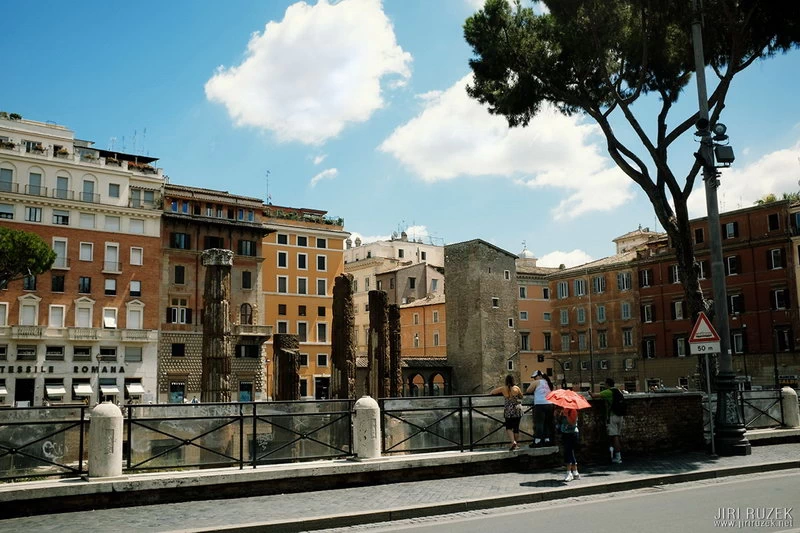
Cocco fresco, cocco bello cocco
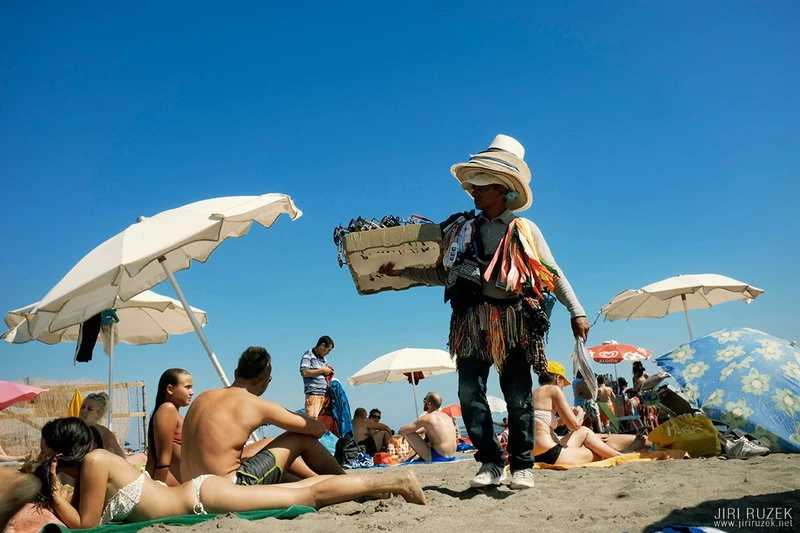
Literally „coconut fresh, coconut beautiful coconut“. Also „sangalas“ (those are sunglasses, this time presumably in English) and everything you can think of will be offered to you over and over every day by vendors from Bangladesh, Pakistan, India and North Africa. You can’t avoid them on the street, and on the beach they’ll show you what they’re really capable of. For example, they’ll offer you cheap sangalas ten times even though you have expensive sunglasses on your eyes. On every visit to Italy we had to buy a beach blanket, because each time we forgot it at home. You pay for stupidity.
These illegal immigrants have infested the whole of Italy and according to the Italians nothing can be done about them; reportedly more and more boats arrive daily on Italian shores, bringing both people and goods. So they’d rather do nothing about it. That was our impression, at least.
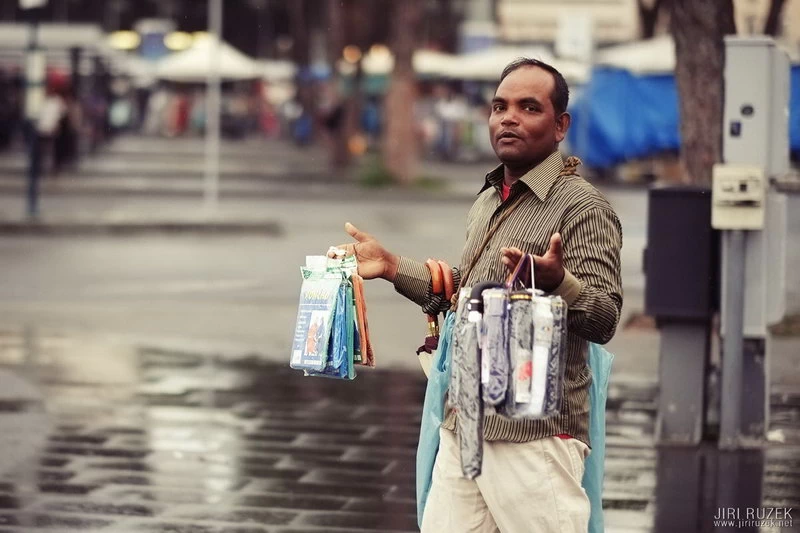
Their business flexibility is worth a mention. Hardly had the sun gone behind a cloud and a few drops fallen when the sangalas vanished and raincoats and umbrellas appeared on offer. After returning to Prague it drizzled and I looked around in vain for vendors.
We need internet
Weak hotel wi-fi and the need to be online during the day too were the reasons we decided to buy an internet card. We found an offer from the company Tre for 3 € for 3 days (Tre also has 3 in its logo, so no wonder). We found a shop and in it a salesman with a phone at his ear. I signalled to him that we were in no hurry, he should finish his call. He replied „No no, signore, speak, what would you like?“. We say we’d like that Tre card etc… Without taking the receiver from his ear, he began in a manner familiar to me, because several Italian salesmen or waiters had spoken to me similarly: „Signore, if you trust Tre, buy Tre. But I don’t recommend it to you, because Tre offers …. and Wind offers ….“. Of course we left with a Wind card for 15 € and got 1 GB a month.
Vespa, Fiat, Twizy…
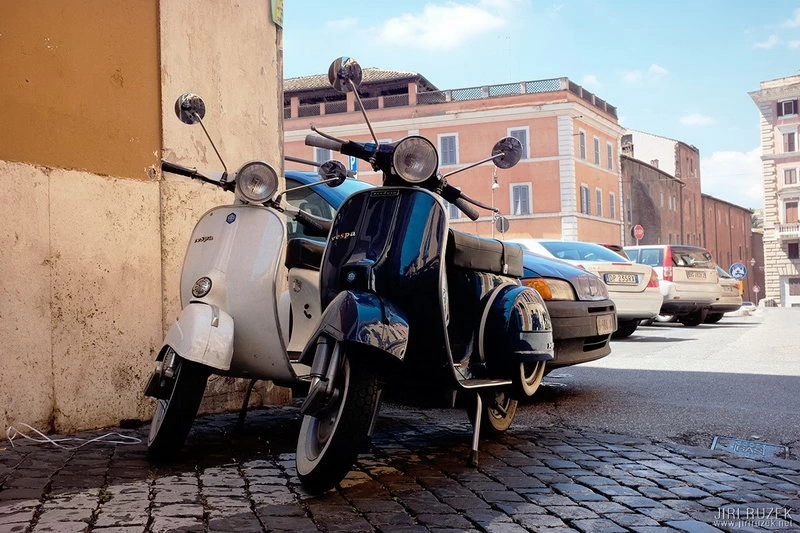
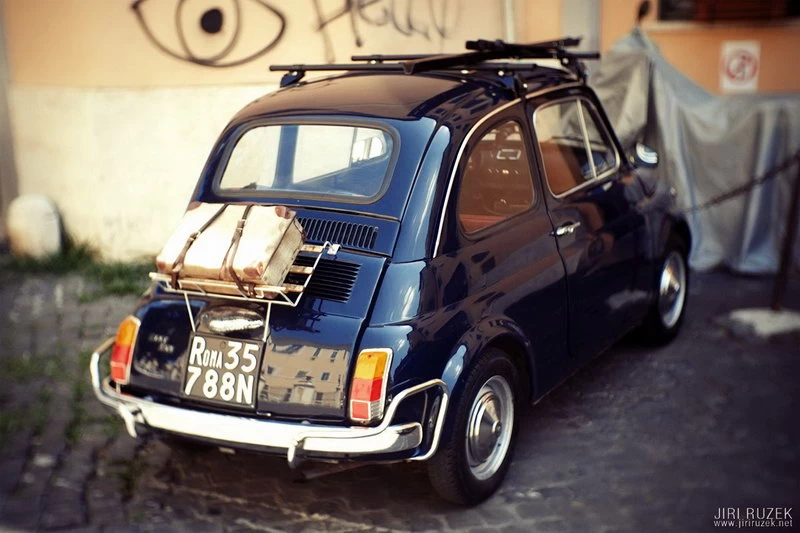
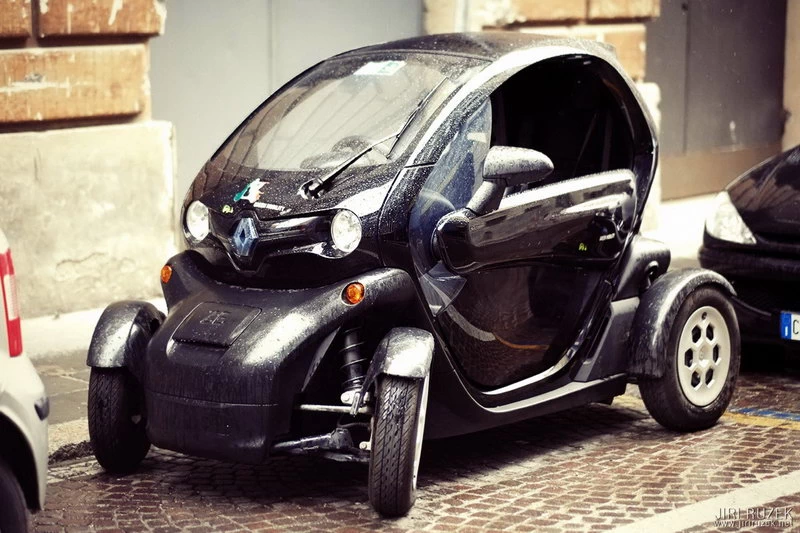
That Italy is a land of scooters and small cars is no news. Scooters flit around you like wasps in summer around a lemonade stand, and of course our beloved Vespas reign over them. 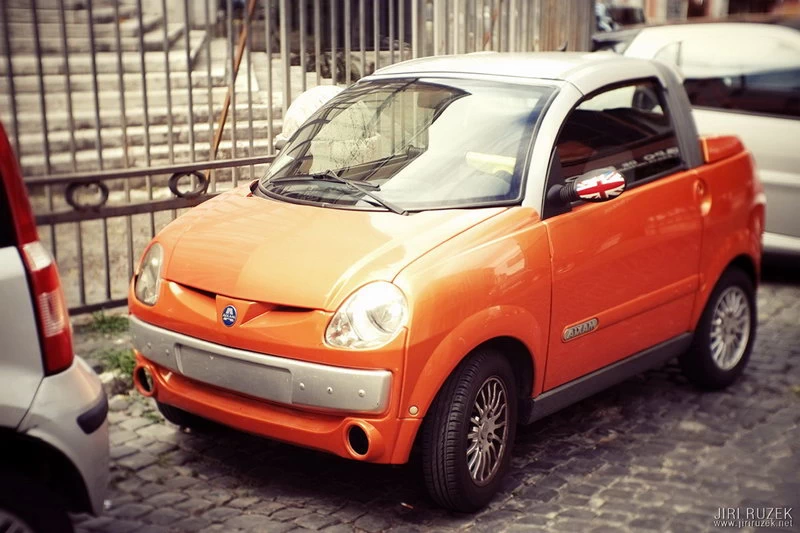 We were surprised, though, by a range of mini-cars we had never seen before. It is possible they haven’t reached us yet, or there is simply no interest in them here. Besides Fiats, Rome is full of Smarts; we also met several cars whose brand we didn’t manage to recognize, but we declared the smallest and most ridiculous car to be the Renault Twizy, which should supposedly be on sale here too, but for us it was a novelty in the streets of Rome. It is incredible that it is a two-seater.
Why there are so many scooters in Italy was once explained to us by our friend Franz: „it’s hard, every family has two or three cars and then we don’t fit on those roads, so everybody has to buy a scooter as well“. Well yes, those are the countries on the verge of bankruptcy …
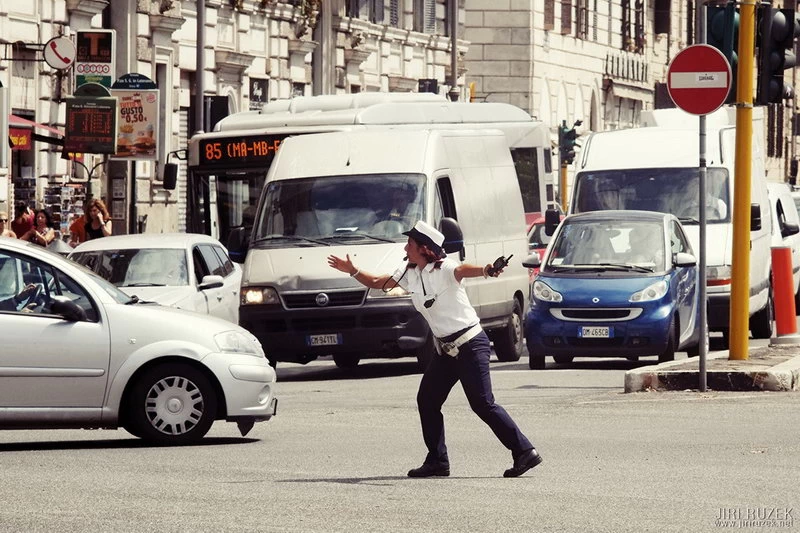
You can also rent a scooter; it isn’t cheap, prices are around 60 € a day and they mostly ask for a deposit of up to 500 € per piece. 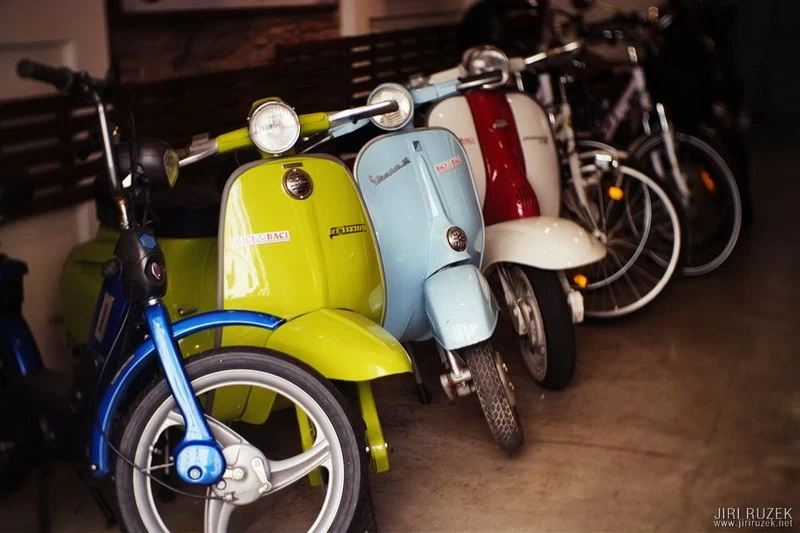
Water
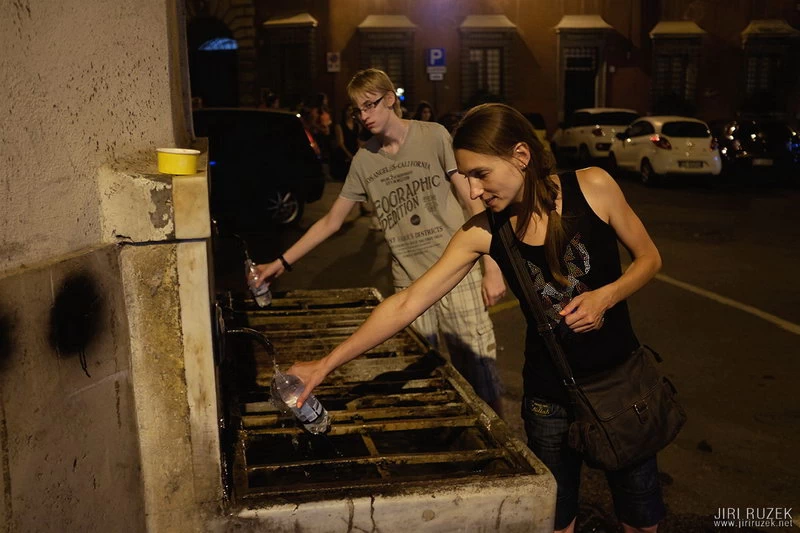
You can’t exist in Rome without water, and you can spend tens of euros on bottled water if you like; every stall across the city offers it. Fortunately that isn’t necessary: buy one half-litre bottle at the start and don’t throw the bottle away. All over the city there are drinking fountains with delicious cold water. It is one of the greatest Roman benefits.
Where to go to the toilet
You won’t meet many public toilets in Rome, and when you do, there are often long queues in front of the women’s part. Even Dan Brown complained in his book Angels and Demons that for the large number of restaurants Rome has too few toilets.
We figured out how to combine the pleasant with the useful, and when we needed the toilet, we popped in for a coffee. Besides the fact that Italian espresso or cappuccino is of course splendid, it is also mostly cheaper than ours. So each time we found a Bar, which is a place where they give you coffee and which is on every corner.
For 80 cents to 1 € we thus had an espresso, or for 1 – 1.50 € a cappuccino, and used the local toilet without a queue.
Coffee standing up
For coffee to cost what I wrote above and not, say, 3.50 €, you must drink it the way Italians do – standing up. In Italy there are two prices for coffee – al banco (at the bar) and al tavola (at the table). As soon as you sit down, the coffee can really cost three times as much, because you’ve forced a lazy Italian to move and that is paid for – it’s service. On our first visit to Italy we of course sat down every time and for two espressos paid as much as for 7 at the bar. At the beginning we felt odd, but this is truly the usual Italian way of drinking coffee. They don’t sit at coffee, they sit for a long time over wine and food.
By the way, a typical Italian breakfast is a cappuccino and a cornetto, known to us as a croissant. Italians handle that too standing at the bar on the way to work. On our last visit it seemed odd to us that Francesca, with whom we stayed, went every morning to the bar opposite and was back in ten minutes. On the first day we thought she’d gone to run an errand, then it dawned on us that she goes for breakfast.
Perhaps the last remarks on coffee – they typically drink cappuccino before lunch, espresso later. Don’t order a lungo or americano, they’ll laugh at you; that’s why it’s called americano, because only tourists drink it. And don’t ask for a piccolo either, it truly doesn’t exist. Neither does latte – that word means milk.
Ciao the wrong way round and good evening after lunch
When a beautiful girl at the first till says ciao to you, you aren’t done for and she isn’t waiting for your phone call. Even if you’d like to not believe it, perhaps you will once it’s said to you by a woman who looks like the mother of Sicily and a hundred-and-fifty-year-old Italian. It is simply a common greeting. Still, it may strike us as cheeky to say ciao to a stranger, and I too sometimes had a problem with it. It often happened that I said buon giorno and the shop assistant or waiter replied ciao. That wasn’t odd; what was odd was the reverse, when I said ciao and he said buon giorno. For several weeks after returning I still have a tendency to say ciao in shops.
Buon giorno (good day) you’ll hear from Italians only until lunch; around two o’clock in the afternoon everyone switches to buona sera (good evening). It is a beautiful nation…
Food
My mother says we went to Italy to stuff ourselves. I don’t think so, but it is true that we love Italian food, spaghetti and pasta in general in various ways rule at our home too, and the plan of our holiday could have reminded someone of a gastropornotour. That’s probably my fault; when I go somewhere, I want to taste local specialities, and for that it is good to be prepared – that is, to know which they are and where to have them and where rather not. And because every region of Italy boasts its own specialities, we weren’t dealing with Italian but Roman food (and that’s why our first stop was a kebab stall, I know, but that’s another story, we love kebab from Berlin, where by the way they have it better).
Roman cuisine is not exactly among the lightest, but the menus here have a nice list of local gems. On my first visit to Rome I was advised to taste the most typical dish – Spaghetti alla carbonara. Because I knew „charcoal-burner’s spaghetti“ from Czech restaurants, I considered it a bad joke. What I then tasted in Rome was new to me, entirely unknown and downright divine food. And because after returning they always brought me those terrible charcoal-burner ones again, I had to learn to cook carbonara myself.
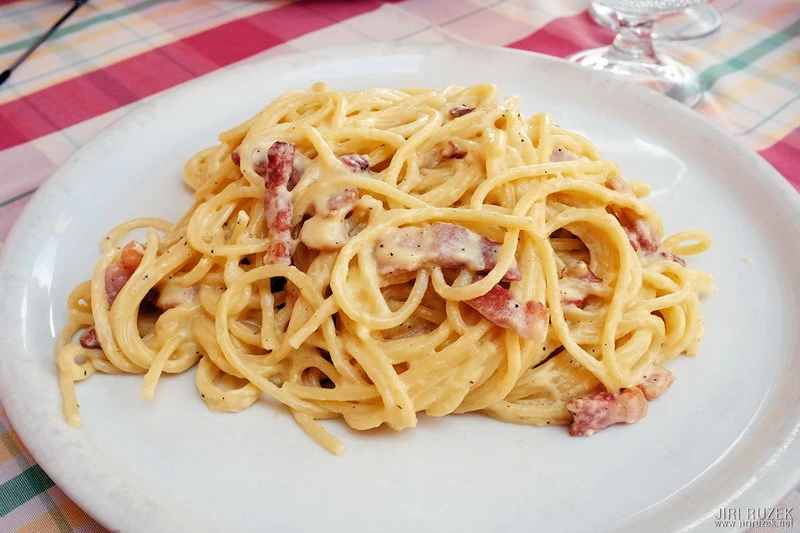
Of the pasta I therefore definitely recommend Spaghetti alla carbonara, Bucatini all’amatriciana, Spaghetti alla gricia, Spaghetti cacio e pepe, Spaghetti alla puttanesca or Penne All´arrabbiata. At Ristorante Il Cantinone in Testaccio I ordered Spaghetti cacio e pe…sce. From the name it was clear it would be something with fish or seafood in the manner of cacio e pepe. It was exactly so, the sea was represented by calamari and the taste was excellent. In another restaurant I had one more spaghetti with seafood, but that was a rather average dish.
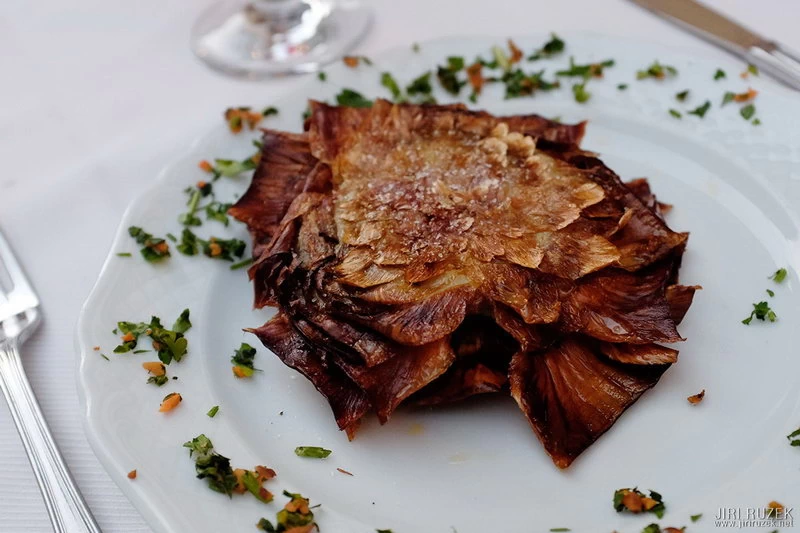
Besides pasta and some pizza we had excellent risotto with chicory (also at Il Cantinone), tripe Trippa alla Romana, veal slices with Parma ham and sage Saltimbocca alla Romana (the name Saltimbocca can be translated as „jump in the mouth“) or oxtail in tomato sauce Coda alla Vaccinara. As a special starter we tasted in the Jewish quarter the Jewish-style artichokes Carciofi alla Giudia. Everywhere else in the city they’ll offer you Carciofi alla Romana, which are prepared differently; we didn’t have them, but try them, we’ll have them next time.
Italians, as I already wrote, often breakfast at the bar on a cappuccino and cornetto, handle lunch with something lighter, then a roughly three-hour siesta awaits them, after which they continue working (if they did any before), and around eight in the evening the restaurants fill up, because they are finally going to eat.
They divide a meal into antipasto (starter), primo piatto (first course, usually pasta), secondo piatto (second course, mostly some meat or fish), with it they have a contorno (side dish) and finally dolce (say tiramisu or ice cream). Water, coffee and vino della casa (house wine – more precisely wine poured from a jug or carafe) are a matter of course.
In restaurants it isn’t possible to just drink; for that there are various bars, but where it says Ristorante, Trattoria, Osteria or Hostaria, you are expected to eat, and drinks alone won’t be brought to you.
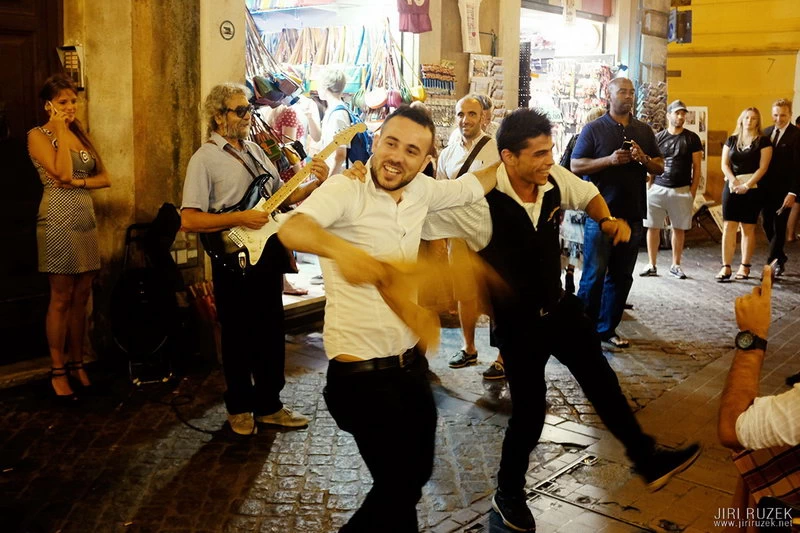
Some restaurants boast that they charge no service fee. Mostly, though, they automatically bring a bottle of water for 2 to 3 € and/or bread (1 to 1.5 € per person) to your table and handle it that way. Tips are not given in Italy; instead drink the water or bite off a piece of bread, they’ll want you to pay for it anyway.
In a bar it is no problem to sit for two hours over one beer or glass of wine; it isn’t like here, where another beer lands and you still have a quarter of the first in the glass. When you want another, you have to speak up. The price of one beer is around 5 €. The brand Peroni is most in vogue here, and unless you’re obsessed with the idea that apart from Plzeň there is no beer, Peroni won’t offend you at all. In supermarkets the price is not so far from the Czech one..
Supermarkets
Speaking of which… Of the big ones there are DeSpar stores (our InterSpar) and Carrefour and then some others. Prices are classically low and the quality … try to imagine that someone here went mad and carried that luxury overpriced food from specialist shops with foreign groceries into Tesco and sold it there at their prices. Roughly like that. Will it ever change here?
Ice cream
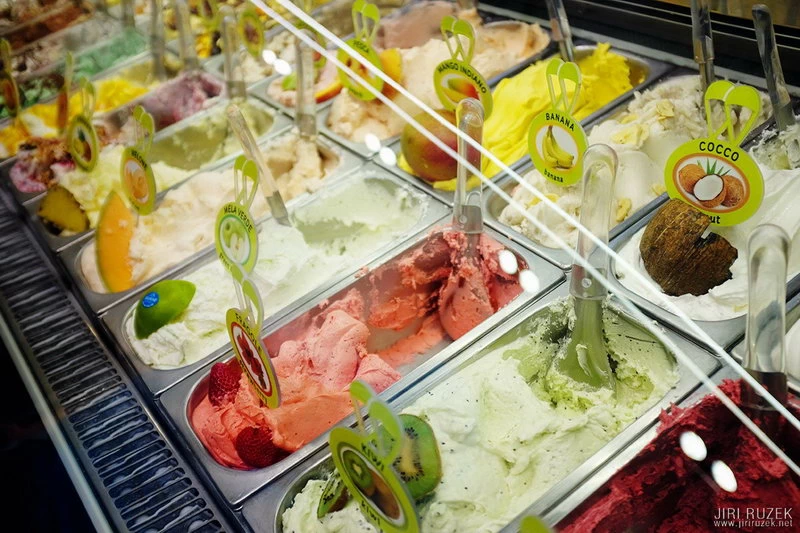
Gelato is another jewel of Italian gastronomy. Gelaterie are everywhere; we had two right by the hotel that are very renowned. One of them is Verde Pistacchio, offering about 15 flavours and interesting flavour combinations. Its pride is the unrivalled pistachio, which truly tastes of pistachios, it isn’t just green ice cream; it was interesting with cardamom too. Right across the street is Wonderful Ice Cream with 50 kinds of ice cream and fantastic frozen yoghurt. It was hard to decide between the two and it even happened that we split up and shopped in both at once. Both are on Via Nazionale about 100 metres below Piazza della Repubblica.
Because we of course photographed in Rome, the end of the article was meant to be devoted to photography and a comparison of two cameras and also several lenses I had with me. Given the length of this article, I’ll devote photography to a separate article and gelato will become a symbolic sweet full stop.
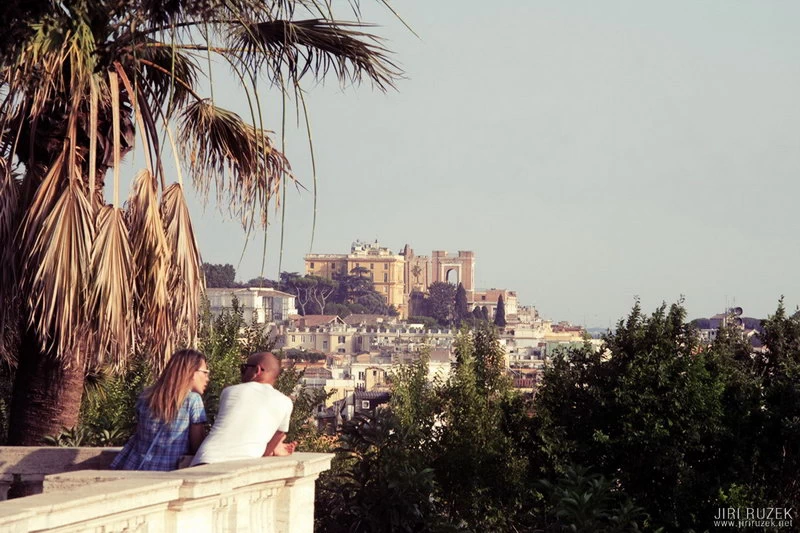
P.S. really long … if I’d written for another hour, it would be a small book 🙂
To anyone who has read this far and still wants more, besides Werich’s book I recommend the slim but wonderful travelogue Italské listy (Letters from Italy) by Karel Čapek.
Perhaps someone will find this interactive map of Rome useful. It has 3 layers that you can switch off and on – 1) quick orientation points, 2) places and attractions, 3) the Roman metro. It is far from containing everything, but it hopefully contains the important points. Gradually I may improve it.