This page was translated by AI. Please be forgiving of any mistakes.
‹ Photo Notes · 19 srpna, 2014
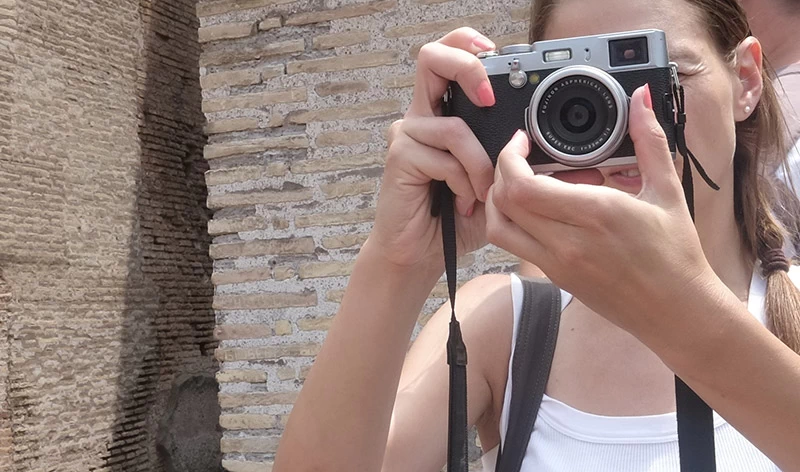
In the previous article I promised to write down my impressions and a subjective comparison from shooting with the Fujifilm X100S and X-E1 cameras.
I went to Rome with my Fujifilm X-E1, and because I had eight days and nights of wandering around one of the most beautiful cities in the world ahead of me, Fujifilm CZ lent me the popular X100S model. The chance to compare the current „king of the street“ with my older-generation model pleased me.
Why the X100S is called the king of the street is hinted at by the list of equipment I took with me.
Set 1
- Fujifilm X-E1 and lenses
- Fujinon XF 14 mm/2.8 R
- Fujinon XF 23 mm/1.4 R
- Fujinon XF 56 mm/1.2 R
- Jupiter 37A 135 mm/3.5
- Fujian 35 mm/1.7
Set 2
- Fujifilm X100S
I didn’t have two cameras so that they would compete with each other, but so that they would complement each other. The comparison of course offered itself. Lída also shot with an Instax, but I’ll skip that today, there is of course nothing to compare there.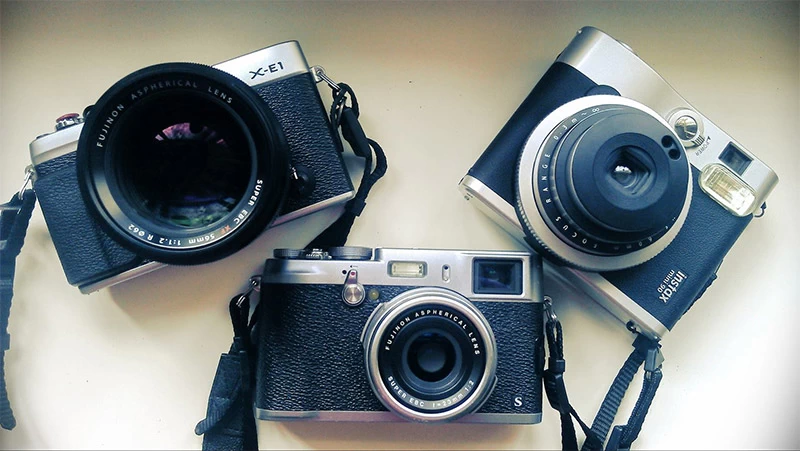
3 advantages of the X100S
Advantage 1 – a fixed lens
The main advantage is that it has no interchangeable lenses. That way you don’t have to deal with what else to cram into the bag and what to set out into the city with today. Although my whole set 1 weighed only about 1.5 kg, the weight of the X100S (it’s not worth calling it set 2) is under 500 grams. You hang the X100S around your neck and go. When you want to put it in a small bag, you don’t look for space for it among lenses and clutter, it always fits. And if not, it stays around your neck. It isn’t a compact, but it is still a very small, light and inconspicuous camera.
The fixed 23 mm focal length (35 mm equivalent) is of course partly limiting; it won’t cover everything. It is a slightly wider lens, ideal on the street because it has a larger field of view than the basic 50 mm, yet doesn’t distort too much and can be used well for photographing people too.
On the other hand, the very absence of the possibility of changing lenses doesn’t distract you while shooting with deliberation over the most suitable focal length and endless swapping of glass.
Advantage 2 – combined optical/electronic viewfinder
Unlike the X-E1, the X100S has a hybrid viewfinder with the option of switching between an electronic and a transparent viewfinder, and various aids and information are displayed in the transparent one too. That looking through an optical transparent viewfinder is an entirely different experience from looking into an electronic one (actually a small LCD display) is clear to everyone.
Advantage 3 – a new generation
The X100S is fitted with a new generation of electronics, i.e. imaging and graphics chip; the electronic viewfinder, the aids for manual focusing etc. have also been improved. In general it can be said that the electronics of the new models should above all be faster and the viewfinder should, thanks to a higher refresh rate, be more pleasant than on older models.
The advantages of paper specifications are clear, but what matters is the shooting itself, comfort, feelings and of course the quality of the result. Read on…
Advantages of the X-E1
Only one occurs to me, and that is the possibility of changing lenses, which, as I wrote above, can slow you down and distract, but when I have the Colosseum fitted to the millimetre and have nowhere left to step back, it is an advantage to have the option of putting on a 14mm lens (it’s just an example, but it happened to me two years ago with the Nikon, when I left the 17-35 at home and squeezed myself against a fence with the 28-70). Likewise, when you climb up to a viewpoint over the city, it’s nice to have the option of putting on, say, 135 mm and pulling in one of the monuments.
The need to change lenses occasionally was the main reason I chose this model in the first place.
In Rome I sometimes carried both, other times I alternated them depending on what I thought awaited me on the way. On the way from Prague I had the X100S around my neck, on the way back the X-E1 with the 56/1.2.
I shot a lot, and Lída and Jirka of course couldn’t stand me for it after a couple of hours. They had the (justified) feeling that I was holding them up and stopping every three steps (it wasn’t like that:). And not only do I stop, but I stop them too if they were walking level with me, because especially when I was shooting with the wide 14mm glass, they would almost always wander a bit into the frame. If they wandered in more, nothing would happen, but to have in the corner of every second photo a little piece of Lída’s cap or a shoulder, in one case half a pair of sunglasses … you probably understand. I had to wait until they moved further away (or step back when they stopped in front of me), or manage to stop them and keep them behind me. On the other hand, in a city full of tourists I soon had to get used to the fact that a piece of a cap or somebody’s arm from the left or right is a matter of course. I thank them both for their patience too; they mostly bore it very bravely.
JPG and semi-automatic mode
Of course I wanted to bring home nice photos, but I was on holiday and felt no responsibility for quality. Because I’d already got used to the excellent quality of the JPG outputs of the X-E1, it seemed pointless to torment myself at home with conversion from raw. And I allowed myself another holiday luxury so that I wouldn’t have to keep readjusting the exposure (light conditions sometimes changed from shot to shot): I shot almost the whole holiday in a mode with fixed aperture, automatic ISO and occasionally automatic time with a lower limit, so that the photos wouldn’t be blurred by motion. I fine-tuned with the exposure compensation control.
X100S – impressions from shooting
The simplicity of the X100S, given by its construction, is splendid, and shooting with it is very much about a feeling of freedom. I must praise one ingenious and perhaps underrated piece of the X100S hardware, and that is the metal lens cap. You simply push it onto the lens and it holds so that there is no danger of it coming loose and being searched for at the bottom of a bag or even lost. It comes off just as easily, you simply pull it off. I had no problems with the camera’s speed; I carried both in sleep mode – they woke up after a tap on the shutter release. If I had to catch some really fast action, I’d probably worry about the wake-up time (approx. 1 second), but I didn’t get into such a situation. Focusing was precise and fast enough, I was aware of no limits there. 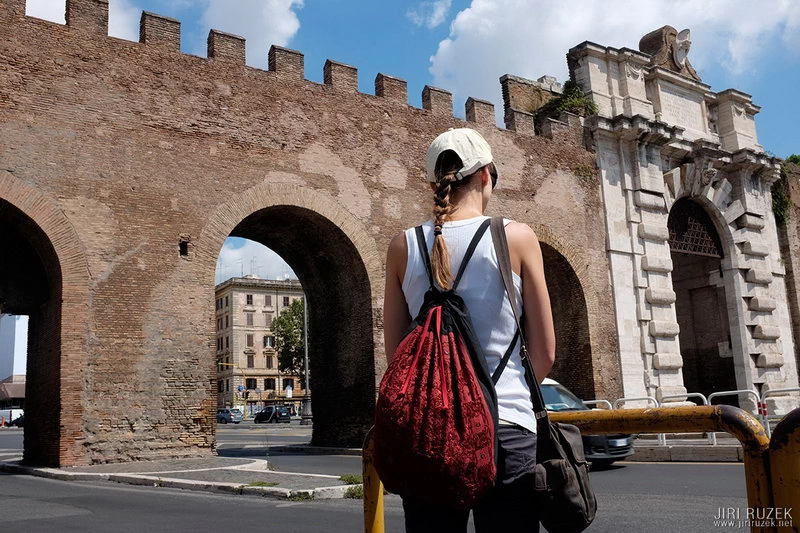
Another thing I liked was silent shooting. I have this mode on the X-E1 too, but it is rather pointless, in practice it only means that the internal flash doesn’t work. For that it’s enough to leave it clicked in. On the X100S silent shooting really means that you can’t hear the shutter. I don’t know if the leaf shutter is responsible (mine has a diaphragm shutter), but it is pleasant. It is also unusual, because sometimes you don’t know whether you’ve taken the photo or not, but the option of turning the sound off completely is not to be thrown away.
The controls are a little different from what I’m used to. I don’t know why, for example, the selection of the focus point is downwards on my X-E1 and exactly the opposite on the X100S. Not only out of habit I prefer the lower direction; it seems more ergonomic to my thumb. But those are details, and everyone gets used to their own camera over time and wouldn’t change.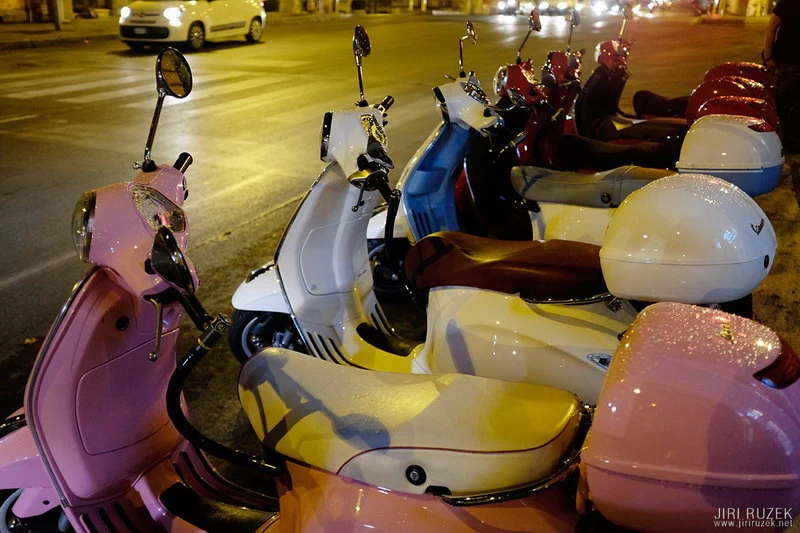
Apart from these differences, shooting with the X100S was comfortable and I had no feeling of a different, unfamiliar camera. Only the compactness and perfect retro design made shooting a different experience. Otherwise I was not aware in anything that I was shooting with a new-generation instrument. Working with it in this respect was neither better nor worse. With one exception, and that was …
The hybrid viewfinder
Paradoxically, one of the advantages turned out for me to be quite an annoying thing. During my time with the X-E1 I had got so used to seeing the exposure before pressing the shutter that it seemed downright irritating to have to check after every shot how the photo turned out. Another unpleasant thing was that the composition in the transparent viewfinder doesn’t correspond one hundred percent to the composition of the resulting image, adding a bit especially at the bottom. As a result I soon decided to use only the electronic viewfinder. But here my imperfect knowledge of operating the instrument probably came into play and I was unable to switch it on permanently. I could switch to it before a shot, but after the shot the optical one jumped back in. I don’t know whether it’s possible or not, but towards the end I shot with the X100S most often through the display. Like a tourist, which after all I was.
X-E1 and lenses – impressions from shooting
It’s hard to expect new impressions from an instrument you know well. It neither surprised nor disappointed; only one SD card disappointed, so I don’t have photos from the Roman Forum, the Pantheon, Castel Sant’Angelo, Capitoline Square etc. When browsing, the photos were there, and the next day instead of thumbnails there were question marks. Never mind, it was only a holiday and I certainly wasn’t in Rome for the last time; besides, I photographed the same places last time with the Nikon. But it stings …
With the X-E1 I shot essentially through the viewfinder, and that, perhaps in combination with the lenses, gave me more of a feeling that I was shooting with a camera and not a compact. That I was shooting with the older model I didn’t feel in any way; the comfort was the same, the speed was the same.
I had with me all three Fujinon lenses and two manual ones. The Fujinons 14 mm and 56 mm were a clear choice; the 23 mm I originally didn’t want to take, because it is the same focal length as the X100S has. Thanks to its negligible size and weight I took it after all, and it came in handy on night wanderings, when I left the X100S in the hotel and took my own out for a walk.
To have something longer with me, I chose the manual Jupiter 37A 135 mm/3.5. Compared with the rest of the arsenal it is a decent zoom-in, and again it was its compact dimensions and weight that decided in its favour. By contrast the kilogram Jupiter 21A 200 mm stayed at home.
The last lens in my travel set was the Fujian 35 mm/1.7. It is also a manual lens, with a C-mount, intended for industrial and security cameras. It is so small and light that in its case there was nothing to think about at all. And it is fun, but more on that in a moment…
Mostly I carried one or two lenses. If two, they were 14 mm and 135 mm or 14 mm and 56 mm. If only one, it was 23 mm, 35 mm and on the last day 56 mm.
Fujinon XF 14 mm/2.8 R and 23 mm/1.4 R
I rate both lenses the same, because I’d be writing the same thing twice. Precise, pleasant and entirely without reservations. Nothing forces you to think about them; they are part of the whole.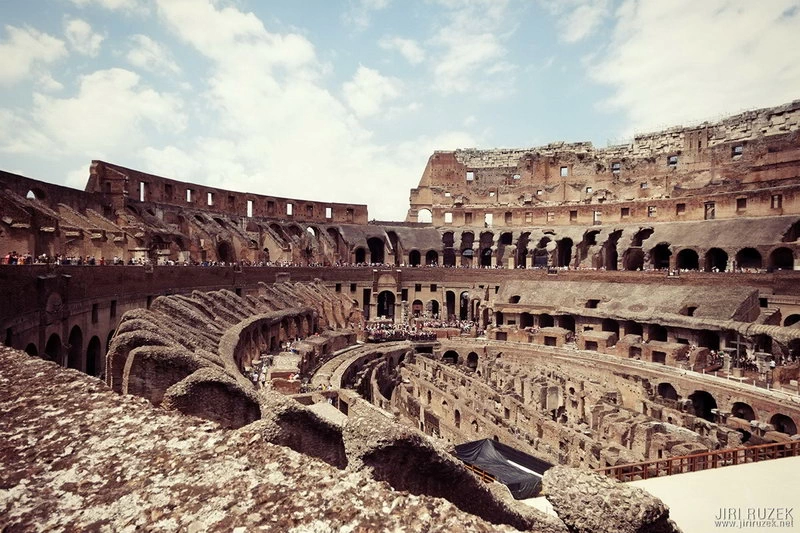
One for the widest scenes, the other for ordinary street. Impression – unobtrusive professionalism.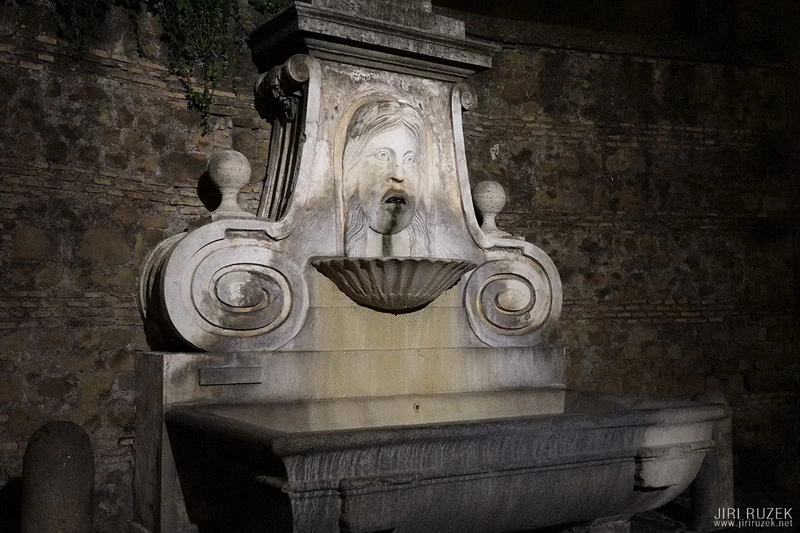
Jupiter 37A 135 mm/3.5
I used it most often at viewpoints, always with a rubber lens hood. It is manual, but focuses nicely, and at those viewpoints focusing wasn’t even necessary: in strong sun I shot at apertures around 11 and 16 and the focus was mostly set to infinity. As a shorter telephoto for the city it is definitely enough; with 200 mm I would often be photographing every roof separately. Impression – a change and a pleasant experience.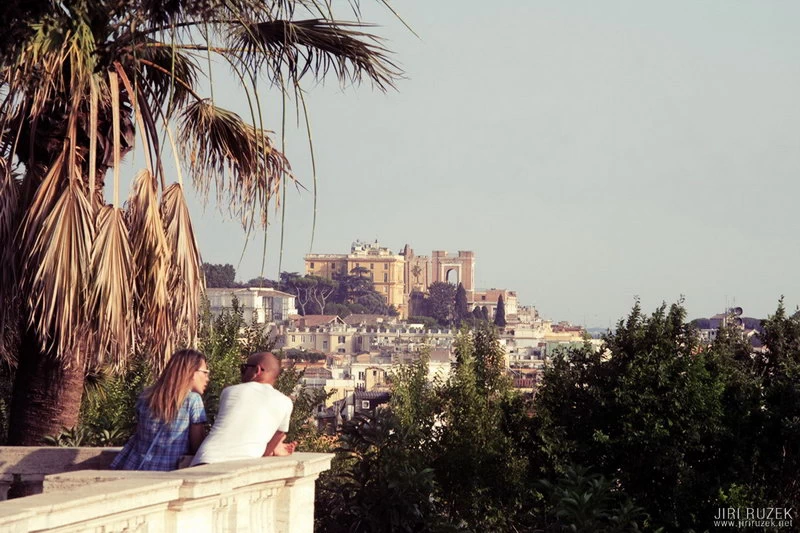
Fujinon XF 56 mm 1.2 R
I used it for the first time only on the evening before departure and haven’t taken it off since. The more I congratulate myself for deciding rightly and buying it, because this is a Lord of a lens. With it, at every shot you know you have exactly the 56/1.2 mounted; it is impossible not to be aware of it. Impression – joy and respect. 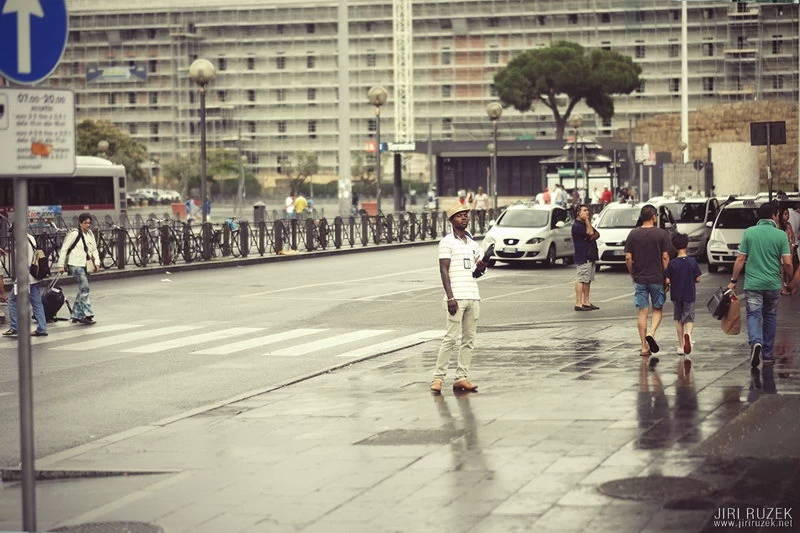
Fujian 35 mm/1.7
I saved this curiosity for last. Fujian has nothing in common with Fujinon or Fujifilm; it is a Chinese lens and, as I wrote, is intended for industrial and security cameras. I bought it as a joke on Ebay for about 500 CZK and expected nothing from it. In Rome I shot with it alone for about two days and it was the greatest fun for me. It is of course manual, but surprisingly easy to focus with. The speed of 1.7 is excellent. It is characterized by a sharp (surprisingly sharp) centre and completely crazy edges of the photo. At one moment it recalls a Lensbaby, at another a Petzval or a hussy on Instagram.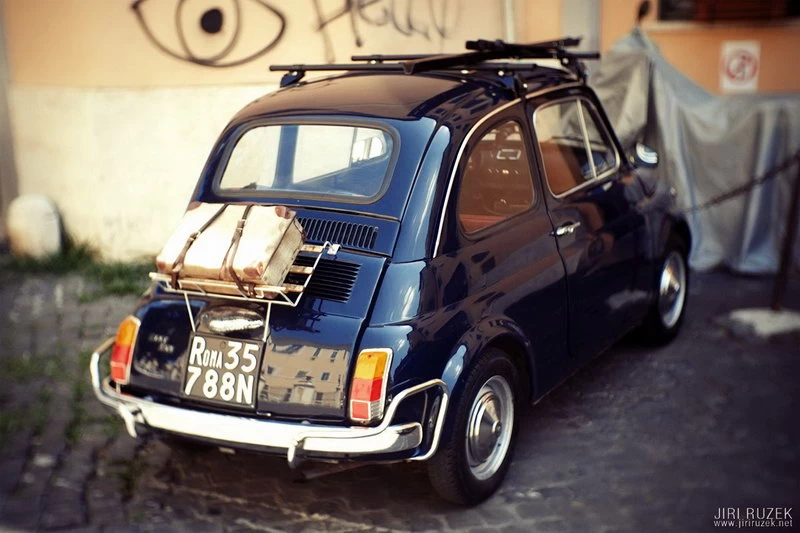
The Fiat 500 looks like a toy car in the photo, and the giant Garibaldi monument with the cars and trees around gives the impression that it could be set in a landscape with electric trains. With this lens I really enjoyed myself the most, and the results amuse me too. Impression – fun.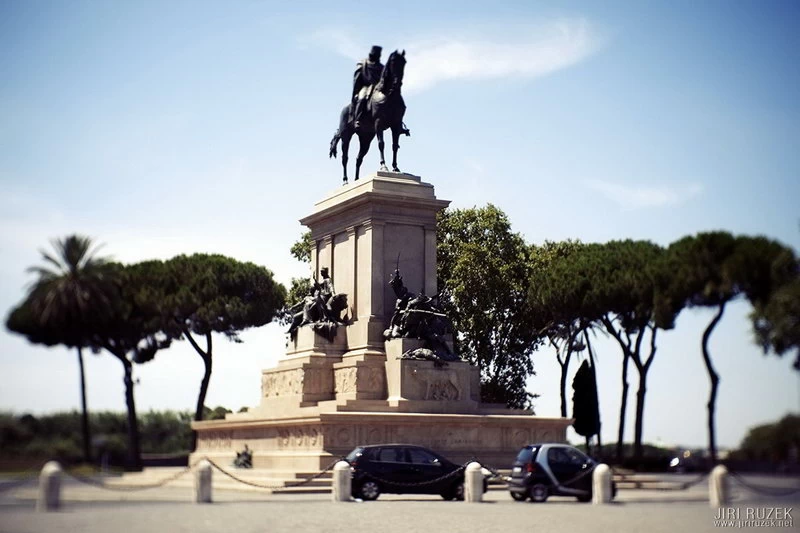
Photo quality
As you can see in the samples, on holiday you can afford to shoot in automatic or partly automatic mode. I didn’t have to deal with noise once, even though a number of photos were shot at ISO 6400 (I’m not saying it isn’t there, but I didn’t have to denoise anything or throw anything away because of noise). In this respect I again found no difference between the two cameras.
Still, the photos from the X-E1 seem better to me. They have pleasant saturation and dynamic range; the photos from the X100S have, to my taste, too much contrast and thereby saturation. I tried to have both cameras set the same. 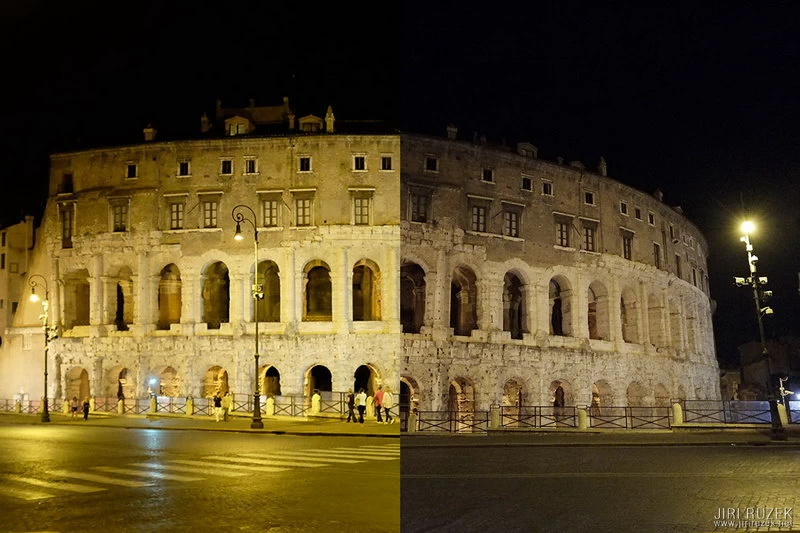
I keep talking about JPG output. I have no doubt that in RAW both cameras would deliver an identical or very similar result, but for the reasons I described I didn’t want to shoot RAW, and I won’t on the street next time either.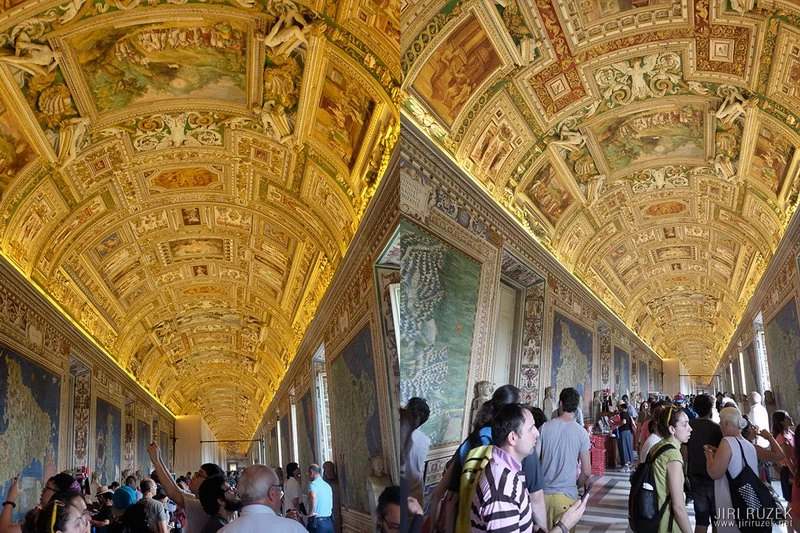
I’d come across the opinion that the first generation of X cameras gave better JPG photos several times already; now it has been confirmed by my own experience. 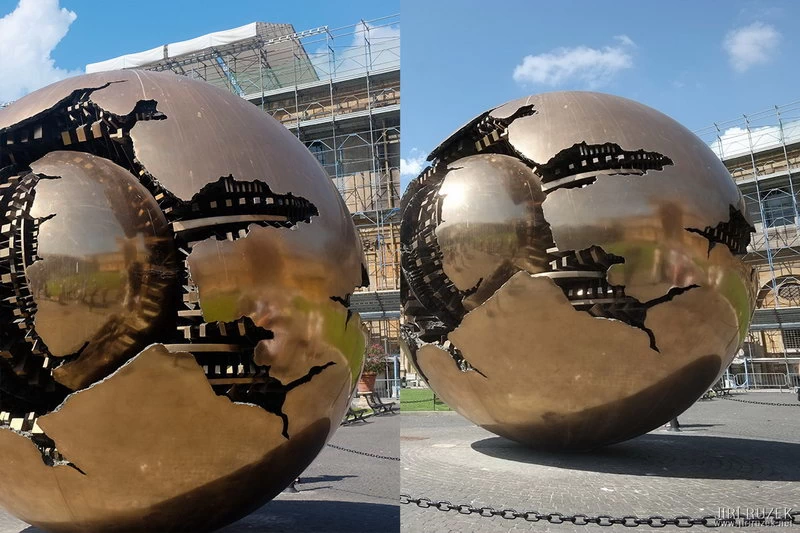
Conclusion
When I add up all the mentioned pluses and minuses and add the fact that the most important thing is the resulting photograph, I must declare the older X-E1 the winner in my personal match.
That doesn’t mean the X100S is a bad instrument or that it disappointed me; I enjoyed it, it amused me and I made lots of fine photos with it. But because I need to change lenses, I would buy the X100S, if at all, only as a second instrument, the one I could carry with me daily for ordinary shooting. On the street, on holiday etc., and for me that mostly means shooting JPG. The X-E1 has such good JPG output that even though I shoot everything important to RAW + JPG, in the vast majority of cases the JPG alone is enough as a source for further edits. Precisely for this difference, if I were ever to buy a „hundred“ for my pocket in the future, it might rather be the older X100, which was the first to dazzle me with its JPG photos and pointed me towards the later purchase of the X-E1.
Thanks to Fujifilm CZ for lending the X100S, and I don’t know if they’ll ever lend me anything again 🙂 But at least you see that I’m not just smearing honey around anyone’s mouth, and when I praise Fuji, I must feel a reason for it. And I still have plenty of reasons.
You’ll find lots more photos in the article Memories of Rome.
Fujifilm cameras and lenses can be bought e.g. at Fujifoto.cz or Megapixel.cz.